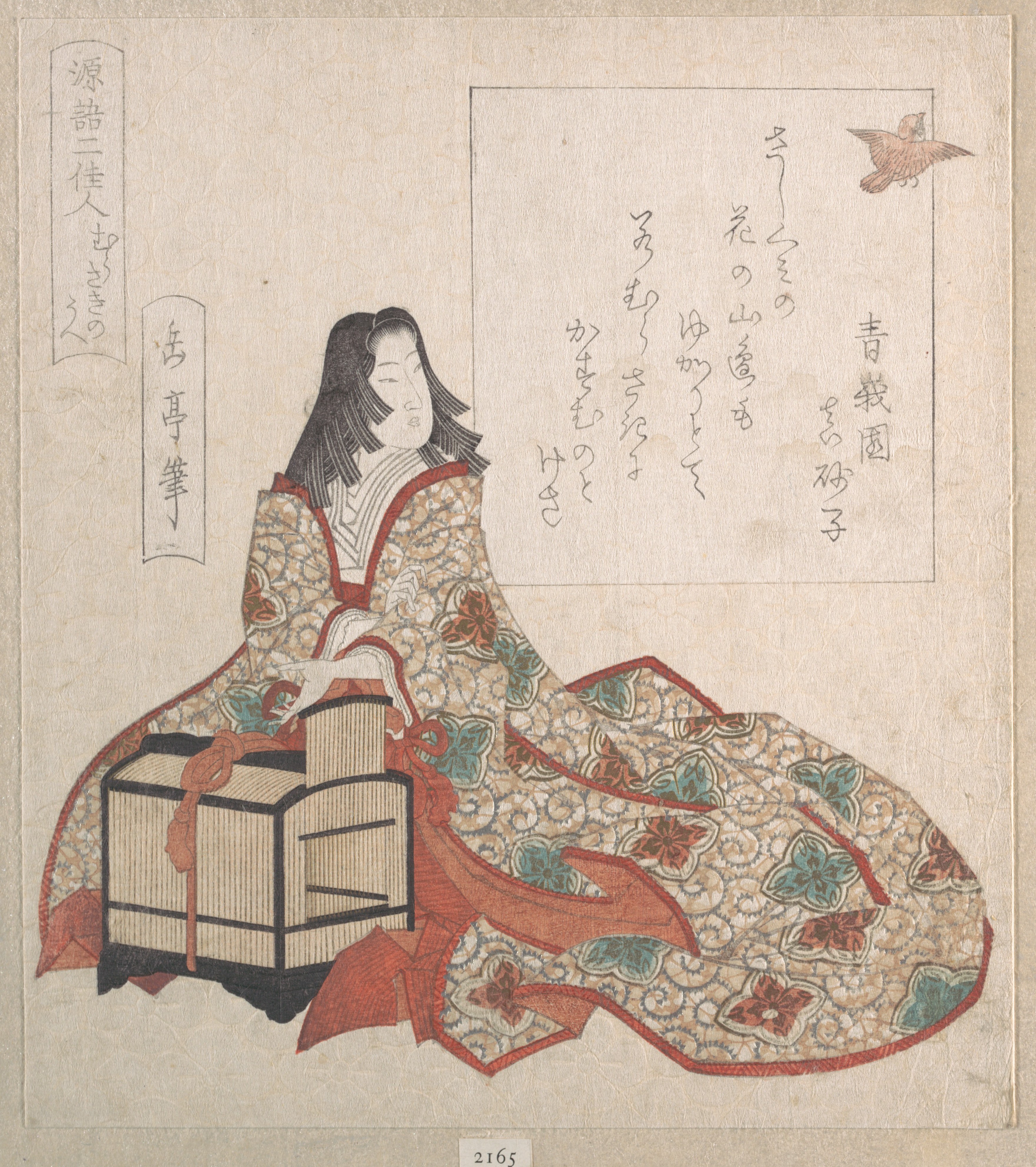
Lady Murasaki Sets a Bird Free from a Cage
- Date:
- 19th century
- Medium:
- Woodblock print (surimono); ink and color on paper
- Source:
- Metropolitan Museum of Art
Description
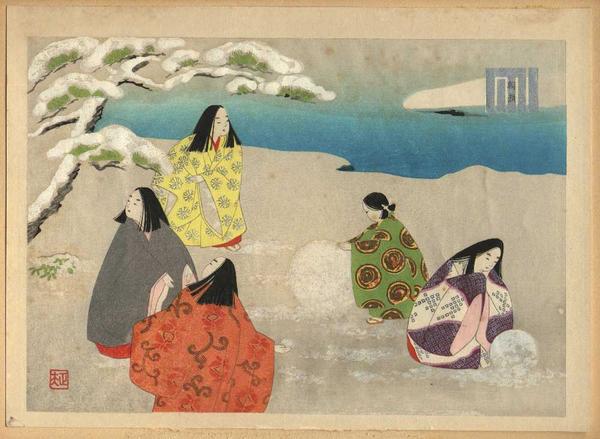
Lady Murasaki Sets a Bird Free from a Cage, held by the Metropolitan Museum of Art, is one of Yashima Gakutei's gently literary compositions, evoking the world of classical Japanese letters that surrounded the author of The Tale of Genji. In Gakutei's rendering, Murasaki Shikibu is shown in the act of releasing a small bird from its cage, a quiet gesture that prompts associations with Buddhist ideas of compassion and release as well as with the courtly refinement that defines her legacy. The framing turns a single moment into a vehicle for poetic suggestion, exactly the kind of imagery prized by the kyoka clubs that commissioned Gakutei's surimono. Yashima Gakutei worked within the broad orbit of the Hokusai school, having studied directly with Totoya Hokkei and absorbed the design principles of Katsushika Hokusai. That training gave him a confident sense of compositional weight: figures are positioned with care, drapery falls in measured curves, and small details such as the cage and the bird's outstretched wings become focal points of design. Surimono of this kind were privately commissioned, printed in limited numbers, and often enriched with metallic pigments and blind embossing, technical refinements that suited an audience of poets and connoisseurs who could read both image and accompanying verse. By choosing Murasaki Shikibu as a subject, Gakutei flatters the literary self-image of his patrons, who saw their own kyoka practice as a modern echo of Heian elegance. The Metropolitan's record of the sheet preserves a characteristic example of how Yashima Gakutei used surimono to weave classical reference, gentle morality, and pictorial refinement into a single small image.
More Prints by Yashima Gakutei


More Birds & Flowers Prints
Frequently Asked Questions
Lady Murasaki Sets a Bird Free from a Cage was created by Yashima Gakutei (八島岳亭) in 19th century.
Lady Murasaki Sets a Bird Free from a Cage depicts birds & flowers.