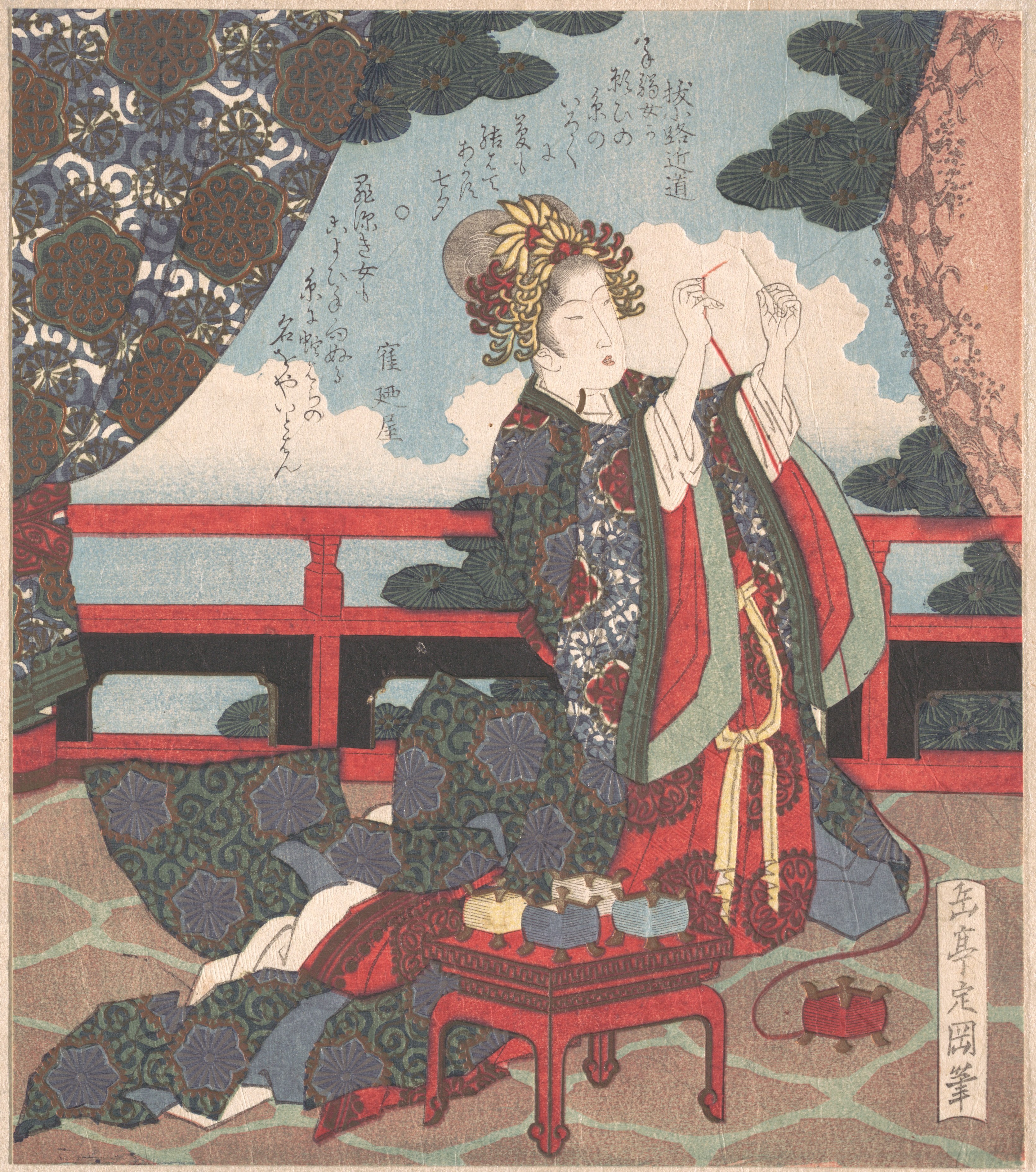
Lady Threading Needle on Verandah
- Date:
- 19th century
- Medium:
- Woodblock print (surimono); ink and color on paper
- Source:
- Metropolitan Museum of Art
Description
Lady Threading Needle on Verandah, by Yashima Gakutei, is held by the Metropolitan Museum of Art and exemplifies the seventh-month subject of Tanabata, the Star Festival, when women traditionally prayed for skill in needlework and other arts. The motif of a lady threading a needle on a verandah specifically alludes to the Tanabata custom of kikkoden, the night when threads were strung between bamboo branches and women's craft skills were dedicated to the Weaver Star, Vega. Yashima Gakutei, trained in the Hokusai school under Katsushika Hokusai and active as one of the leading designers in the privately commissioned deluxe surimono format, made the seasonal calendar a central armature of his work. The verandah setting, looking out to garden or sky, gave him an opportunity to dramatize the threshold between domestic interior and the cosmos in which the festival's Weaver and Cowherd stars were meeting across the Milky Way. Surimono printing techniques, including bokashi gradations of evening sky, embossed pattern in the kimono, and metallic pigments on accouterments, would have lent the image the tactile luxury that distinguished surimono from commercial ukiyo-e. The accompanying kyoka verses, typical of the genre, would have linked the visual scene to the Tanabata occasion and to specific poetic conceits favored by the commissioning club. The Hokusai school's compositional discipline organizes the woman's tilted head, the fall of her kimono, and the careful tension of the thread. The Metropolitan Museum's holdings of Gakutei's seasonal surimono make this image part of an essential record of how the deluxe print format engaged the Japanese calendar.
More Prints by Yashima Gakutei


Frequently Asked Questions
Lady Threading Needle on Verandah was created by Yashima Gakutei (八島岳亭) in 19th century.