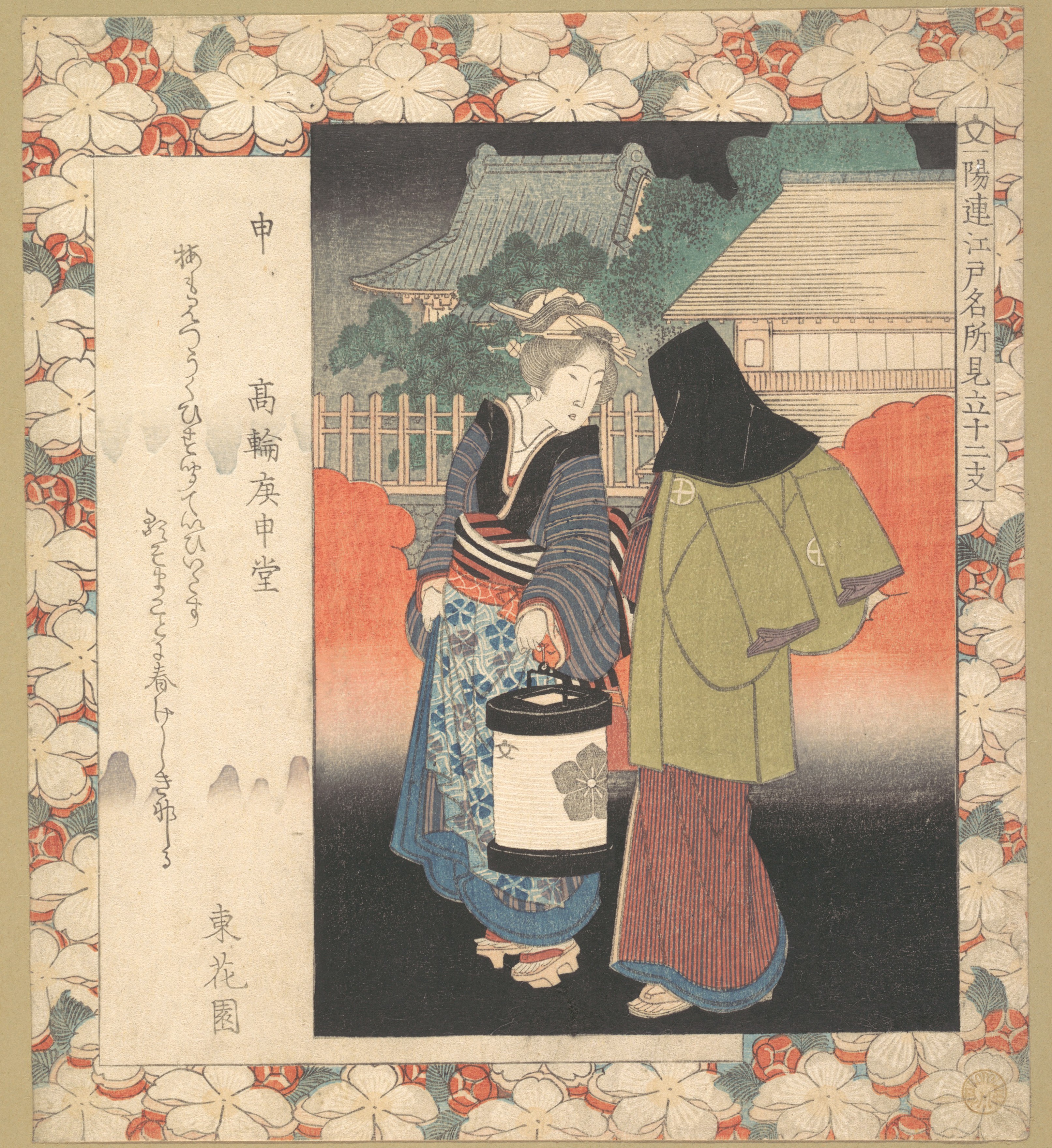
Night Scene
- Date:
- ca. 1830
- Medium:
- Woodblock print (surimono); ink and color on paper
- Source:
- Metropolitan Museum of Art
Description
Night Scene, in the Metropolitan Museum of Art, is a Yashima Gakutei print whose generic title masks the careful attention to mood that gives his nocturnal subjects their distinctive character. Edo-period printmakers used darkness, lantern light, and the suggestion of late hours to amplify emotional or narrative content, whether in scenes of the licensed pleasure quarter, of festivals, or of private moments of contemplation. Gakutei's design draws on this tradition, transforming what might otherwise be an ordinary subject into one charged with quiet suggestion. As a designer in the Hokusai school, Yashima Gakutei trained under Totoya Hokkei and worked within the wider influence of Katsushika Hokusai. The Hokusai school was distinguished by its willingness to extend the range of print subjects beyond fashion and theater into landscape, mythology, and daily life, and its members frequently exploited atmospheric effects to differentiate their work from earlier ukiyo-e conventions. A night scene, with its restricted palette and dependence on selective illumination, gave the printmaker a chance to display compositional discipline: the brightest passages had to be carefully chosen, and the darker areas balanced so that the eye could move through them. Within the surimono tradition that Gakutei principally served, a night scene could carry seasonal or poetic associations. Kyoka verses written in response to such an image might emphasize the contrast between the small lit interior and the vast surrounding dark, or treat the night as a metaphor for inner experience. Surimono frequently used premium materials, including metallic pigments, that responded beautifully to the implied glow of lantern or moonlight. The Metropolitan Museum of Art's record of this Yashima Gakutei sheet preserves a quiet but expressive example of his work.
More Prints by Yashima Gakutei


Frequently Asked Questions
Night Scene was created by Yashima Gakutei (八島岳亭) in ca. 1830.