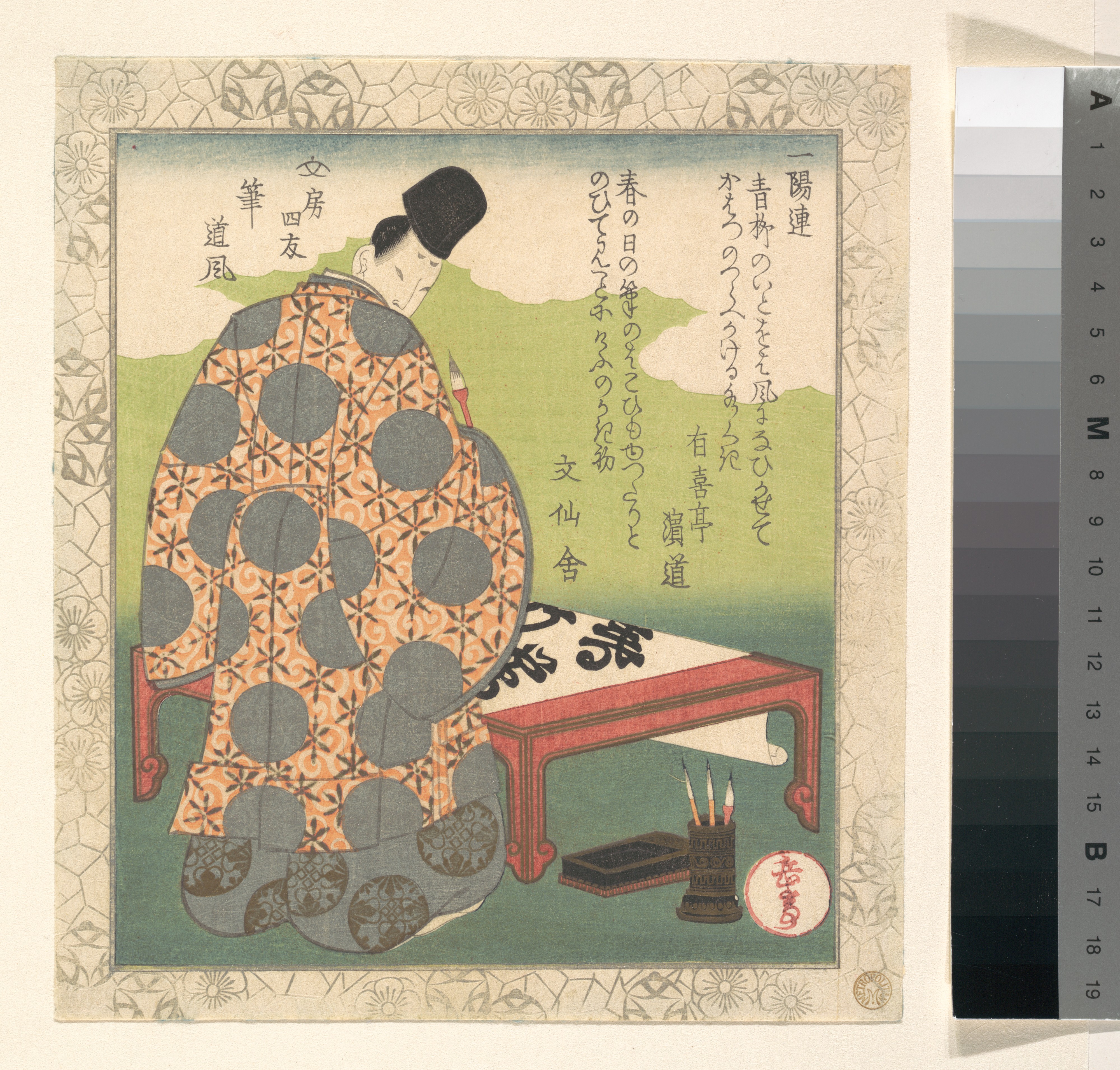
Nobleman Making Calligraphy
- Date:
- ca. 1830
- Medium:
- Woodblock print (surimono); ink and color on paper
- Source:
- Metropolitan Museum of Art
Description
Nobleman Making Calligraphy, in the Metropolitan Museum of Art, presents one of Yashima Gakutei's quietly intimate scenes of cultivated practice. An aristocratic figure is depicted in the act of writing, brush in hand, attention fixed on the paper before him. The composition shows the materials and posture associated with high-status calligraphic exercise: a low writing surface, inkstone, and the careful poise of the body that classical Japanese and Chinese teachings linked to good brushwork. Through such details Gakutei evokes a world in which calligraphy was a moral and aesthetic discipline as well as a literary art. Yashima Gakutei was a prominent designer in the Hokusai school, training under Totoya Hokkei and absorbing the influence of Katsushika Hokusai. He worked extensively in surimono and illustrated books, and his images of poets, scholars, and noblemen at work belong to a wider Edo-period interest in the picturing of literary labor. Within kyoka poetry circles, depictions of calligraphic practice resonated strongly. Members commissioned surimono to accompany their own verses, and they recognized themselves in figures absorbed in the careful production of brushed text. The image of a nobleman writing also embedded contemporary patrons within a longer history of courtly learning. Surimono of this kind often used premium materials and printing techniques, including blind embossing and metallic pigments, that emphasized their function as luxurious keepsakes. The viewer was meant to study the print as carefully as the nobleman studied his page. The Metropolitan Museum of Art's preservation of Nobleman Making Calligraphy ensures that this characteristic Yashima Gakutei design, rooted in the Hokusai school's literary subjects, remains accessible to modern viewers interested in Edo-period print culture.
More Prints by Yashima Gakutei


Frequently Asked Questions
Nobleman Making Calligraphy was created by Yashima Gakutei (八島岳亭) in ca. 1830.