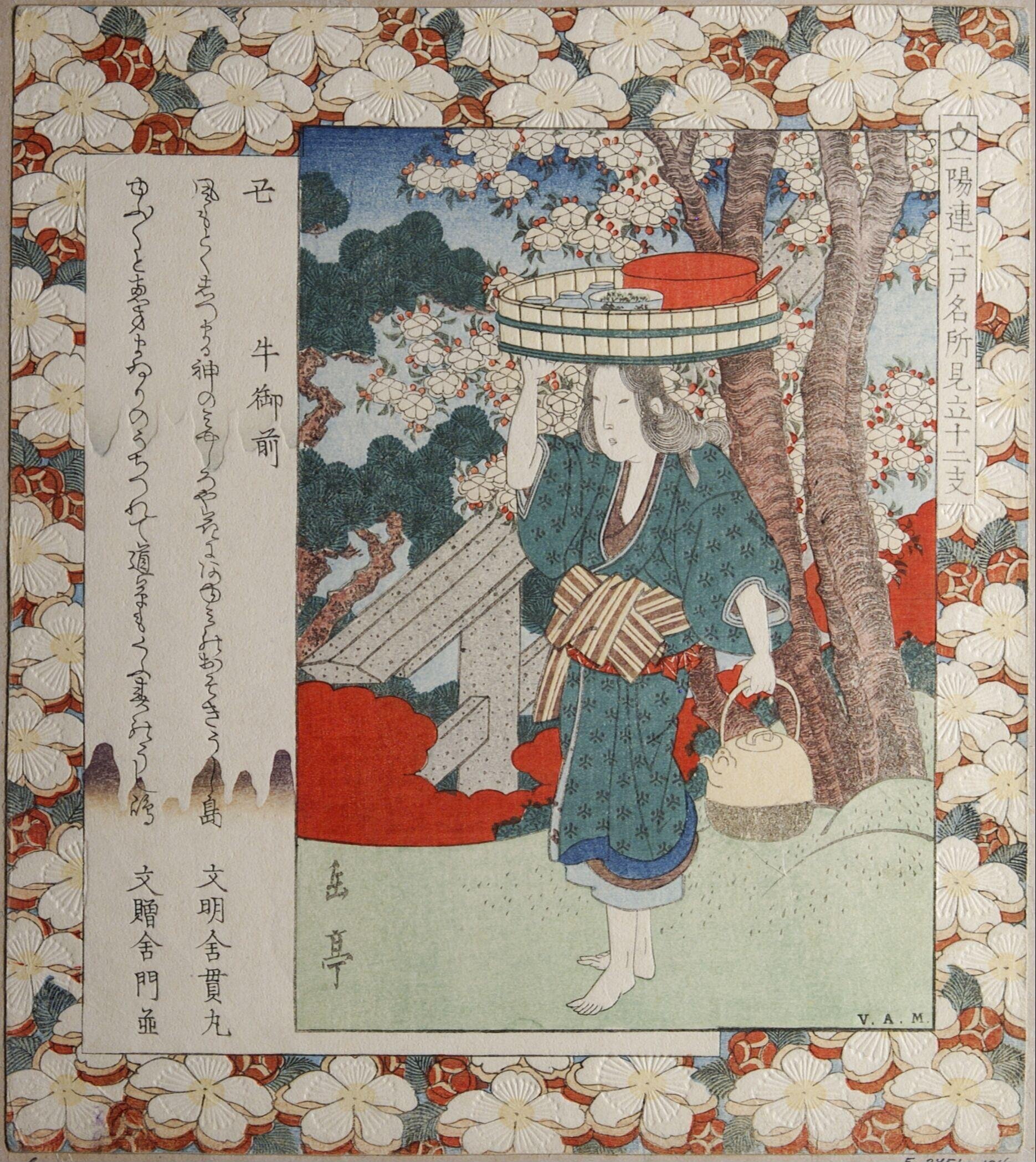
Ox (Ushi)
- Date:
- ca. 1826
- Medium:
- Source:
- Victoria and Albert Museum
Description
Yashima Gakutei designed Ox (Ushi) in 1826 as part of his complete zodiac surimono cycle, contributing the second animal in the twelve-year calendar. The Victoria and Albert Museum holds the print as part of the same suite.
The ox is rendered in solid, calm bulk, its massive body articulated through careful overprinting that suggests the texture of dark hide, with horns curving symmetrically above the broad, low-set head. Gakutei often pairs the animal with seasonal flora — perhaps plum blossoms, given the ox year's New Year associations — and sometimes situates it in references to the deity Tenjin (Sugawara no Michizane), whose riding-ox iconography made him an enduring presence in Japanese visual culture. Whatever the supporting motifs, the ox occupies the composition with grounded dignity.
Gakutei trained in the Hokusai school under Totoya Hokkei, and Katsushika Hokusai's example of treating large quadrupeds with both observational care and decorative economy is visible here. Hokusai's pupils inherited the master's ability to balance bulk and contour, and Gakutei's ox exemplifies that lineage.
Zodiac surimono of this kind were commissioned by kyōka poetry clubs, especially for the New Year of the corresponding animal. The surimono format permitted refined embossing, exact registration, and selective use of metallic pigments, all of which show in the Victoria and Albert Museum's example. The Ushi print sits within the broader cycle of 1826 zodiac designs by Yashima Gakutei, exemplifying how Hokusai school discipline and surimono craftsmanship together produced animal imagery whose visual quality matched its calendrical and cultural resonance for Edo's literate print connoisseurs.
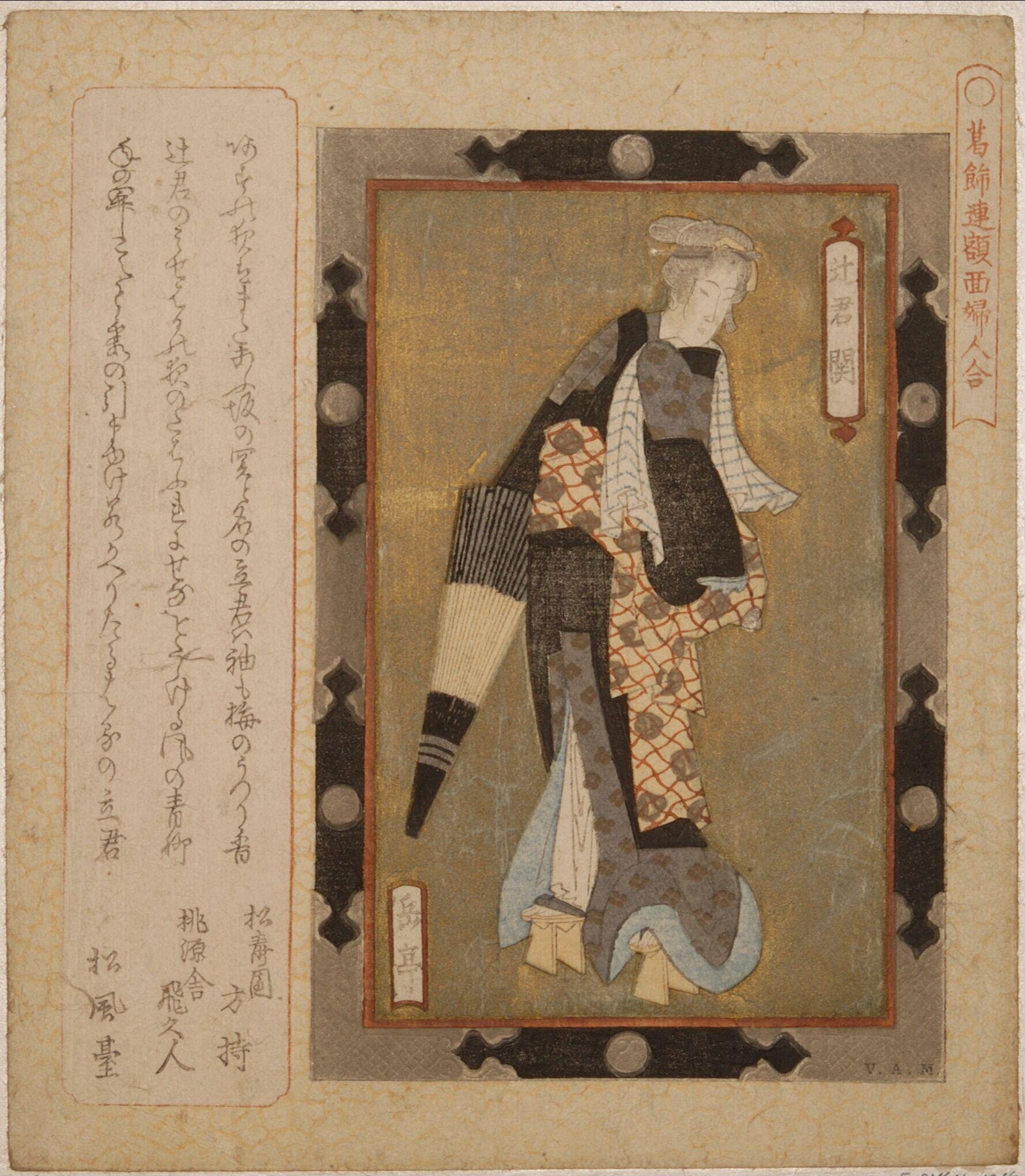
More Prints by Yashima Gakutei


Frequently Asked Questions
Ox (Ushi) was created by Yashima Gakutei (八島岳亭) in ca. 1826.