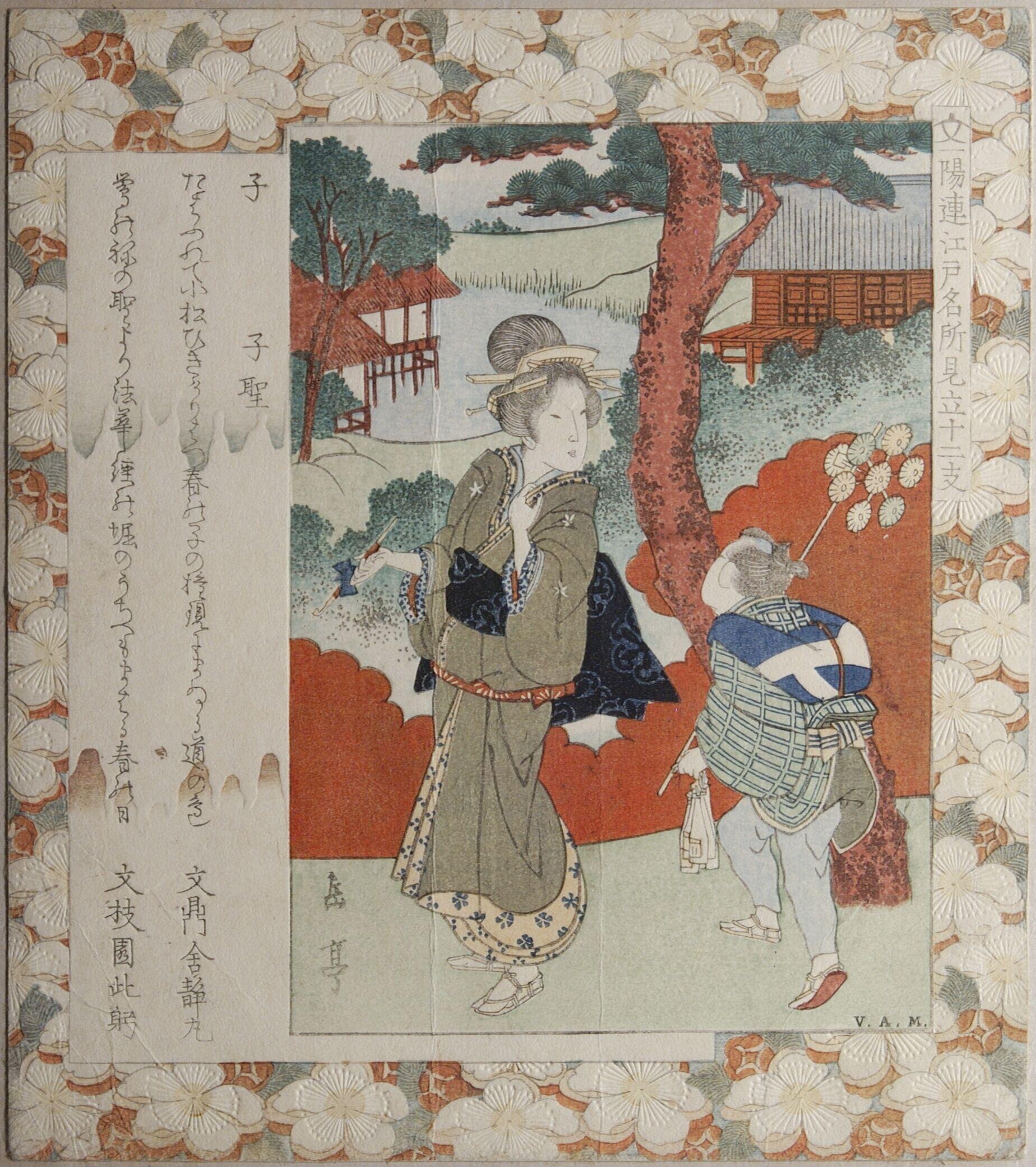
Rat (Ne)
- Date:
- ca. 1826
- Medium:
- Source:
- Victoria and Albert Museum
Description
Yashima Gakutei designed Rat (Ne) in 1826 as part of his complete zodiac surimono series, marking the first of the twelve calendrical animals. The Victoria and Albert Museum preserves the print as part of the same set that includes the artist's tiger, ox, and other zodiac designs.
In East Asian calendar lore the rat begins the twelve-year cycle, and Gakutei accords the small animal a composition of unhurried elegance. The rat is delicately rendered, its fur indicated by overprinted tones and its long tail and rounded ears drawn with precise contours. Gakutei often paired zodiac animals with attributes drawn from folklore: the rat is associated with the deity Daikokuten, the god of wealth, and small touches such as straw bales of rice or other tokens of prosperity often appear in such designs.
Gakutei trained in the Hokusai school under Totoya Hokkei and absorbed Katsushika Hokusai's example of treating even modest creatures with the same compositional rigor reserved for grand figural subjects. Hokusai's surviving sketches and prints of small animals demonstrate the kind of close observation that surimono designers like Gakutei brought to such motifs. The result is a print in which the rat reads as both an observed animal and a richly symbolic emblem.
The surimono format invited refined treatment — careful color registration, gauffrage, and occasional metallic pigments — appropriate to the auspicious New Year commissions for which zodiac prints were customarily produced. Members of kyōka poetry clubs exchanged such images alongside their own verses, often punning on the animal's name or attributes. The Victoria and Albert Museum's impression preserves Yashima Gakutei's modest but elegant inauguration of his zodiac set within the disciplined craft of the Hokusai school surimono tradition.
More Prints by Yashima Gakutei


Frequently Asked Questions
Rat (Ne) was created by Yashima Gakutei (八島岳亭) in ca. 1826.