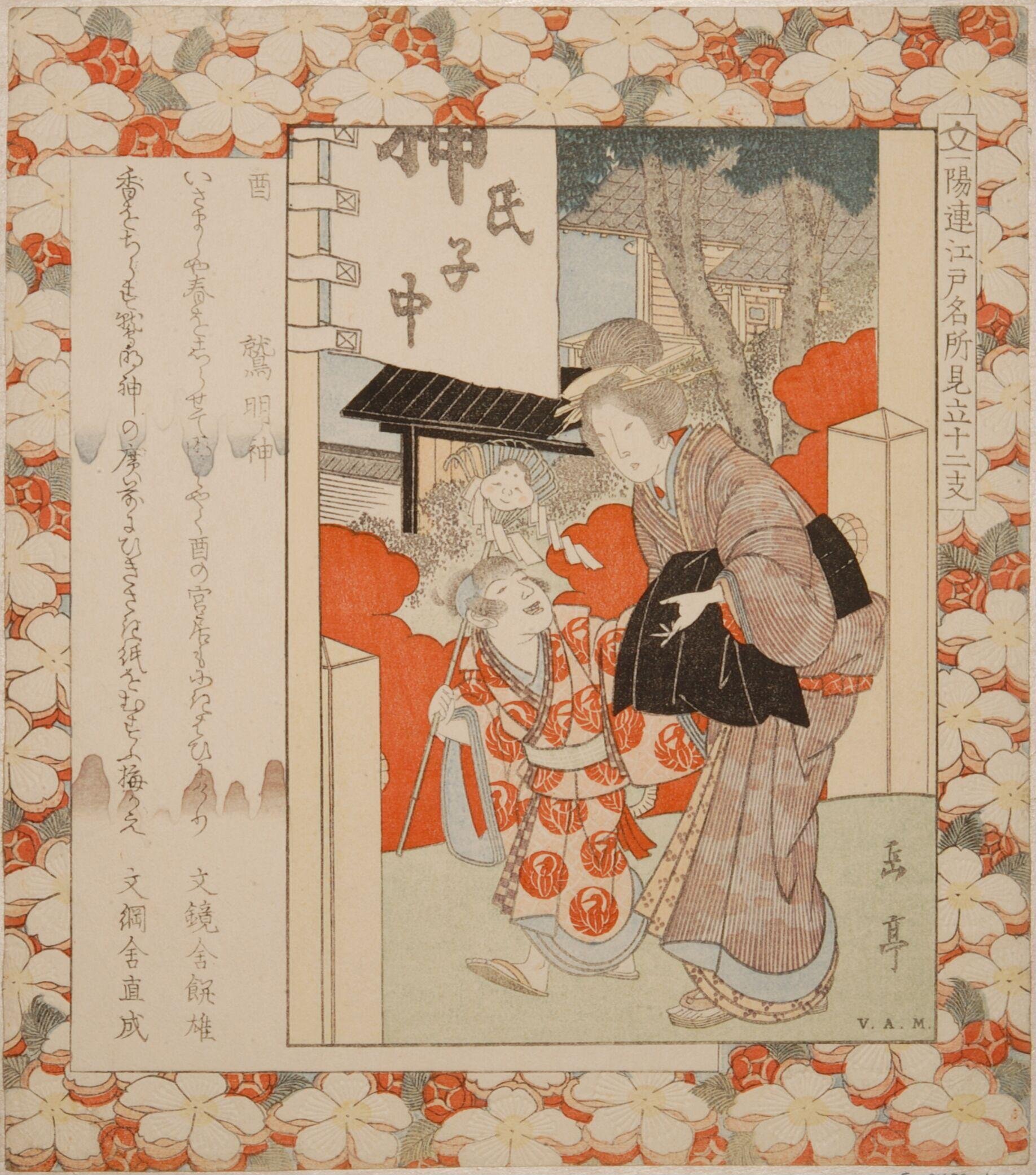
Rooster (Tori)
- Date:
- ca. 1826
- Medium:
- Source:
- Victoria and Albert Museum
Description
Yashima Gakutei designed Rooster (Tori) in 1826 as part of his complete zodiac surimono cycle. The Victoria and Albert Museum preserves the print within its broader holdings of Gakutei's calendar designs.
The rooster, tenth in the East Asian zodiac, is rendered with the upright bearing and elaborate plumage that designers of the period favored. Gakutei pays particular attention to the bird's cascading tail feathers, comb, and wattles, using carefully registered color blocks to suggest iridescence without sacrificing clear silhouette. The pose conveys vigilance and pride, qualities long associated with the rooster in Japanese folk culture, where its dawn crowing carries strong religious and protective connotations.
Gakutei trained in the Hokusai school under Totoya Hokkei, and Katsushika Hokusai's many studies of poultry — preserved in sketches, picture books, and surimono of his own — offered a vocabulary of poses and feather patterns that Hokusai's pupils inherited and adapted. Hokusai school designers approached birds with a blend of naturalistic observation and stylized line that suits the surimono format's premium on craftsmanship and design.
Zodiac sets were prized commissions for kyōka poetry clubs, particularly around the New Year of the corresponding animal. The surimono format permitted detailed overprinting, embossing, and occasional metallic pigments that brought the rooster's plumage to vivid life. The Victoria and Albert Museum's impression demonstrates how Yashima Gakutei adapted Hokusai school avian iconography to the refined demands of surimono, producing an image of the rooster that doubles as both auspicious calendrical emblem and accomplished exercise in decorative animal portraiture for Edo's poetry-club connoisseurs.
More Prints by Yashima Gakutei


Frequently Asked Questions
Rooster (Tori) was created by Yashima Gakutei (八島岳亭) in ca. 1826.