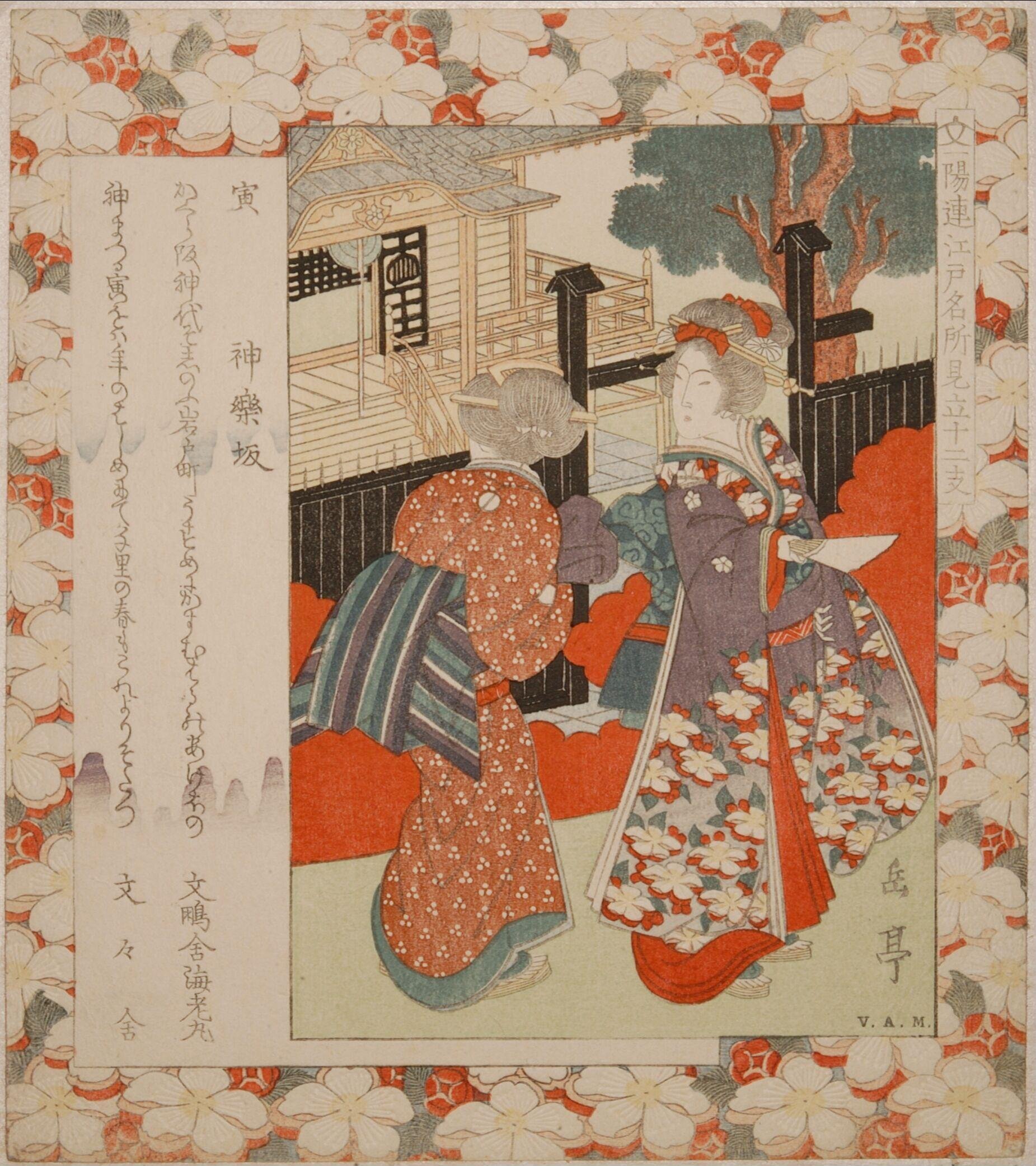
Tiger (Tora)
- Date:
- ca. 1826
- Medium:
- Source:
- Victoria and Albert Museum
Description
Yashima Gakutei designed Tiger (Tora) in 1826 as part of a celebrated zodiac series in which the twelve animals of the East Asian calendar were each given a separate surimono. The print is preserved at the Victoria and Albert Museum, which holds the complete set among its substantial Gakutei holdings.
The tiger is shown in a tightly coiled posture, the stripes of its coat carefully registered through overprinting and the bunched muscles of its haunches articulated with confident drawing. Gakutei concentrates compositional energy on the animal itself, sometimes paired with a bamboo grove or a craggy rock that anchors it in the landscape conventions associated with the tiger in East Asian painting. The figure's claws, whiskers, and the alert turn of the head exhibit the precision expected of high-quality surimono.
Gakutei studied in the Hokusai school under Totoya Hokkei, and his treatment of the tiger reflects Katsushika Hokusai's well-known fascination with vigorous animal subjects. Edo designers approached the tiger, an animal not native to Japan, through earlier Chinese painting models filtered through Japanese painters of the Maruyama and Kanō traditions, and Gakutei mediates those legacies with a print designer's clarity of contour.
Zodiac sets were favored subjects for surimono because they offered twelve discrete commissions, each ideal for circulation among kyōka poetry clubs around the New Year of the corresponding animal. The Victoria and Albert Museum's preservation of the complete cycle, including this Tiger, allows scholars to study how Yashima Gakutei handled the iconography of each creature within a unified visual program. The Tora print exemplifies the synthesis of Hokusai school discipline with surimono's craftsmanship in the service of one of East Asia's most enduring calendrical traditions.
More Prints by Yashima Gakutei


Frequently Asked Questions
Tiger (Tora) was created by Yashima Gakutei (八島岳亭) in ca. 1826.