
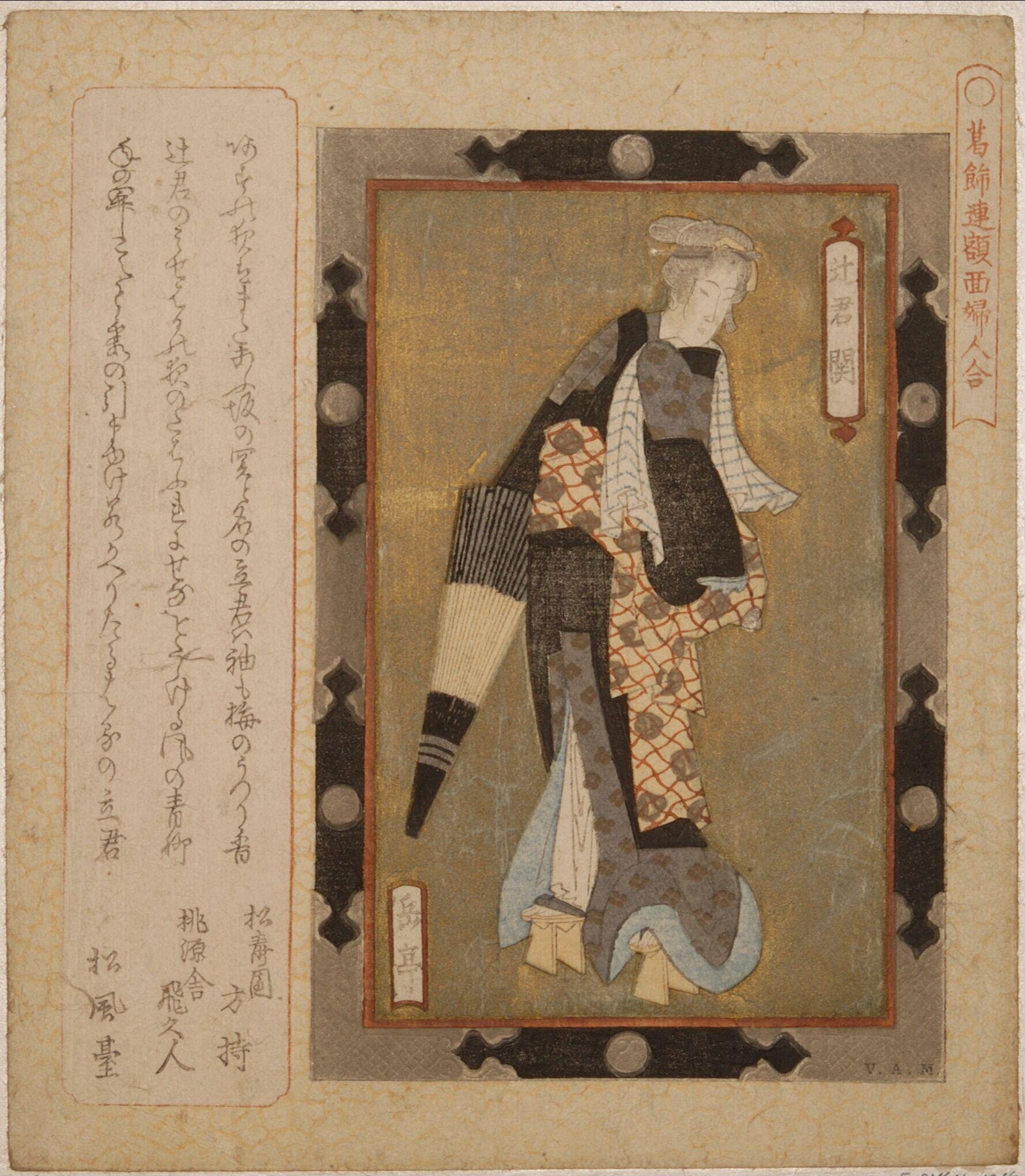
Toasted Mochi (a kind of rice food used during the New Year season)
- Date:
- 19th century
- Medium:
- Part of an album of woodblock prints (surimono); ink and color on paper
- Source:
- Metropolitan Museum of Art
Description
Toasted Mochi, in the collection of the Metropolitan Museum of Art, is a small but pointedly seasonal work by Yashima Gakutei. The image centers on toasted mochi, the cooked rice cakes that occupy a central place in Japanese New Year celebrations. Mochi appears in offerings to household deities, in special soups and snacks, and in the social rituals that mark the turning of the year. By isolating these foods as the principal subject, Gakutei joins a long tradition of New Year–themed surimono in which deceptively humble objects carry significant cultural weight. As a leading designer of surimono and a member of the Hokusai school, Yashima Gakutei was deeply familiar with the visual vocabulary of seasonal celebration. His teacher Totoya Hokkei and the broader circle around Katsushika Hokusai produced numerous New Year prints for kyoka poetry clubs, where members commissioned images to accompany their verses on the renewal of the year. Toasted mochi was a natural subject for these gatherings: it stood for prosperity, longevity, and the auspicious beginning of the calendar. Gakutei's compositional restraint, the careful disposition of forms within the small sheet, and the typical surimono use of fine printing techniques such as embossing and metallic pigments would all have enhanced the image's value as a luxurious keepsake. The Metropolitan's holding of this print preserves a quiet example of how Yashima Gakutei used everyday objects to evoke an entire season's worth of social meaning. The work illustrates how the Hokusai school's surimono tradition could transform a New Year snack into a vehicle for sophisticated cultural commentary.
More Prints by Yashima Gakutei


Frequently Asked Questions
Toasted Mochi (a kind of rice food used during the New Year season) was created by Yashima Gakutei (八島岳亭) in 19th century.