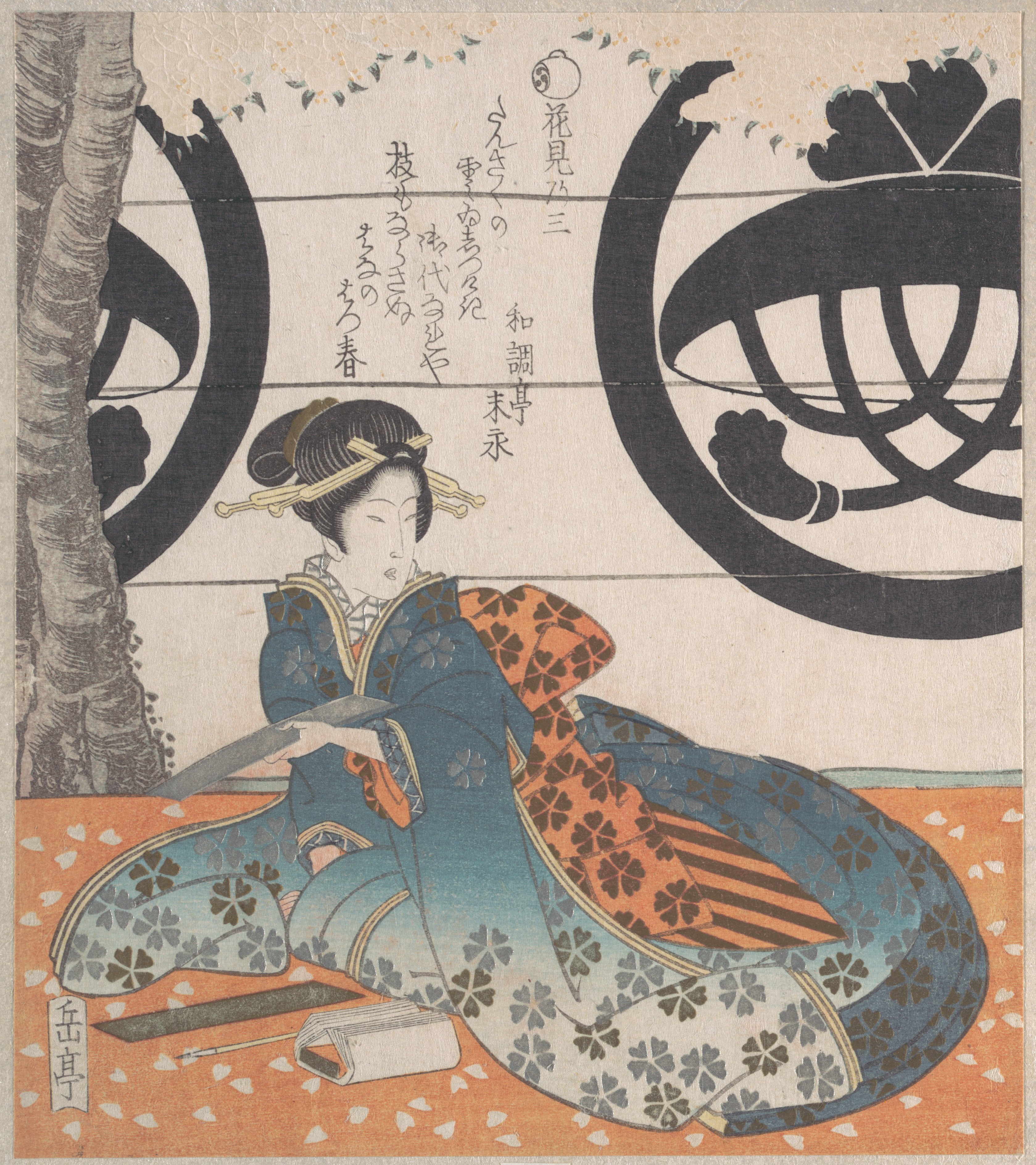
Woman Seated Under a Cherry Tree About to Write a Poem on a Sheet of Paper for Poem Writing (Tanzaku)
- Date:
- 19th century
- Medium:
- Part of an album of woodblock prints (surimono); ink and color on paper
- Source:
- Metropolitan Museum of Art
Description
Woman Seated Under a Cherry Tree About to Write a Poem on a Sheet of Paper for Poem Writing (Tanzaku), by Yashima Gakutei, is held by the Metropolitan Museum of Art and brings together the spring cherry-blossom (sakura) season, the practice of inscribing poetry on the long vertical tanzaku slips, and the deeply Japanese association of poetic composition with the natural calendar. Tanzaku, hung from blossoming branches or exchanged among friends, were the everyday vehicle of waka and kyoka composition; depicting a woman about to write on one is to depict the act of poetry itself. As a designer trained in the Hokusai school under Katsushika Hokusai and a leading specialist in the deluxe privately commissioned surimono format, Yashima Gakutei made literary subjects a constant theme of his work, and his patrons, kyoka poetry clubs themselves, would have appreciated the recursive resonance of the image. Surimono printing techniques, including bokashi gradations of cherry blossoms, embossed accents in the kimono, and metallic pigments on accouterments, would have lent the design the tactile luxury characteristic of the format. The Hokusai school's discipline of figural composition organizes the woman's tilted head, the fall of her kimono, the angle of the brush, and the curve of the blossoming branch above. The accompanying kyoka verses, integral to the surimono idiom, would have completed the image's literary play, perhaps offering the verse the woman might write. The Metropolitan Museum's holdings of Gakutei's poetry-themed surimono provide an essential resource for studying how the Hokusai school engaged the practice of poetic exchange within the privately distributed deluxe print tradition.
More Prints by Yashima Gakutei


Frequently Asked Questions
Woman Seated Under a Cherry Tree About to Write a Poem on a Sheet of Paper for Poem Writing (Tanzaku) was created by Yashima Gakutei (八島岳亭) in 19th century.