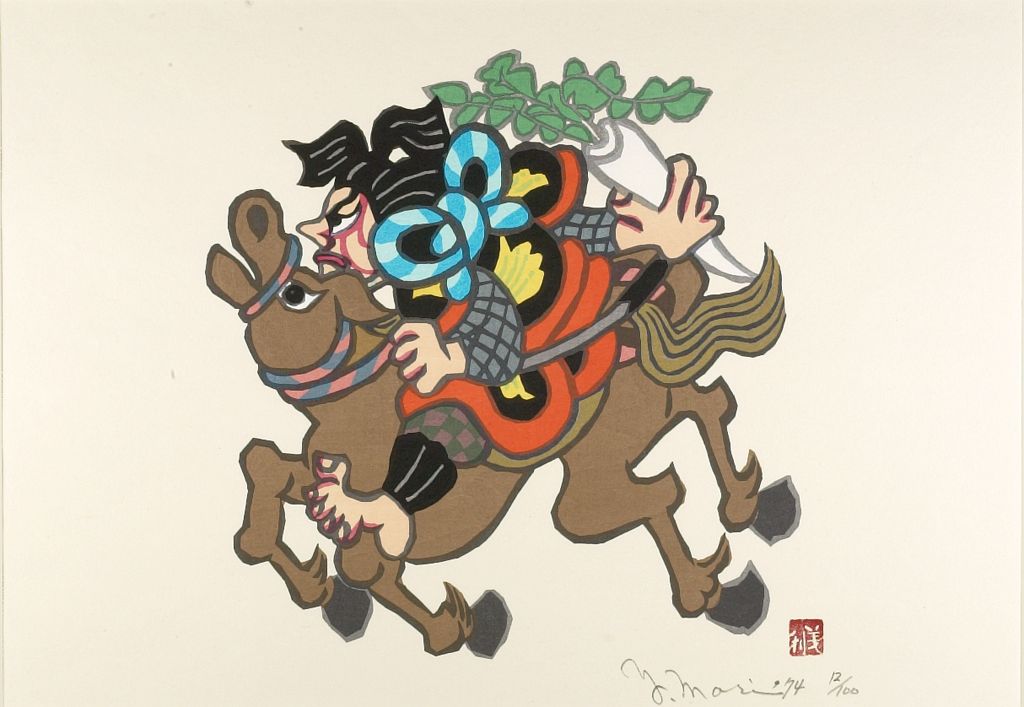
Goro
- Medium:
- Woodblock print
- Source:
- Harvard Art Museum
- Image courtesy of
- Harvard Art Museum
Description
Goro refers almost certainly to Soga no Goro Tokimune, one of the two brothers celebrated in the Soga Monogatari, a revenge cycle among the most enduring subjects in Japanese popular performance and printmaking. Mori's version likely presents the warrior in full armor or battle readiness, drawing on an iconographic tradition established in Edo-period musha-e and theatrical imagery. Unlike nineteenth-century precedents by artists such as Kuniyoshi, Mori would have approached the subject through a sosaku-hanga sensibility — personal interpretation, simplified line, and limited palette rather than the densely patterned polychrome surfaces of nishiki-e. The warrior's attributes — kumadori-style facial expression, eboshi cap or kabuto helmet, sword — would anchor viewer recognition of the figure. Mori's self-carved blocks and hand-printed impressions give the image a directness of surface texture absent from commercially produced prints.
More Prints by Yoshitoshi Mori

More Figures Prints
Featured in Collections
Curated cross-cuts that include this print.
Frequently Asked Questions
Goro was created by Yoshitoshi Mori (森義利).
Goro depicts figures and warriors.