
Warrior God
- Medium:
- Mokuhanga (Japanese woodblock)
- Image courtesy of
- Saru Gallery
Description
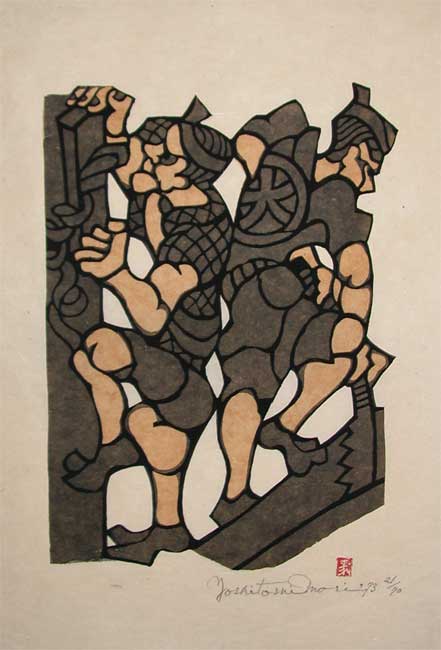
The title most likely refers to a Buddhist or Shinto guardian deity — Fudo Myoo, Bishamonten, or one of the Nio temple guardians — figures whose muscular bodies and fierce expressions translate readily into Mori's vocabulary of strong outline and flat color. Such deities appear repeatedly across his oeuvre, drawn from the folk-religious world of festival masks, votive imagery, and rural shrine iconography that Mori studied throughout his life. The composition would typically center the figure frontally or in stable contrapposto, with attributes (sword, vajra, rope) rendered as graphic emblems rather than naturalistic objects. Drapery and armor flatten into pattern, reflecting Mori's background in katazome stencil dyeing, where complex forms must resolve to cuttable shapes. Within the sosaku-hanga movement's emphasis on the artist's individual hand at every production stage, Mori's warrior-god subjects participate in a wider postwar interest in Japanese folk traditions — paralleling the mingei (folk craft) movement of Yanagi Soetsu — as a counterweight to imported modernism. The graphic concentration on outline rather than gradation distinguishes the print from contemporaneous shin-hanga treatments of similar subjects.
More Prints by Yoshitoshi Mori

More Warriors Prints
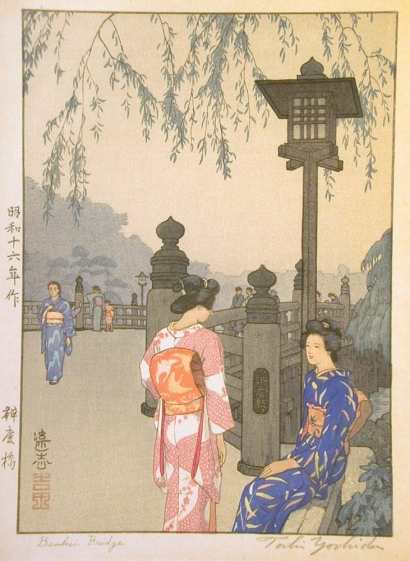
Benkei Bridge
Woodblock print

Saishin, from the series "Fashionable Women as the One Hundred and Eight Heroes of the Water Margin (Fuzoku onna Suikoden, ippyakuhachinin no uchi)"
c. 1828/30
Color woodblock print; surimono
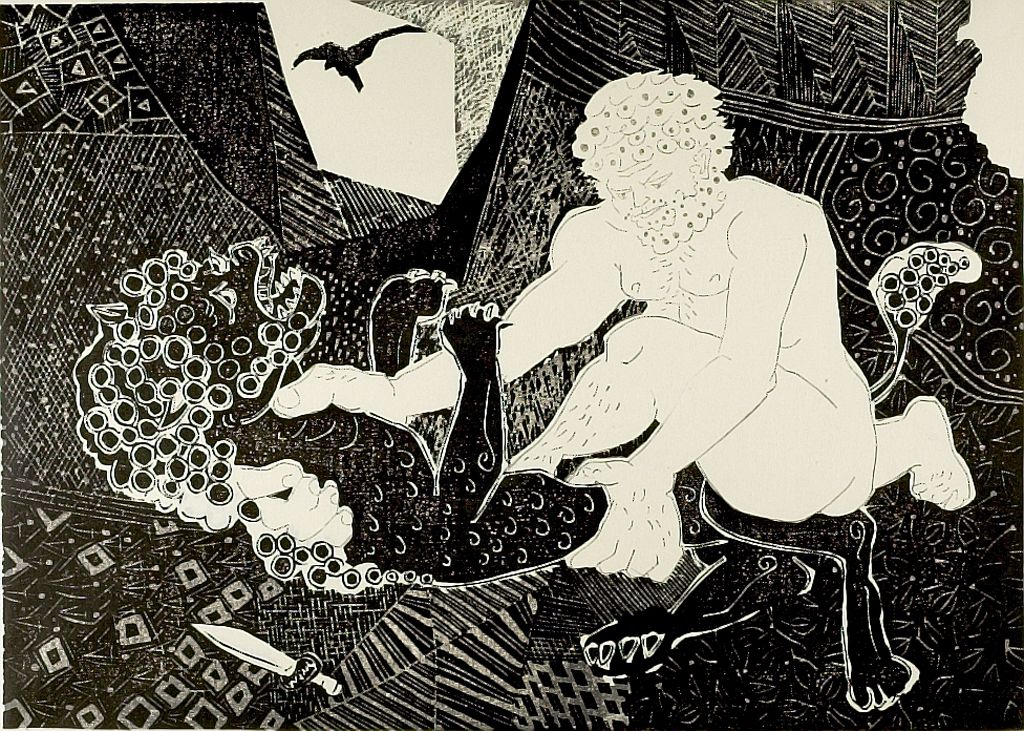
Herakles, Shôwa period, dated 1965?
Woodblock print
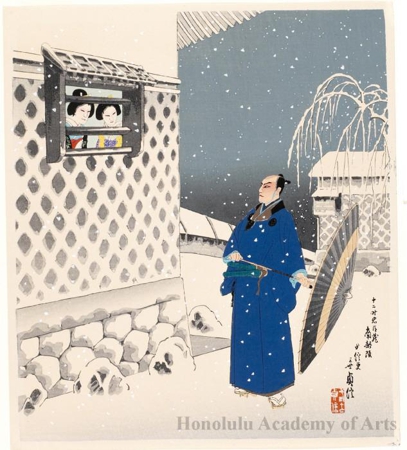
Chüshingura in Twelve Months
Woodblock print
Featured in Collections
Curated cross-cuts that include this print.
Frequently Asked Questions
Warrior God was created by Yoshitoshi Mori (森義利).
Warrior God depicts warriors.