
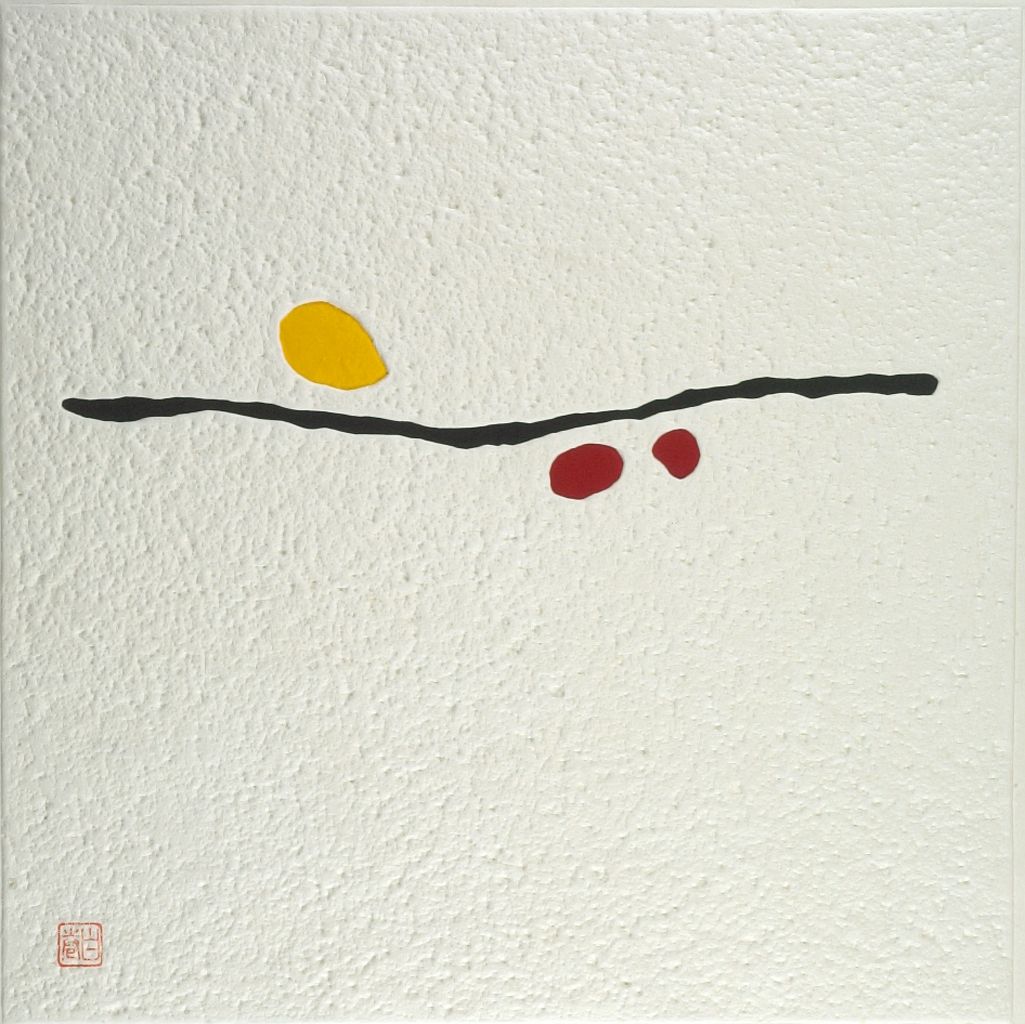
Tsugi Hagi I
by Yuko Kimura
- Medium:
- Etching, paper collage on washi
- Image courtesy of
- The Verne Collection
Description
Tsugi hagi—meaning patchwork or piecing together—names the traditional practice of joining disparate fabric or paper scraps into a unified whole, a technique with deep roots in Japanese textile and repair culture. In this first work of the series, Kimura makes the collage process itself the explicit subject: fragments of washi, each with its own fiber content, color, and surface history, are assembled across the print surface and integrated with etched marks. The seams and overlaps between collage elements are left visible rather than concealed, reflecting the wabi-sabi principle that repair and accumulation carry aesthetic value. The etching beneath unifies the composition without erasing the individuality of each paper piece. As an inaugural work in a series, Tsugi Hagi I establishes the formal vocabulary—visible joinery, material heterogeneity—that subsequent works in the sequence develop.
More Prints by Yuko Kimura
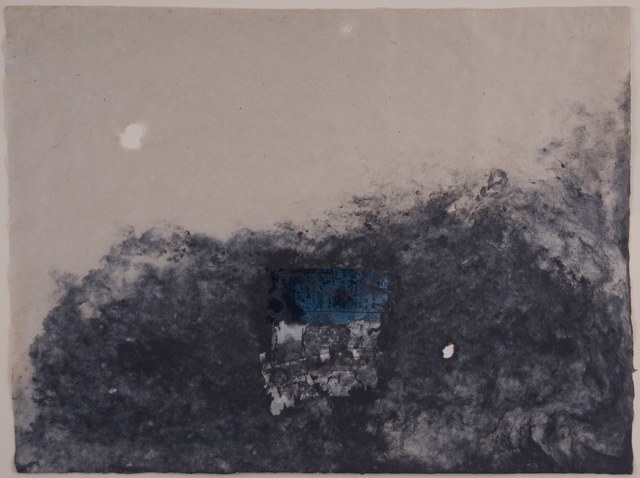
Waterscape
2011
Handmade paper, natural Abaca and black denim pulp, indigo aquatint on late Edo period Japanese bookpage embedded
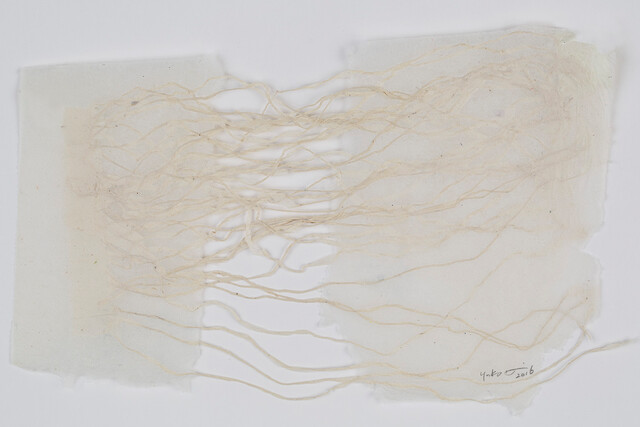
Twist Twist
2016
Paper threads embedded in Abaca handmade paper
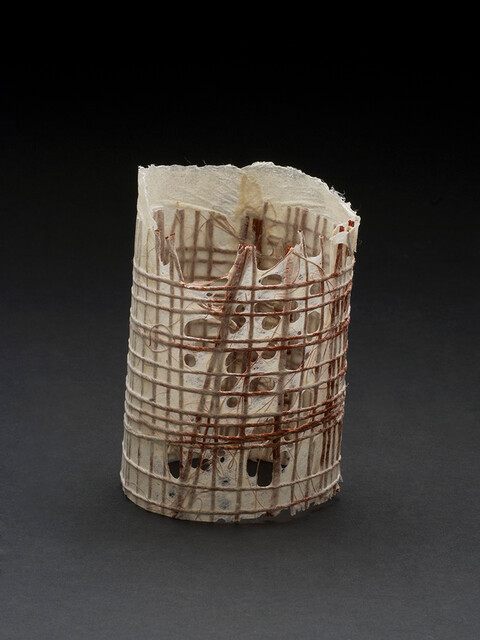
Paper Windows no. 2
2013
Thread and Abaca handmade paper
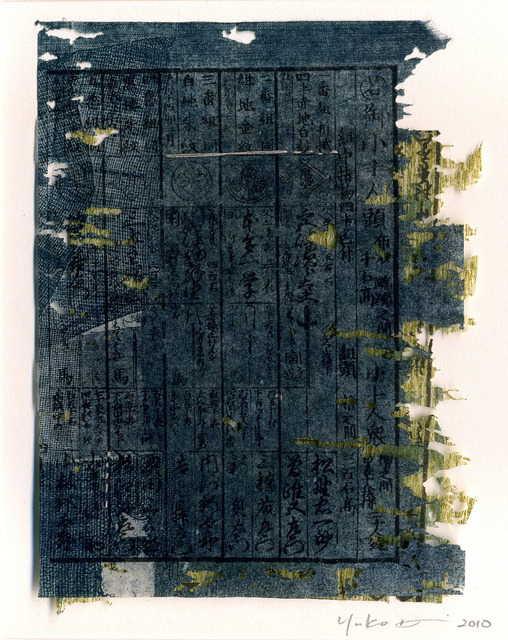
Indigo No. 6
2010
Collage of etching on old book pages from Japan
More Abstract Prints

![[abstract composition with diagonal woodgrain] by Gen Yamaguchi](https://1.api.artsmia.org/800/135949.jpg)
Frequently Asked Questions
Tsugi Hagi I was created by Yuko Kimura.
Tsugi Hagi I depicts abstract.