Nihonbashi (日本橋)
15 prints by 12 artists
About Nihonbashi
Nihonbashi is a district in central Tokyo, in present-day Chuo Ward, organized around the historic Nihonbashi bridge over the Nihonbashi River (formerly part of the Edo river system, now a tributary of the Sumida system). The bridge was first constructed in 1603 in conjunction with the founding of Edo as the Tokugawa shogunal capital, and from that date it served as the official kilometer-zero point of the five great highways of Edo Japan (the Gokaido), the Tokaido, Nakasendo, Nikko Kaido, Oshu Kaido, and Koshu Kaido, with all road distances measured from a marker at the foot of this bridge that is preserved today as the Nihon Doro Genpyo (Japan Road Zero Marker), still set into the modern bridge with the official distances of the historical highways from the central point. The surrounding district became the principal mercantile zone of Edo, housing the city's central Uogashi fish market through 1923 (when it was relocated to Tsukiji after the Great Kanto Earthquake), the Mitsui (founders of the Mitsui Echigoya kimono store of 1673, the predecessor of the Mitsukoshi department store) and other major merchant houses including the Shirokiya and the Daimaru, and the offices of the great publishers of the late Edo period, including Tsutaya Juzaburo's Koshodo at the southeast corner of Tori-Aburacho and Nishimuraya Yohachi's Eijudo, who issued the principal ukiyo-e print designs of Utamaro, Sharaku, Hokusai, and others. The bridge was rebuilt repeatedly in wood across the Edo period after recurring fires and finally in stone in 1911, with the present granite double-arched span dating to that Meiji-era reconstruction and incorporating bronze ornaments including the lion statues and the kirin sculptures by Watanabe Osao. In the postwar period the bridge was overshadowed by the Shuto Expressway elevated viaduct, completed in 1964 in preparation for the Tokyo Olympics, which passes directly above it. For Japanese printmaking Nihonbashi figures across the entire span of the meisho-e tradition. Hokusai placed Nihonbashi in his Thirty-Six Views of Mount Fuji in the celebrated sheet Nihonbashi Bridge in Edo (Edo Nihonbashi), in which the bridge appears as the principal foreground motif with the distant Mount Fuji visible upriver above the receding rows of merchant storehouses, embedding the mercantile heart of the city into the Fuji iconography. Utagawa Hiroshige treated Nihonbashi as the first station of his Fifty-Three Stations of the Tokaido issued by Hoeido around 1833-1834, in which the bridge appears at dawn as the starting point of the great road with a procession of samurai and the morning fish-market traffic crossing, and again in One Hundred Famous Views of Edo (Meisho Edo hyakkei) of 1856-1858, in which Nihonbashi Bridge in Snow (Nihonbashi yuki-bare) records the bridge under heavy snowfall with the procession of an early-morning fish market and the curving canal of the surrounding district. Hiroshige III, Inoue Yasuji, and Kobayashi Kiyochika produced Meiji-period kaika-e treating the bridge under its new stone form and the surrounding modernized district. Shin-hanga and sosaku-hanga artists returned to Nihonbashi in their Tokyo sets, with Kawase Hasui producing rain and snow views and Onchi Koshiro and others treating the district within the One Hundred Views of New Tokyo project. The visual character of Nihonbashi in prints is built on the arched span of the bridge (whether wooden or stone), the canal and boats below, the surrounding merchant houses and Edo-period white-walled kura storehouses, the procession of travelers, samurai, and packhorses at the foot of the road, and after the Meiji period the streetcars, electric lamps, and stone parapet of the rebuilt bridge. Contemporary Nihonbashi preserves the 1911 stone bridge and the surrounding mercantile district including the original Mitsukoshi flagship building of 1914 and the Nihonbashi Mitsui Tower, though the elevated expressway above the bridge significantly alters the historical view, with current planning efforts since the late 2010s seeking to relocate the highway underground and restore the open sky above the bridge in time for the centennial.
Prints Depicting Nihonbashi (15)
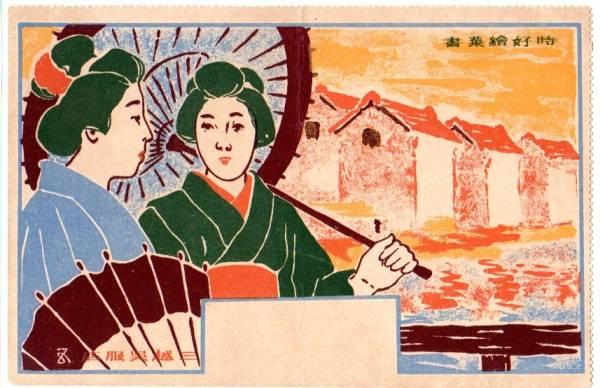
Bijin at Nihonbashi — 日本橋美人
Not set
Woodblock print
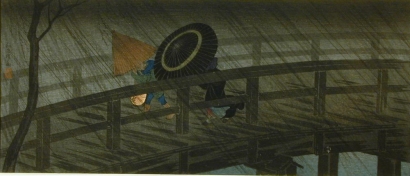
Night at Nihonbashi
日本橋の夜
c. 1920
Color woodblock print

Night at Nihonbashi Bridge (Tokyo)
1946
Color woodblock print

Nihon Bridge: Morning Scene (Nihonbashi, asa no kei), from the series "Fifty-three Stations of the Tokaido Road (Tokaido gojusan tsugi no uchi)," also known as the Hoeido Tokaido
c. 1833/34
Color woodblock print; oban
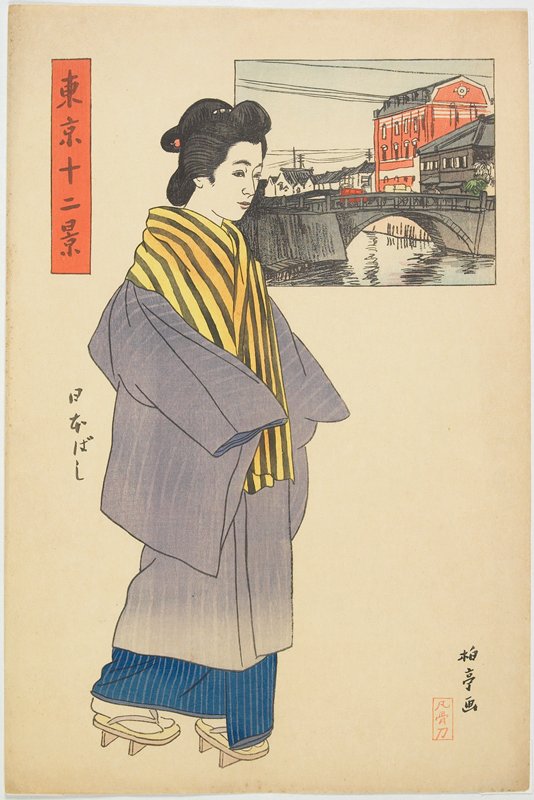
Nihonbashi
c. 1914–1916
Woodblock print, ink and color on paper
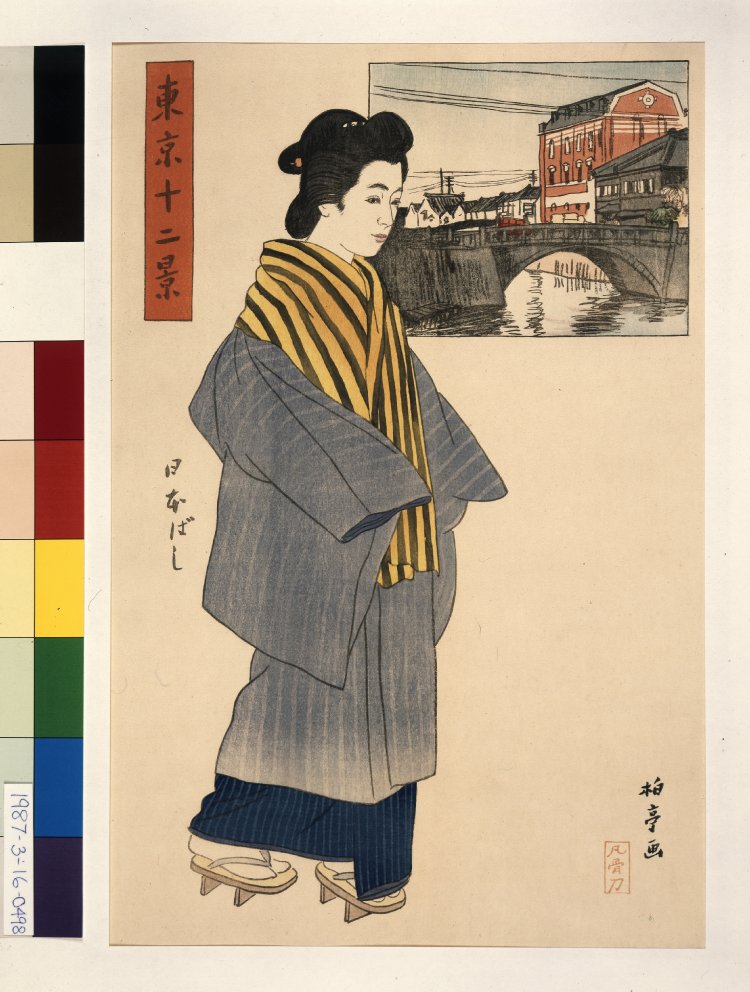
Nihonbashi (Japan Bridge) / Tokyo junikei (Twelve Views of Tokyo)
Woodblock print
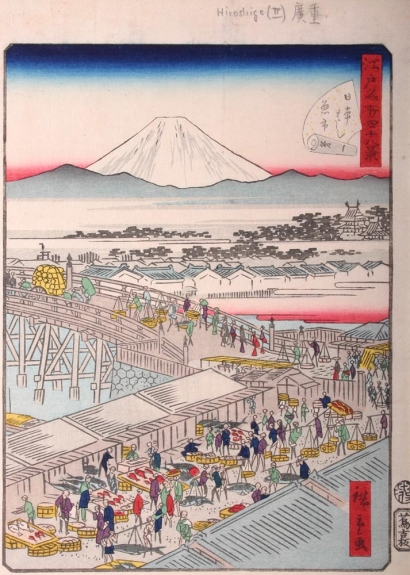
Nihonbashi #1
Woodblock print
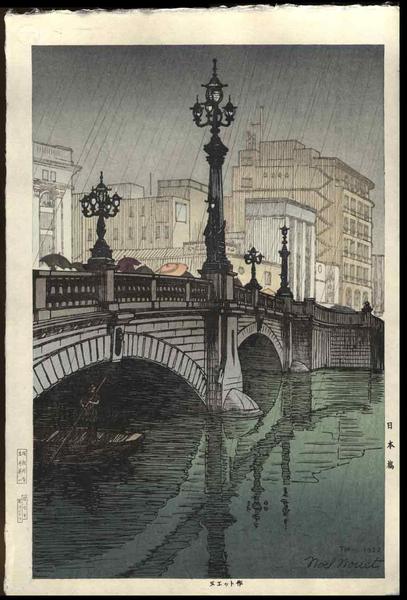
Nihonbashi Bridge
Woodblock print
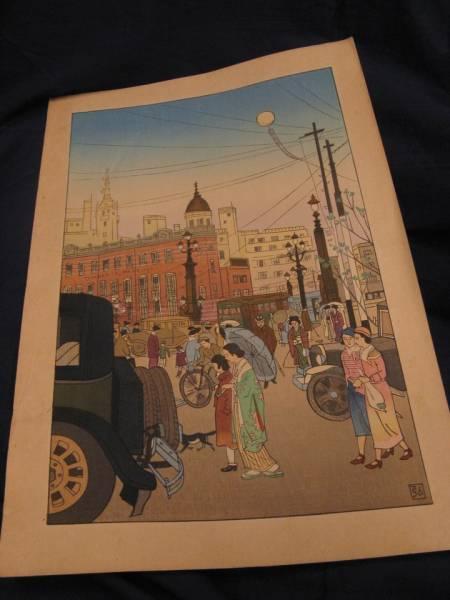
Nihonbashi in Early Spring — 早春の日本橋
Woodblock print
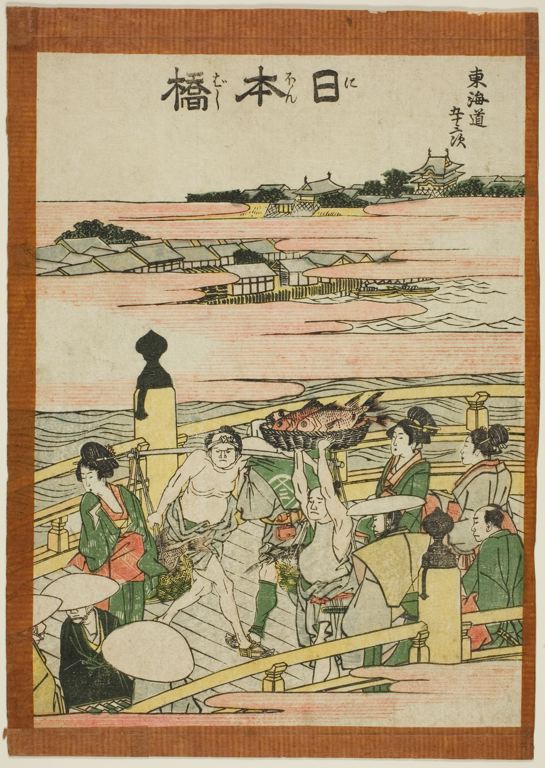
Nihonbashi, from the series Fifty-three Stations of the Tokaido (Tokaido gojusan tsugi)
Woodblock print

Nihonbashi, Shinagawa, Kawasaki, and Kanagawa, from the series "Famous Places on the Fifty-three Stations of the Tokaido, Four Stations (Tokaido gojusan eki yonshuku meisho)"
c. 1830/35
Color woodblock print; oban
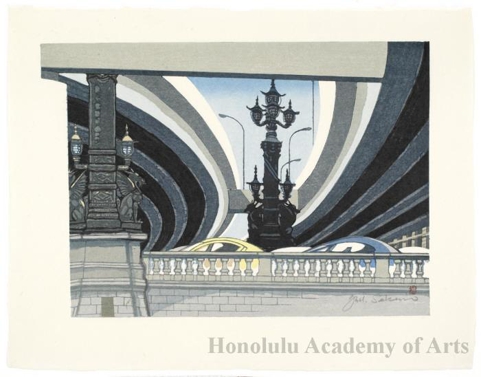
Nihonbashi: Expressway
Woodblock print

Rain at Nihonbashi Bridge (Nihonbashi no hakuu), from the series "Famous Places in the Eastern Capital (Toto meisho)"
c. 1832/38
Color woodblock print; oban

Spring Snow at Hamacho Park in Nihonbashi (Nihonbashi-ku Hamacho koen shunsetsu) from the series "One Hundred Views of Great Tokyo in the Showa Era (Showa dai Tokyo fukei hyaku zue hanga)"
1940
Color woodblock print; oban
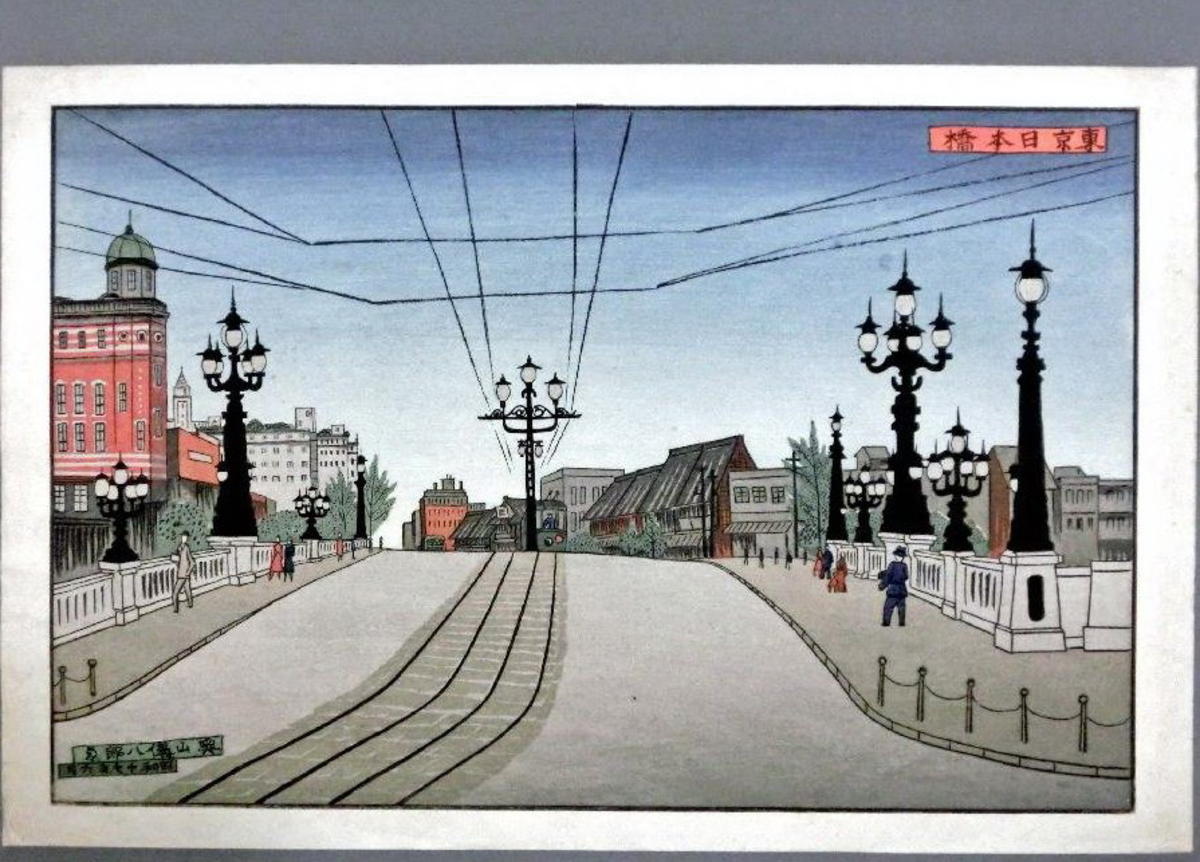
Tokyo Nihonbashi Bridge — 東京日本橋
Woodblock print
Artists Who Depicted Nihonbashi (12)

Gihachiro Okuyama
奥山儀八郎
1907–1981

Hashiguchi Goyo
橋口五葉
1880–1921
Hiratsuka Un'ichi
平塚運一
1895–1997
Hiromitsu Nakazawa
中沢弘光
1874–1964
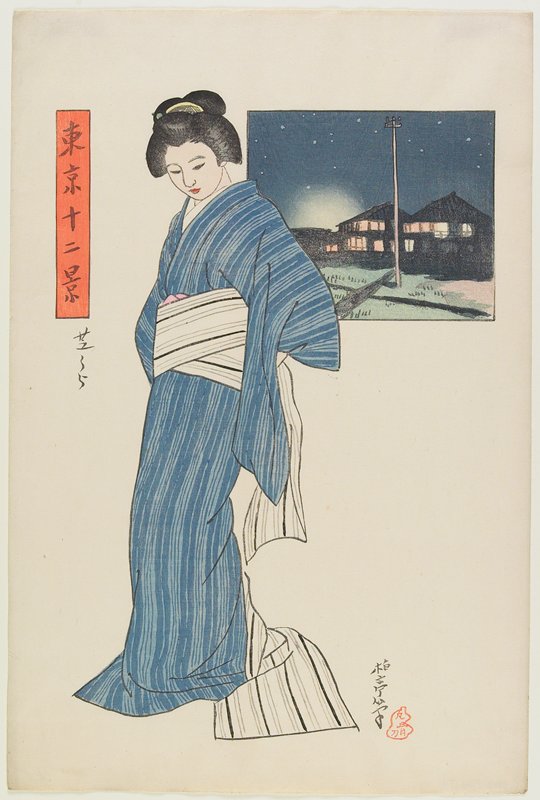
Ishii Hakutei
石井柏亭
1882–1958

Jun'ichiro Sekino
関野準一郎
1914–1988
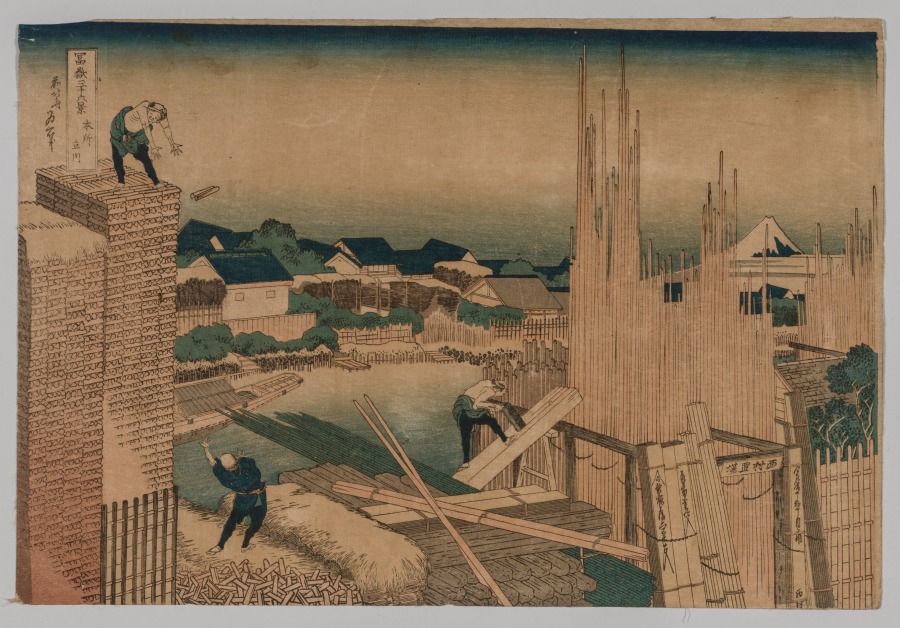
Katsushika Hokusai
葛飾北斎
1760–1849

Kishio Koizumi
小泉癸巳男
1893–1945
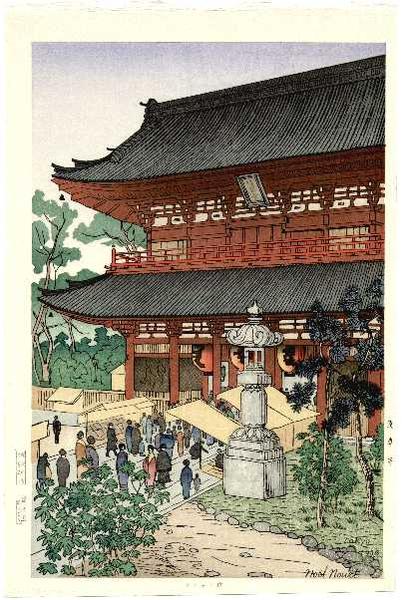
Noël Nouët
1885–1969
Takahashi Shotei
高橋松亭
1871–1945

Utagawa Hiroshige
歌川広重
1797–1858

Utagawa Kuniyoshi
歌川国芳
1798–1861
Frequently Asked Questions
Nihonbashi is a district in central Tokyo, in present-day Chuo Ward, organized around the historic Nihonbashi bridge over the Nihonbashi River (formerly part of the Edo river system, now a tributary of the Sumida system). The bridge was first constructed in 1603 in conjunction with the founding of Edo as the Tokugawa shogunal capital, and from that date it served as the official kilometer-zero point of the five great highways of Edo Japan (the Gokaido), the Tokaido, Nakasendo, Nikko Kaido, Oshu Kaido, and Koshu Kaido, with all road distances measured from a marker at the foot of this bridge that is preserved today as the Nihon Doro Genpyo (Japan Road Zero Marker), still set into the modern bridge with the official distances of the historical highways from the central point. The surrounding district became the principal mercantile zone of Edo, housing the city's central Uogashi fish market through 1923 (when it was relocated to Tsukiji after the Great Kanto Earthquake), the Mitsui (founders of the Mitsui Echigoya kimono store of 1673, the predecessor of the Mitsukoshi department store) and other major merchant houses including the Shirokiya and the Daimaru, and the offices of the great publishers of the late Edo period, including Tsutaya Juzaburo's Koshodo at the southeast corner of Tori-Aburacho and Nishimuraya Yohachi's Eijudo, who issued the principal ukiyo-e print designs of Utamaro, Sharaku, Hokusai, and others. The bridge was rebuilt repeatedly in wood across the Edo period after recurring fires and finally in stone in 1911, with the present granite double-arched span dating to that Meiji-era reconstruction and incorporating bronze ornaments including the lion statues and the kirin sculptures by Watanabe Osao. In the postwar period the bridge was overshadowed by the Shuto Expressway elevated viaduct, completed in 1964 in preparation for the Tokyo Olympics, which passes directly above it. For Japanese printmaking Nihonbashi figures across the entire span of the meisho-e tradition. Hokusai placed Nihonbashi in his Thirty-Six Views of Mount Fuji in the celebrated sheet Nihonbashi Bridge in Edo (Edo Nihonbashi), in which the bridge appears as the principal foreground motif with the distant Mount Fuji visible upriver above the receding rows of merchant storehouses, embedding the mercantile heart of the city into the Fuji iconography. Utagawa Hiroshige treated Nihonbashi as the first station of his Fifty-Three Stations of the Tokaido issued by Hoeido around 1833-1834, in which the bridge appears at dawn as the starting point of the great road with a procession of samurai and the morning fish-market traffic crossing, and again in One Hundred Famous Views of Edo (Meisho Edo hyakkei) of 1856-1858, in which Nihonbashi Bridge in Snow (Nihonbashi yuki-bare) records the bridge under heavy snowfall with the procession of an early-morning fish market and the curving canal of the surrounding district. Hiroshige III, Inoue Yasuji, and Kobayashi Kiyochika produced Meiji-period kaika-e treating the bridge under its new stone form and the surrounding modernized district. Shin-hanga and sosaku-hanga artists returned to Nihonbashi in their Tokyo sets, with Kawase Hasui producing rain and snow views and Onchi Koshiro and others treating the district within the One Hundred Views of New Tokyo project. The visual character of Nihonbashi in prints is built on the arched span of the bridge (whether wooden or stone), the canal and boats below, the surrounding merchant houses and Edo-period white-walled kura storehouses, the procession of travelers, samurai, and packhorses at the foot of the road, and after the Meiji period the streetcars, electric lamps, and stone parapet of the rebuilt bridge. Contemporary Nihonbashi preserves the 1911 stone bridge and the surrounding mercantile district including the original Mitsukoshi flagship building of 1914 and the Nihonbashi Mitsui Tower, though the elevated expressway above the bridge significantly alters the historical view, with current planning efforts since the late 2010s seeking to relocate the highway underground and restore the open sky above the bridge in time for the centennial.
Hanga catalogues 15 prints depicting Nihonbashi (日本橋), by 12 different artists.
Gihachiro Okuyama, Hashiguchi Goyo, and Hiratsuka Un'ichi are among the 12 artists who depicted Nihonbashi in our collection.
Want to rate prints from Nihonbashi?
Sign up to start rating