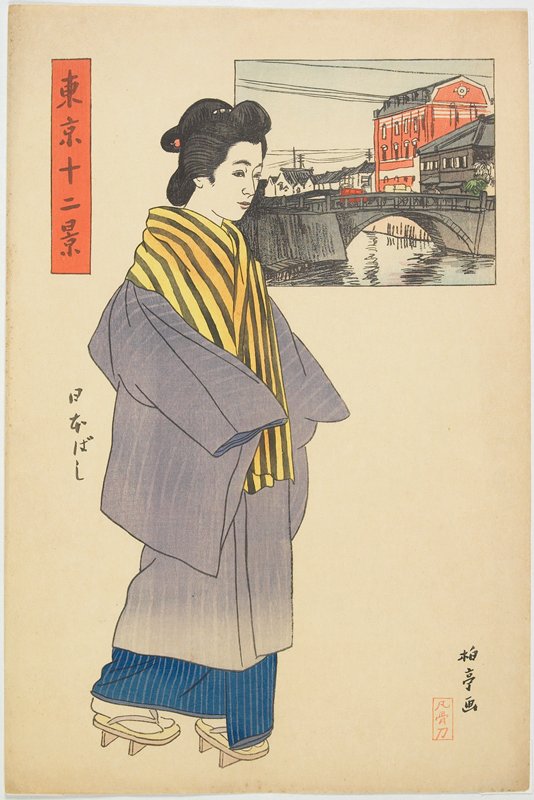
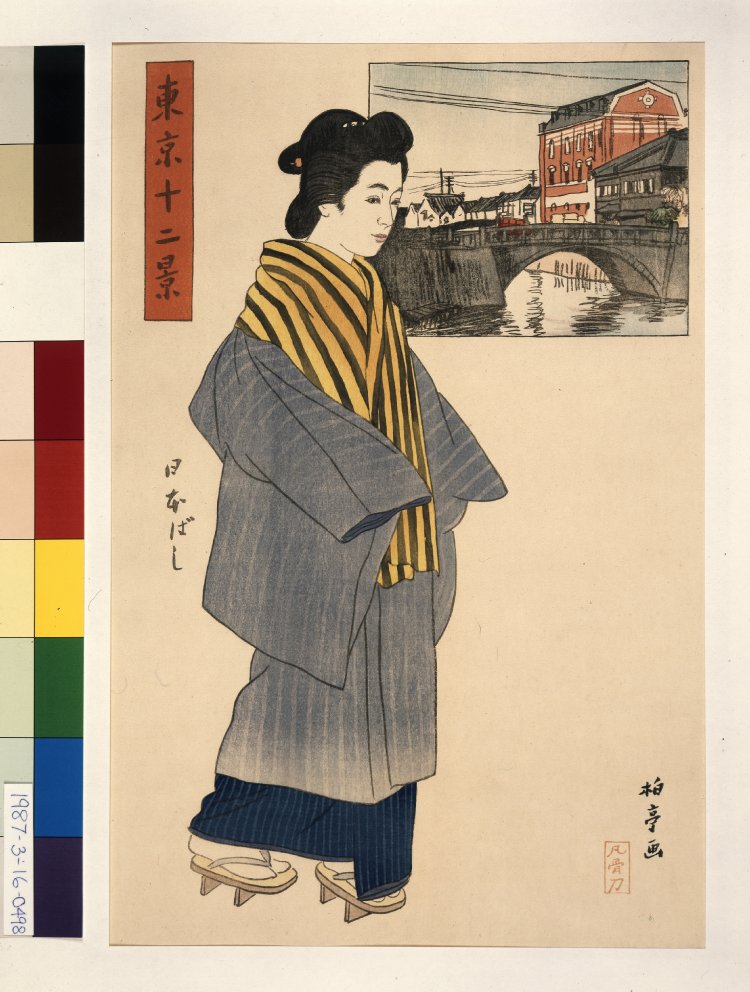
Nihonbashi
- Date:
- c. 1914–1916
- Medium:
- Woodblock print, ink and color on paper
- Dimensions:
- 38.3 × 25.6 cm
- Edition:
- Self-printed
- Source:
- Minneapolis Institute of Art
Description
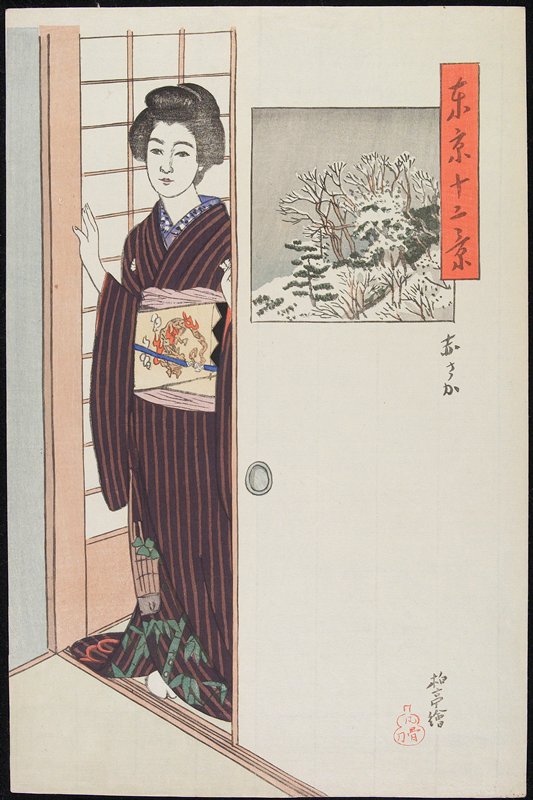
Produced circa 1914-1916 in ink and color on paper, this print offers another view of the Nihonbashi district, Tokyo's mercantile heart. The area around Nihonbashi bridge housed the city's major department stores, banks, and trading houses, making it a showcase for Japan's modernization. Hakutei's rendering of this commercial landscape carries a documentary quality, recording architecture and street life that would be devastated by the 1923 Great Kanto Earthquake. The woodblock medium flattens the busy district into interlocking color planes, while Hakutei's Western art training allows him to construct convincing spatial recession. This print belongs to a group of Tokyo views that Hakutei produced during a particularly productive period in the mid-1910s, when the sosaku-hanga movement was crystallizing its identity.
More Prints by Ishii Hakutei
More Urban Scenes Prints
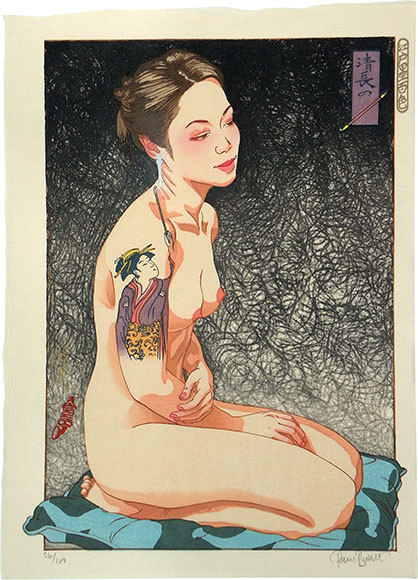
A Hundred Shades of Ink of Edo: Kiyonaga's Pipe (Edo zumi hyaku shoku: Kiyonaga no kiseru)
Woodblock print

View of Kabuki Theater from Matsuya (Ginza Matsuya yori Kabukiza), no. 3 from the series "Pictures of Ginza, First Series (Gashu Ginza dai isshu)"
1928
Color lithograph

Distant View of Mitsukoshi Movie Theater in Shinjuku from the Sixth Floor of Hoteiya (Hoteiya rokkai kara Shinjuku Mitsukoshi Musashi no kan enbo zu), no. 1 from the series "Scenery of Shinjuku (Gashu Shinjuku fukei)"
1930
Color lithograph
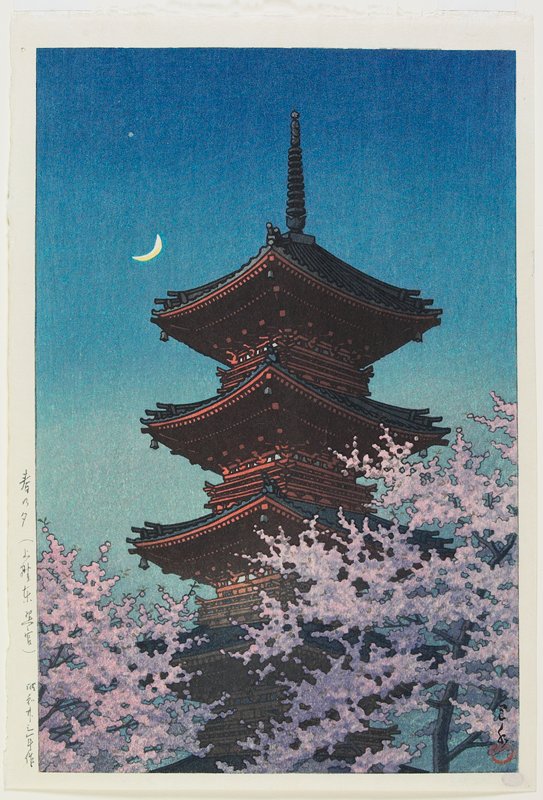
Spring Dusk at the Tōshō Shrine in Ueno
1948
Woodblock print, ink and color on paper
Featured in Collections
Curated cross-cuts that include this print.
Frequently Asked Questions
Nihonbashi was created by Ishii Hakutei (石井柏亭) in c. 1914–1916.
Nihonbashi depicts urban scenes, set at Nihonbashi.
Nihonbashi measures 38.3 × 25.6 cm.