Warriors Prints (395)
Warrior prints (musha-e) depict samurai, historical battles, legendary heroes, and martial subjects drawn from Japanese history, mythology, and literature. The genre flourished in the nineteenth century as artists responded to public appetite for dramatic narratives of valor, loyalty, and supernatural power, producing some of the most visually dynamic compositions in the woodblock tradition. Utagawa Kuniyoshi was the genre's supreme master, creating hundreds of warrior prints that combined vigorous draftsmanship with imaginative composition. His depictions of the 108 heroes of the Suikoden (Water Margin), historical battles, and supernatural encounters set standards of dramatic intensity that defined the genre. Kuniyoshi's warrior prints influenced not only subsequent printmakers but also the tattoo tradition (irezumi), which adopted many of his compositions. The warrior print tradition also served political purposes, particularly during periods when direct commentary on current events was censored. Artists used historical warrior subjects as coded references to contemporary political situations, a practice that required viewers to read the prints on multiple levels. The genre continued into the Meiji era, when prints documented the Satsuma Rebellion and Sino-Japanese War, before declining as photographic journalism replaced printmaking as the primary medium for depicting military subjects.
Artists Known for Warriors


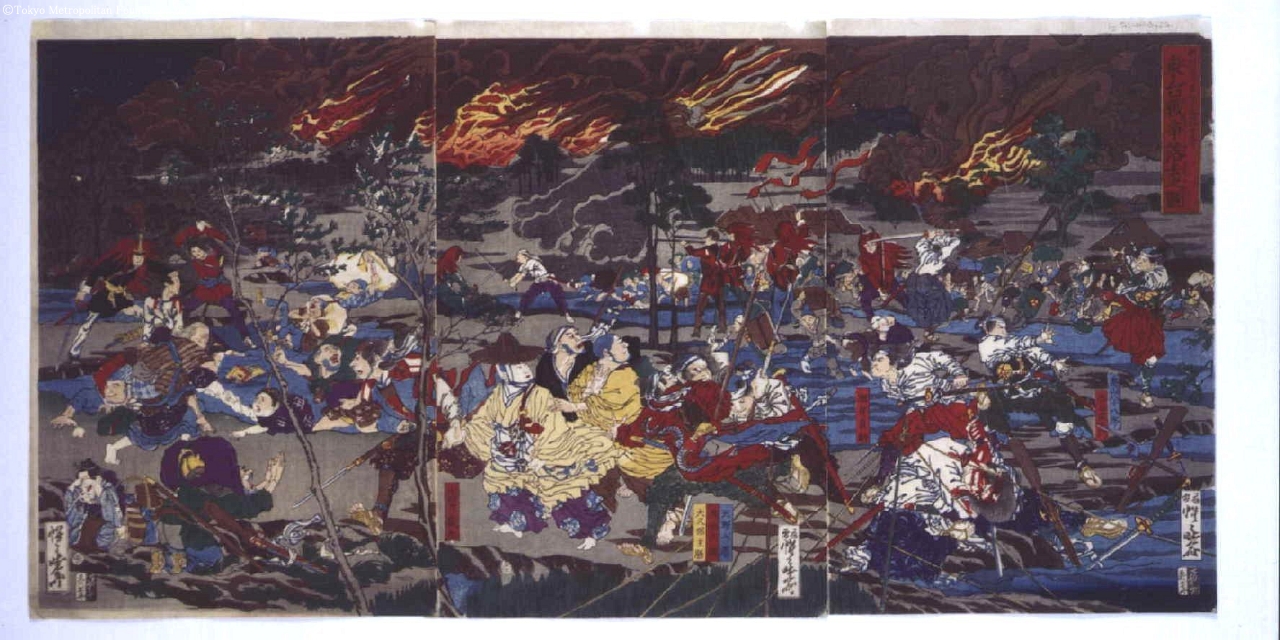
The Battle of Ueno: Defeat
Woodblock print
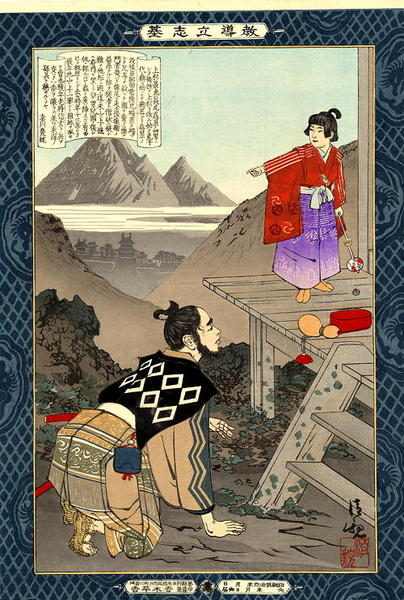
A young Samurai bowing before a young Prince playing Japanese Croquet
Woodblock print
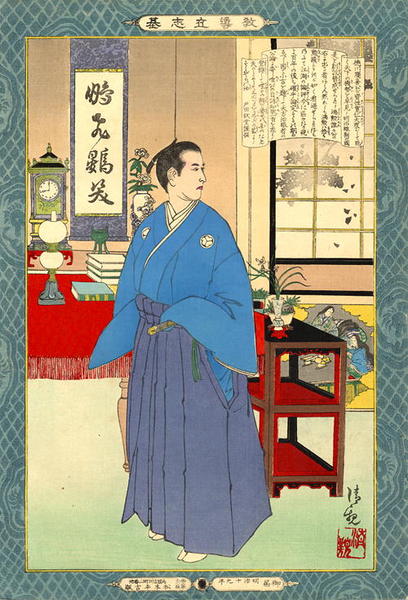
A young Samurai scholar
Woodblock print
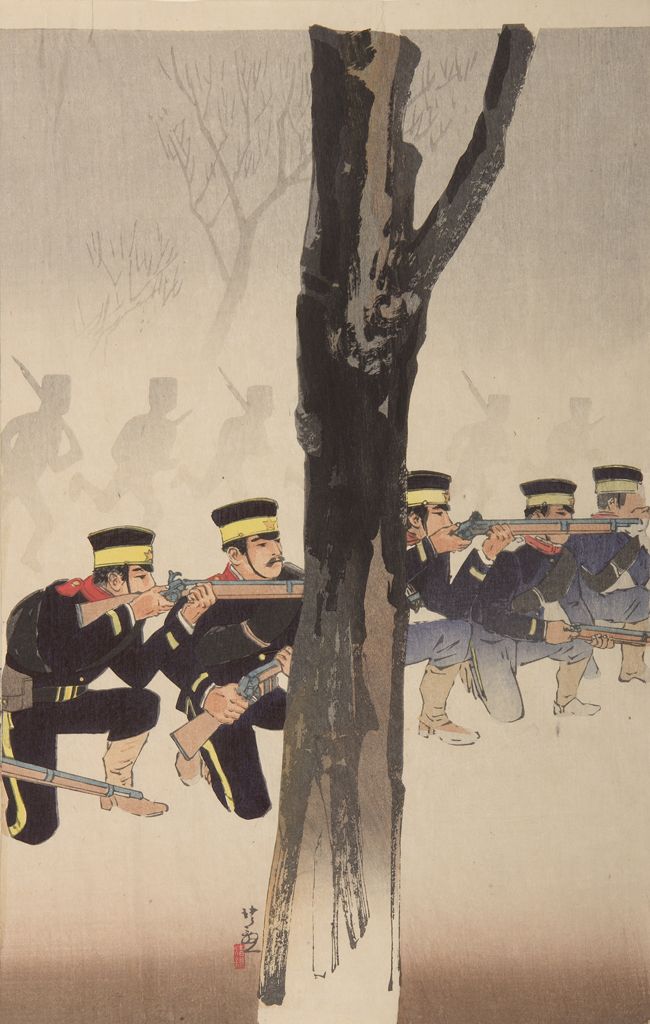
Battle at Kinshujô on the way to Ryojun (Ryojun-dô Kinshujô sen), Meiji period, dated 1894
Woodblock print
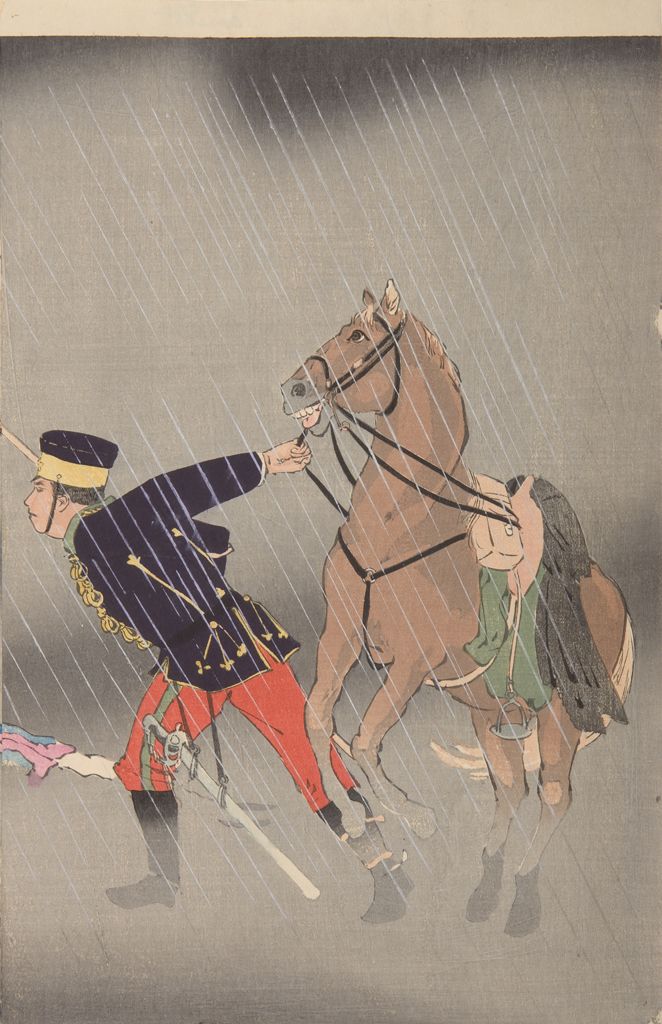
Captain Asakawa Scouts the Battle and Fights Bravely (Sekkô Asakawa Kiheitaii Funsen no zu), Meiji period, dated 1895
Woodblock print
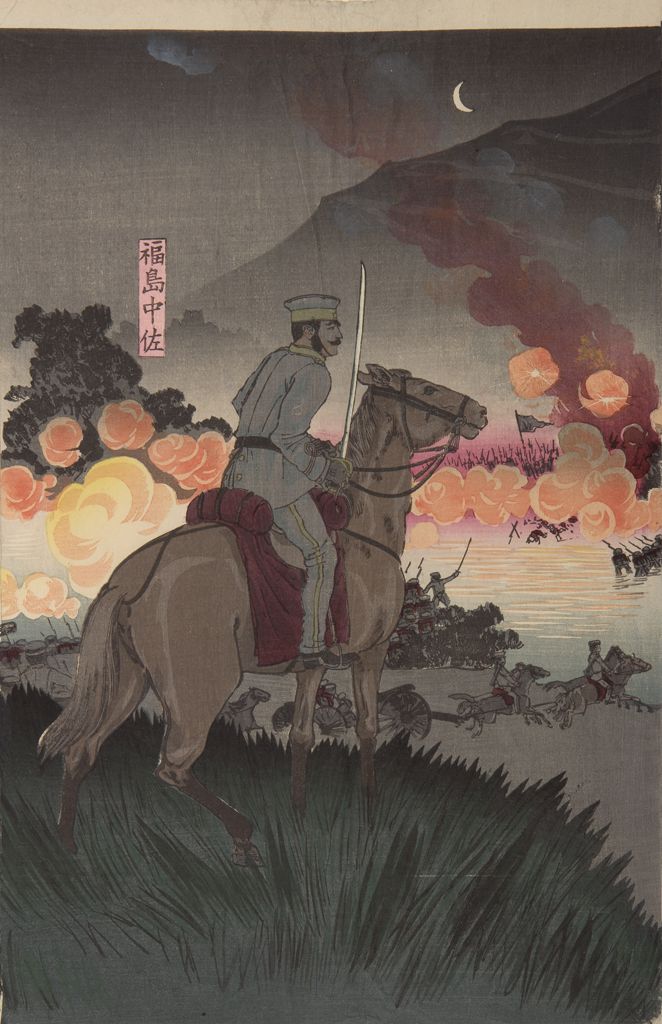
Crossing Anjô Proceeding in Battle (Anjô o watari shingeki no zu), Meiji period, dated 1894
Woodblock print

Departure of the Warrior Kusunoki at the Sakurai Station
Woodblock print
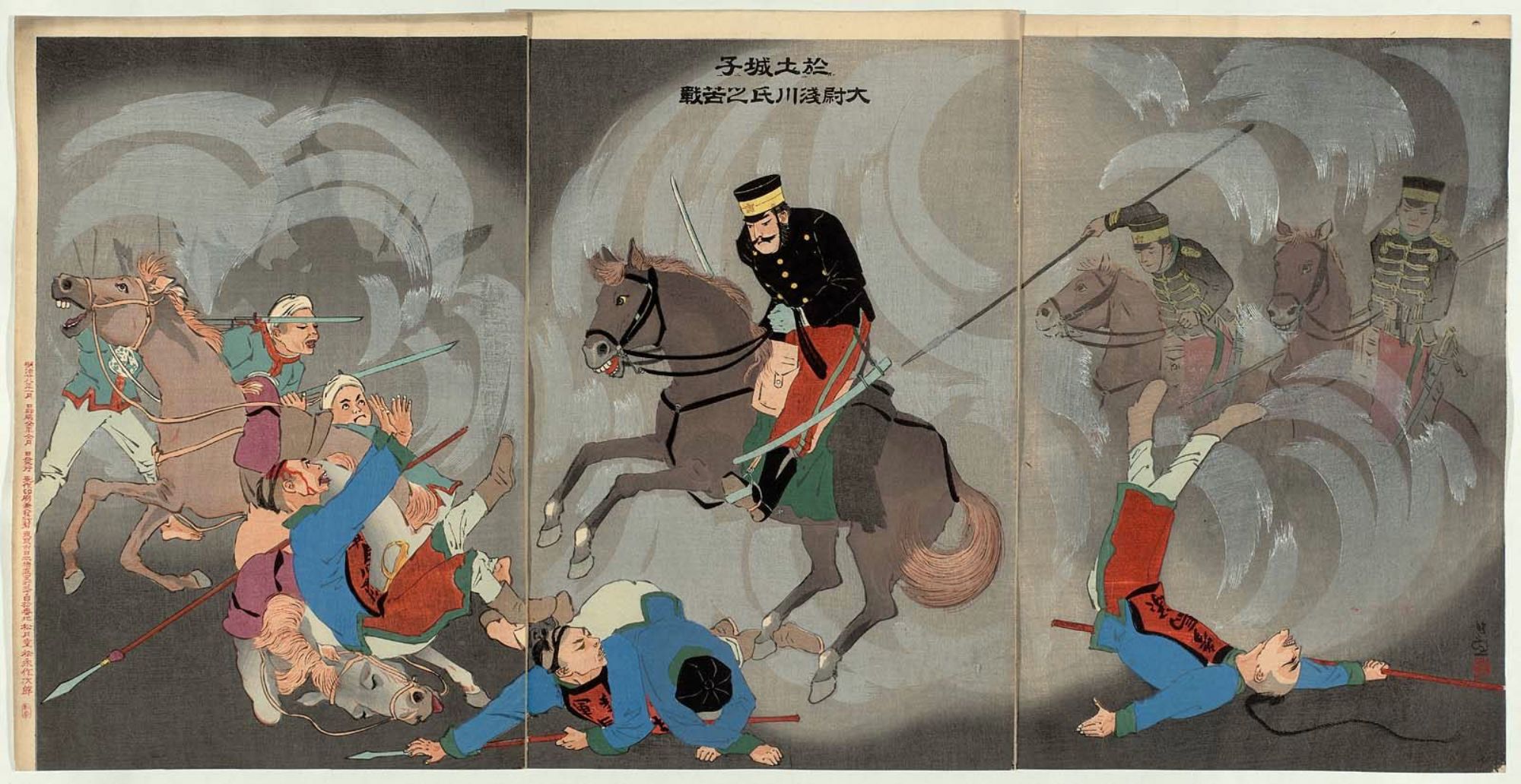
Desperate Battle of Captain Asakawa at Tuchengzi (Dojôshi ni okeru Taii Asakawa shi no kusen)
Woodblock print
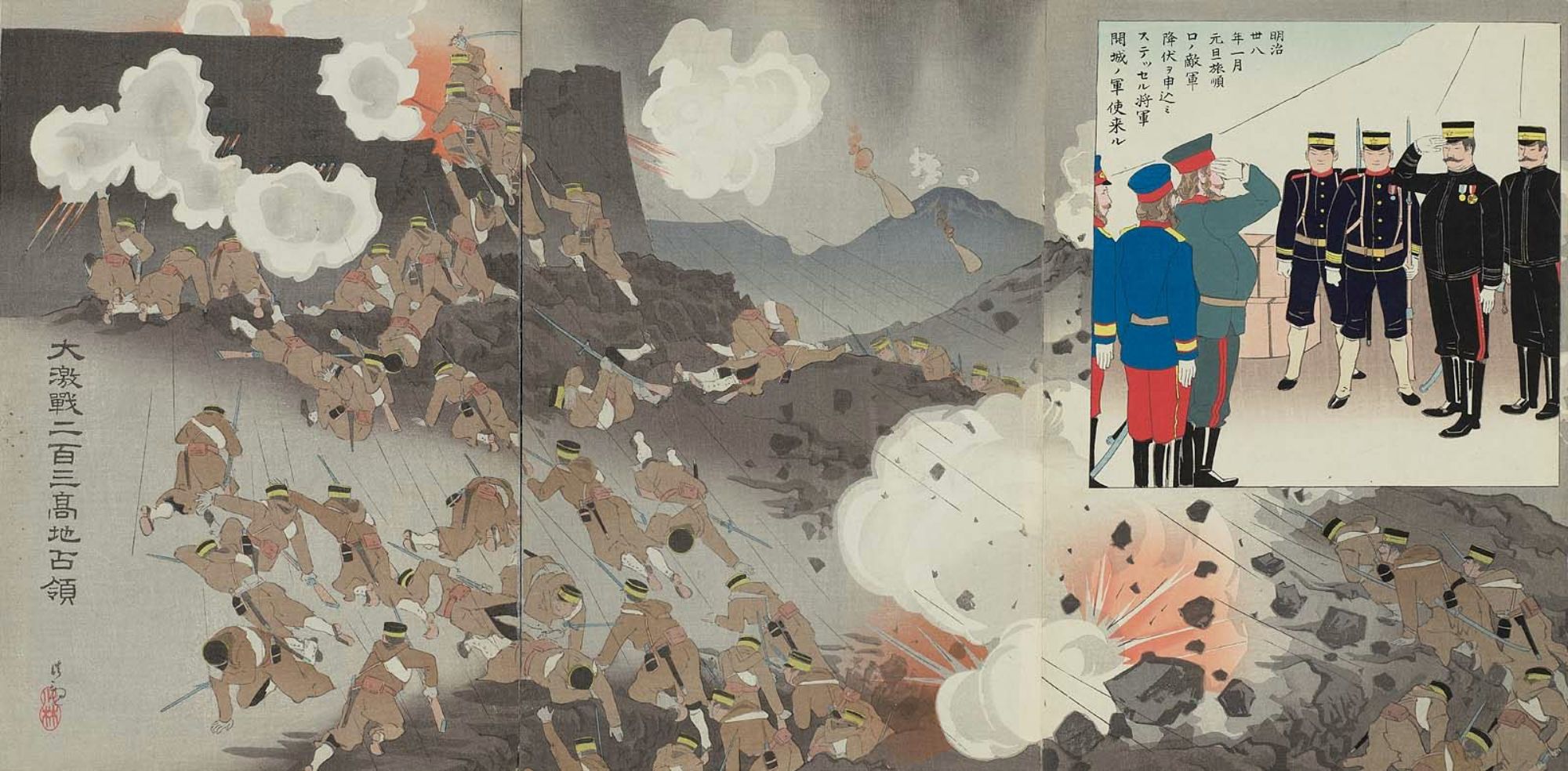
Great Battle for the Occupation of the 203-meter Hill (Dai gekisen nihyakusan kôchi senryô)
Woodblock print
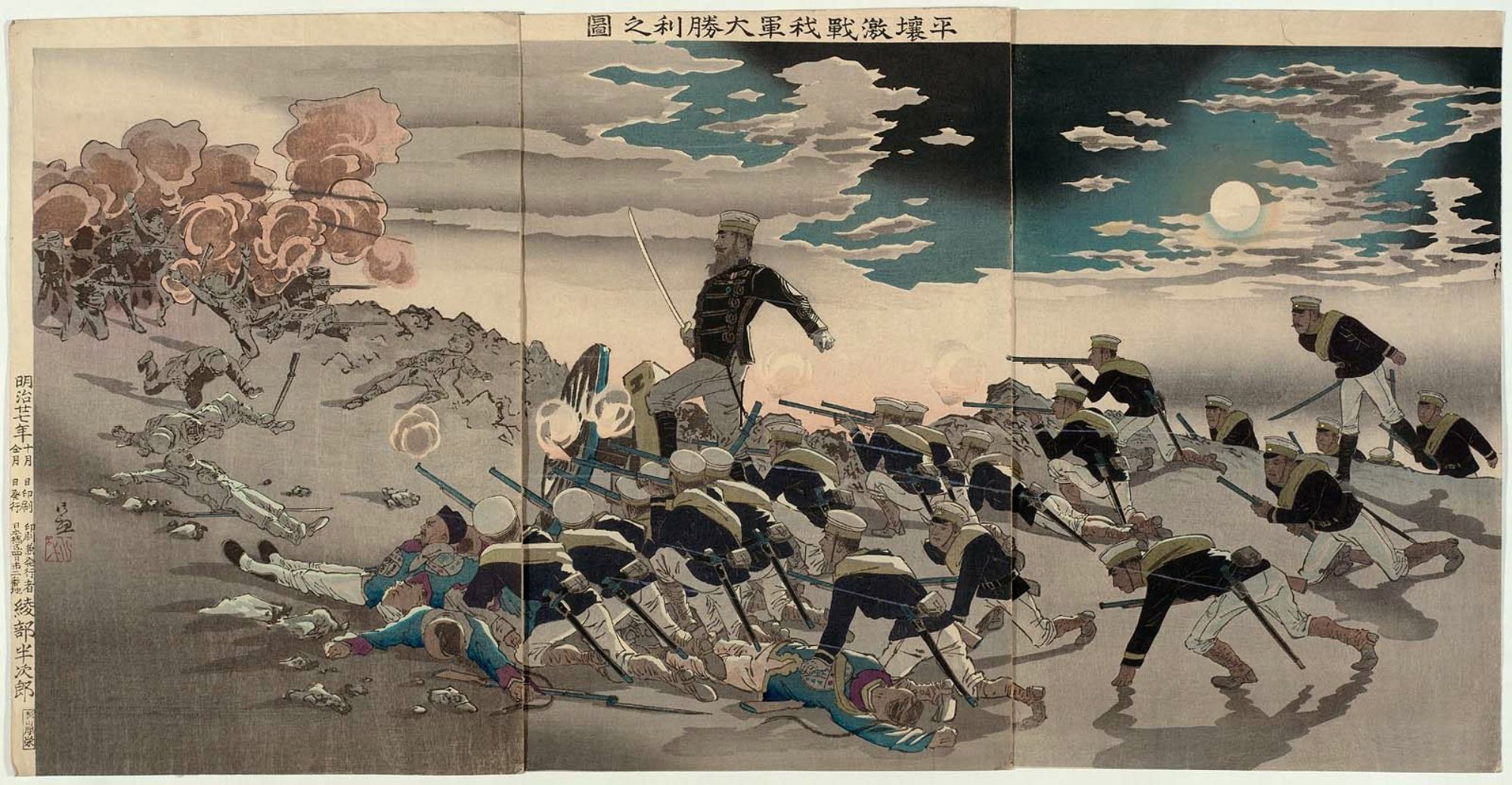
Great Victory of Our Armed Forces at the Battle of Pyongyang (Heijô gekisen waga gun dai shôri no zu)
Woodblock print
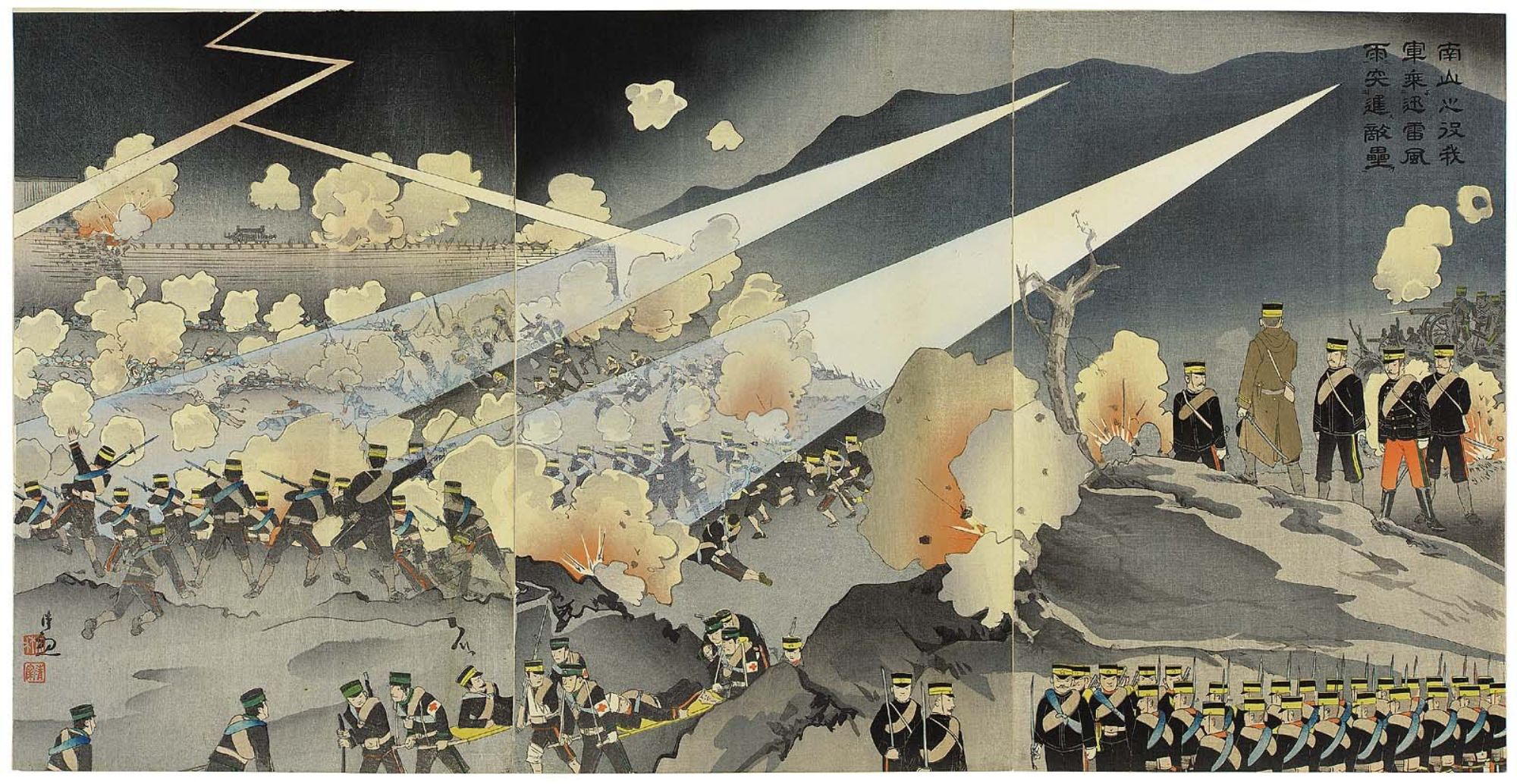
In the Battle of Nanshan Our Troops Took Advantage of a Violent Thunderstorm and Charged the Enemy Fortress (Jinraifûu Nanzan no eki waga gun noshite tekirui o tosshin su)
Woodblock print
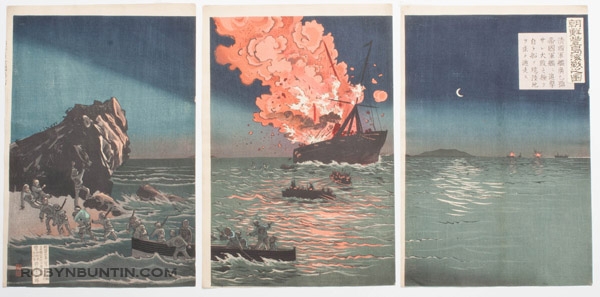
Naval Battle near Phung-to, Korea
Woodblock print
![[Russian general, possibly meant to be A.N. Kuropatkin, holding sword in raised right hand while doctors and a nurse tend to wounds in his left arm] by Kobayashi Kiyochika](https://data.ukiyo-e.org/loc/images/00989v.jpg)
[Russian general, possibly meant to be A.N. Kuropatkin, holding sword in raised right hand while doctors and a nurse tend to wounds in his left arm]
Woodblock print
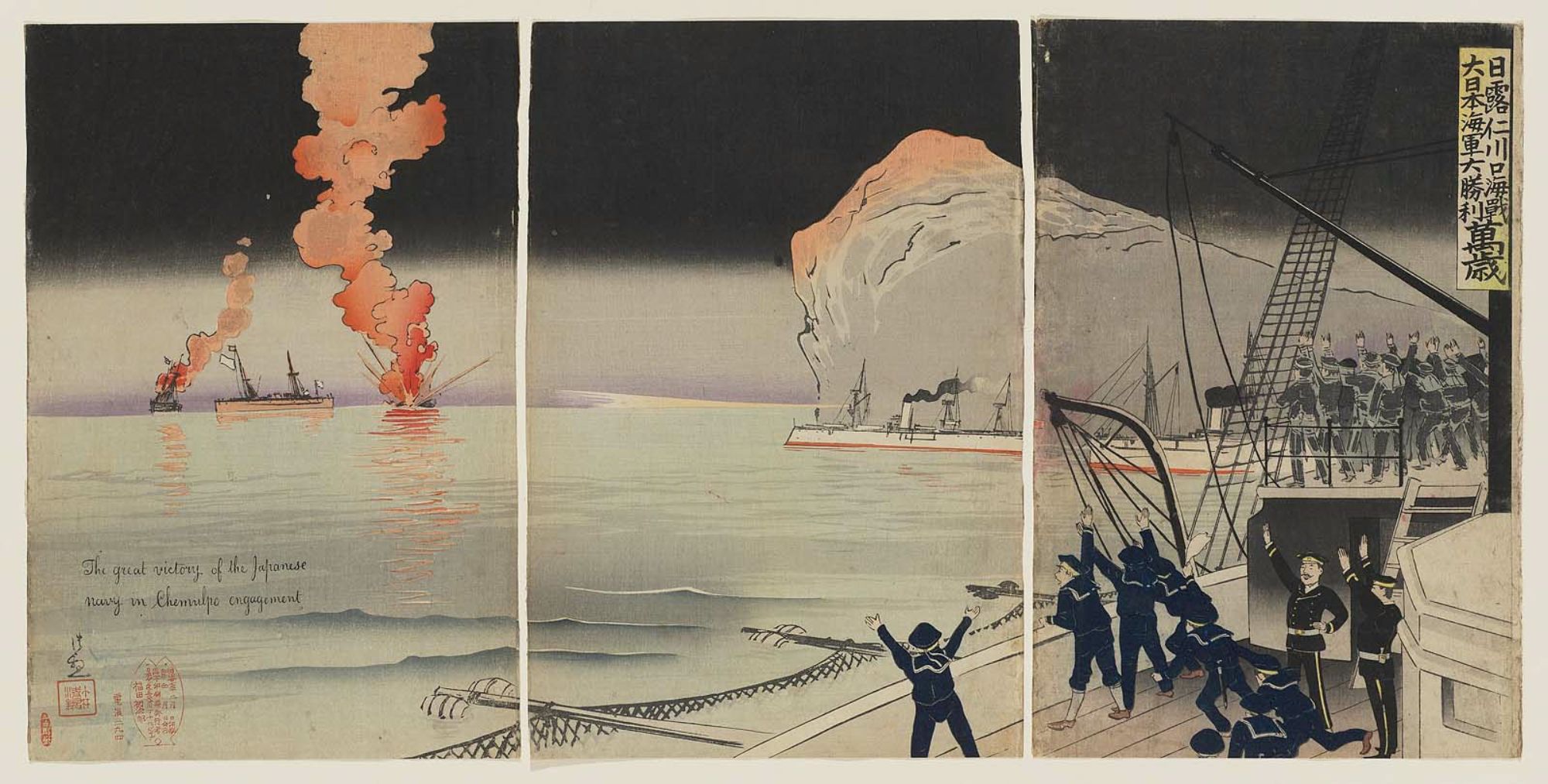
Russo-Japanese Naval Battle at the Entrance of Inchon: The Great Victory of the Japanese Navy--BANZAI! (Nichiro Jinsenkô kaisen dai Nihon kaigundaishôri Banzai)
Woodblock print
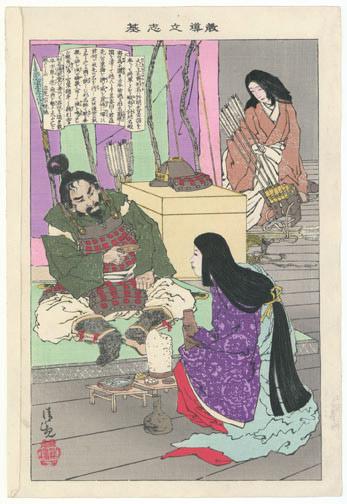
Tainin Kozuke No Katana and His Wife
Woodblock print
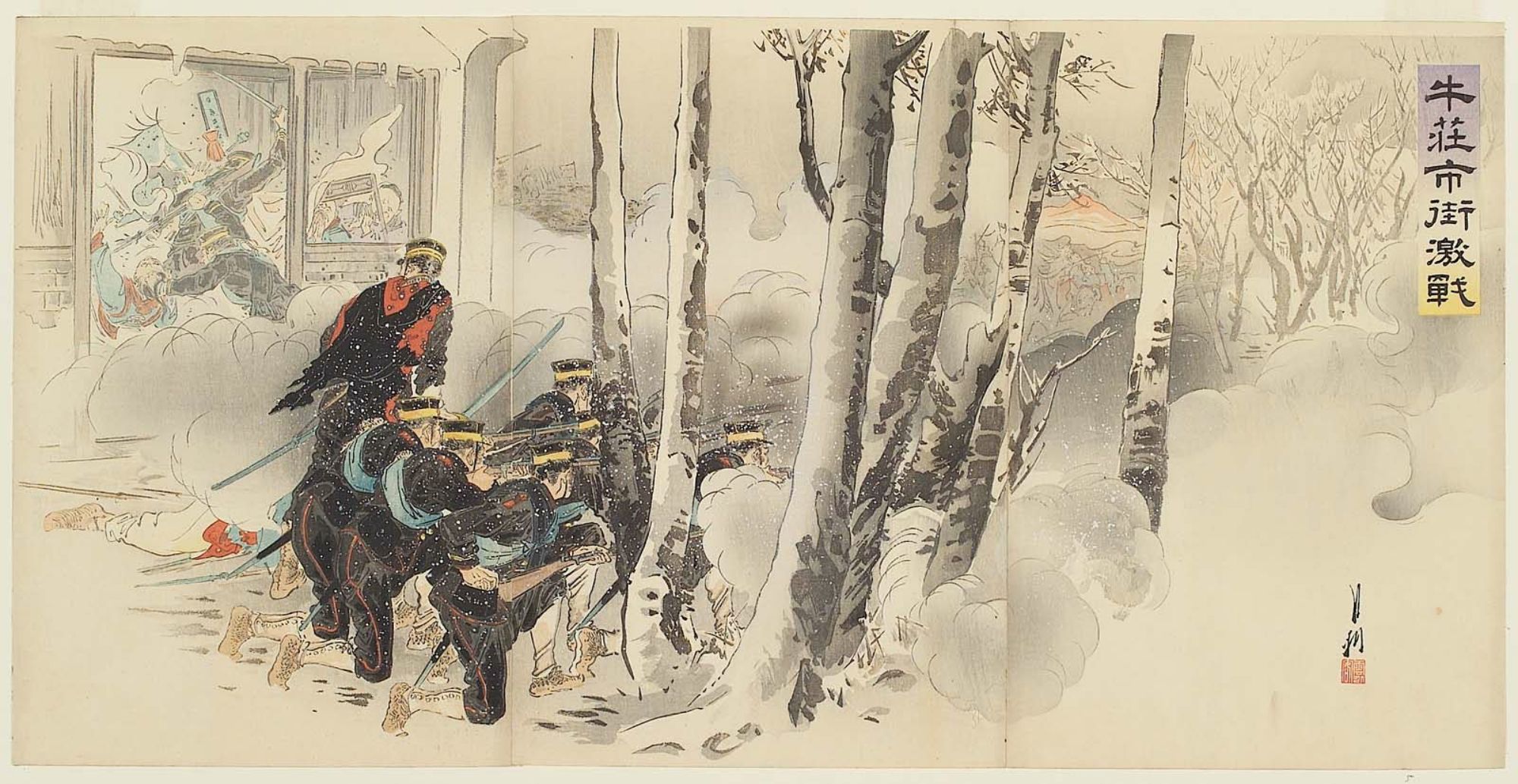
Fierce Street Battle at Niuzhuang (Gyûsô shigai gekisen)
Woodblock print
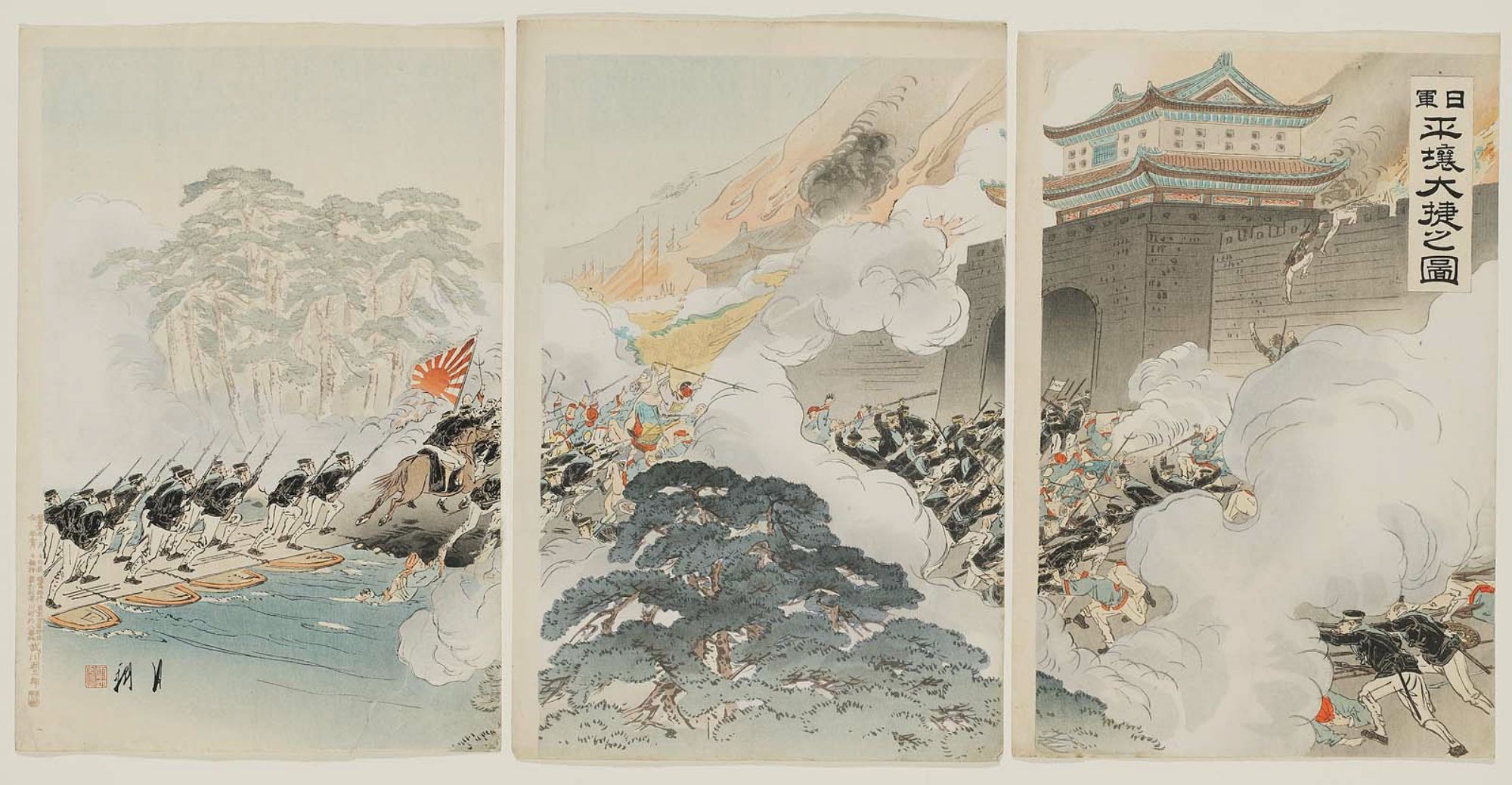
Illustration of the Great Battle of the Japanese Army at Pyongyang (Nichigun Heijô daishô no zu)
Woodblock print
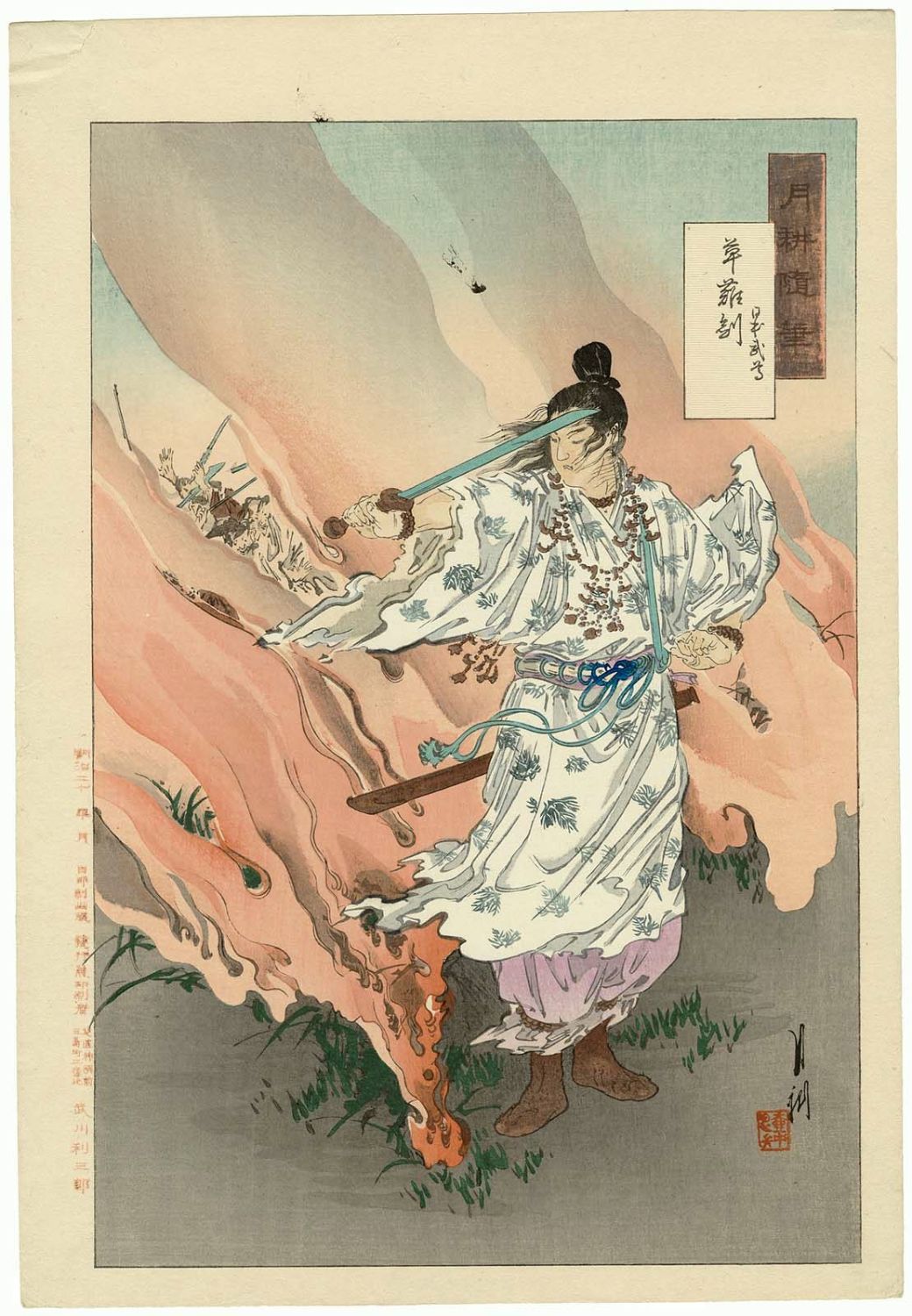
Kusunagi (no) Tsurugi, Yamato dake(no)- Mikoto. (the grass-cutting sword of Prince Yamato-dake no Mikoto). Series: Gekko Zuihitsu
Woodblock print
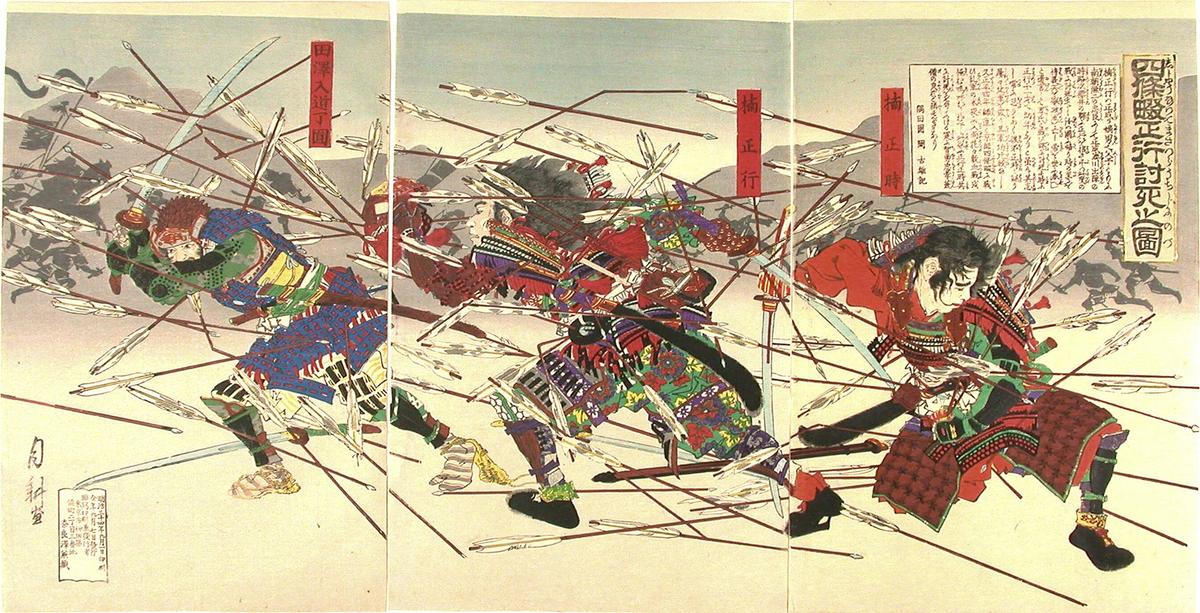
The last stand of Masatsura in the battle of Shijo-nawate
Woodblock print
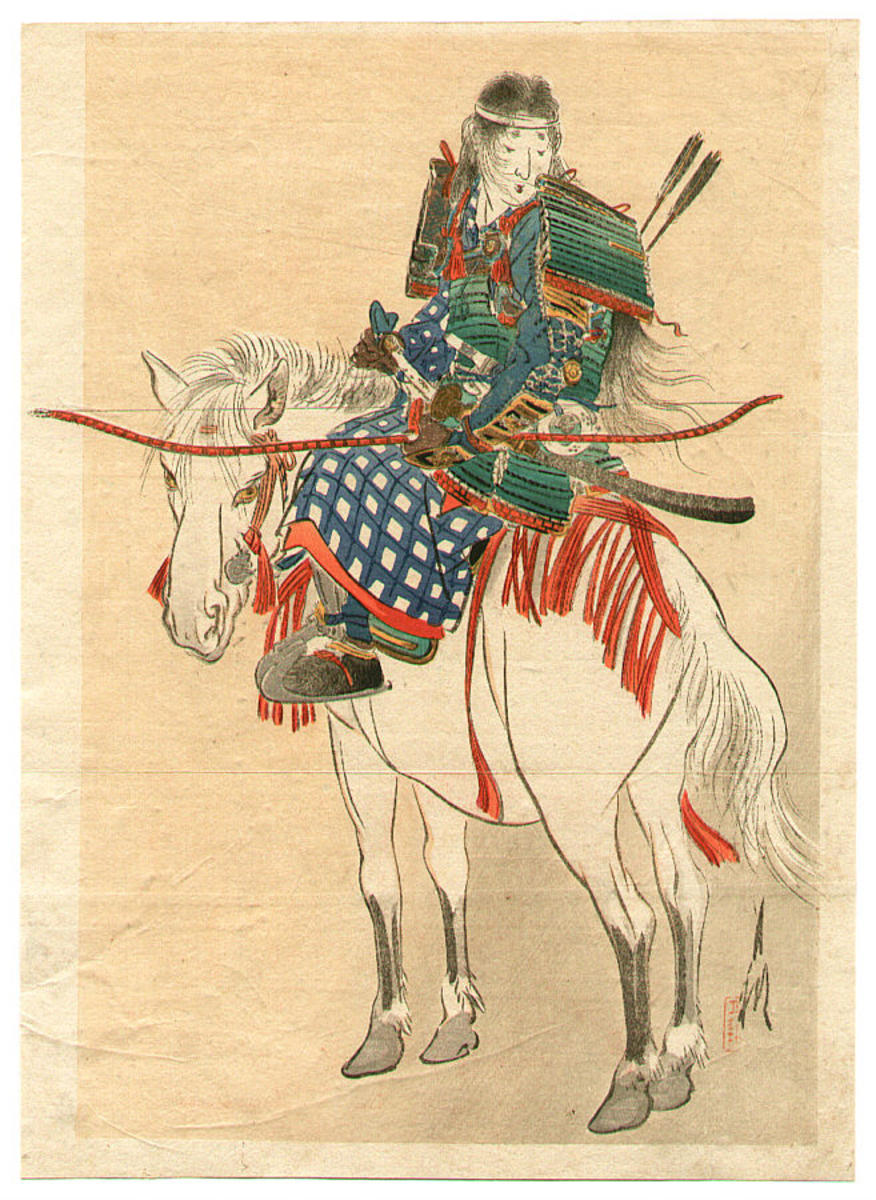
Tomoe, the Female Warrior
Woodblock print

Samurai Swinging a Sword
Mokuhanga (Japanese woodblock)

Battle Commander
Mokuhanga (Japanese woodblock)

Samurai with a Long Sword
Mokuhanga (Japanese woodblock)

Kabuto gate of Konnichi-an
Mokuhanga (Japanese woodblock)

Yotsuguruma Daihachi and Kotengu Heisuke duelling during the battle between firemen and sumo wrestlers at the Shinmei shrine in Shiba in 1805
Mokuhanga (Japanese woodblock)

Shima Sako Tomoyuki hit by a bullet during the battle at Sekigahara
Mokuhanga (Japanese woodblock)

Shima Sako Tomoyuki hit by a bullet during the battle at Sekigahara
Mokuhanga (Japanese woodblock)

Geki Magohachi with upraised sword in smoke and rifle fire
Mokuhanga (Japanese woodblock)

Battle Of Kurihara Pass
Mokuhanga (Japanese woodblock)

Warrior God
Mokuhanga (Japanese woodblock)

The loyalty of the Kusonoki clan at the battle at Shijônawate
Mokuhanga (Japanese woodblock)

The Battle of Nagashino: The Death of Yamagata Saburōhei Masakage (Nagashino kassen Yamagata Saburōhei Masakage uchijini no zu)
1868

Yang Zhi (Seimenju Yoshi), from the series "One Hundred and Eight Heroes of the Popular Water Margin (Tsuzoku Suikoden goketsu hyakuhachinin no hitori)"
c. 1827/30
Color woodblock print; oban

Xie Zhen (Ryotoda Kaichin), from the series "One Hundred and Eight Heroes of the Popular Water Margin (Tsuzoku Suikoden goketsu hyakuhachinin no hitori)"
c. 1827/30
Color woodblock print; oban

The Armor-hanging Pine at Hakkeizaka (Hakkeizaka Yoroikakematsu), from the series "One Hundred Famous Views of Edo (Meisho Edo hyakkei)"
1856
Color woodblock print; oban
Related Subjects
Frequently Asked Questions
Warrior prints (musha-e) depict samurai, historical battles, legendary heroes, and martial subjects drawn from Japanese history, mythology, and literature. The genre flourished in the nineteenth century as artists responded to public appetite for dramatic narratives of valor, loyalty, and supernatural power, producing some of the most visually dynamic compositions in the woodblock tradition.
Kobayashi Kiyochika, Tsukioka Yoshitoshi, and Ogata Gekko are among the artists most associated with warriors in our collection. Browse the full list of artists who explored this subject above.
Hanga currently catalogues 395 prints tagged with warriors, spanning ukiyo-e, shin-hanga, and sōsaku-hanga traditions where applicable.