
Kabuto gate of Konnichi-an
- Medium:
- Mokuhanga (Japanese woodblock)
- Image courtesy of
- Saru Gallery
Description
Konnichi-an ('Hut of Today') is the historic tea room at the Urasenke headquarters in Kyoto, established in the seventeenth century by Sen Sōtan, grandson of Sen no Rikyū. The kabuto-mon, or 'helmet gate,' takes its name from the curved profile of its roof, which suggests a samurai's helmet, and serves as one of the principal entrances into the Urasenke compound. Tokuriki's print most likely renders the gate among its surrounding tile-capped earthen walls and approach path, materials and forms central to Kyoto's chashitsu architecture. As the twelfth-generation representative of a Kyoto artisan family long tied to Honganji and to the city's traditional crafts, Tokuriki had unusual access to this material, and the work belongs with his sustained meisho-e treatment of Kyoto's religious and ceremonial sites. The mokuhanga technique—blocks carved in cherry wood and pigments brushed and printed by baren onto handmade washi—suits the restrained surfaces and quiet geometry of Urasenke architecture, with bokashi likely used for the wall and ground tones.
More Prints by Tomikichiro Tokuriki
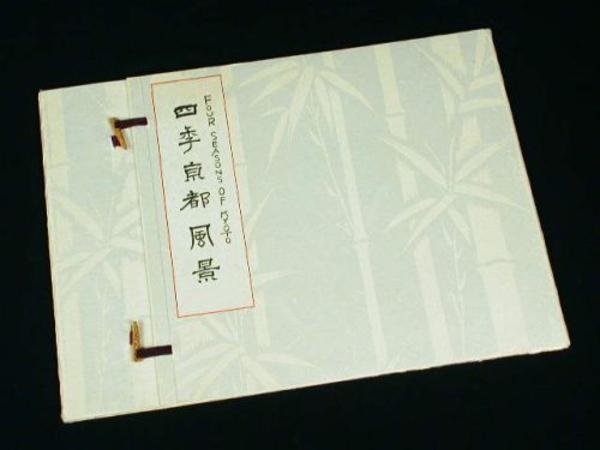
Heian Shrine in the Spring
Woodblock print
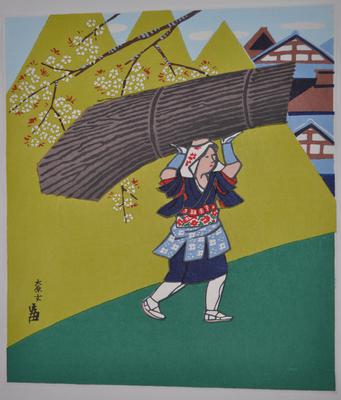
An Oharame Girl Carrying Firewood on Her Head
20th century
Woodblock print, ink and color on paper

April (Arashiyama Park, a Famous Scenic Resort)
四月 (嵐山)
second half 20th century
Woodblock print, ink and color on paper

June (Rainy Scene of the Sen-ke, Japanese Tea Ceremony Founder's House)
六月 (千家雨景)
second half 20th century
Woodblock print, ink and color on paper
More Warriors Prints
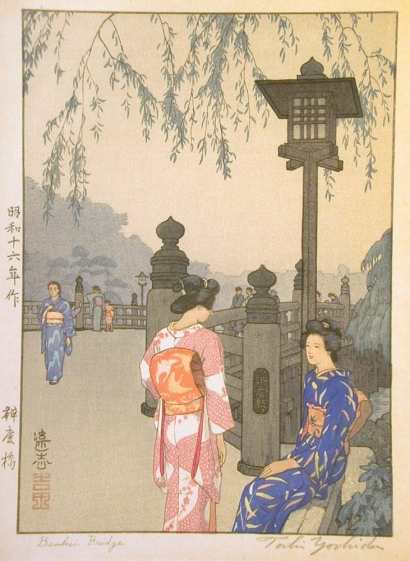
Benkei Bridge
Woodblock print

Saishin, from the series "Fashionable Women as the One Hundred and Eight Heroes of the Water Margin (Fuzoku onna Suikoden, ippyakuhachinin no uchi)"
c. 1828/30
Color woodblock print; surimono
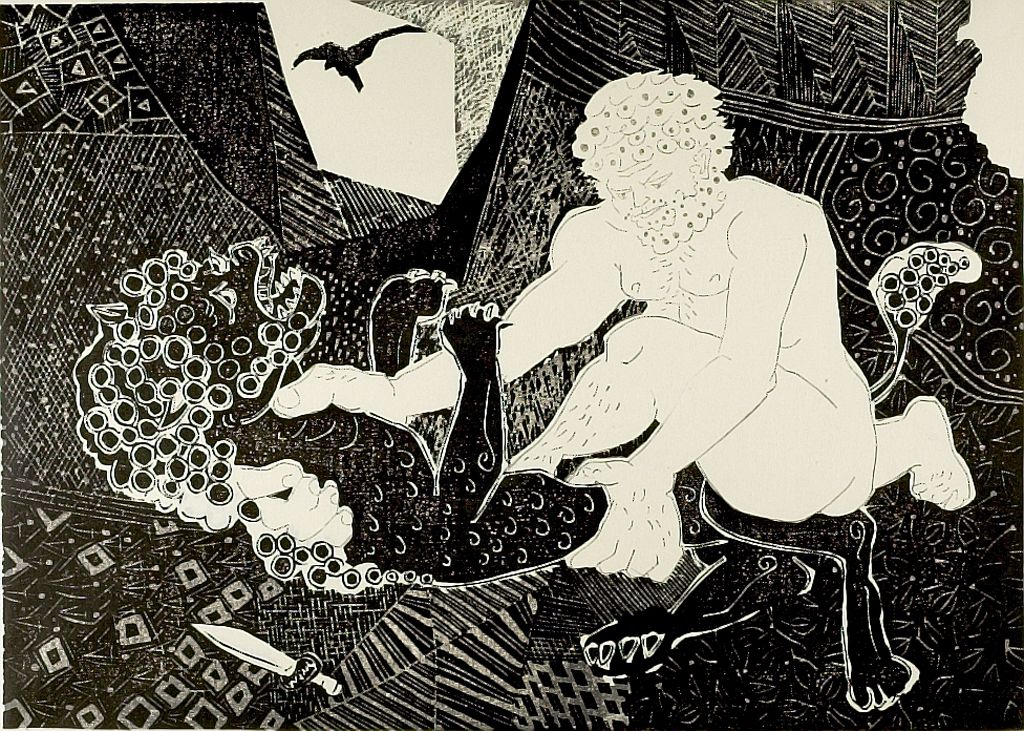
Herakles, Shôwa period, dated 1965?
Woodblock print
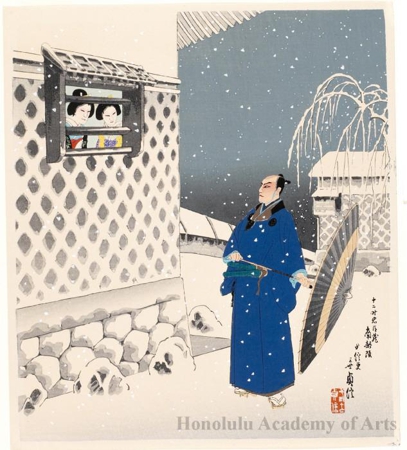
Chüshingura in Twelve Months
Woodblock print
Featured in Collections
Curated cross-cuts that include this print.
Frequently Asked Questions
Kabuto gate of Konnichi-an was created by Tomikichiro Tokuriki (徳力富吉郎).
Kabuto gate of Konnichi-an depicts warriors.