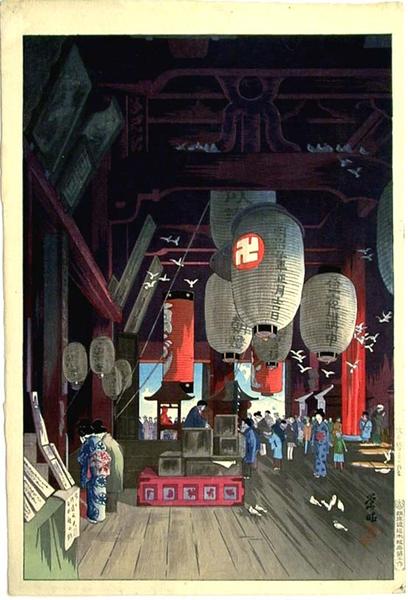
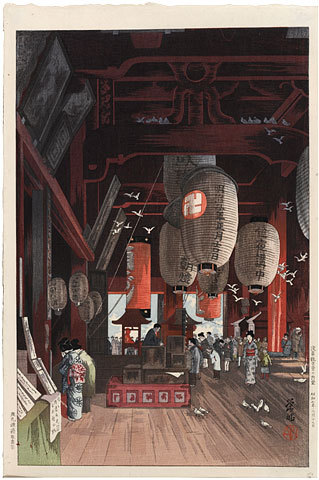
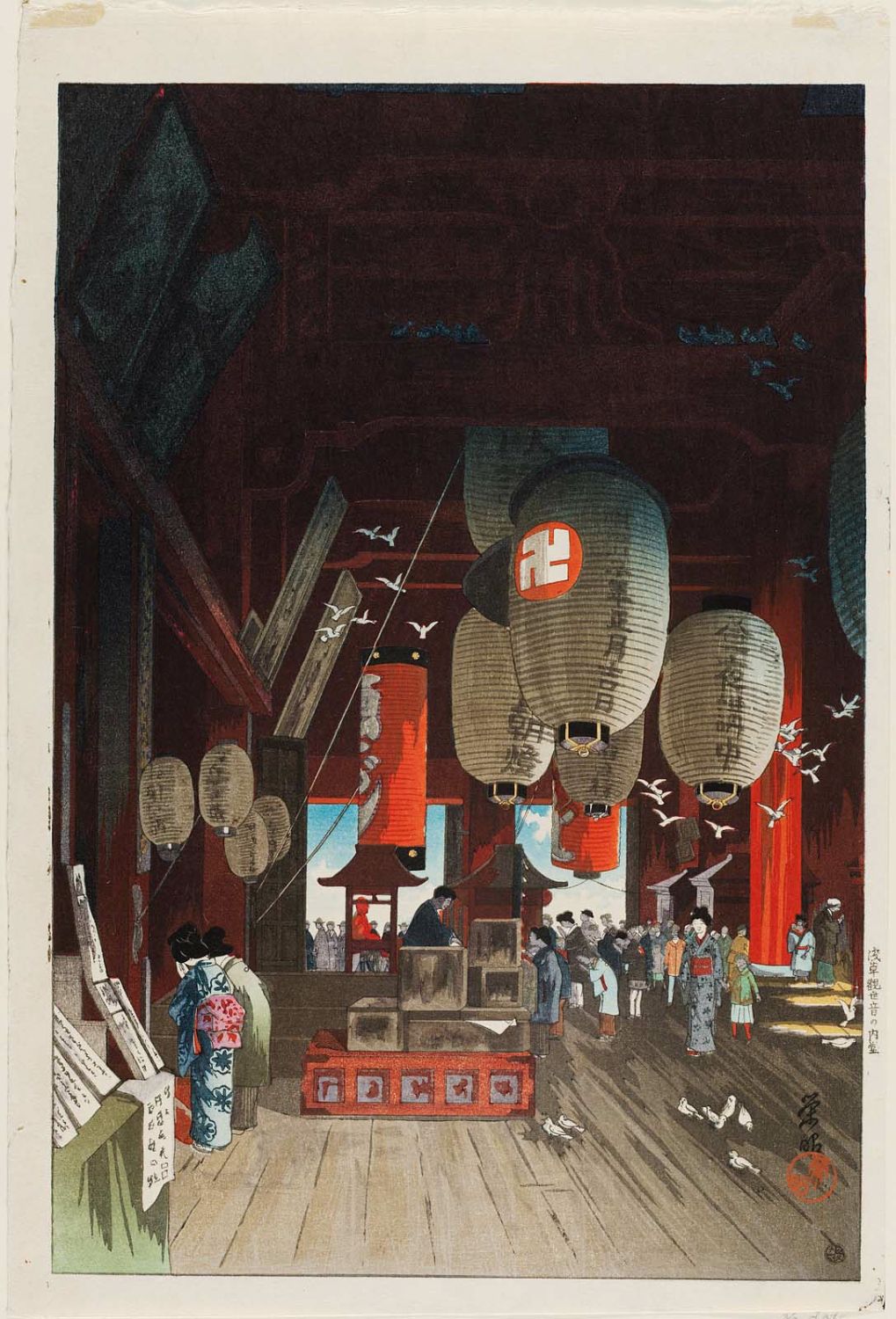
Asakusa Kanzeon Temple
- Date:
- 1932
- Medium:
- Color woodblock print
- Source:
- Art Institute of Chicago
Description
This 1932 color woodblock print depicts the Kanzeon (Kannon) Temple at Asakusa, one of Tokyo's oldest and most visited religious sites. Founded in the 7th century, Senso-ji, as it is formally known, draws millions of visitors annually to its imposing gate, the Kaminarimon, with its massive red lantern, and the bustling Nakamise shopping street leading to the main hall. Narazaki Eisho captures the temple in the shin-hanga style that emphasizes mood and atmosphere over documentary precision. The 1932 date places this print during a period when Tokyo's historic sites were being celebrated in woodblock prints even as the city modernized rapidly around them. The Asakusa district was the entertainment heart of old Tokyo, and the temple complex served as both a sacred site and a gathering place for the pleasures of the surrounding neighborhood.
More Prints by Narazaki Eisho
More Urban Scenes Prints
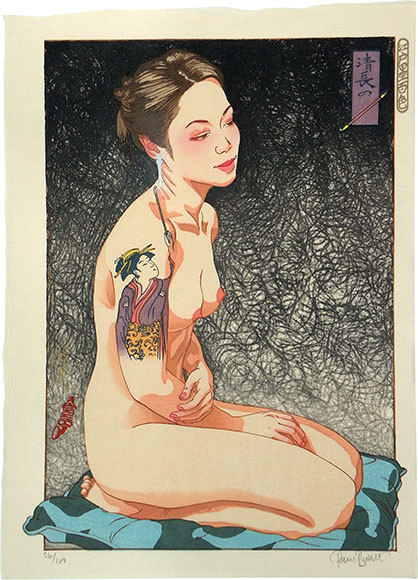
A Hundred Shades of Ink of Edo: Kiyonaga's Pipe (Edo zumi hyaku shoku: Kiyonaga no kiseru)
Woodblock print

View of Kabuki Theater from Matsuya (Ginza Matsuya yori Kabukiza), no. 3 from the series "Pictures of Ginza, First Series (Gashu Ginza dai isshu)"
1928
Color lithograph

Distant View of Mitsukoshi Movie Theater in Shinjuku from the Sixth Floor of Hoteiya (Hoteiya rokkai kara Shinjuku Mitsukoshi Musashi no kan enbo zu), no. 1 from the series "Scenery of Shinjuku (Gashu Shinjuku fukei)"
1930
Color lithograph
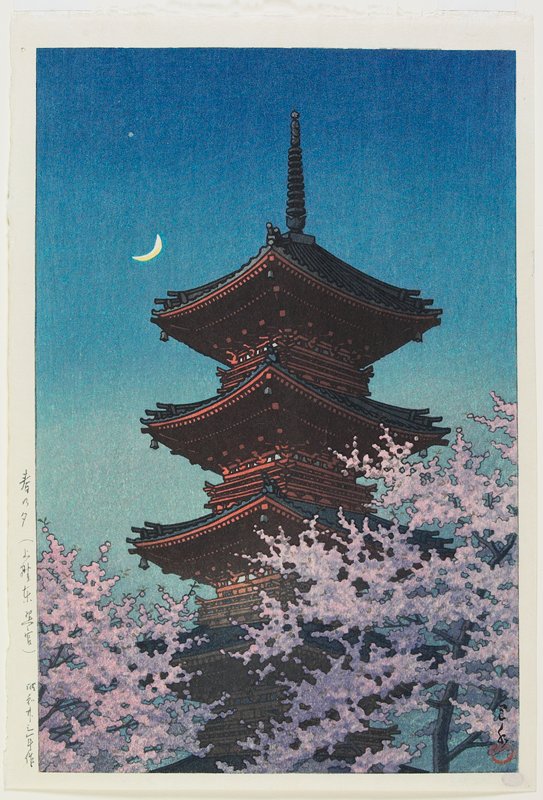
Spring Dusk at the Tōshō Shrine in Ueno
1948
Woodblock print, ink and color on paper
Featured in Collections
Curated cross-cuts that include this print.
Frequently Asked Questions
Asakusa Kanzeon Temple was created by Narazaki Eisho (楢崎栄昌) in 1932.
Asakusa Kanzeon Temple depicts urban scenes and temples & shrines, set at Asakusa.