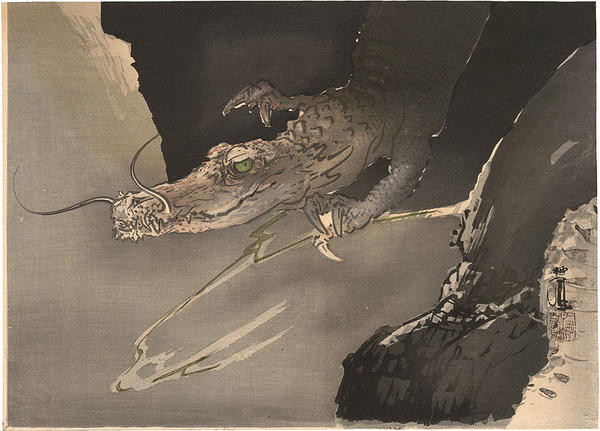
Takeuchi Seihō
竹内栖鳳
1864–1942
Japan
Biography
Takeuchi Seihō (竹内栖鳳, 1864–1942) was the dominant Kyoto-school painter of his generation and a founding figure of modern nihonga — a body of work that absorbed European naturalism into the Maruyama-Shijō tradition without abandoning it. Born Takeuchi Tsunekichi in Kyoto on December 20, 1864, in the final years of the Edo period, he came of age as the Meiji government dismantled the patronage structures that had sustained Kyoto's painters for generations.
At the age of seventeen, in 1881, Seihō entered the studio of Kōno Bairei (1844–1895), the leading Maruyama-Shijō master of his day. That tradition, descending from Matsumura Goshun and the Kyoto naturalist Maruyama Ōkyo, emphasized careful drawing from life — especially of birds and animals — combined with the brush economy of Chinese-inspired ink painting. Bairei trained his pupils to sketch incessantly from observation while studying classical models, and the cohort that emerged from his studio, including Kikuchi Hōbun and Kawai Gyokudō, helped shape Kyoto painting for half a century. It was Bairei who gave the young painter his art name, Seihō — written first with the characters 棲鳳 and later with the variant 栖鳳.
The European journey of 1900 was the hinge of his career. Travelling in connection with the Exposition Universelle in Paris, he toured the Continent for several months, studying Western painting in its major museums and sketching animals in its zoos — drawing a lion from life for the first time. He returned convinced that a Shijō painter could absorb European tonal modelling and atmospheric perspective into a calligraphic ink line without losing the language of the brush. His lion paintings from the years immediately following were received as a turning point in Japanese painting, and one was awarded a gold prize on his return.
From 1909 Seihō taught at the Kyoto Municipal School of Painting (later absorbed into Kyoto City University of Arts), where his studio became the most influential nihonga atelier in western Japan. His pupils included Uemura Shōen, the foremost painter of women in modern Japan; Tsuchida Bakusen; and Nishiyama Suishō. He served on the juries of the government Bunten exhibitions from their founding in 1907. Official honours accumulated: Imperial Household Artist (Teishitsu Gigeiin) in 1913, membership of the Imperial Fine Arts Academy in 1919, and in 1937 he was one of the inaugural recipients of the Order of Culture (Bunka Kunshō). He died on August 23, 1942, in Kanagawa Prefecture.
Seihō's woodblock presence rests largely on the prints that translated his paintings and ink studies into printed form, produced in close association with the Kyoto publisher Unsōdō. The most celebrated is Seihō's Album of the Twelve Signs of the Zodiac (Seihō-ga haku hitsu jūnishi-jō), an accordion-fold album whose fluid, calligraphic images render the twelve zodiac animals with the look of ink-and-wash painting. Alongside it, Seihō's Twelve Views of Mount Fuji (1894) and other albums and individual sheets round out his printed corpus. His work is held in major museum collections, including the Art Institute of Chicago.
Key Facts
- Active Period
- 1864–1942
- Nationality
- 🇯🇵Japan
- Subjects
- PagodasBirds & Flowers
- Works Indexed
- 15
Frequently Asked Questions
Takeuchi Seihō (竹内栖鳳, 1864–1942) was the dominant Kyoto-school painter of his generation and a founding figure of modern nihonga — a body of work that absorbed European naturalism into the Maruyama-Shijō tradition without abandoning it. Born Takeuchi Tsunekichi in Kyoto on December 20, 1864, in the final years of the Edo period, he came of age as the Meiji government dismantled the patronage structures that had sustained Kyoto's painters for generations.
Takeuchi Seihō was active from 1864 to 1942.
Takeuchi Seihō's prints frequently feature pagodas, birds & flowers.
Original prints by Takeuchi Seihō can be found in collections including Japanese Art Open Database (JAODB) via ukiyo-e.org, Art Institute of Chicago.
Woodblock Prints by Takeuchi Seihō (15)

Autumn River Scene, The Brook
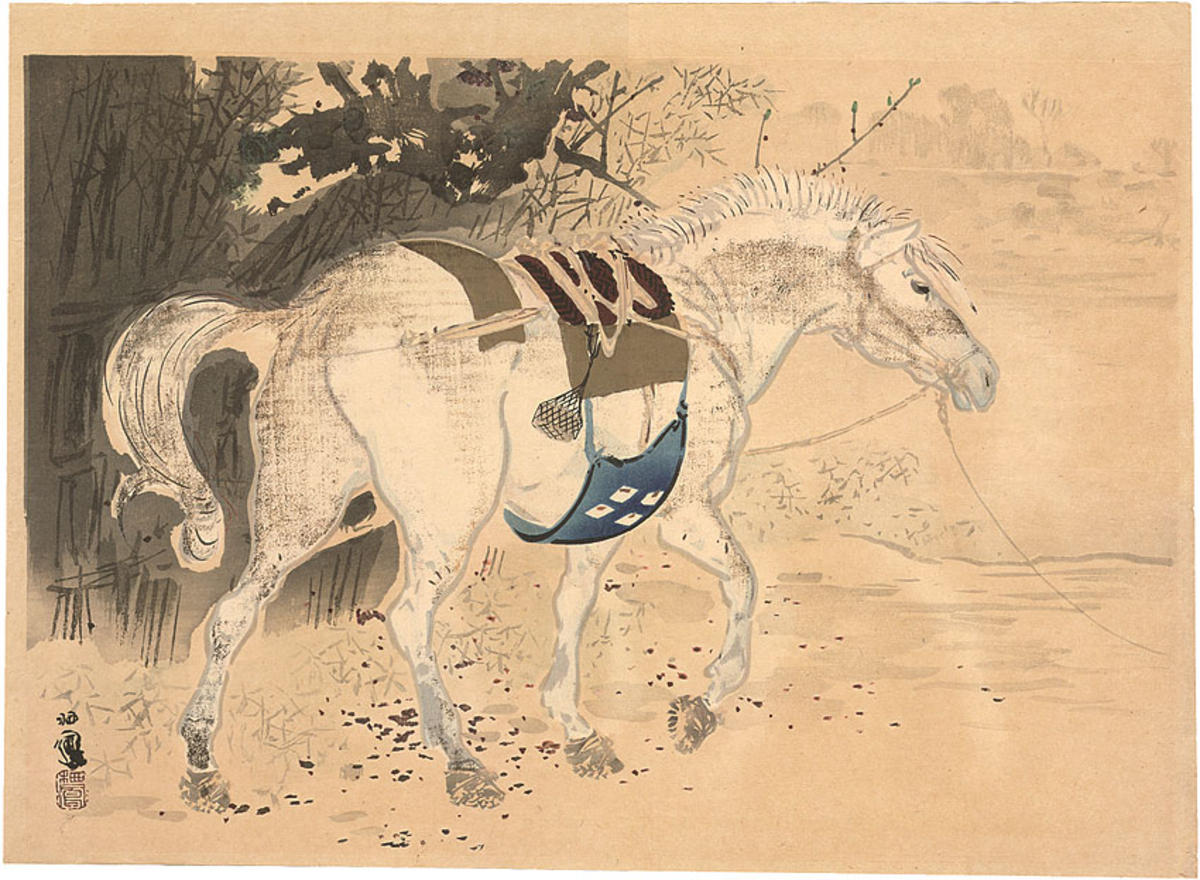
Horse, from the series "Twelve Signs of the Zodiac"
十二支 (午)
c. 1906
Color woodblock print

Still Life in Interior

Rooster and Hen, from the series "Album of Twelve Zodiacal Animals by the Artist Seiho (Seiho gahaku hitsu junishi cho)"
栖鳳画伯筆十二支帖 (酉)
c. 1910/12 (printed c. 1930s/40s)
Color woodblock print

Pears and Verse
梨と賛
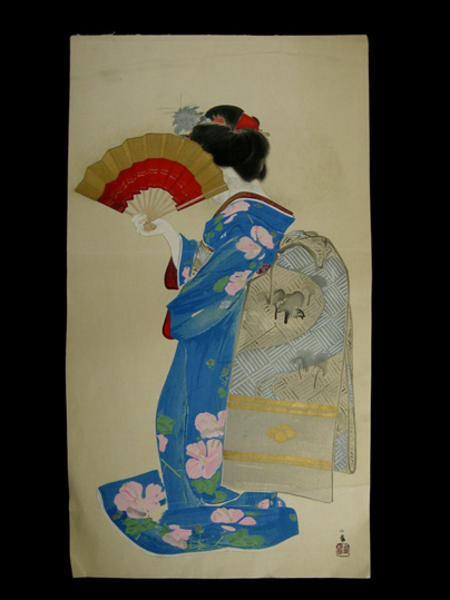
Maiko
舞妓
Color woodblock print
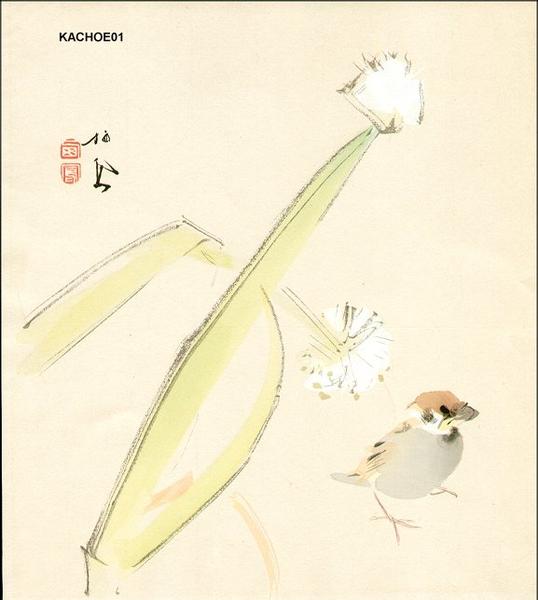
Sparrow
雀
Color woodblock print (shikishi-e)
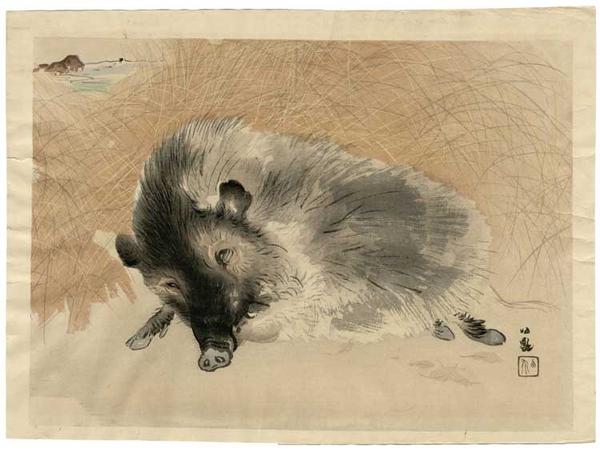
Boar, from the series "Twelve Signs of the Zodiac"
十二支 (亥)
c. 1910s/20s
Color woodblock print
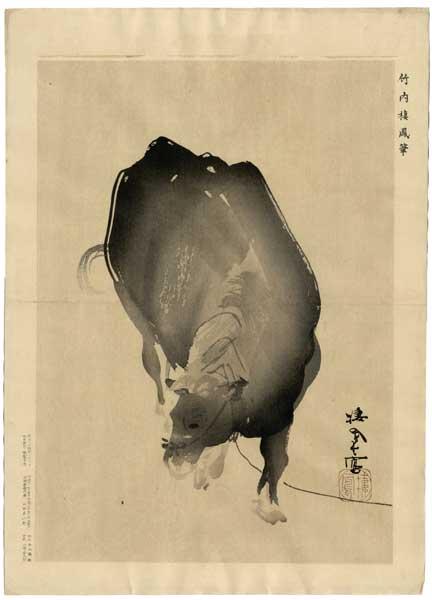
Ox, from the series "Twelve Signs of the Zodiac"
十二支 (丑)
c. 1910s/20s
Color woodblock print
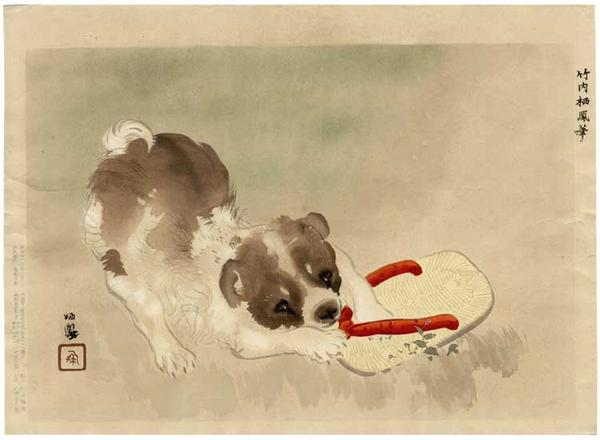
Dog, from the series "Twelve Signs of the Zodiac"
十二支 (戌)
c. 1910s/20s
Color woodblock print
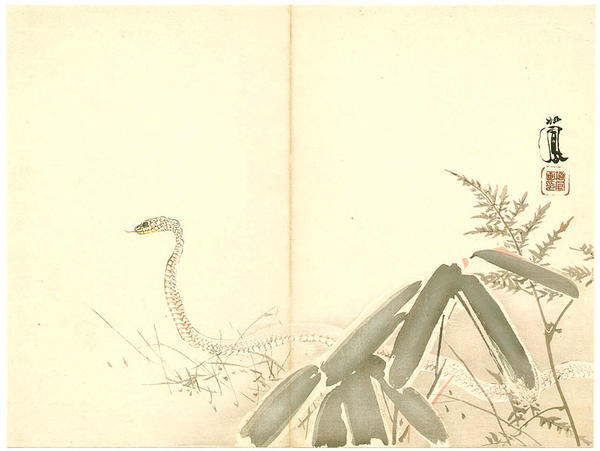
Snake
蛇
early 20th century
Color woodblock print

Seiho shogajo (Book of paintings and calligraphy by Seiho), 3 vols.
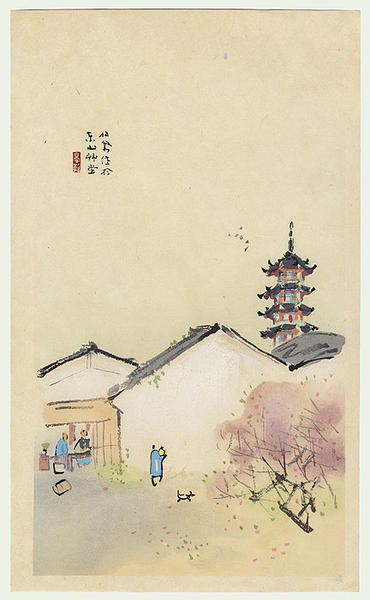
Pagoda Spire
塔
Color woodblock print
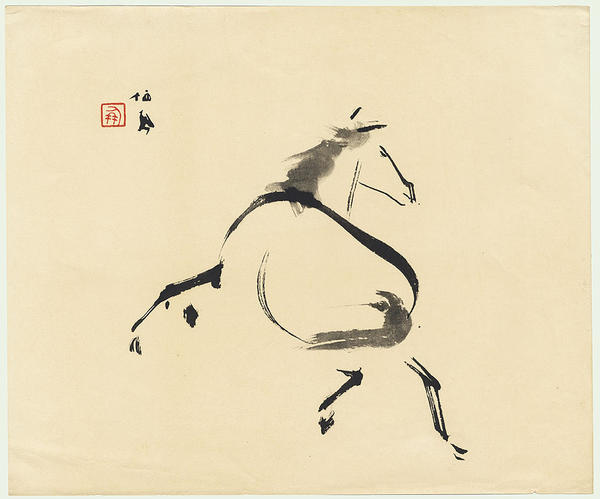
Galloping Horse
駆ける馬
Color woodblock print
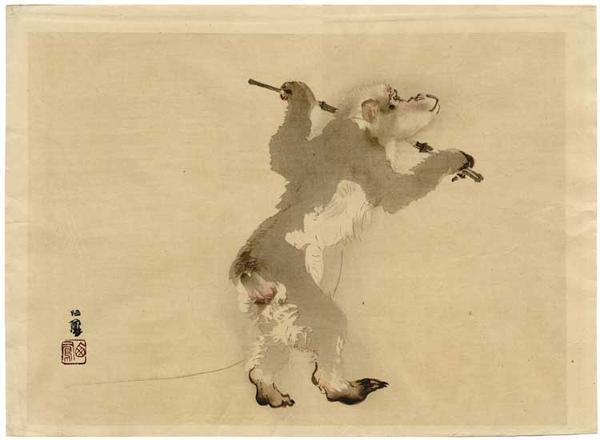
Monkey, from the series "Twelve Signs of the Zodiac"
十二支 (申)
c. 1910s/20s
Color woodblock print