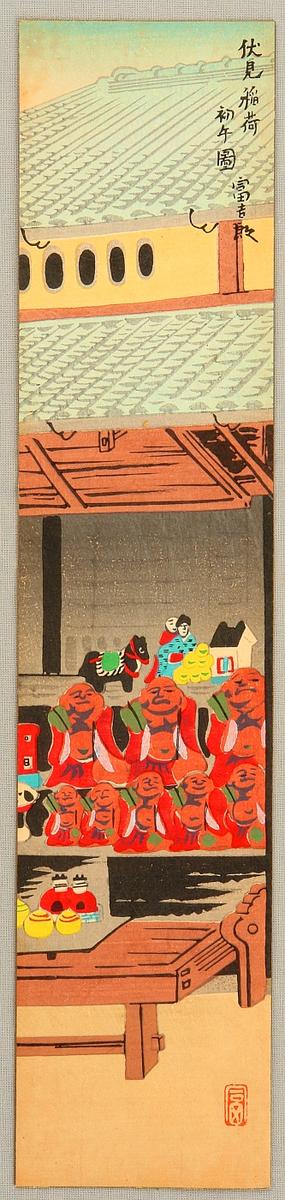
Fushimi Dolls
- Medium:
- Woodblock print
- Format:
- Oban
- Publisher:
- Unsodo
- Source:
- ukiyo-e.org
Description
Fushimi dolls — the clay figures that have been produced in Kyoto's Fushimi district since the Momoyama period, their brightly painted surfaces depicting gods, demons, animals, and folk heroes — are Tokuriki's subject in this print, the folk craft tradition of his native city treated with the same affectionate attention he brought to its temples and festivals. Fushimi dolls were among the most widely exported folk objects of Edo-period Japan, their bright colors and expressive forms crossing cultural boundaries more easily than more sophisticated art objects.
More Prints by Tomikichiro Tokuriki
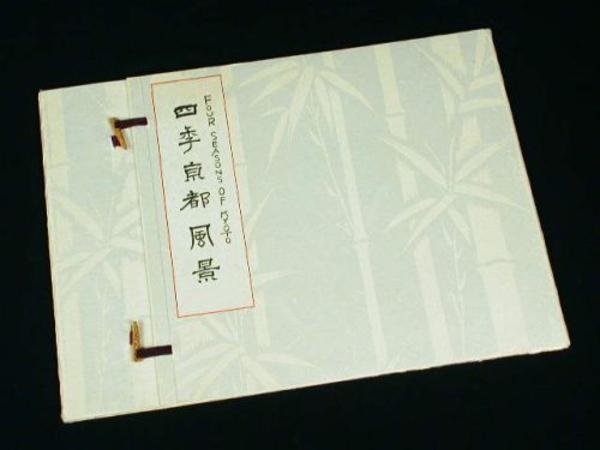
Heian Shrine in the Spring
Woodblock print
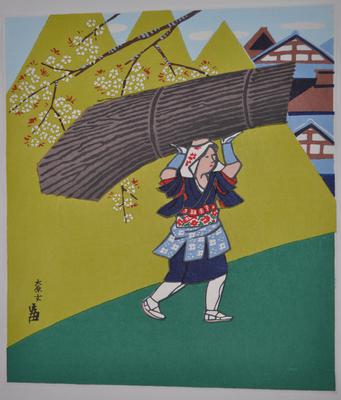
An Oharame Girl Carrying Firewood on Her Head
20th century
Woodblock print, ink and color on paper

April (Arashiyama Park, a Famous Scenic Resort)
四月 (嵐山)
second half 20th century
Woodblock print, ink and color on paper

June (Rainy Scene of the Sen-ke, Japanese Tea Ceremony Founder's House)
六月 (千家雨景)
second half 20th century
Woodblock print, ink and color on paper
More Still Life Prints


Featured in Collections
Curated cross-cuts that include this print.
Frequently Asked Questions
Fushimi Dolls was created by Tomikichiro Tokuriki (徳力富吉郎).
Fushimi Dolls uses Nishiki-e, Moku-hanga, and Kento, on woodblock print.
Fushimi Dolls was published by Unsodo.
Fushimi Dolls depicts still life, craftspeople, and daily life, set at Kyoto, Fushimi Inari.