
December (Snow Scene at the Golden Pavilion)
十二月 (金閣寺雪景)
- Series:
- Twelve Months of Kyoto (print 12 of 12)
- Date:
- second half 20th century
- Medium:
- Woodblock print, ink and color on paper
- Format:
- Chuban
- Dimensions:
- 25.1 × 28.3 cm
- Publisher:
- Unsodo
- Source:
- Minneapolis Institute of Art
Description
December (Snow Scene at the Golden Pavilion) depicts Kinkaku-ji, Kyoto's famed Temple of the Golden Pavilion, transformed by a winter snowfall. This print is part of Tomikichiro Tokuriki's celebrated Twelve Months of Kyoto series, created around 1970, which presents iconic Kyoto landmarks in their most characteristic seasonal settings throughout the calendar year.
Kinkaku-ji, originally built in 1397 as a retirement villa for the shogun Ashikaga Yoshimitsu, is one of Japan's most recognized cultural landmarks. Its top two stories are covered in gold leaf, and the pavilion sits at the edge of the Mirror Pond (Kyoko-chi), whose still waters reflect the golden structure. In Tokuriki's December scene, fresh snow covers the pavilion's distinctive three-tiered roofline and the surrounding garden, while the gold surfaces gleam beneath their white covering. The reflection of the snow-dusted golden building in the pond creates a doubled image of extraordinary beauty.
Tokuriki employed his characteristic bold palette and confident line work to render this beloved scene. As an artist who worked prolifically throughout the twentieth century, producing an estimated tens of thousands of prints, he developed an efficient yet visually compelling style suited to his ambitious series projects. The printing uses rich colors — the gold of the pavilion, the white of snow, the deep green of surrounding pines — applied in broad, clearly defined areas that give his work a distinctive graphic clarity.
The Twelve Months of Kyoto series represents one of Tokuriki's most successful achievements, systematically pairing Kyoto's greatest cultural sites with their ideal seasonal moments. December and the Golden Pavilion in snow is arguably the most iconic pairing in the series, as snow-covered Kinkaku-ji is widely considered one of the most beautiful sights in Japan. Tokuriki's version, held by the Minneapolis Institute of Art among other collections, has become one of the most recognizable prints in his extensive catalog and a beloved representation of Kyoto's winter beauty.
More Prints by Tomikichiro Tokuriki
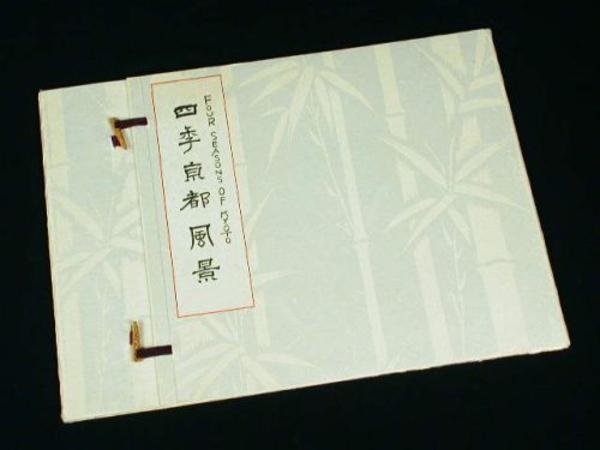
Heian Shrine in the Spring
Woodblock print
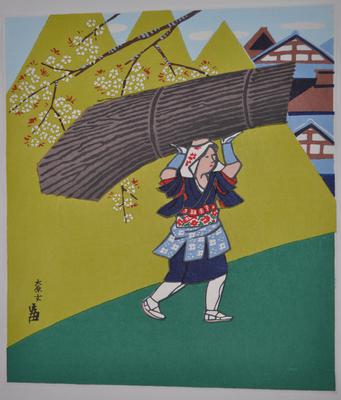
An Oharame Girl Carrying Firewood on Her Head
20th century
Woodblock print, ink and color on paper

April (Arashiyama Park, a Famous Scenic Resort)
四月 (嵐山)
second half 20th century
Woodblock print, ink and color on paper

June (Rainy Scene of the Sen-ke, Japanese Tea Ceremony Founder's House)
六月 (千家雨景)
second half 20th century
Woodblock print, ink and color on paper
More Snow Scenes Prints
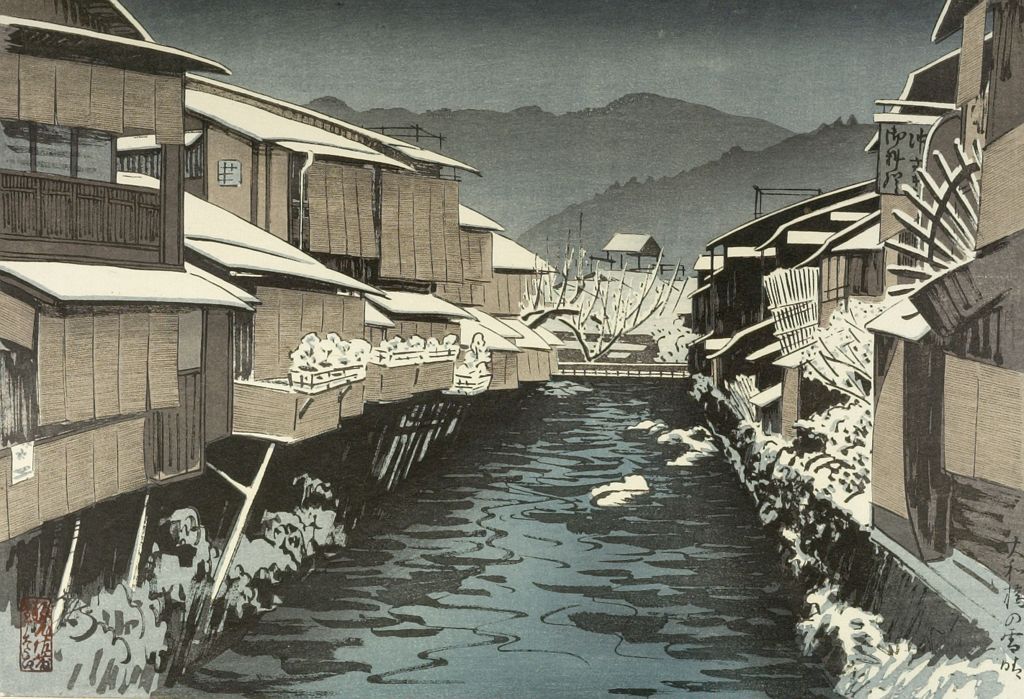
Fair Weather After Snow at Yamato Bridge, Kyoto (Yamato bashi no yukibare), Taishô period, dated 1924
Woodblock print

The Compound of the Tenman Shrine at Kameido in the Snow (Kameido Tenmangu keidai no yuki), from the series "Famous Places in the Eastern Capital (Toto meisho)"
c. 1832/38
Color woodblock print; oban

Miyajima in Snow (Yuki no Miyajima)
Yuki no Miyajima
1929
Color woodblock print; oban
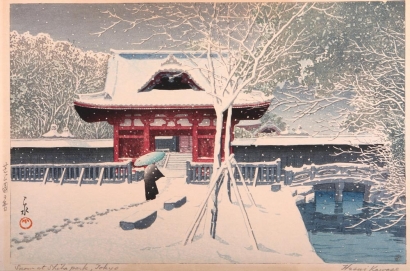
Evening Snow at Shiha Park, Tokyo
1932
Woodblock print
Featured in Collections
Curated cross-cuts that include this print.
Frequently Asked Questions
December (Snow Scene at the Golden Pavilion) (十二月 (金閣寺雪景)) was created by Tomikichiro Tokuriki (徳力富吉郎) in second half 20th century.
Yes — December (Snow Scene at the Golden Pavilion) is part of the Twelve Months of Kyoto series (print 12 of 12) by Tomikichiro Tokuriki.
December (Snow Scene at the Golden Pavilion) uses Nishiki-e, Moku-hanga, and Kento, on woodblock print, ink and color on paper.
December (Snow Scene at the Golden Pavilion) was published by Unsodo (second half 20th century).
December (Snow Scene at the Golden Pavilion) depicts snow scenes and architecture, set at Kyoto, Kinkaku-ji.
December (Snow Scene at the Golden Pavilion) measures 25.1 × 28.3 cm (Chuban format).