Biography
Toshi Yoshida (吉田遠志, 1911–1995) was a Japanese woodblock print artist who inherited one of the most celebrated names in modern printmaking and built upon it a career spanning six decades, thousands of designs, and a distinctive body of wildlife and nature prints without precedent in Japanese woodblock tradition. Born on July 25, 1911, in Tokyo, he was the eldest son of the landscape printmaker Hiroshi Yoshida and his wife Fujio, herself a painter. He grew up in the family's Tokyo studio, surrounded by professional carvers, printers, and stacks of cherry-wood blocks.
Toshi's childhood was shaped by a physical disability — one of his legs was paralyzed in early childhood, keeping him out of school for extended periods. During this confinement he watched his father's workshop in operation and, encouraged by his grandmother Rui, spent hours sketching the animals he could observe from home. This early fascination with wildlife would become the defining subject of his artistic career. In 1926, at the age of fifteen, he deliberately chose animals as his primary theme to distinguish his work from his father's landscapes.
Father and son traveled together extensively. Between 1930 and 1931, Hiroshi and Toshi journeyed to India, Shanghai, Hong Kong, Malaysia, Singapore, and Burma, sketching side by side. These early voyages provided sketches and visual memories that informed his work for decades, and they established a pattern of international travel that continued throughout his life — eventually including a voyage to Antarctica.
After Hiroshi's death in 1950, Toshi assumed leadership of the Yoshida studio and underwent a radical artistic transformation. Influenced by his younger brother Hodaka, who was pursuing pure abstraction, Toshi began a series of abstract woodblock prints in 1952 that represented a complete departure from the naturalistic tradition in which he had been raised. Over the following two decades he produced some three hundred non-objective prints, demonstrating a restless creative ambition that prevented him from settling into comfortable repetition.
In 1971, Toshi returned to the animal and bird subjects that had drawn him from boyhood, capturing them with a naturalist's precision and a printmaker's sensitivity to color and atmosphere. But his most striking innovation came from his travels to East Africa. The resulting African wildlife prints — elephants against savanna sunsets, flamingos wading in shallow lakes, lions in tall grass, zebras crossing open plains — brought a subject matter entirely new to Japanese woodblock tradition. These prints found enthusiastic collectors worldwide, and their luminous atmospheres, built through many separate color impressions using the traditional mokuhanga method, demonstrated the remarkable range of effects the medium could achieve.
Toshi was equally prolific as a landscape artist, producing extensive series documenting national parks and famous views across Japan as well as prints inspired by his travels to Europe, the Americas, and Southeast Asia. His technical range was formidable: some prints employed fifty or more separate color impressions, building up luminous atmospheres through transparent layers of pigment in the traditional mokuhanga method. At the Yoshida studio, he maintained the collaborative system his father had established, employing skilled carvers and printers while exercising close artistic supervision over every stage of production.
Toshi was also a dedicated educator and advocate for Japanese woodblock technique as a living art form. In 1980 he founded an art center in Miasa, in Nagano Prefecture, that attracted international students, including Karyn Young, Carol Jessen, Sarah Brayer, and Micah Schwaberow, all of whom went on to significant careers as printmakers. Through teaching, published instructional texts, and demonstrations abroad, he helped transmit mokuhanga technique to a new generation of practitioners worldwide.
Toshi Yoshida's total output eventually numbered well over a thousand designs, making him one of the most prolific printmakers in the history of mokuhanga. He died on July 1, 1995, at the age of eighty-three. His work is held by major institutions including the Art Institute of Chicago, the Museum of Modern Art, the British Museum, the Los Angeles County Museum of Art, and the Minneapolis Institute of Art.
Key Facts
- Active Period
- 1911–1995
- Nationality
- 🇯🇵Japan
- Movements
- Shin-hangaSōsaku-hanga
- Works Indexed
- 100
Frequently Asked Questions
Toshi Yoshida (吉田遠志, 1911–1995) was a Japanese woodblock print artist who inherited one of the most celebrated names in modern printmaking and built upon it a career spanning six decades, thousands of designs, and a distinctive body of wildlife and nature prints without precedent in Japanese woodblock tradition. Born on July 25, 1911, in Tokyo, he was the eldest son of the landscape printmaker Hiroshi Yoshida and his wife Fujio, herself a painter. He grew up in the family's Tokyo studio, surrounded by professional carvers, printers, and stacks of cherry-wood blocks.
Toshi Yoshida was active from 1911 to 1995. They were associated with the Shin-hanga and Sōsaku-hanga movements.
Toshi Yoshida's work was shaped by the Shin-hanga and Sōsaku-hanga traditions in Japanese woodblock printmaking. Shin-hanga: ## What is Shin-hanga? Shin-hanga (新版画), literally "new prints," is the early twentieth-century revival of the collaborative Japanese woodblock workshop, organized between roughly 1915 and 1960 by the Tokyo publisher Watanabe Shōzaburō (1885–1962) and a handful of competing houses. Sōsaku-hanga: ## What is sōsaku-hanga? Sōsaku-hanga (創作版画, "creative prints") was a twentieth-century Japanese print movement defined by a single commitment: the artist must design, carve, and print every work alone.
Toshi Yoshida's prints frequently feature temples & shrines, birds & flowers, landscapes, bridges, seascapes, trees.
Original prints by Toshi Yoshida can be found in collections including ukiyo-e.org, Art Institute of Chicago, Art Gallery of Greater Victoria.
Based on 1601 recorded auction sales from 2010–2025, most Toshi Yoshida prints sold in the $200–$375 range, with a median around $260. Top results exceeded $500. Actual prices vary widely with edition, condition, and subject.
External Resources
Series by Toshi Yoshida
Woodblock Prints by Toshi Yoshida (100)

Ishiyama Temple (Ishiyamadera)
石山寺
1946
Color woodblock print
Shrine of the Paper Makers
1951
Woodblock print, ink and color on paper

Heirinji Temple Bell (Tsuriganedo), from the series "Four Landscapes" ("Fukei yondai")
釣鐘堂
1951
Color woodblock print

Opus No. 2
1952
Color woodblock print
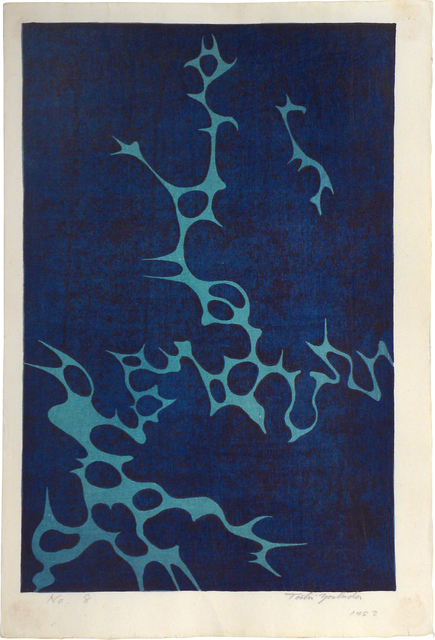
No. 8
1952
Woodblock print
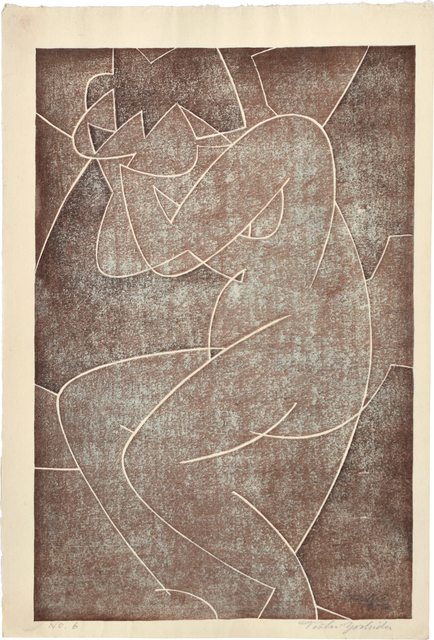
No. 6
1952
Woodblock print

Opus No. 12
1953
Woodblock print

German Girl
1954
Color woodblock print

Woman in Bagdad
1954
Color woodblock print

Myōkō Hot Springs
1955
Woodblock print, ink and color on paper
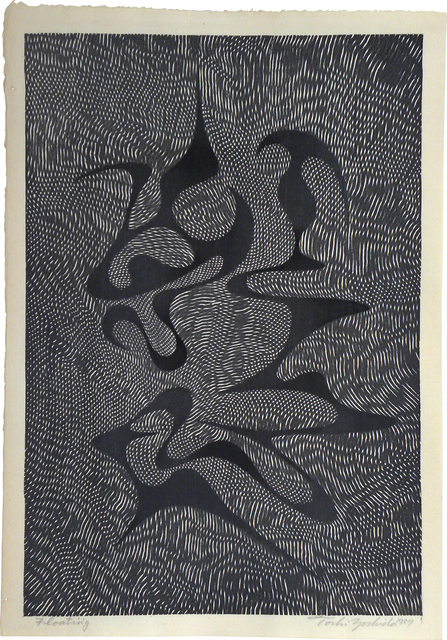
Floating
1957
Woodblock print
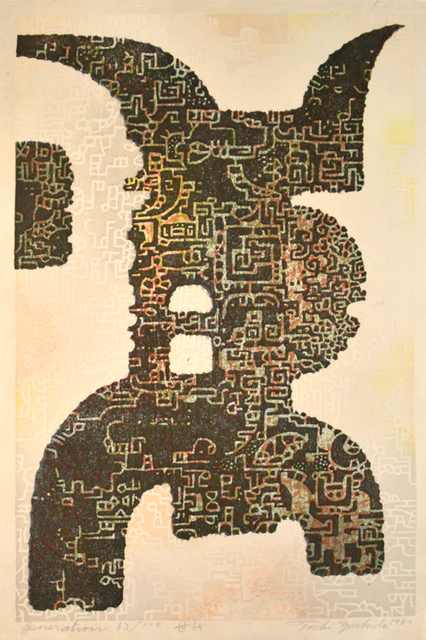
Generation
1962
Woodblock Print
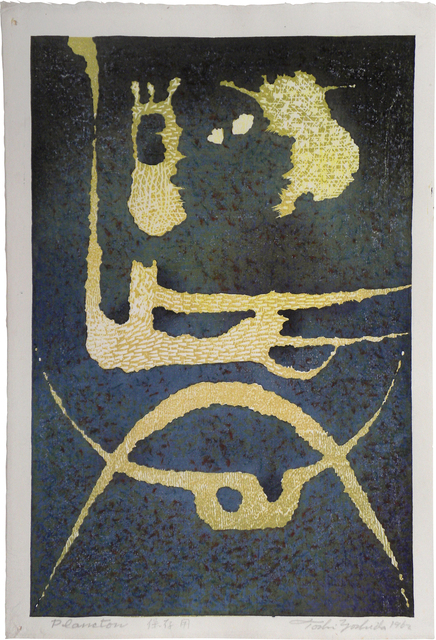
Plancton
1962
Woodblock print
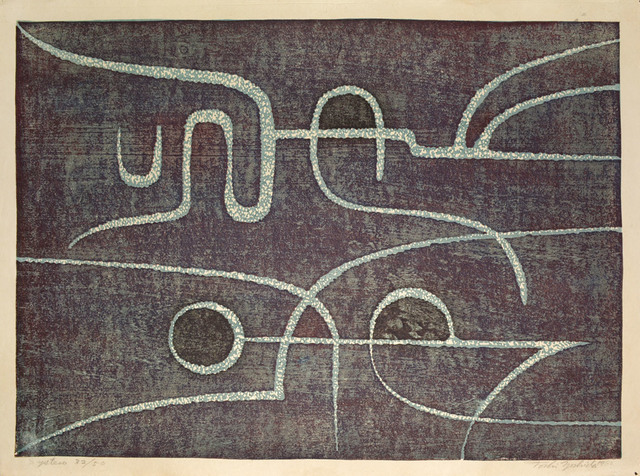
System
1962
Woodblock Print
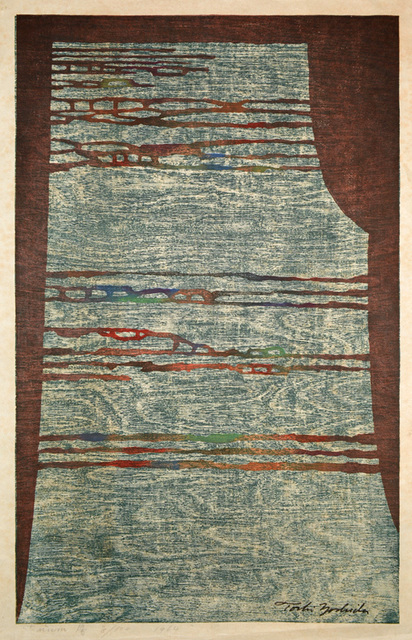
Stratum
1964
Woodblock Print
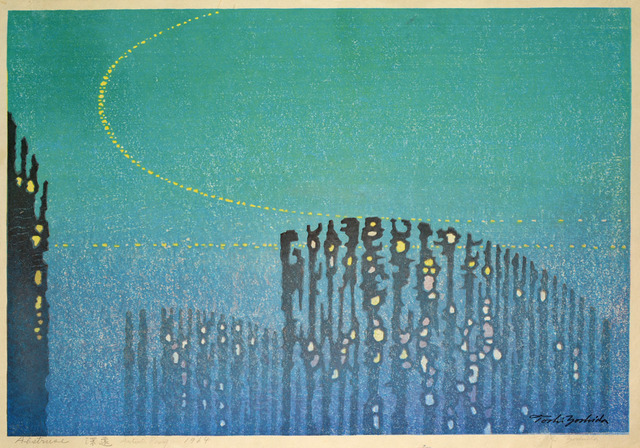
Abstruse
1964
Woodblock Print
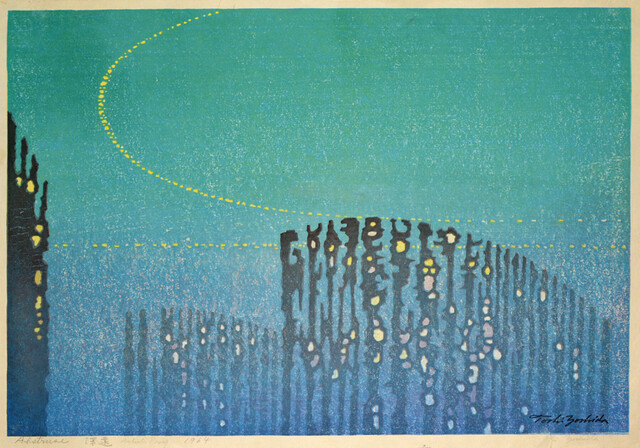
Abstruse
1964
Woodblock Print
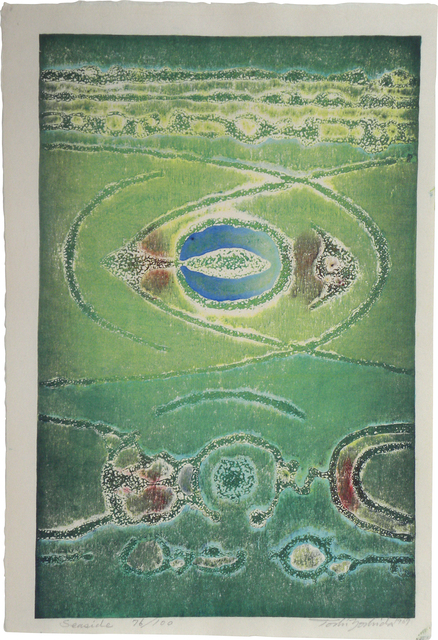
Seaside
1967
Woodblock print
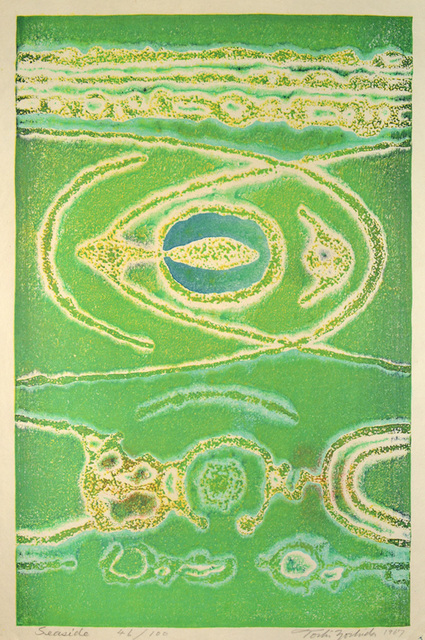
Seaside
1967
Woodblock Print

Unknown (Michi no)
未知の
1968
Color woodblock print
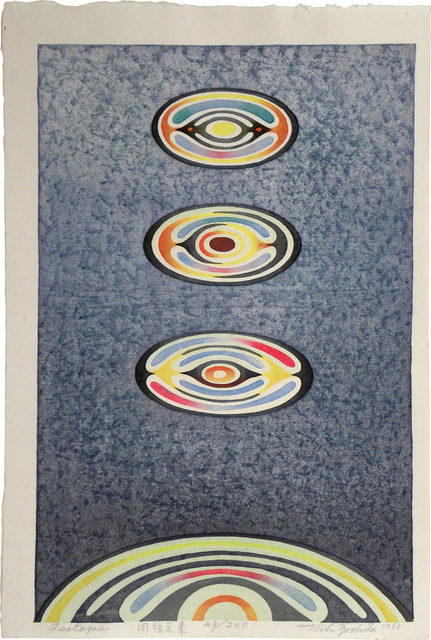
Isotope
1968
Woodblock print
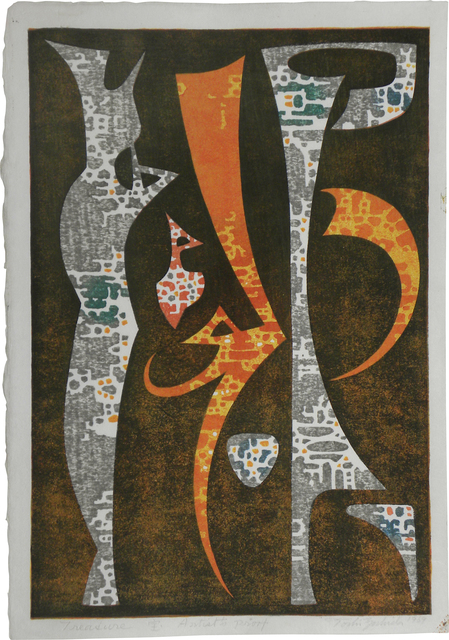
Treasure
1969
Woodblock print
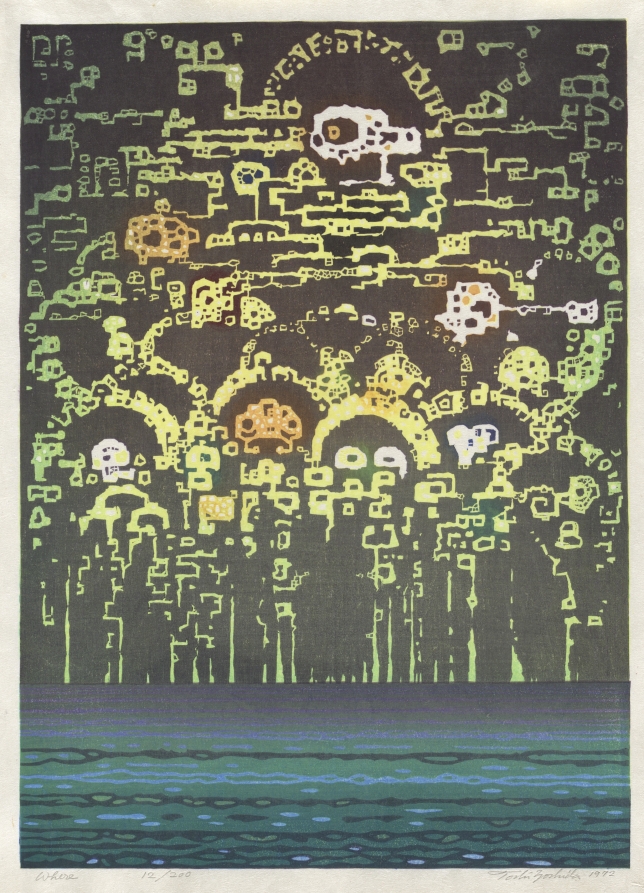
Where
1972
Color woodcut

Peaceful Wild Animals
1974
Color woodblock print