
The Village of Kotaba
by Asai Chu
- Date:
- 1893
- Medium:
- Oil on canvas
Description
The Village of Kotaba, painted by Asai Chu in 1893, is one of the artist's most fully realized statements of Meiji yoga (Western-style) plein-air practice applied to a specifically Japanese rural subject. By the early 1890s Asai had been a co-founder of the Meiji Bijutsukai (Meiji Art Society) for several years and stood at the head of the second wave of Japanese Western-style painters who took the lessons of Antonio Fontanesi's Kobu Bijutsu Gakko (Technical Fine Art School) studio out of the classroom and into the fields and villages of central Japan. Kotaba, a small farming settlement that Asai visited in the early 1890s, gave him a motif perfectly suited to that programme: thatched farmhouses, an undulating ridge of cultivated ground, and figures absorbed into work on the land, all bathed in the diffused atmospheric light favored by Barbizon-school naturalism. He builds the composition out of broad tonal masses rather than linear contours, allowing greens, ochres, and dusty roof-thatch browns to carry the picture's weight while small figures lend scale. The painting is preserved in the Mie Prefectural Art Museum and reproduced through Wikimedia Commons (https://commons.wikimedia.org/wiki/File:Asai_chu_kotaba.jpg). For historians of Meiji yoga, The Village of Kotaba is significant on multiple counts: it is among the most ambitious Japanese rural landscapes Asai produced before his 1900-1902 residence in France, it shows the Fontanesi inheritance fully digested and transposed onto the Japanese countryside, and it foreshadows the Kotaba motifs he would continue to revisit in later works such as the Chiba Prefectural Museum's Kotaba Village. As a benchmark of pre-1907 Japanese plein-air painting and a key piece in the Meiji Bijutsukai's argument that Western-style painting could be a serious vehicle for the depiction of Japan itself, the Kotaba canvas remains essential to any account of Asai Chu's career.
More Prints by Asai Chu


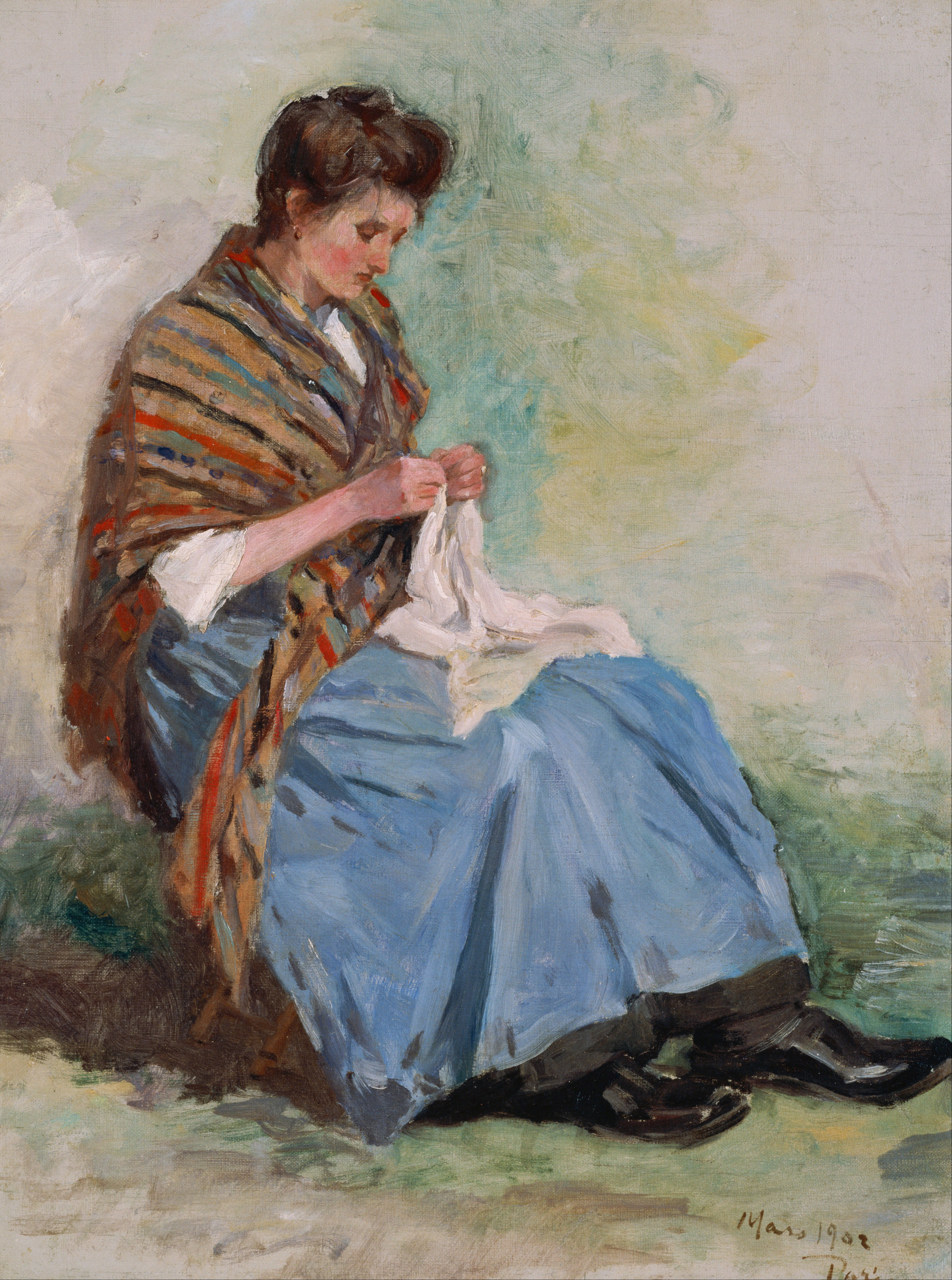
More Landscapes Prints

Lake Kugushi in Wakasa Province (Wakasa Kugushiko), from the series Souvenirs of Travel I (Tabi miyage dai isshu)"
Wakasa Kugushiko
1920
Color woodblock print; oban
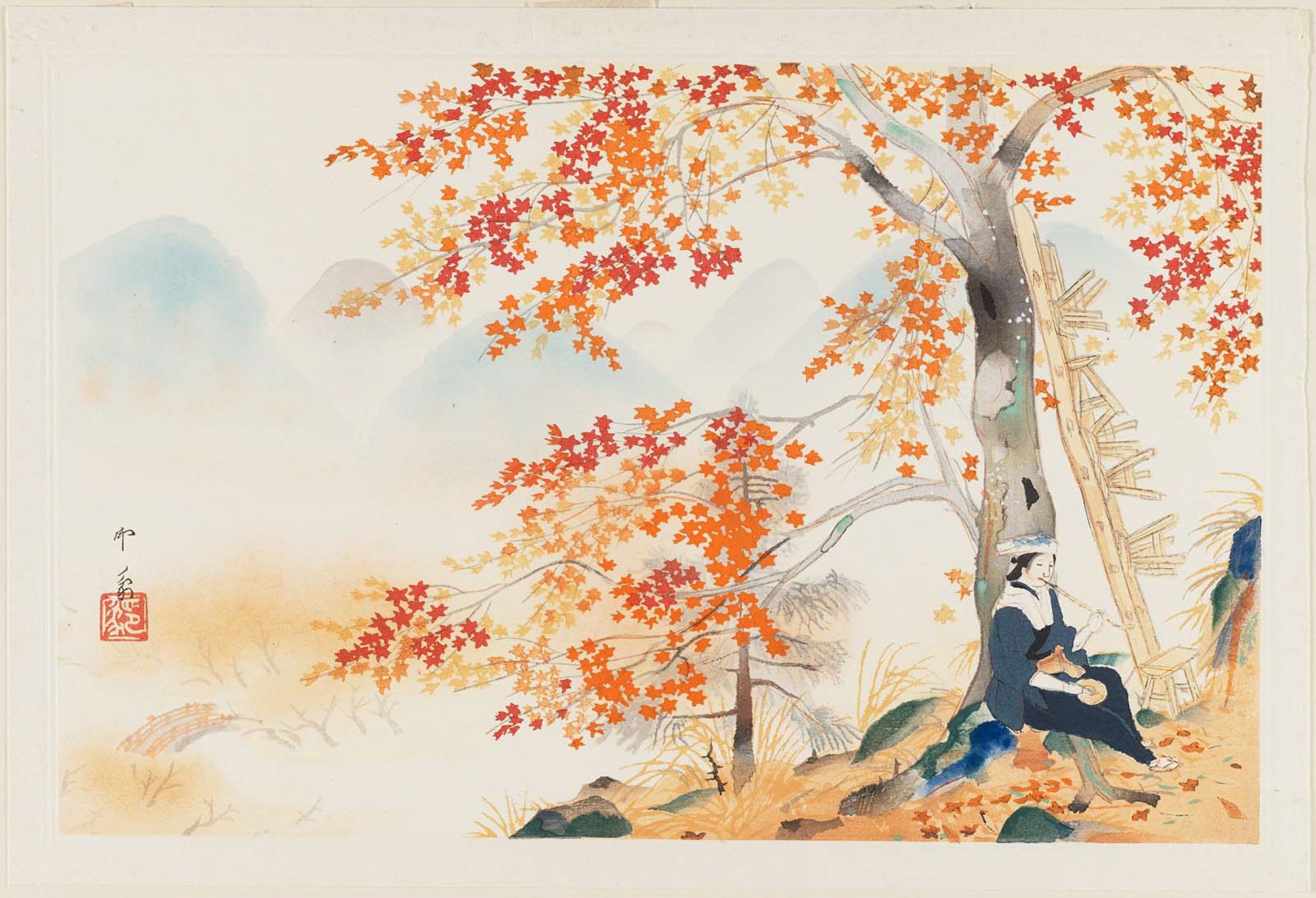
Autumn Maple Leaves at Takao, from the album Eight Views of Kyoto (Kyôto hakkei)
Woodblock print

The Beach at Kaiganji in Sanuki Province (Sanuki Kaiganji no hama), from the series "Collection of Views of Japan II, Kansai Edition (Nihon fukei shu II Kansai hen)"
1934
Color woodblock print; oban

Tea Kettle, section of a sheet from the series "Mirror of Stone Rubbings of Views of the Provinces" (Kohon meihitsu ishizuri kagami)
n.d.
Woodblock print; ishizuri-e, section of harimaze sheet
Featured in Collections
Curated cross-cuts that include this print.
Frequently Asked Questions
The Village of Kotaba was created by Asai Chu (浅井忠) in 1893.
The Village of Kotaba depicts landscapes.