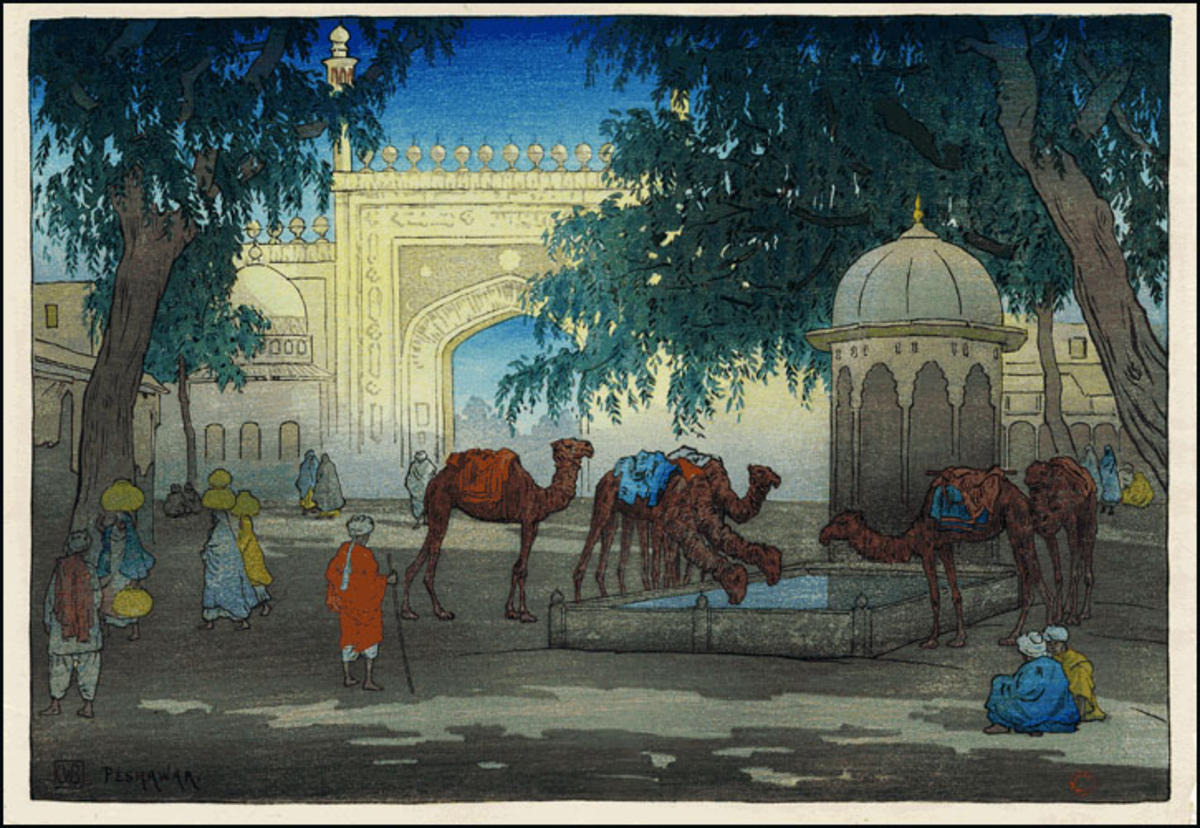
Peshawar
- Date:
- Not set
- Medium:
- Woodblock print
- Format:
- Oban
- Source:
- Japanese Art Open Database
Description
Peshawar depicts the ancient frontier city in what is now northwestern Pakistan, a crossroads settlement that has connected Central Asia, Afghanistan, and the Indian subcontinent for over two thousand years. In Bartlett's era, Peshawar was the capital of the North-West Frontier Province of British India, a garrison city where the cultures of the Afghan Pashtun borderlands met the administrative apparatus of the British Raj.
Bartlett's oban woodblock print captures the visual character of this frontier city: its bazaars, its mosque minarets, the mix of Afghan, Pashtun, and British colonial architecture, and the constant presence of the mountains that define the northwest frontier landscape. The print extends the geographic range of the Japanese woodblock medium to one of its most remote outposts, depicting a subject that no Japanese printmaker had attempted. Bartlett's watercolorist's eye for atmospheric haze and dust-filtered light serves the arid frontier environment particularly well.
More Prints by Charles W. Bartlett

More Urban Scenes Prints
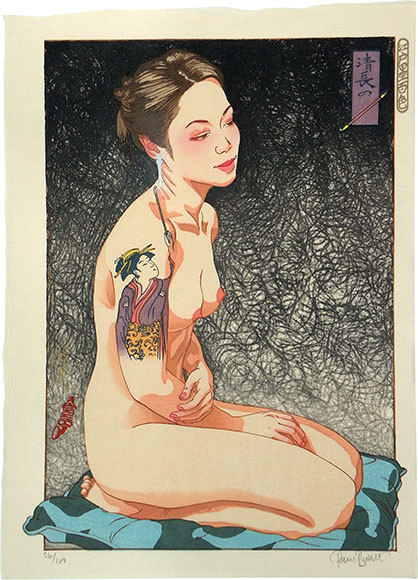
A Hundred Shades of Ink of Edo: Kiyonaga's Pipe (Edo zumi hyaku shoku: Kiyonaga no kiseru)
Woodblock print

View of Kabuki Theater from Matsuya (Ginza Matsuya yori Kabukiza), no. 3 from the series "Pictures of Ginza, First Series (Gashu Ginza dai isshu)"
1928
Color lithograph

Distant View of Mitsukoshi Movie Theater in Shinjuku from the Sixth Floor of Hoteiya (Hoteiya rokkai kara Shinjuku Mitsukoshi Musashi no kan enbo zu), no. 1 from the series "Scenery of Shinjuku (Gashu Shinjuku fukei)"
1930
Color lithograph
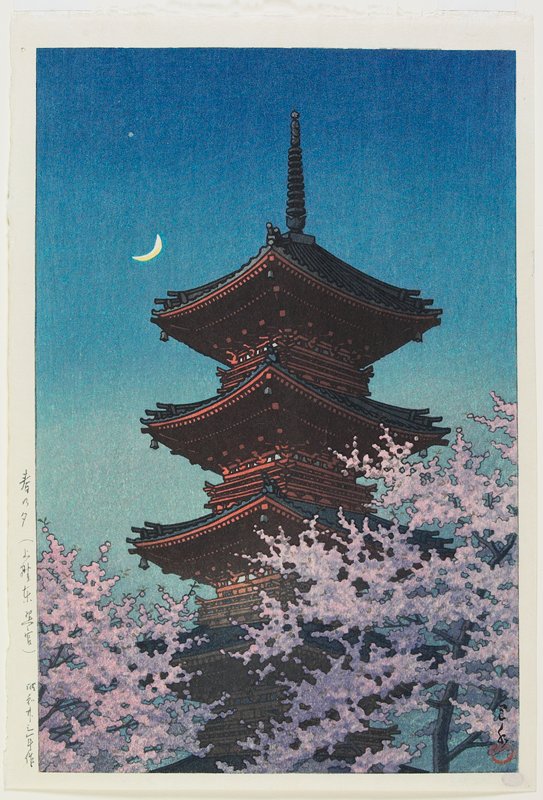
Spring Dusk at the Tōshō Shrine in Ueno
1948
Woodblock print, ink and color on paper
Featured in Collections
Curated cross-cuts that include this print.
Frequently Asked Questions
Peshawar was created by Charles W. Bartlett in Not set.
Peshawar depicts urban scenes, figures, and travel scenes.