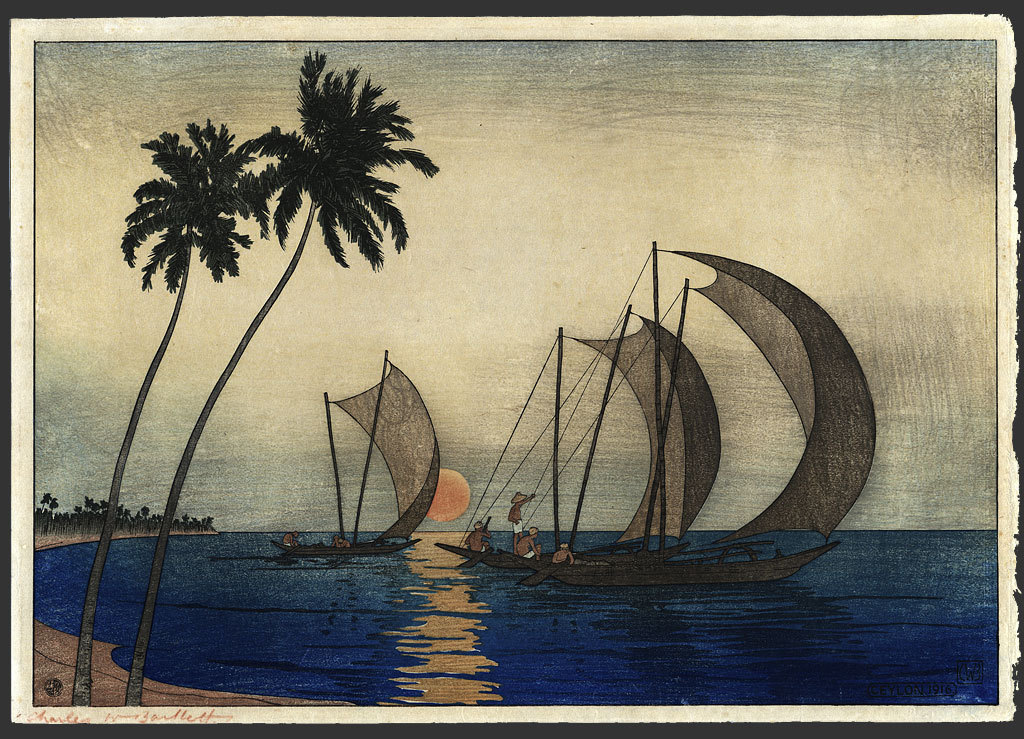
Ceylon
- Date:
- 1916
- Medium:
- Woodblock print
- Format:
- Oban
- Source:
- Art of Japan
Description
Ceylon depicts the island's tropical landscape and culture through Bartlett's practiced eye for light, color, and architectural form. Created in 1916, this oban woodblock print belongs to the same body of work as Bartlett's other South Asian prints, produced during or shortly after his extensive travels through the region.
The island of Ceylon, positioned off India's southern tip, offered Bartlett a subject distinct from the subcontinental landscapes he depicted elsewhere. The Portuguese, Dutch, and British colonial presence had layered European architectural elements over the island's ancient Buddhist and Hindu structures, creating a visual environment of unusual cultural complexity. Bartlett's woodblock technique, learned from Japanese craftsmen, gave him a printing method capable of rendering the lush greens and vivid blues of the tropical landscape with a clarity and luminosity that Western printmaking methods of the era could not easily match.
More Prints by Charles W. Bartlett

More Landscapes Prints

Lake Kugushi in Wakasa Province (Wakasa Kugushiko), from the series Souvenirs of Travel I (Tabi miyage dai isshu)"
Wakasa Kugushiko
1920
Color woodblock print; oban
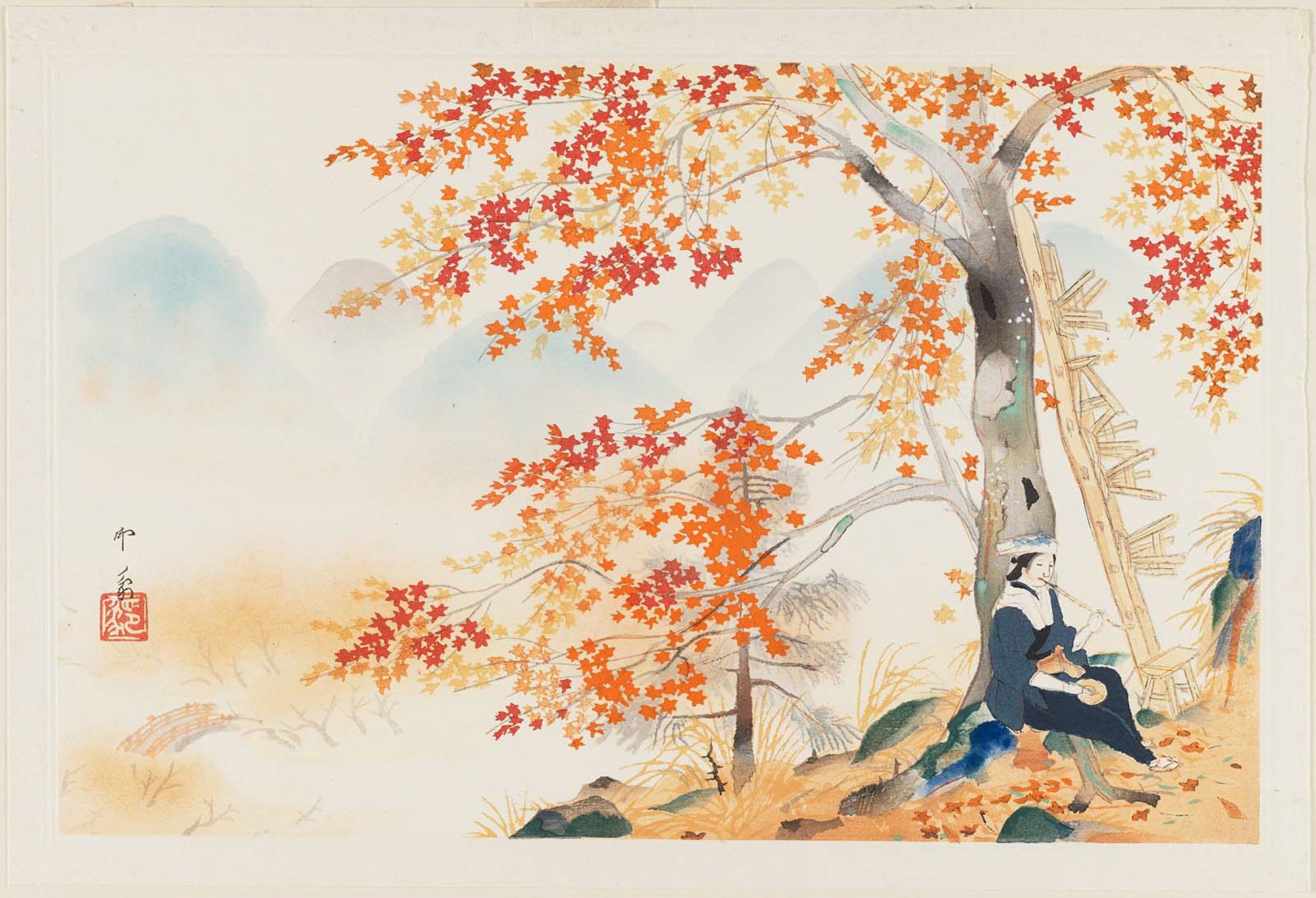
Autumn Maple Leaves at Takao, from the album Eight Views of Kyoto (Kyôto hakkei)
Woodblock print

The Beach at Kaiganji in Sanuki Province (Sanuki Kaiganji no hama), from the series "Collection of Views of Japan II, Kansai Edition (Nihon fukei shu II Kansai hen)"
1934
Color woodblock print; oban

Tea Kettle, section of a sheet from the series "Mirror of Stone Rubbings of Views of the Provinces" (Kohon meihitsu ishizuri kagami)
n.d.
Woodblock print; ishizuri-e, section of harimaze sheet
Featured in Collections
Curated cross-cuts that include this print.
Frequently Asked Questions
Ceylon was created by Charles W. Bartlett in 1916.
Ceylon depicts landscapes and travel scenes.