
Fujiyama-First Light of the Sun, from the series "Ten Views of Fuji"
- Series:
- Ten Views of Mount Fuji (print 2 of 10)
- Date:
- 1926
- Medium:
- Color woodblock print
- Format:
- Oban
- Dimensions:
- 76.5 × 59.5 cm
- Publisher:
- Yoshida Studio
- Source:
- Art Institute of Chicago
Description
Fujiyama — First Light of the Sun is a magnificent print from Hiroshi Yoshida's Ten Views of Fuji series, published in 1926. The composition captures Japan's most sacred mountain at the transcendent moment when the first rays of dawn strike its snow-covered peak, suffusing the summit with a warm golden-pink radiance while the lower slopes and surrounding landscape remain cloaked in the cool blue shadows of retreating night. This fleeting phenomenon, known in Japanese as goraiko (the arrival of light), has inspired artists and pilgrims for centuries, and Yoshida's interpretation ranks among the most compelling modern renderings of the subject.
The Ten Views of Fuji series places Yoshida in direct dialogue with the great ukiyo-e masters who preceded him, most notably Katsushika Hokusai, whose Thirty-six Views of Mount Fuji (1830-1832) remains one of the most iconic series in Japanese art history. While Yoshida deeply respected this tradition, his approach was fundamentally different. Where Hokusai used bold outlines and flat color planes, Yoshida employed the atmospheric naturalism he had developed through decades of Western-style oil and watercolor painting. The result is a Mount Fuji that feels observed rather than idealized, grounded in specific meteorological conditions rather than symbolic abstraction.
The technical execution of this print required extraordinary precision in color gradation. The bokashi technique was employed extensively to create the seamless transition from the warm sunrise tones at the peak to the cool violet shadows at the base. The sky behind the mountain shifts through a complex spectrum of colors — from deep blue at the top of the composition through bands of green, yellow, and orange near the horizon — requiring numerous separate color blocks printed in careful sequence.
As part of Yoshida's broader engagement with Mount Fuji as a subject, this print demonstrates his conviction that Japan's landscape could be interpreted with fresh eyes through the synthesis of Eastern printmaking craft and Western painterly observation.
More Prints by Hiroshi Yoshida
More Landscapes Prints

Lake Kugushi in Wakasa Province (Wakasa Kugushiko), from the series Souvenirs of Travel I (Tabi miyage dai isshu)"
Wakasa Kugushiko
1920
Color woodblock print; oban
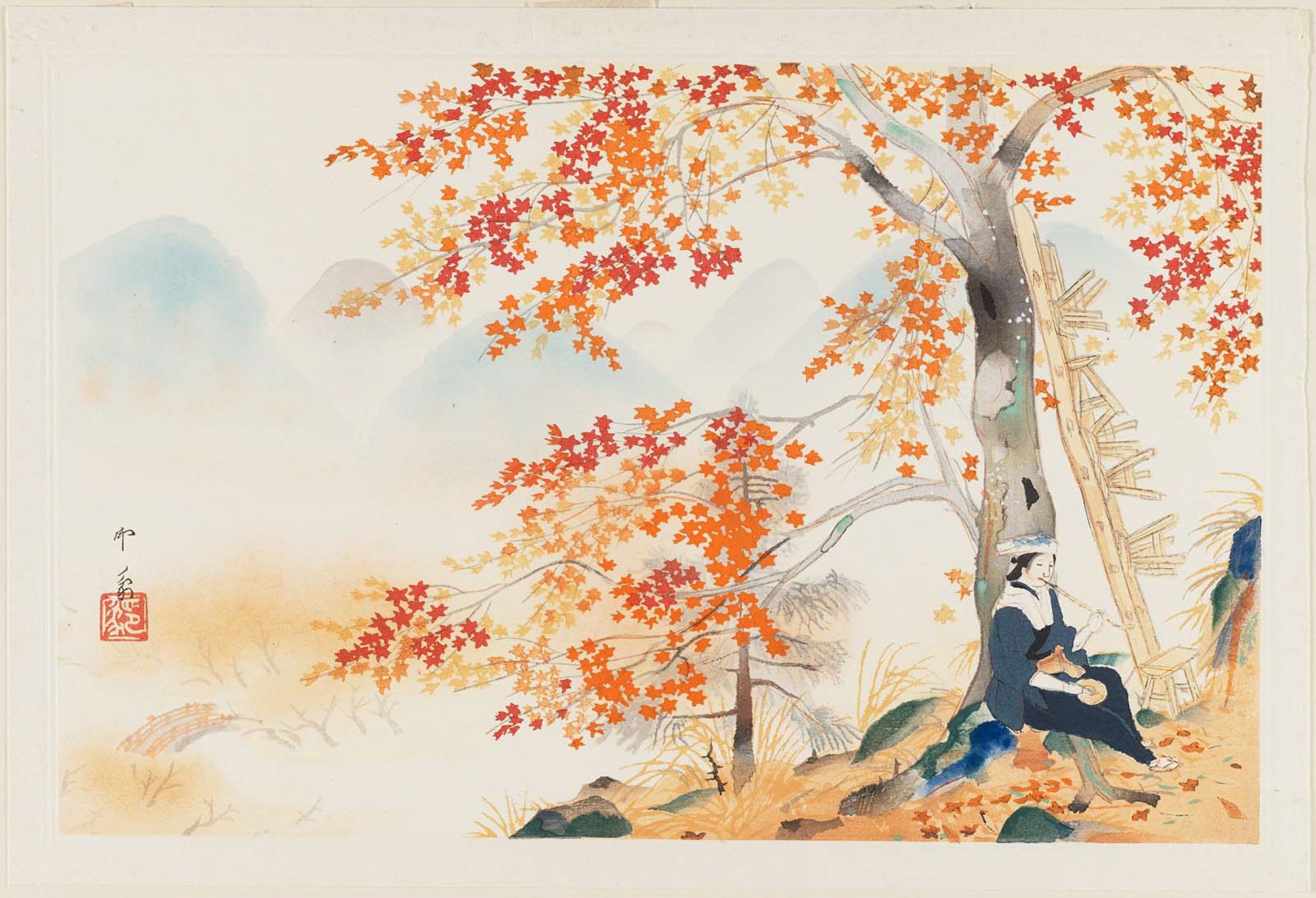
Autumn Maple Leaves at Takao, from the album Eight Views of Kyoto (Kyôto hakkei)
Woodblock print

The Beach at Kaiganji in Sanuki Province (Sanuki Kaiganji no hama), from the series "Collection of Views of Japan II, Kansai Edition (Nihon fukei shu II Kansai hen)"
1934
Color woodblock print; oban

Tea Kettle, section of a sheet from the series "Mirror of Stone Rubbings of Views of the Provinces" (Kohon meihitsu ishizuri kagami)
n.d.
Woodblock print; ishizuri-e, section of harimaze sheet
Featured in Collections
Curated cross-cuts that include this print.
Frequently Asked Questions
Fujiyama-First Light of the Sun, from the series "Ten Views of Fuji" was created by Hiroshi Yoshida (吉田博) in 1926.
Yes — Fujiyama-First Light of the Sun, from the series "Ten Views of Fuji" is part of the Ten Views of Mount Fuji series (print 2 of 10) by Hiroshi Yoshida.
Fujiyama-First Light of the Sun, from the series "Ten Views of Fuji" uses Bokashi, Nishiki-e, and Moku-hanga, on color woodblock print.
Fujiyama-First Light of the Sun, from the series "Ten Views of Fuji" was published by Yoshida Studio (1926).
Fujiyama-First Light of the Sun, from the series "Ten Views of Fuji" depicts landscapes and mount fuji, set at Mount Fuji.
Fujiyama-First Light of the Sun, from the series "Ten Views of Fuji" measures 76.5 × 59.5 cm (Oban format).