
Fujiyama from Suzukawa
- Date:
- 1928
- Medium:
- Color woodblock print
- Format:
- Oban
- Dimensions:
- 19.9 × 10.1 cm
- Publisher:
- Yoshida Studio
- Source:
- Art Institute of Chicago
Description
Yoshida viewed Fuji from Suzukawa — a small settlement at the mountain's southeastern base in Shizuoka Prefecture — in this 1928 print that positions the viewer at low elevation looking up and across the surrounding foothills toward the summit. The Suzukawa viewpoint offers a less-iconic but more intimate vantage than the famous views from Miho or Lake Kawaguchi, and Yoshida's treatment emphasizes the mountain's relationship to its immediate forested surroundings rather than isolating it against sky. The lower slopes, covered in dense forest or agricultural land, provide textural contrast to the clean volcanic cone above the treeline, and his color gradations capture the way the mountain changes tone from base to summit.
More Prints by Hiroshi Yoshida
More Landscapes Prints

Lake Kugushi in Wakasa Province (Wakasa Kugushiko), from the series Souvenirs of Travel I (Tabi miyage dai isshu)"
Wakasa Kugushiko
1920
Color woodblock print; oban
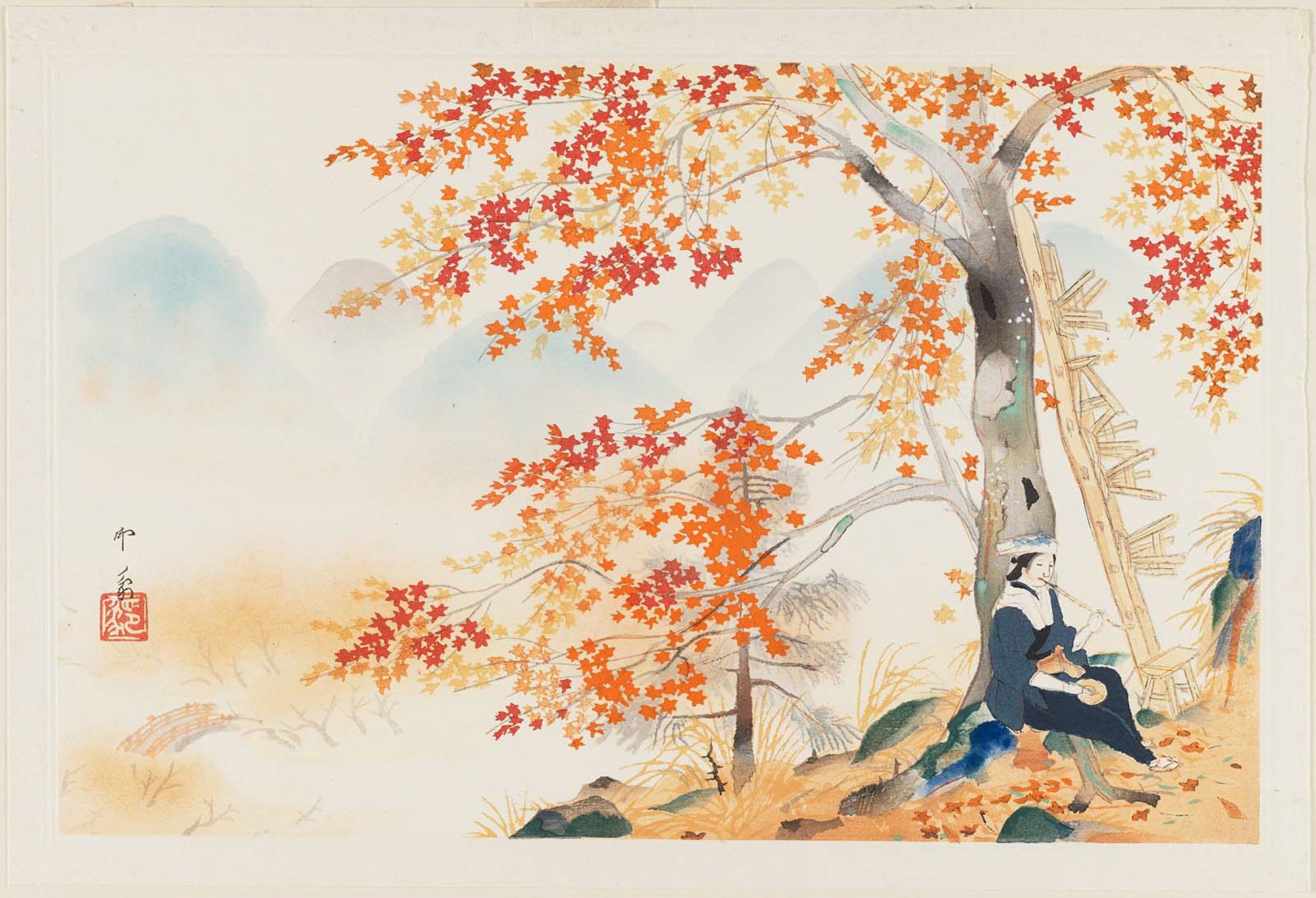
Autumn Maple Leaves at Takao, from the album Eight Views of Kyoto (Kyôto hakkei)
Woodblock print

The Beach at Kaiganji in Sanuki Province (Sanuki Kaiganji no hama), from the series "Collection of Views of Japan II, Kansai Edition (Nihon fukei shu II Kansai hen)"
1934
Color woodblock print; oban

Tea Kettle, section of a sheet from the series "Mirror of Stone Rubbings of Views of the Provinces" (Kohon meihitsu ishizuri kagami)
n.d.
Woodblock print; ishizuri-e, section of harimaze sheet
Featured in Collections
Curated cross-cuts that include this print.
Frequently Asked Questions
Fujiyama from Suzukawa was created by Hiroshi Yoshida (吉田博) in 1928.
Fujiyama from Suzukawa uses Bokashi, Nishiki-e, and Moku-hanga, on color woodblock print.
Fujiyama from Suzukawa was published by Yoshida Studio (1928).
Fujiyama from Suzukawa depicts landscapes and mount fuji, set at Mount Fuji.
Fujiyama from Suzukawa measures 19.9 × 10.1 cm (Oban format).