
Misty Day in Nikko
- Date:
- 1937
- Medium:
- Color woodblock print
- Format:
- Oban
- Dimensions:
- 26.9 × 40.8 cm
- Publisher:
- Yoshida Studio
- Source:
- Art Institute of Chicago
Description
Nikko — the extravagant Toshogu shrine complex built in Tochigi Prefecture to enshrine the shogun Tokugawa Ieyasu — is surrounded by dense cedar forests and mountain streams, and in misty weather the entire precinct takes on a dreamlike quality that Yoshida captures in this 1937 print. The mist that gathers in Nikko's forested valleys in spring and autumn transforms its ornate shrine architecture and natural setting into something more ethereal than the clear-day tourist view: color and detail dissolve into gradients of grey-green and white, leaving only the essential forms of trees and rooflines. Yoshida's atmospheric mastery — his ability to render the visual logic of mist without losing compositional clarity — is at its finest in this treatment.
More Prints by Hiroshi Yoshida
More Landscapes Prints

Lake Kugushi in Wakasa Province (Wakasa Kugushiko), from the series Souvenirs of Travel I (Tabi miyage dai isshu)"
Wakasa Kugushiko
1920
Color woodblock print; oban
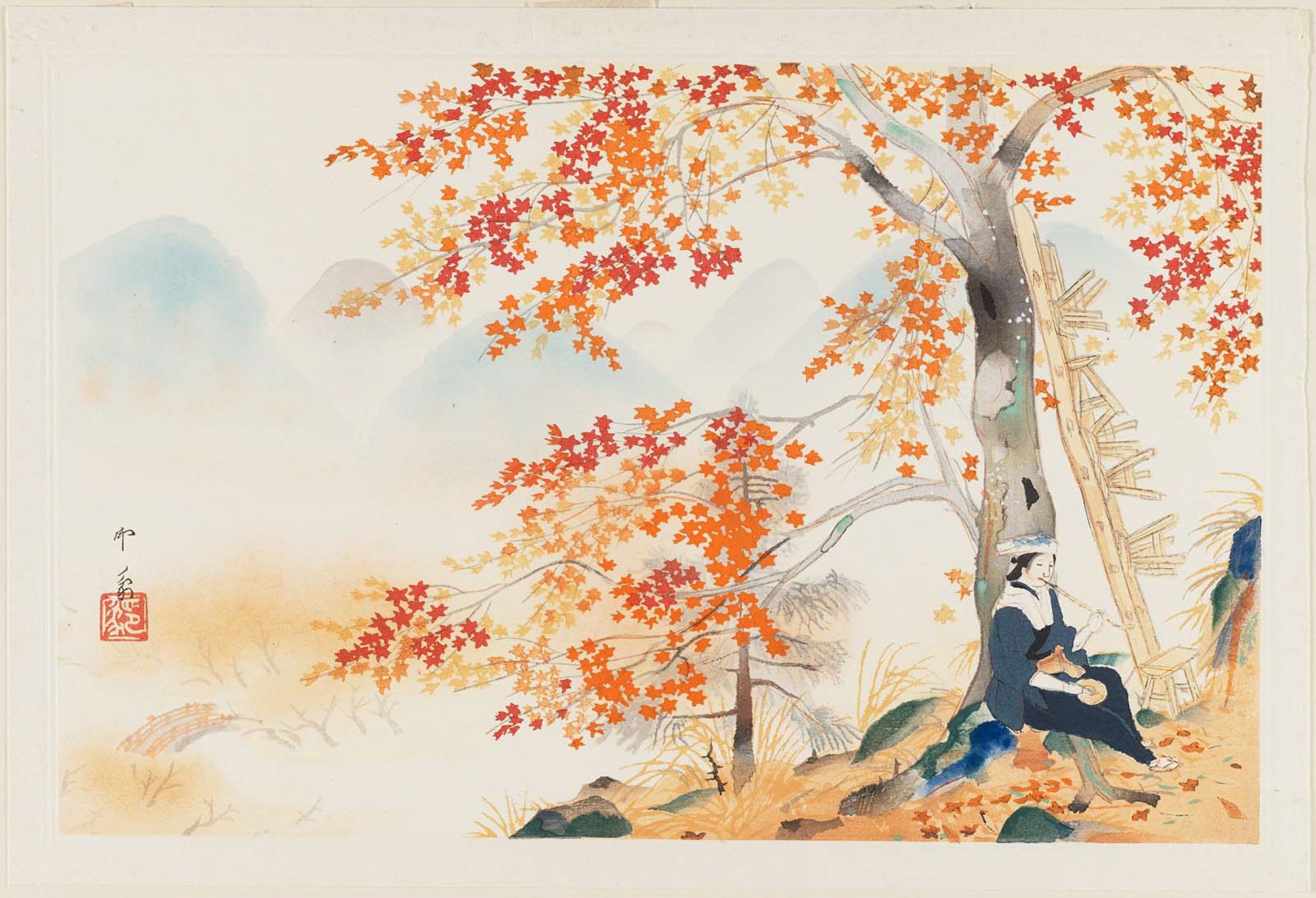
Autumn Maple Leaves at Takao, from the album Eight Views of Kyoto (Kyôto hakkei)
Woodblock print

The Beach at Kaiganji in Sanuki Province (Sanuki Kaiganji no hama), from the series "Collection of Views of Japan II, Kansai Edition (Nihon fukei shu II Kansai hen)"
1934
Color woodblock print; oban

Tea Kettle, section of a sheet from the series "Mirror of Stone Rubbings of Views of the Provinces" (Kohon meihitsu ishizuri kagami)
n.d.
Woodblock print; ishizuri-e, section of harimaze sheet
Featured in Collections
Curated cross-cuts that include this print.
Frequently Asked Questions
Misty Day in Nikko was created by Hiroshi Yoshida (吉田博) in 1937.
Misty Day in Nikko uses Bokashi, Nishiki-e, and Moku-hanga, on color woodblock print.
Misty Day in Nikko was published by Yoshida Studio (1937).
Misty Day in Nikko depicts landscapes, temples & shrines, and trees, set at Nikko.
Misty Day in Nikko measures 26.9 × 40.8 cm (Oban format).