Nikko (日光)
33 prints by 12 artists
About Nikko
Nikko is a town in northwestern Tochigi Prefecture in the Kanto region of Honshu, situated in the foothills of the volcanic mountains of the Nikko massif, approximately 140 kilometers north of Tokyo. The area has been a sacred mountain district since the eighth century, when the Buddhist priest Shodo Shonin established the principal mountain temples and made the first recorded ascent of Mount Nantai in 782, but its present importance derives principally from its selection as the burial site of the first Tokugawa shogun, Tokugawa Ieyasu, after his death in 1616. The Toshogu shrine complex, established in 1617 and dramatically expanded by the third shogun, Tokugawa Iemitsu, in 1636 in the great Kan'ei reconstruction, is one of the most architecturally elaborate religious monuments in Japan, with its main buildings covered in polychrome lacquer carvings, gold leaf, and ornamental metalwork in a deliberately maximalist mode distinguished from the more austere Edo Shinto and Buddhist architectural conventions. The complex includes the Yomei-mon gate, the principal main hall (honden) and worship hall (haiden), the Karamon Chinese-style gate, the bronze and stone lanterns donated by subsidiary daimyo, the Sleeping Cat carving attributed to Hidari Jingoro, and the Three Wise Monkeys panel of the sacred horse stable depicting the famous see-no-evil, hear-no-evil, speak-no-evil monkeys. Adjacent shrine and temple complexes include Futarasan-jinja (founded 782 by Shodo Shonin), Rinno-ji (the head temple of the Tendai school in the region), and the burial complex of the third shogun at Taiyu-in completed in 1653. The town is also celebrated for its waterfalls, including the Kegon Falls and the surrounding mountain landscape extending toward Lake Chuzenji, which is treated under its own entry. The Shrines and Temples of Nikko were designated a UNESCO World Heritage Site in 1999. For Japanese printmaking Nikko appears as one of the canonical Japanese meisho. Utagawa Hiroshige treated Nikko in his Famous Views of the Sixty-Odd Provinces and in individual sheets of the shrine and the surrounding landscape, and Hokusai included Nikko in passages of his minor printed sets. The shin-hanga revival brought a sustained engagement with the shrine complex and the surrounding mountain district. Kawase Hasui produced numerous Nikko compositions including snow and twilight views of the Yomei-mon gate, the Shinkyo sacred bridge (the curved red lacquered bridge across the Daiya River at the entrance to the shrine district, founded in legend by Jakko in the eighth century), and the surrounding shrine precincts, with his Nikko sheets across multiple decades among the most reproduced of his Kanto regional subjects. Yoshida Hiroshi treated Nikko in his individual landscape sheets including memorable snow scenes of the shrine architecture and variant impressions of the temples under different conditions. Tsuchiya Koitsu, Asano Takeji, Tokuriki Tomikichiro, and the postwar sosaku-hanga circle contributed further compositions. The visual character of Nikko in prints is built on the dense polychrome ornamentation of the Toshogu architecture set against the surrounding dark green cryptomeria (sugi) forest, the curved red Shinkyo bridge across the Daiya River at the entrance to the shrine district, the seasonal phenomena of snow on the eaves and gates in winter, autumn maple in October and November, and spring fresh foliage, and frequently the foreground stone lanterns or pilgrims approaching the gates. The contrast between the elaborate polychrome of the architecture and the dark surrounding cedars produces the principal compositional tension in most Nikko prints. Contemporary visitors reach Nikko via the JR Nikko Line and the Tobu Nikko Line from Tokyo (approximately two hours via the Tobu Limited Express SPACIA), with the shrine and temple complex preserved as a UNESCO World Heritage Site and the surrounding mountain district extending north to Lake Chuzenji and beyond, accessible via the dramatic Iroha-zaka switchback road.
Prints Depicting Nikko (33)
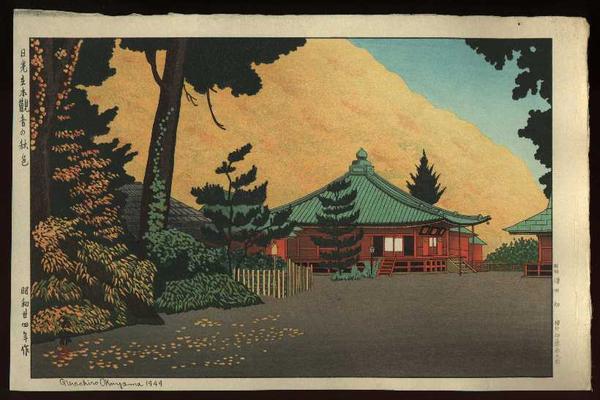
Autumn Colors at Nikko
Woodblock print
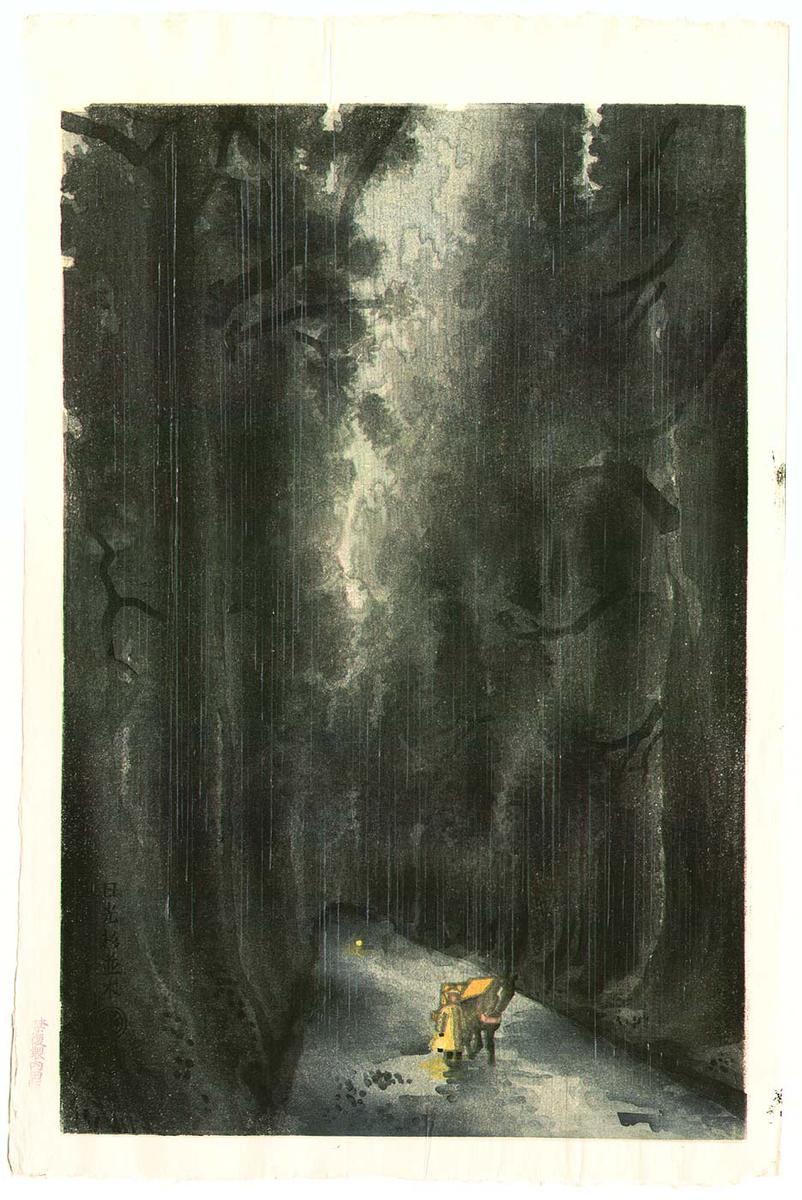
Cryptomerias Trees in Nikko — 日光杉並木
Not set
Woodblock print

Five-storied Pagoda at Nikko (Nikko Goju no to)
1920
Color woodblock print; oban

FOUR SEASONS OF NIKKO- set
Not set
Woodblock print

Futarasan Shrine at Nikko (Nikko Futarasan jinja)
1930
Color woodblock print; oban
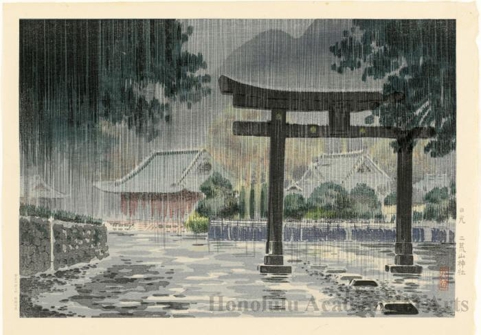
Futaro shrine, Nikko
Woodblock print

Futatsu Hall, Nikko (Nikko Futatsudo)
1929
Color woodblock print
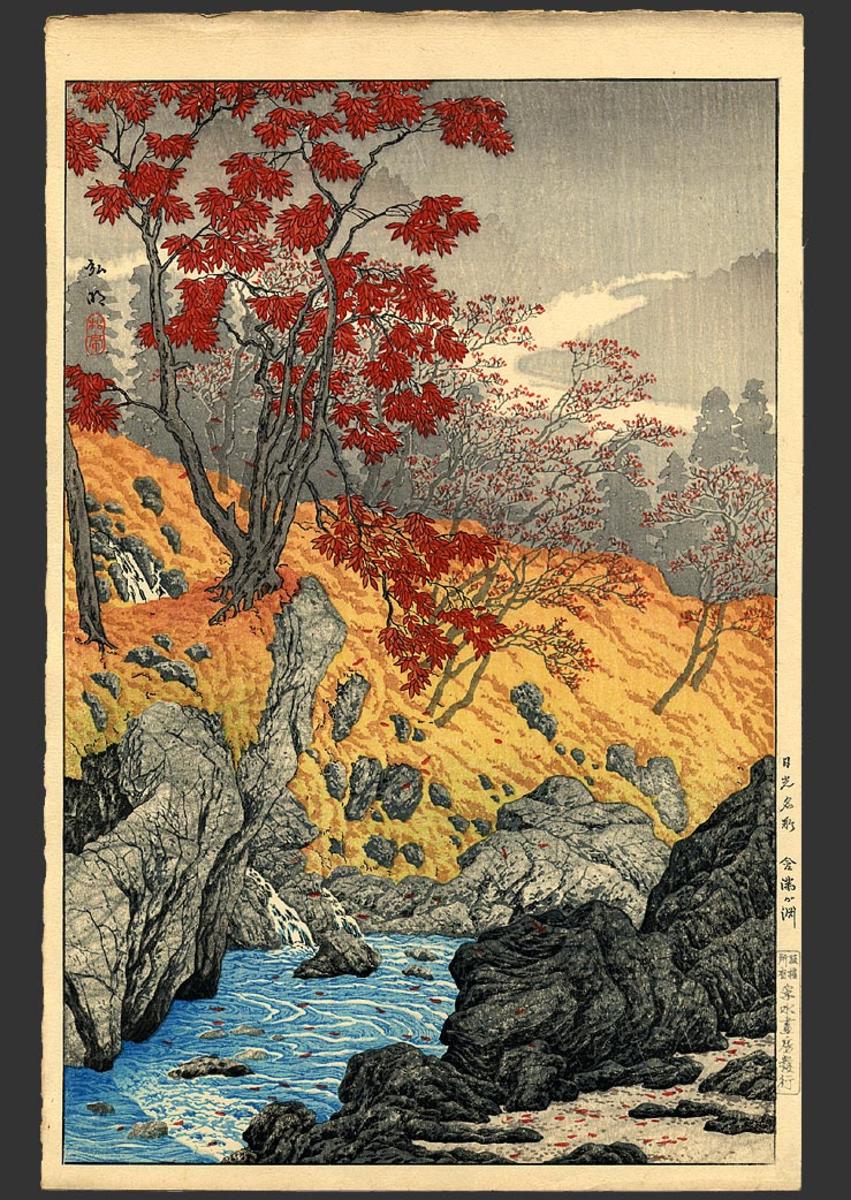
Gamman-ga-Fuchi in Nikko
Woodblock print

Kegon Falls, Nikko (Nikko Kegon no taki)
1927
Color woodblock print; oban

Kegon Falls, Nikko (Nikko Kegon-no-taki)
n.d.
Color woodblock print
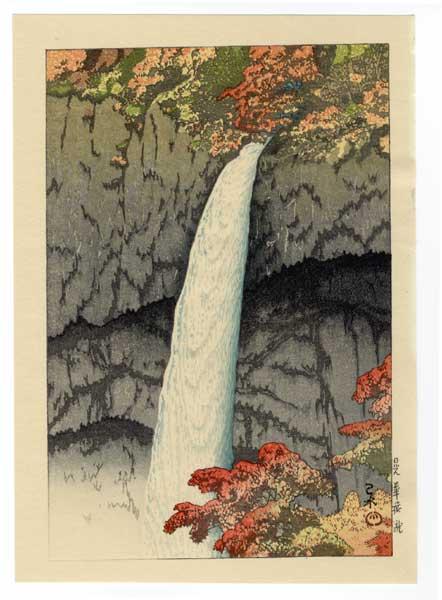
Kegon Waterfalls, Nikko — 華源滝
Woodblock print
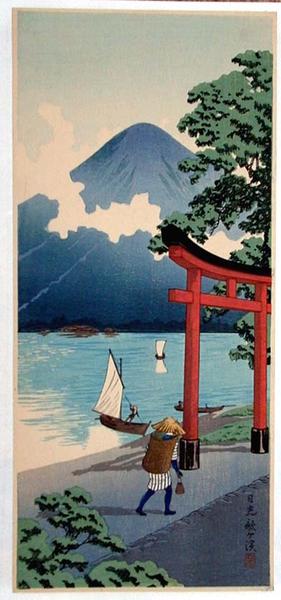
Lake at Nikko
Woodblock print

Lake Chuzenji, Nikko (Nikko Chuzenjiko)
Nikko Chuzenjiko
1930
Color woodblock print; oban
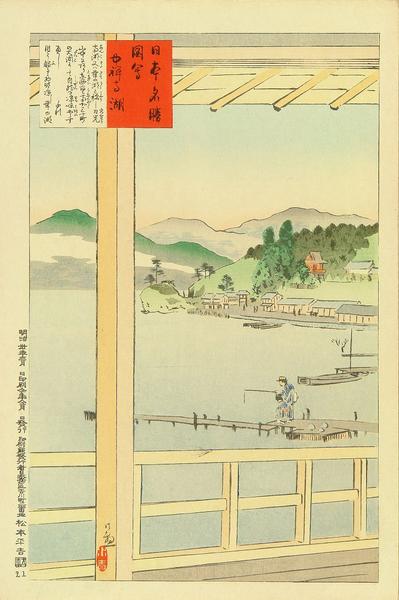
Lake Chuzenji, Nikko, from
Woodblock print

Misty Day in Nikko
1937
Color woodblock print
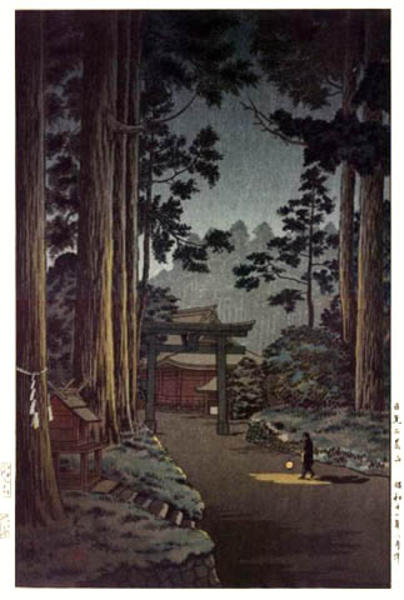
Mountain Temple (Futara-san, Nikko) - oban
Woodblock print

Nikko
1966
Woodblock print, ink and color on paper
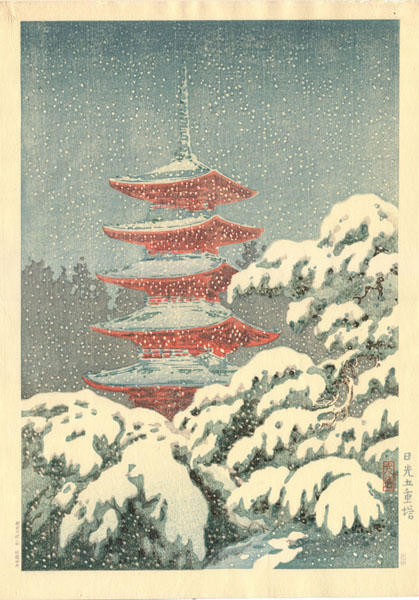
Nikko 5 Story Pagoda
Woodblock print
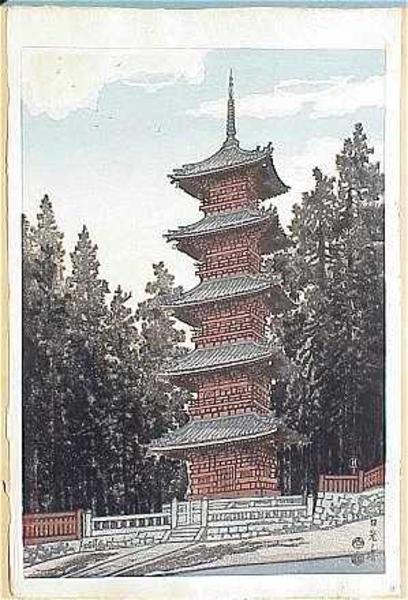
Nikko no to (Nikko Pagoda)
1950
Woodblock print
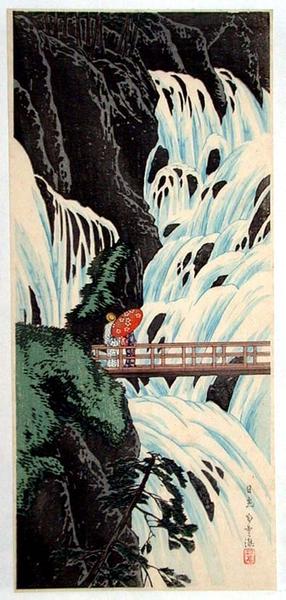
Nikko Shirakumo Waterfall — 日光白雲瀧
Woodblock print
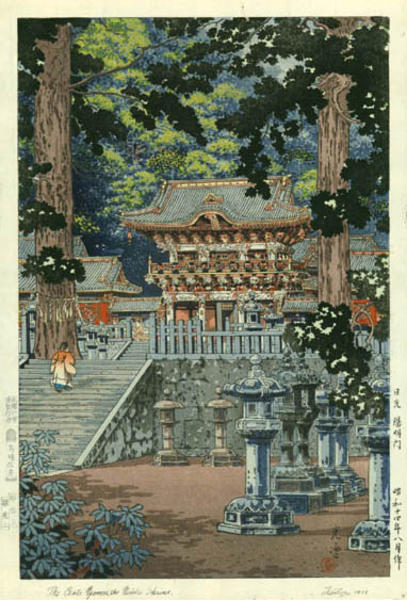
Nikko Yomei Gate
Woodblock print
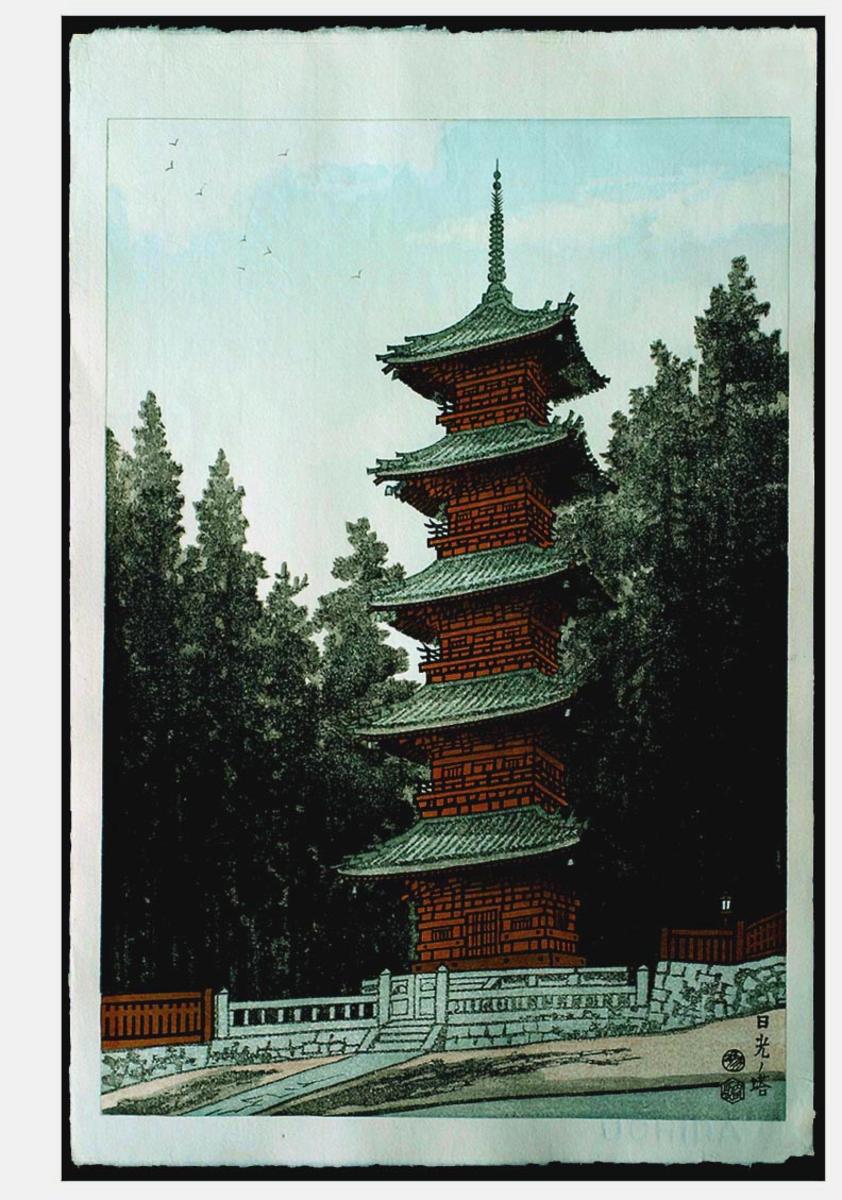
No Series Nikko No To
Woodblock print
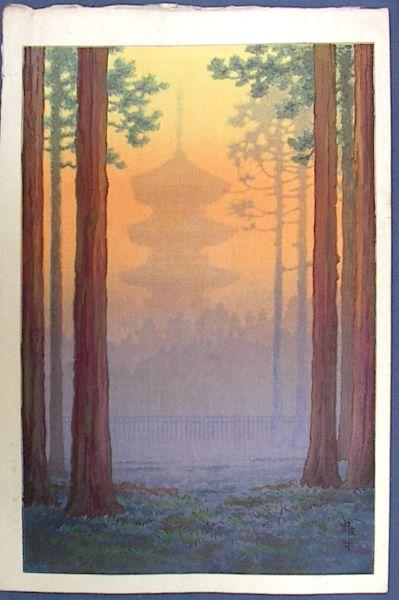
Pagoda At Nikko
Woodblock print

Road throuh the Forest at Nikko
1916
Woodblock print

Sacred Bridge at Nikko
日光 神橋
1941
Color woodblock print

Sacred Bridge in Nikko (Nikko Shinkyo)
1930
Color woodblock print; oban
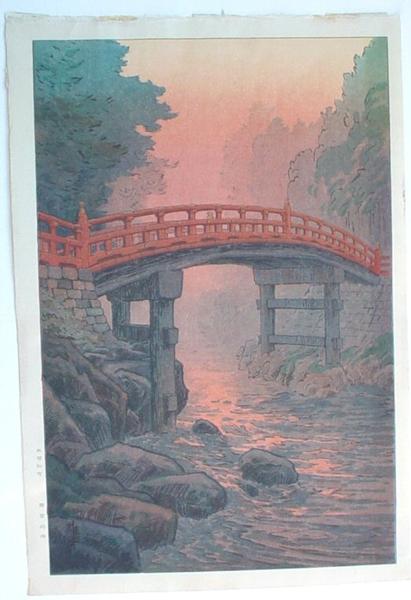
Sacred Bridge, Nikko
Woodblock print

Shin Bridge, Nikko (Nikko Shinkyo)
December 1953
Color woodblock print

Snow at the Shin Bridge, Nikko (Nikko Shinkyo no yuki)
Nikko Shinkyo no yuki
1930; edition:178/350
Color woodblock print; Oban

Snow at Yomei Gate, Nikko
日光陽明門の雪
1952
Color woodblock print
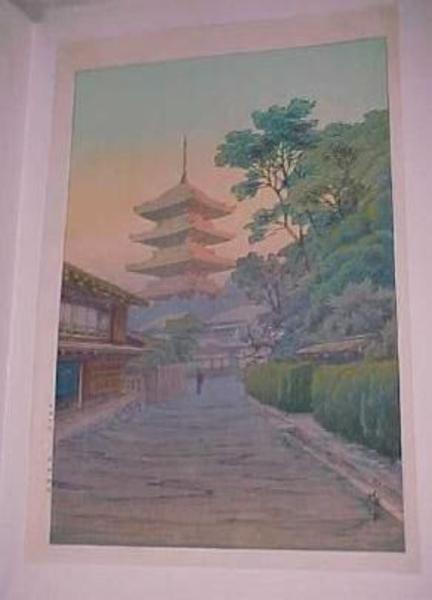
Village Near Nikko
Woodblock print

Yukadi Falls , Nikko (Nikko Yukadi)
1941
Color woodblock print
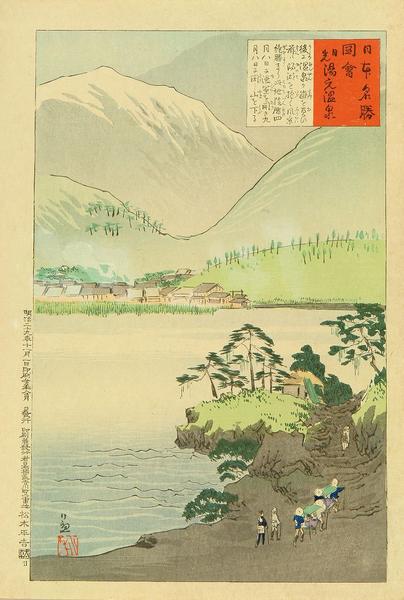
Yumoto Hot Spring, Nikko, from
Woodblock print
Artists Who Depicted Nikko (12)
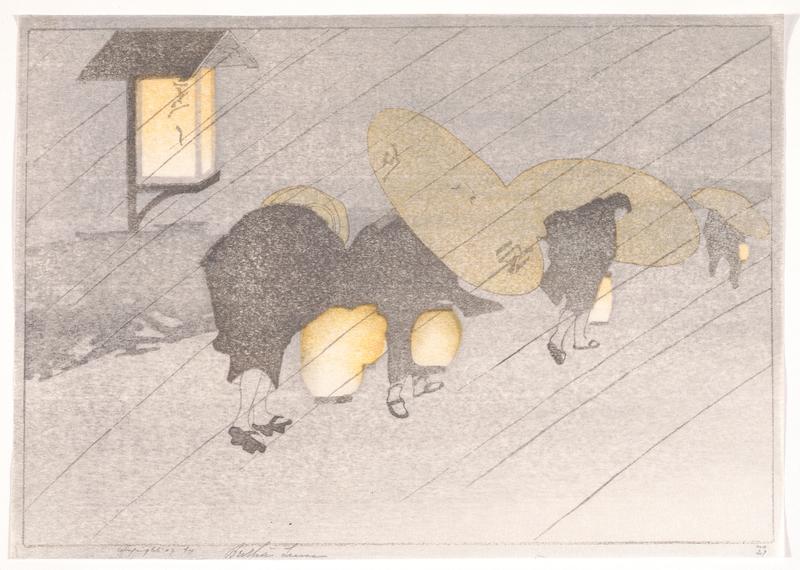
Bertha Lum
1869–1954

Gihachiro Okuyama
奥山儀八郎
1907–1981
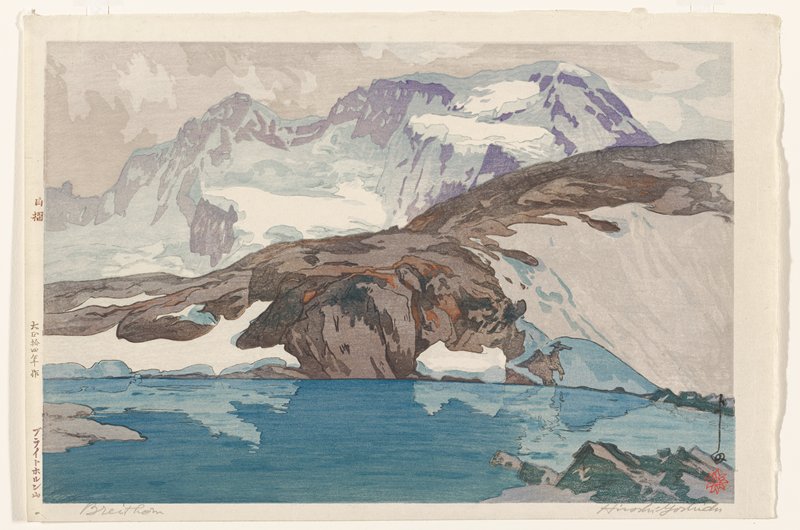
Hiroshi Yoshida
吉田博
1876–1950

Kawase Hasui
川瀬巴水
1883–1957
Kobayashi Kiyochika
小林清親
1847–1915
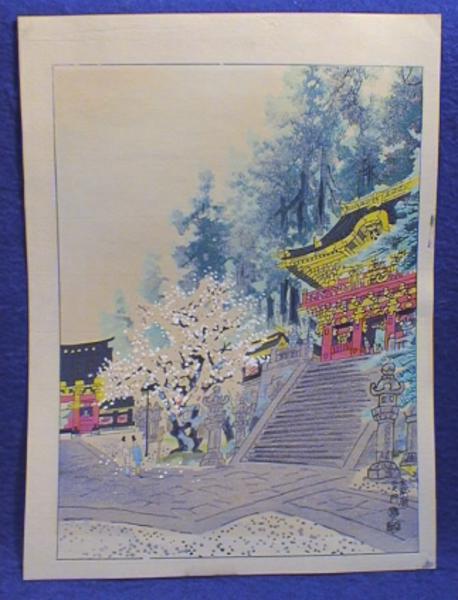
Kotozuka Eiichi
琴塚英一
1906–1979

Saito Kiyoshi
斎藤清
1907–1997

Shiro Kasamatsu
笠松紫浪
1898–1991
Takahashi Shotei
高橋松亭
1871–1945

Tsuchiya Koitsu
土屋光逸
1870–1949
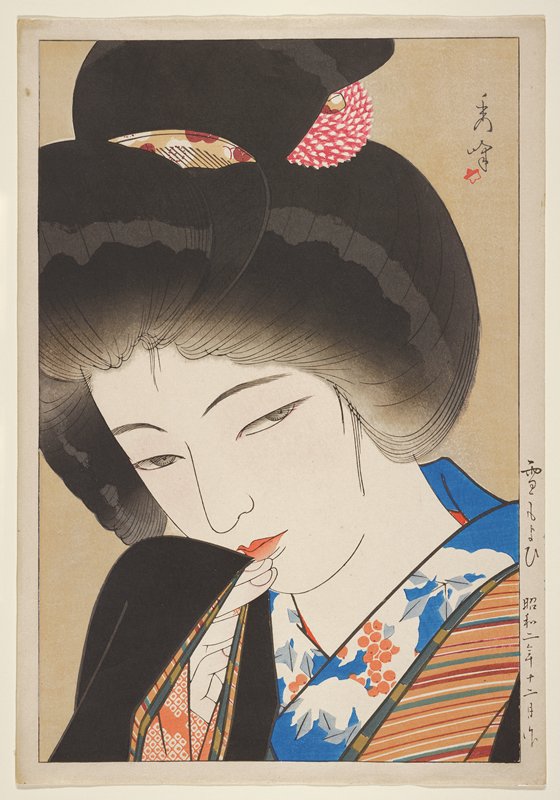
Yamakawa Shuho
山川秀峰
1898–1944

Yuhan Ito
伊藤雄半
Frequently Asked Questions
Nikko is a town in northwestern Tochigi Prefecture in the Kanto region of Honshu, situated in the foothills of the volcanic mountains of the Nikko massif, approximately 140 kilometers north of Tokyo. The area has been a sacred mountain district since the eighth century, when the Buddhist priest Shodo Shonin established the principal mountain temples and made the first recorded ascent of Mount Nantai in 782, but its present importance derives principally from its selection as the burial site of the first Tokugawa shogun, Tokugawa Ieyasu, after his death in 1616. The Toshogu shrine complex, established in 1617 and dramatically expanded by the third shogun, Tokugawa Iemitsu, in 1636 in the great Kan'ei reconstruction, is one of the most architecturally elaborate religious monuments in Japan, with its main buildings covered in polychrome lacquer carvings, gold leaf, and ornamental metalwork in a deliberately maximalist mode distinguished from the more austere Edo Shinto and Buddhist architectural conventions. The complex includes the Yomei-mon gate, the principal main hall (honden) and worship hall (haiden), the Karamon Chinese-style gate, the bronze and stone lanterns donated by subsidiary daimyo, the Sleeping Cat carving attributed to Hidari Jingoro, and the Three Wise Monkeys panel of the sacred horse stable depicting the famous see-no-evil, hear-no-evil, speak-no-evil monkeys. Adjacent shrine and temple complexes include Futarasan-jinja (founded 782 by Shodo Shonin), Rinno-ji (the head temple of the Tendai school in the region), and the burial complex of the third shogun at Taiyu-in completed in 1653. The town is also celebrated for its waterfalls, including the Kegon Falls and the surrounding mountain landscape extending toward Lake Chuzenji, which is treated under its own entry. The Shrines and Temples of Nikko were designated a UNESCO World Heritage Site in 1999. For Japanese printmaking Nikko appears as one of the canonical Japanese meisho. Utagawa Hiroshige treated Nikko in his Famous Views of the Sixty-Odd Provinces and in individual sheets of the shrine and the surrounding landscape, and Hokusai included Nikko in passages of his minor printed sets. The shin-hanga revival brought a sustained engagement with the shrine complex and the surrounding mountain district. Kawase Hasui produced numerous Nikko compositions including snow and twilight views of the Yomei-mon gate, the Shinkyo sacred bridge (the curved red lacquered bridge across the Daiya River at the entrance to the shrine district, founded in legend by Jakko in the eighth century), and the surrounding shrine precincts, with his Nikko sheets across multiple decades among the most reproduced of his Kanto regional subjects. Yoshida Hiroshi treated Nikko in his individual landscape sheets including memorable snow scenes of the shrine architecture and variant impressions of the temples under different conditions. Tsuchiya Koitsu, Asano Takeji, Tokuriki Tomikichiro, and the postwar sosaku-hanga circle contributed further compositions. The visual character of Nikko in prints is built on the dense polychrome ornamentation of the Toshogu architecture set against the surrounding dark green cryptomeria (sugi) forest, the curved red Shinkyo bridge across the Daiya River at the entrance to the shrine district, the seasonal phenomena of snow on the eaves and gates in winter, autumn maple in October and November, and spring fresh foliage, and frequently the foreground stone lanterns or pilgrims approaching the gates. The contrast between the elaborate polychrome of the architecture and the dark surrounding cedars produces the principal compositional tension in most Nikko prints. Contemporary visitors reach Nikko via the JR Nikko Line and the Tobu Nikko Line from Tokyo (approximately two hours via the Tobu Limited Express SPACIA), with the shrine and temple complex preserved as a UNESCO World Heritage Site and the surrounding mountain district extending north to Lake Chuzenji and beyond, accessible via the dramatic Iroha-zaka switchback road.
Hanga catalogues 33 prints depicting Nikko (日光), by 12 different artists.
Bertha Lum, Gihachiro Okuyama, and Hiroshi Yoshida are among the 12 artists who depicted Nikko in our collection.
Want to rate prints from Nikko?
Sign up to start rating