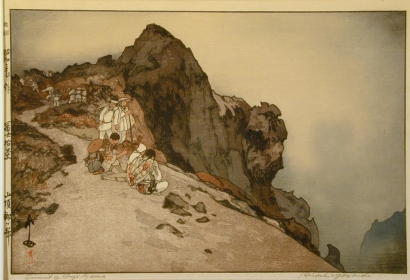
Summit of Fujiyama
- Date:
- 1928
- Medium:
- Woodblock print
- Format:
- Oban
- Publisher:
- Yoshida Studio
- Source:
- Art Gallery of Greater Victoria
Description
The Summit of Fujiyama presents Mount Fuji from its highest point — a vantage few artists depicted, the crater and volcanic geology replacing the elegant cone seen from the plains below. Yoshida climbed Fuji multiple times and was unusual among shin-hanga artists in depicting the mountain from its own summit rather than from a distance. The 1928 print captures the barren, otherworldly quality of the crater zone, the horizon dropping away on all sides and the sky taking on the deep blue of high altitude, a view utterly unlike the romantic distance-shots that dominated Fuji imagery.
More Prints by Hiroshi Yoshida
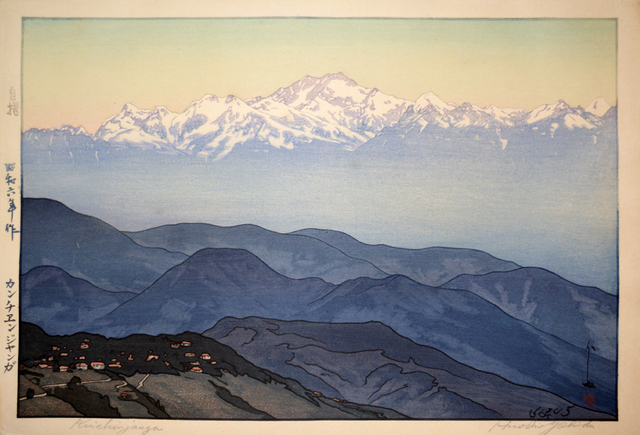
More Landscapes Prints

Lake Kugushi in Wakasa Province (Wakasa Kugushiko), from the series Souvenirs of Travel I (Tabi miyage dai isshu)"
Wakasa Kugushiko
1920
Color woodblock print; oban
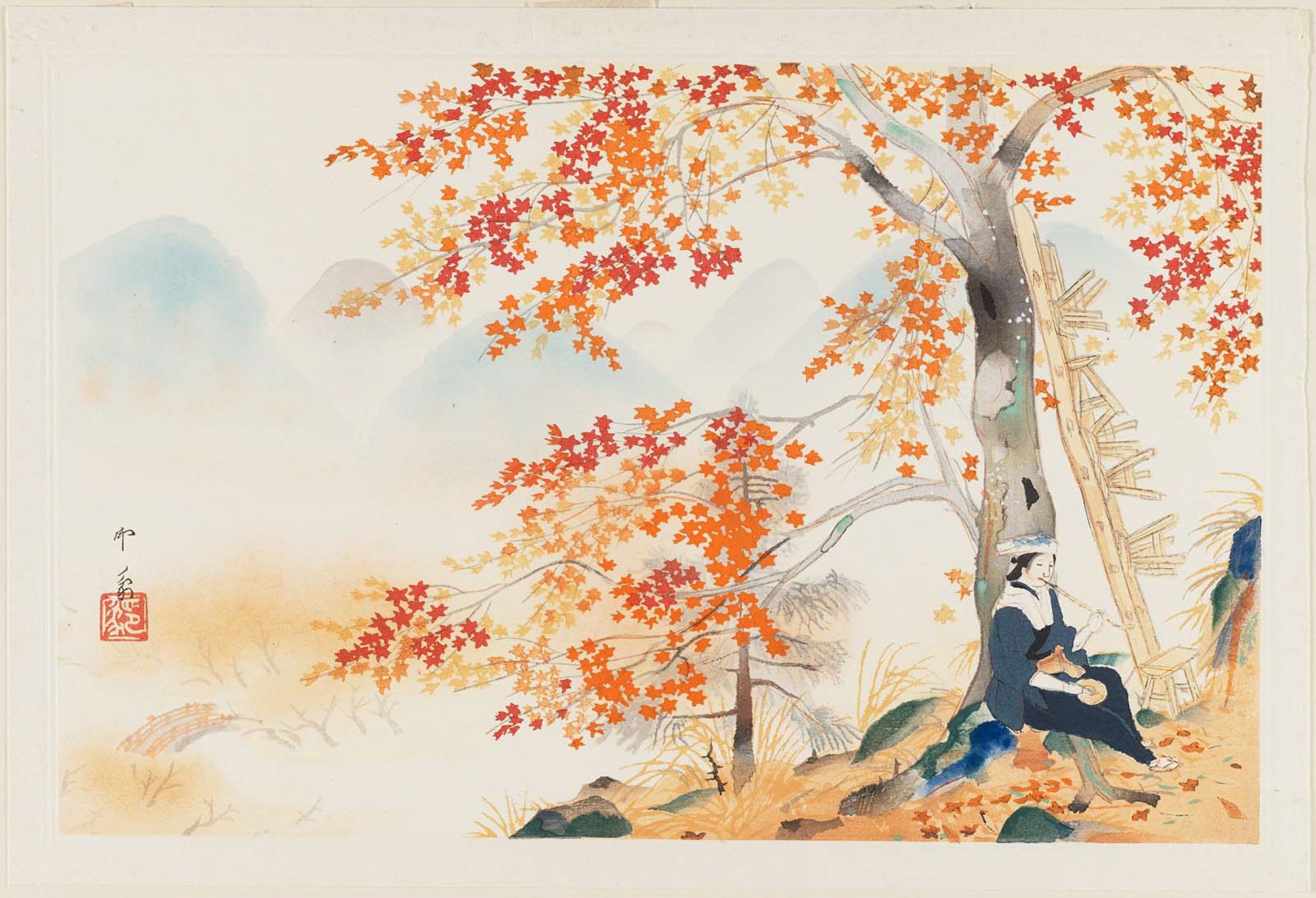
Autumn Maple Leaves at Takao, from the album Eight Views of Kyoto (Kyôto hakkei)
Woodblock print

The Beach at Kaiganji in Sanuki Province (Sanuki Kaiganji no hama), from the series "Collection of Views of Japan II, Kansai Edition (Nihon fukei shu II Kansai hen)"
1934
Color woodblock print; oban

Tea Kettle, section of a sheet from the series "Mirror of Stone Rubbings of Views of the Provinces" (Kohon meihitsu ishizuri kagami)
n.d.
Woodblock print; ishizuri-e, section of harimaze sheet
Featured in Collections
Curated cross-cuts that include this print.
Frequently Asked Questions
Summit of Fujiyama was created by Hiroshi Yoshida (吉田博) in 1928.
Summit of Fujiyama was published by Yoshida Studio (1928).
Summit of Fujiyama depicts landscapes, mount fuji, and mountains, set at Mount Fuji.