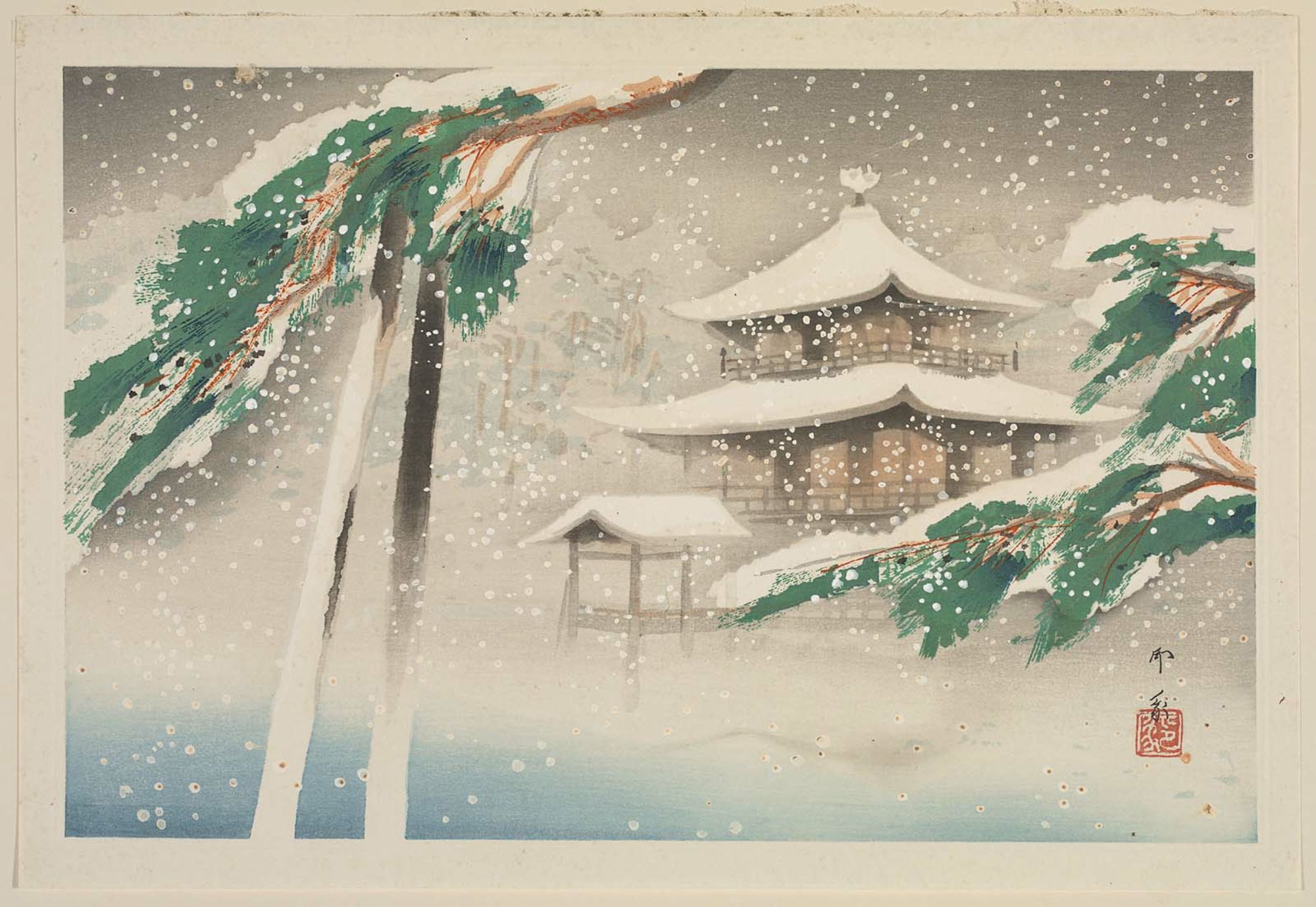
Kinkaku-ji in Snow, from the album Eight Views of Kyoto (Kyôto hakkei)
by Insho Domoto
- Medium:
- Woodblock print
- Source:
- Museum of Fine Arts
- Image courtesy of
- Museum of Fine Arts
Description
Kinkaku-ji, the Temple of the Golden Pavilion in northwestern Kyoto, presents a compositionally distinctive subject for snow-scene printing: the gilded three-story pavilion set against a pale winter sky and reflected in the partially frozen surface of Kyokochi pond. Snow-scene prints in the meisho-e tradition typically reserve the white of the washi support for snow accumulation, using the unpainted paper surface itself as the primary snow color while surrounding areas receive pale blue-grey bokashi gradations for sky and ice. Domoto's nihonga training, which emphasized the interaction of ground and applied pigment, would have translated naturally into this technical convention. The contrast between the pavilion's warm gold tone — achieved through layered yellow and ochre printing — and the cold whites and blues of the surrounding snow would be a central compositional concern. The reflection in the pond's surface, if included, requires careful bilateral registration across multiple blocks.
More Prints by Insho Domoto
More Snow Scenes Prints
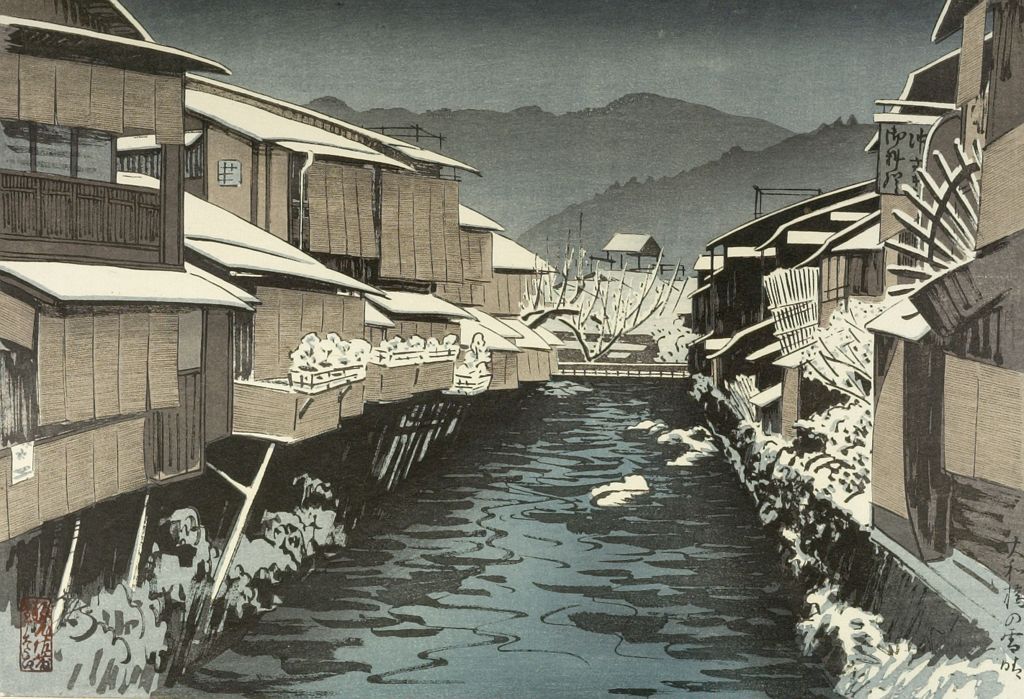
Fair Weather After Snow at Yamato Bridge, Kyoto (Yamato bashi no yukibare), Taishô period, dated 1924
Woodblock print

The Compound of the Tenman Shrine at Kameido in the Snow (Kameido Tenmangu keidai no yuki), from the series "Famous Places in the Eastern Capital (Toto meisho)"
c. 1832/38
Color woodblock print; oban

Miyajima in Snow (Yuki no Miyajima)
Yuki no Miyajima
1929
Color woodblock print; oban
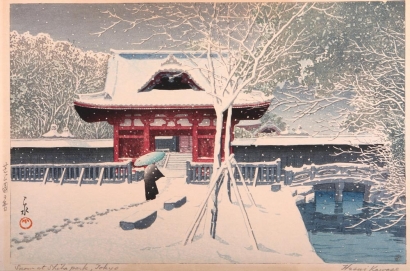
Evening Snow at Shiha Park, Tokyo
1932
Woodblock print
Featured in Collections
Curated cross-cuts that include this print.
Frequently Asked Questions
Kinkaku-ji in Snow, from the album Eight Views of Kyoto (Kyôto hakkei) was created by Insho Domoto (堂本印象).
Kinkaku-ji in Snow, from the album Eight Views of Kyoto (Kyôto hakkei) depicts snow scenes.