Kyoto (京都)
149 prints by 40 artists
About Kyoto
Kyoto, in the southern basin of the Yamashiro plain in west-central Honshu, served as the imperial capital of Japan from its founding as Heian-kyo in 794 until the Meiji Restoration of 1868, when the imperial court relocated to the renamed Tokyo. The city is organized on a classical grid laid down at its founding in deliberate emulation of the Tang Chinese capital at Chang'an, with broad north-south avenues and an east-west cross-axis structured around the Suzaku-oji thoroughfare, and the long centuries of court patronage produced an unusually dense concentration of Buddhist temples, Shinto shrines, aristocratic gardens, and craft workshops, many of which became the meisho, or famous places, on which the meisho-e tradition fed. The city survived without significant destruction through the Onin War, the Meiji transition, and the Pacific War, the last in part because of deliberate U.S. military decisions to spare its historical fabric, and the result is the densest concentration of pre-modern monumental architecture in any major Japanese city. For ukiyo-e and the later shin-hanga and sosaku-hanga schools, Kyoto provided an alternative iconography to Edo, one rooted in seasonal pilgrimage, classical literature, and the visual culture of the Heian court rather than the urban entertainment districts of the eastern capital. The principal Edo-period meisho-e treatment is Utagawa Hiroshige's Famous Views of Kyoto (Kyoto meisho), a horizontal-format series of ten sheets issued by Eisendo around 1834, which covers locations including Arashiyama, Kiyomizu Temple, Gion, Yodo River, Sanjo Bridge, Tadasugawara, the Shimabara pleasure quarter, and the Kamogawa River bridges, and which remains the canonical Edo-period print survey of the city. Hokusai had earlier included scenes of the Tokaido approach to Kyoto in his Travel road compositions and in passages of the One Hundred Views of Mount Fuji, Utagawa Kunisada and Toyokuni III contributed individual Kyoto theatrical and bijin sheets across the late Edo period, and Hasegawa Sadanobu I and II of the Osaka kamigata school produced their own Kyoto and Kansai meisho sets in the mid-nineteenth century. With the shin-hanga revival of the early twentieth century, Kyoto became a major subject for Kawase Hasui, who produced numerous Kyoto views including night and snow scenes of Kiyomizu, Gion, Yasaka pagoda, Heian Shrine, Sanjusangendo, and the Kamogawa, and for Yoshida Hiroshi, Tsuchiya Koitsu, Asano Takeji, and Tokuriki Tomikichiro, the last of whom, working from Kyoto itself, produced extensive Kyoto-centered series including Eight Views of Kyoto, Twelve Months of Kyoto, and the long-running Famous Places of Kyoto print sets across more than three decades. The Kyoto sosaku-hanga response was anchored by artists such as Asada Benji, Tokuriki Tomikichiro, Sekino Junichiro, and the postwar Kyoto-based creative-print circle, who worked within and around the city and brought their own creative-print idioms to its temples, gardens, and street scenes. The visual character of Kyoto in prints is built from a repeating set of motifs, including the cherry blossoms and autumn maples of Arashiyama and Higashiyama, the lantern-lit night quarters of Gion and Pontocho, the bell towers and gates of Higashi and Nishi Honganji, the wooden veranda of Kiyomizudera projecting over its hillside, the golden pavilion of Kinkakuji set on its mirror pond, the great rock garden of Ryoanji, the maiko and geiko of the entertainment districts, and the seasonal festivals such as Gion Matsuri in July, Daimonji Okuribi in August, Jidai Matsuri in October, and the cherry-blossom and autumn-foliage seasons that punctuate the calendar. Locations treated under their own entries in this database include Arashiyama, Chion-in, Daimonji, Fushimi Inari, Gion, Heian Shrine, Kinkaku-ji, Kiyomizu Temple, Maruyama Park, Sagano, and Shirakawa. The city remains the principal pilgrimage destination in Japan for travelers seeking the world depicted in these prints, with the Higashiyama temple district, the Gion entertainment quarter, and the Arashiyama-Sagano western edge preserving the broad outlines of the meisho geography that the printmakers recorded, and the Kyoto National Museum, the Kyoto Municipal Museum of Art, and the Kahitsukan Kyoto Museum of Contemporary Art holding representative print collections.
Prints Depicting Kyoto (149)
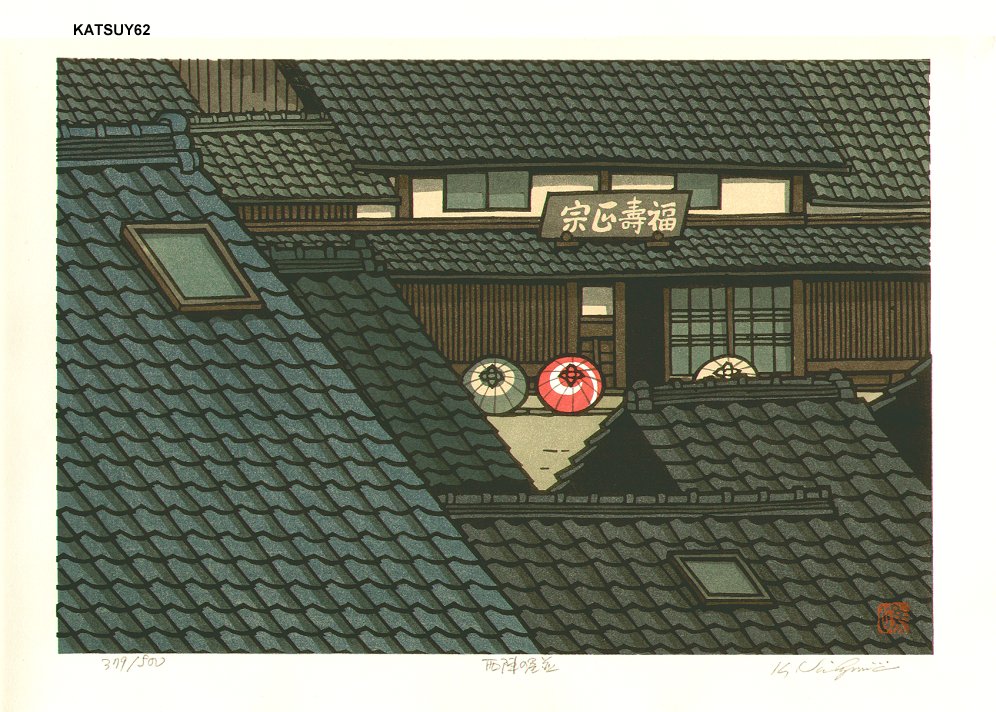
A Row of Houses in Nishijin, Kyoto
Woodblock print
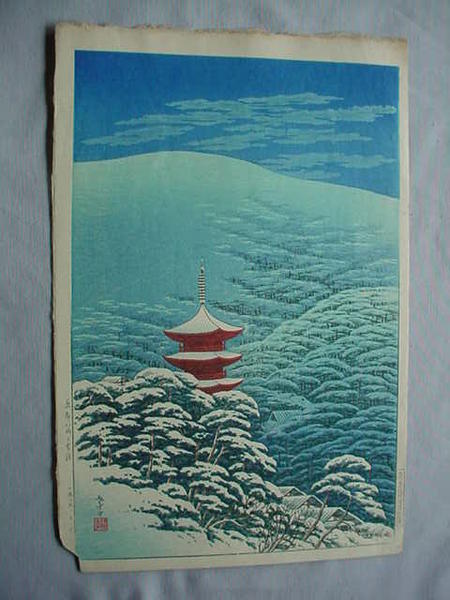
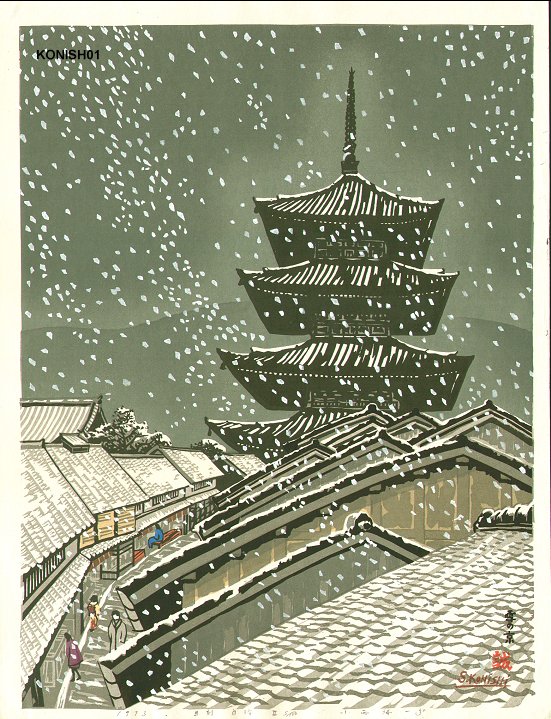
After a Snowfall, Yasaka Shrine, Kyoto
Woodblock print
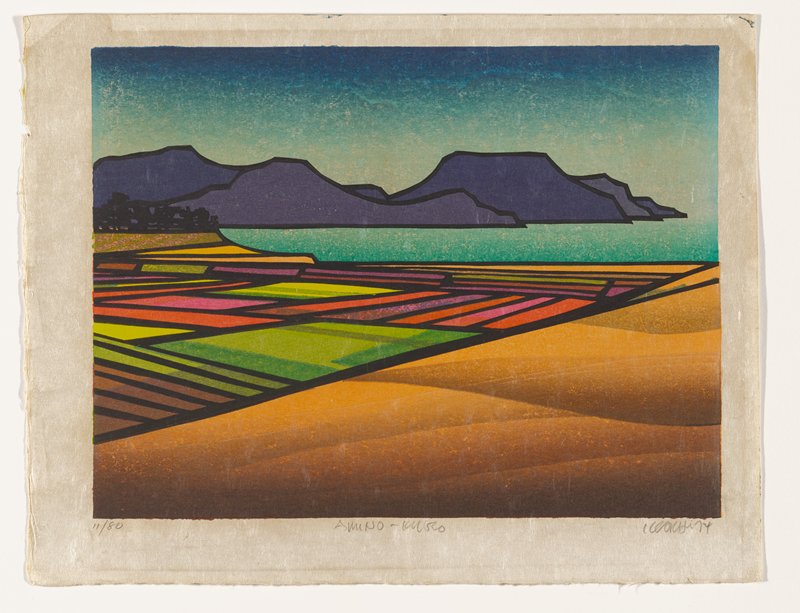
Amino-Kyoto
1974
Woodblock print, ink and color on paper

April (Arashiyama Park, a Famous Scenic Resort)
四月 (嵐山)
second half 20th century
Woodblock print, ink and color on paper

Arashiyama, from the series "Eight Scenes of Cherry Blossoms"
1935
Color woodblock print

Arashiyama, Kyoto
n.d. [1952]
Color woodblock print
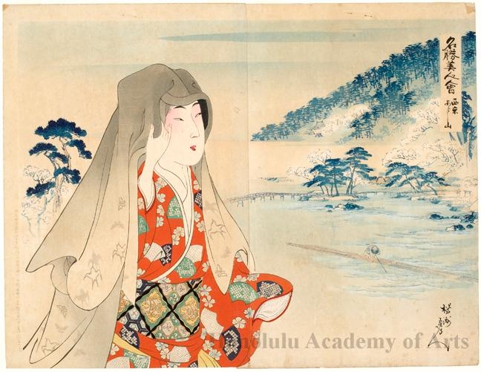
Arashiyama, Kyoto
Woodblock print
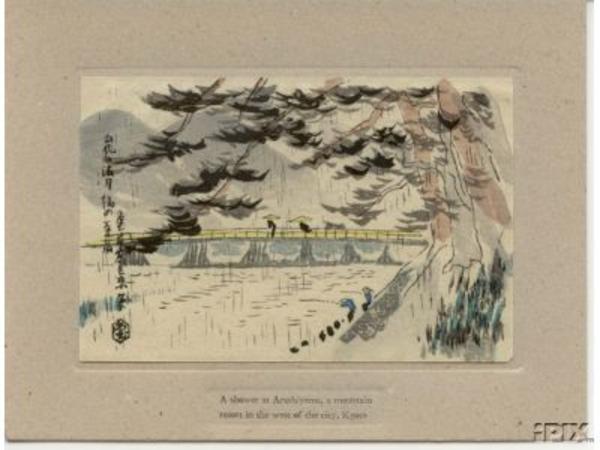
Arishiyama, Kyoto
Woodblock print

August (The Bonfire Festival of the Daimonji Hill Viewed from the Sanjo Bridge)
八月 (三条大橋より大文字)
second half 20th century
Woodblock print, ink and color on paper
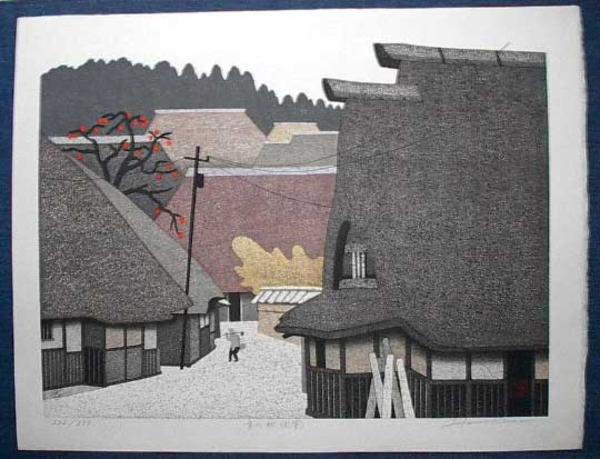
Autumn in Kyoto
Woodblock print

Autumn in Saga, Kyoto
Woodblock print
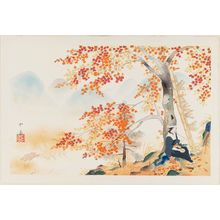
Autumn Maple Leaves at Takao, from the album Eight Views of Kyoto (Kyôto hakkei)
Woodblock print

Bamboo Grove of Saga
嵯峨竹林
1952
Woodblock print
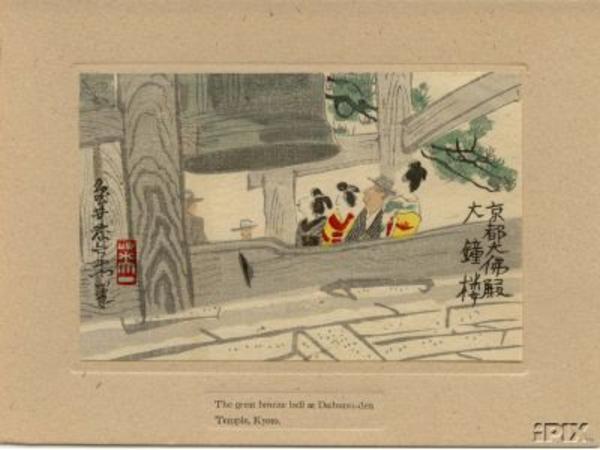
bronze bell at Daibutsu-den Temple in Kyoto
Woodblock print
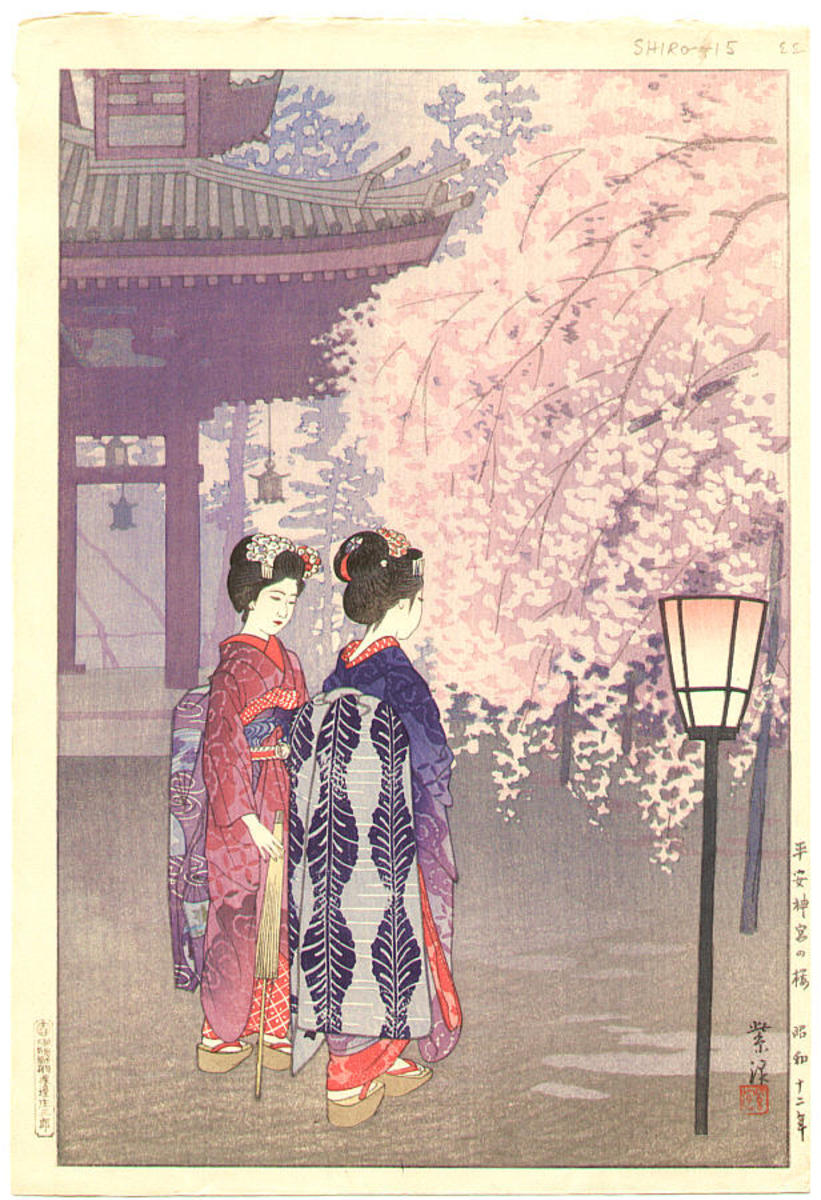
Cherry Blossoms at Heian Jingu Shrine
Woodblock print
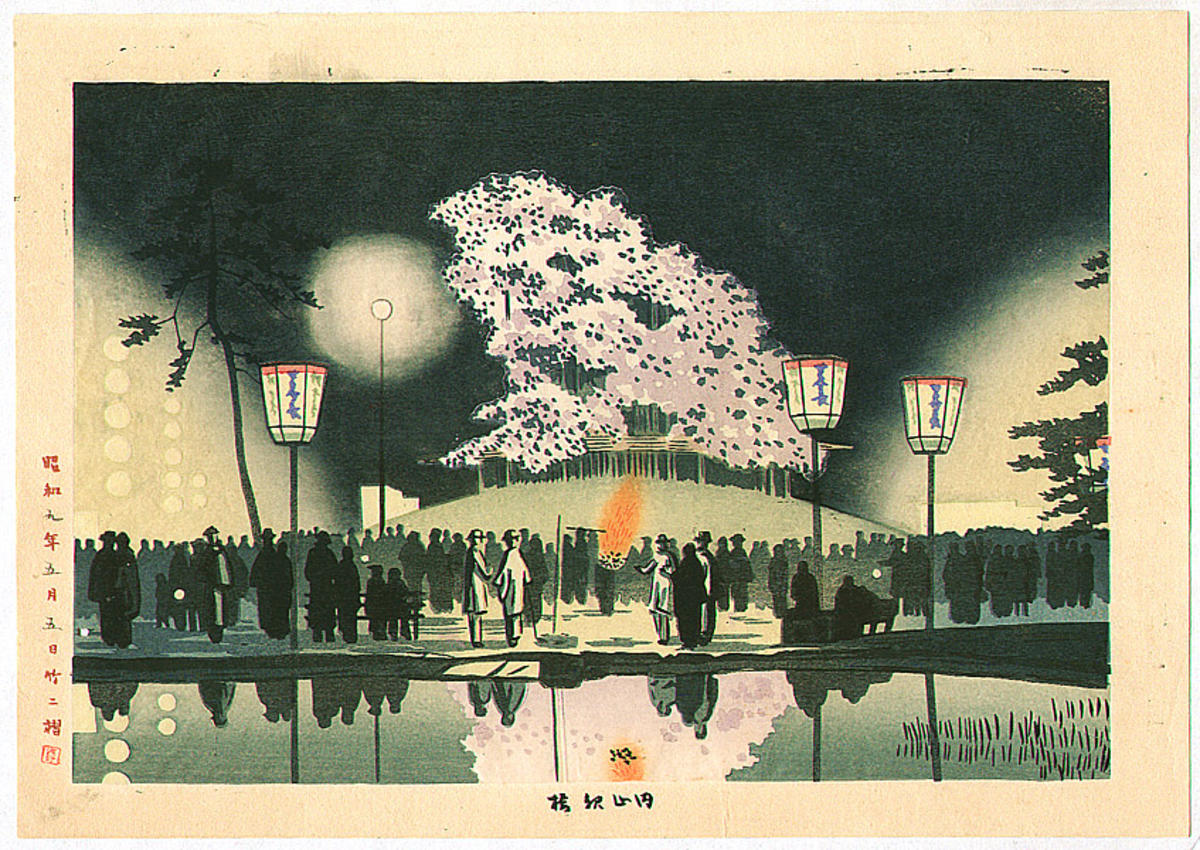
Cherry Blossoms at Maruyama Park
円山公園桜
Woodblock print

Cherry Blossoms in Full Bloom at Arashiyama (Arashiyama manka), from the series "Famous Places in Kyoto (Kyoto meisho no uchi)"
c. 1834
Color woodblock print; oban
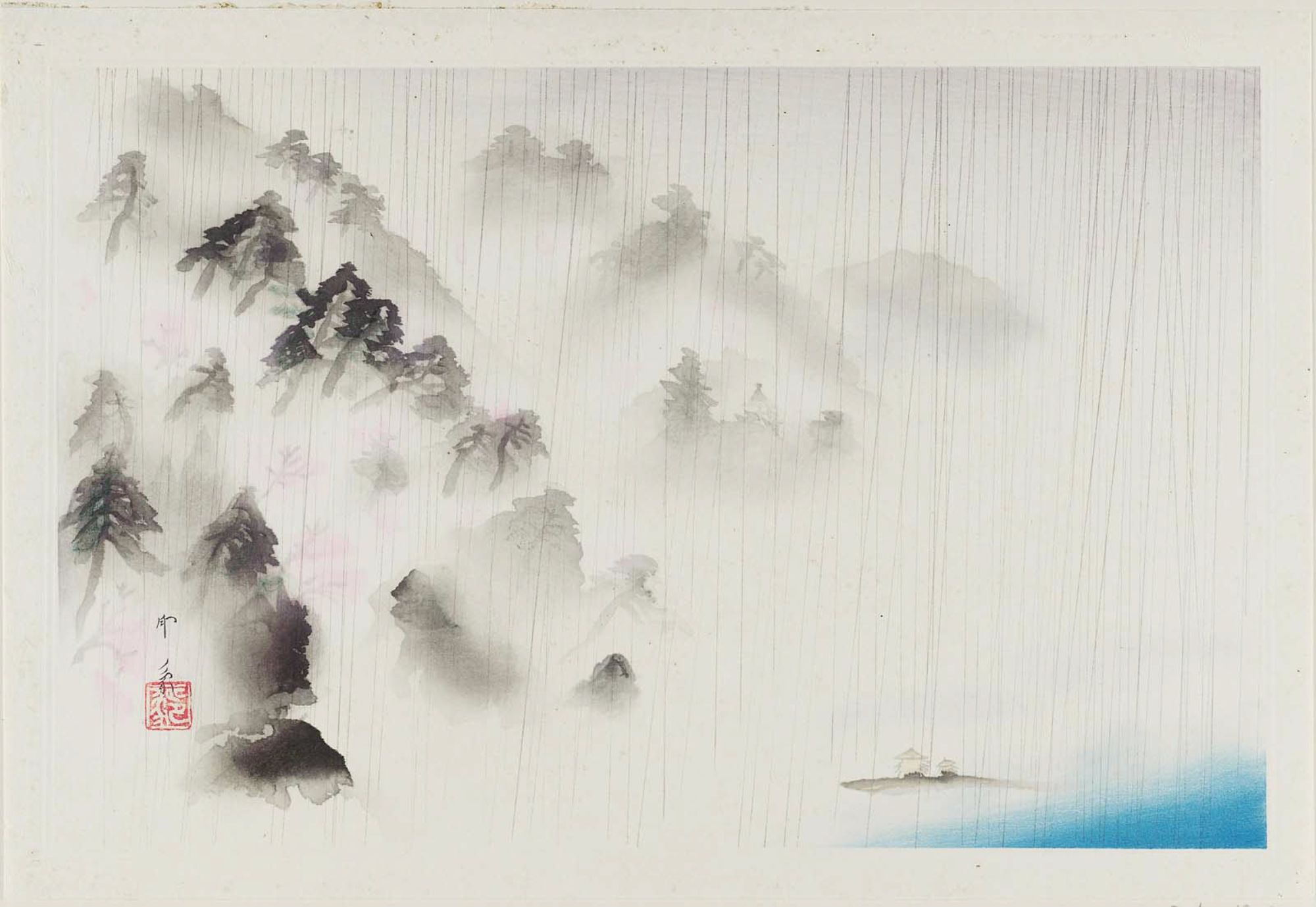
Cherry Blossoms in Rain at Arashiyama, from the album Eight Views of Kyoto (Kyôto hakkei)
Woodblock print

Chion Temple, Kyoto, from the series "Collection of Scenic Views of Japan II, Kansai Edition" (Nihon fukei shu II Kansai hen, Kyoto Chionin)
August 1933
Color woodblock print

Chion-in Temple Gate (Romon), from the series Eight Scenes of Cherry Blossoms (Sakura hachidai)
Romon
1935
Color woodblock print
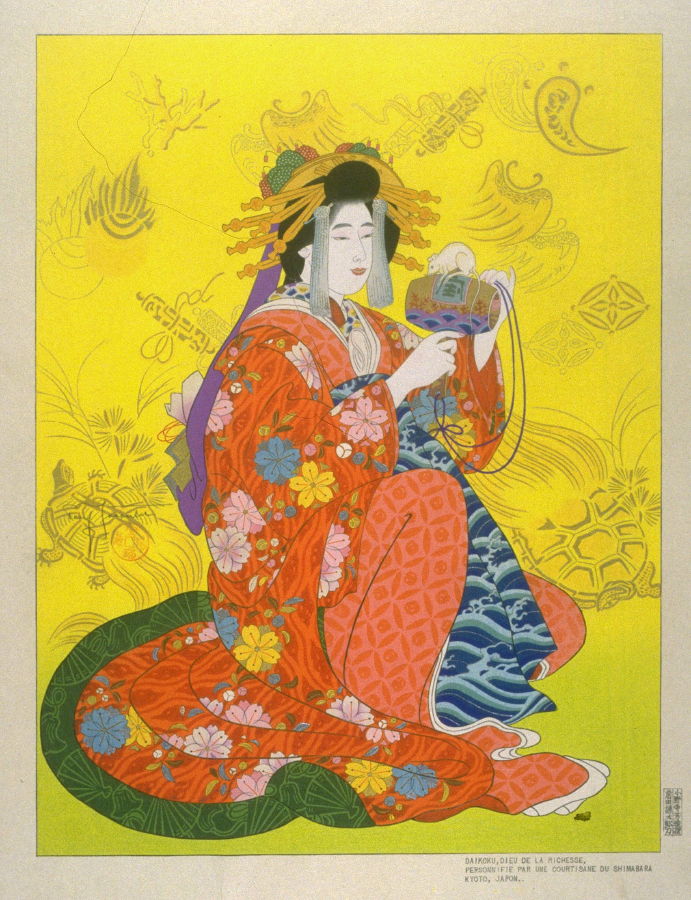
Daikoku, God of Health, Personified by a Courtesan of the Shimabara, Kyoto
1952
Woodblock print
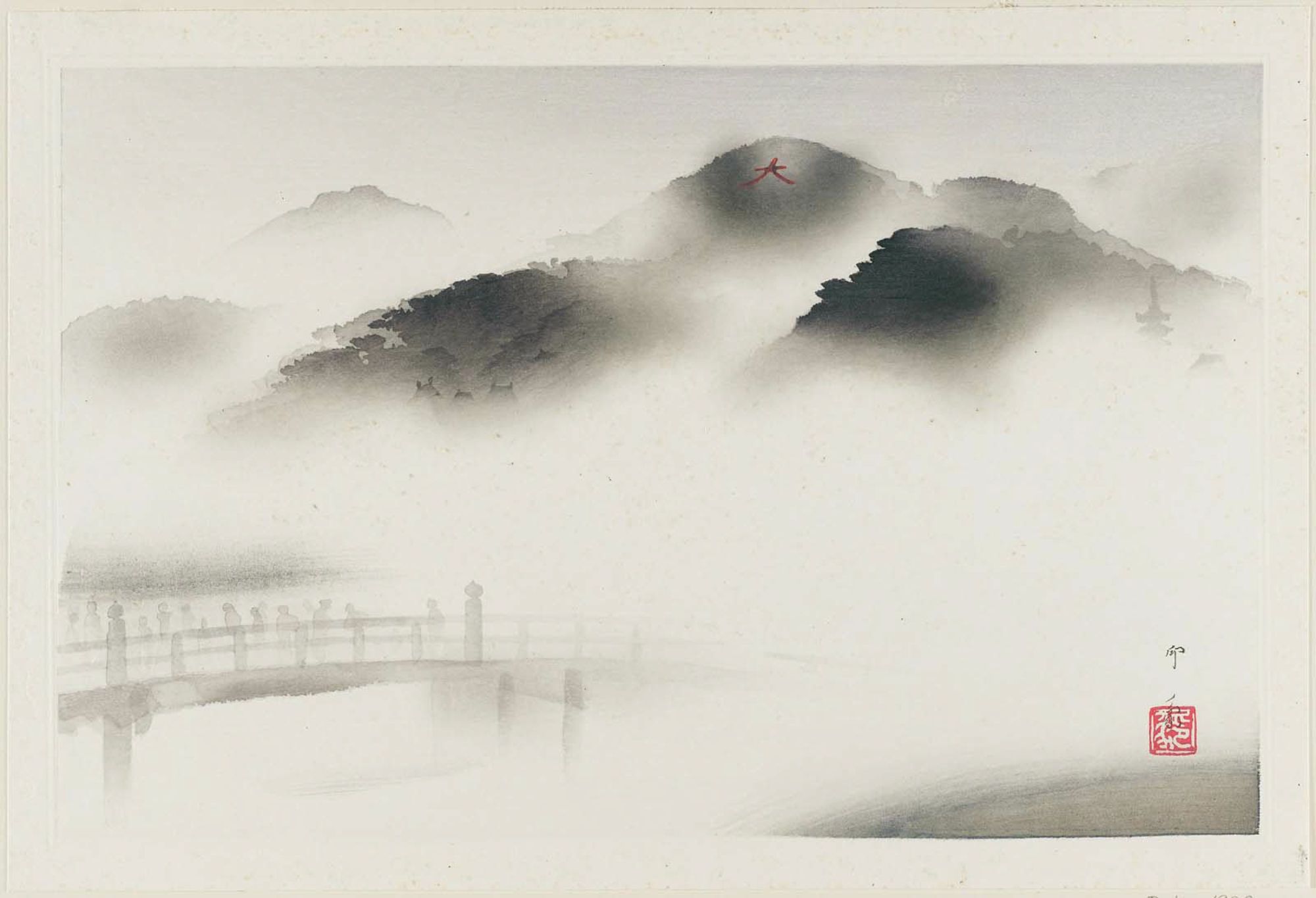
Daimonji-yama, from the album Eight Views of Kyoto (Kyôto hakkei)
Woodblock print

December (Snow Scene at the Golden Pavilion)
十二月 (金閣寺雪景)
second half 20th century
Woodblock print, ink and color on paper
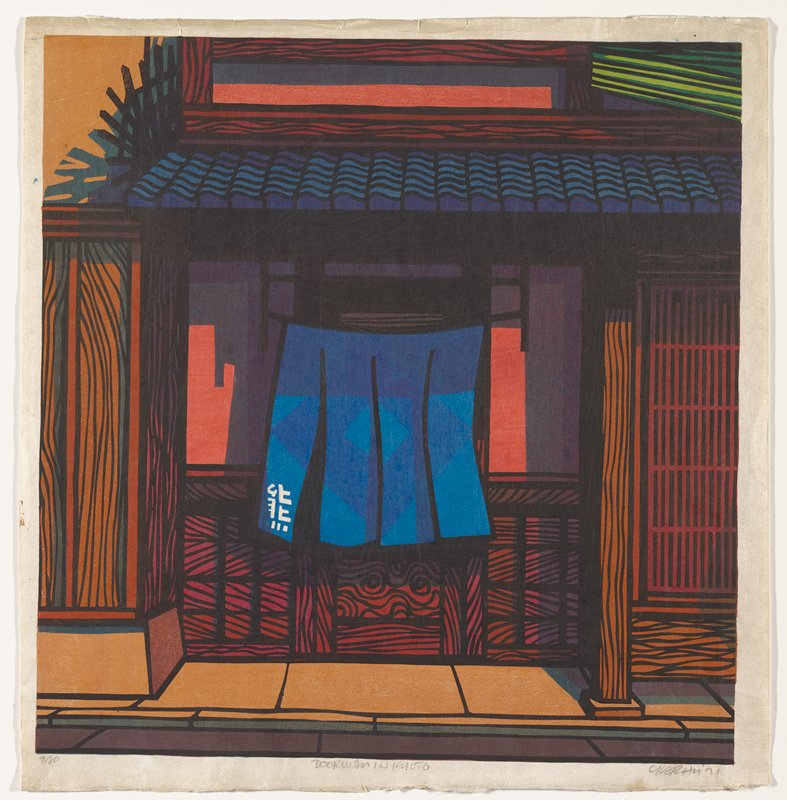
Doorway in Kyoto
1971
Woodblock print, ink and color on paper
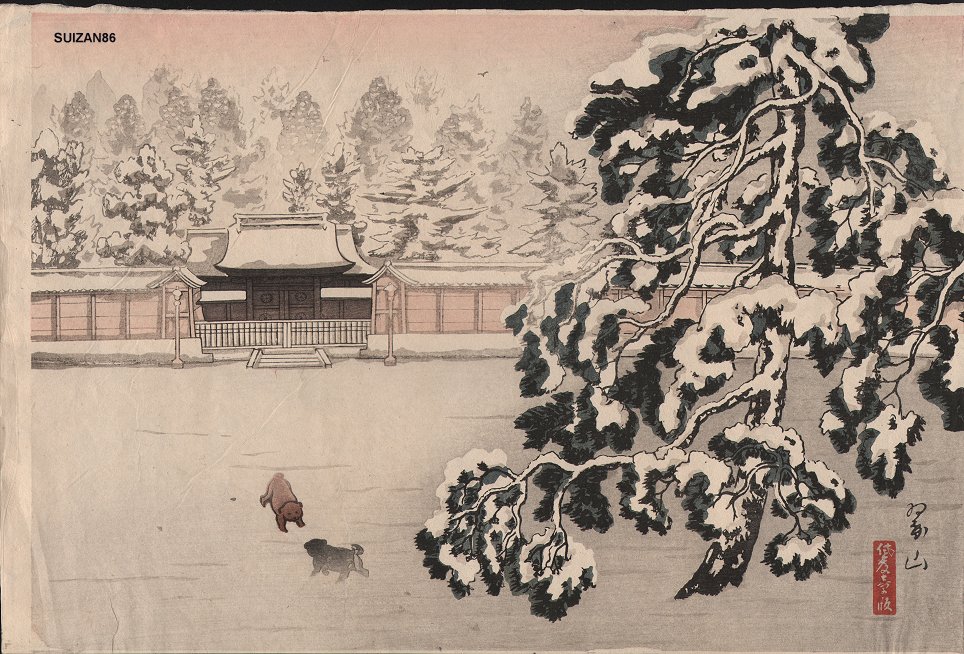
Early Morning Imperial Garden, Kyoto
Woodblock print
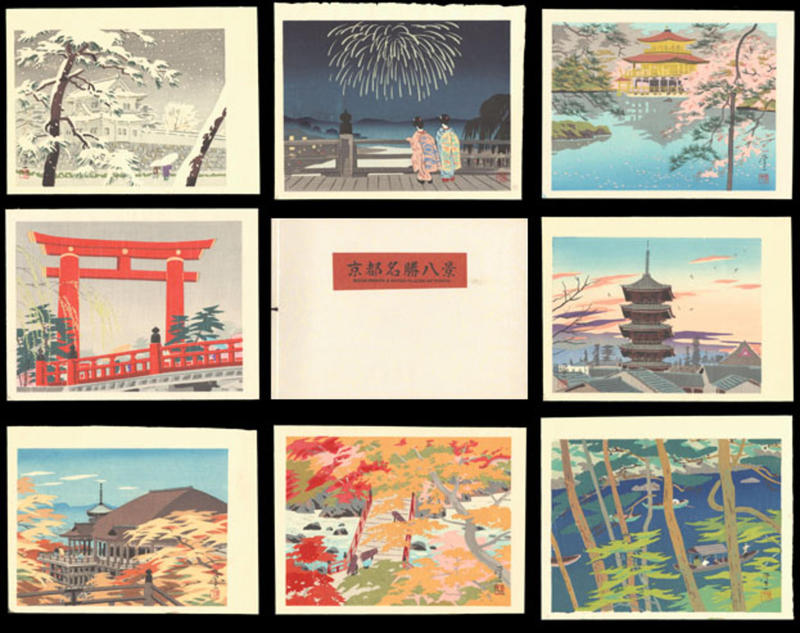
Eight Noted Places of Kyoto- Complete Eight-Print Set With Album
Woodblock print

Enjoying the Evening Cool on the Riverbed at Shijo (Shijogawara yusuzumi), from the series "Famous Places in Kyoto (Kyoto meisho no uchi)"
c. 1834
Color woodblock print; oban

Evening Shower at the Bank of Tadasu River (Tadasugawara no yudachi), from the series "Famous Places in Kyoto (Kyoto meisho no uchi)"
c. 1834
Color woodblock print; oban
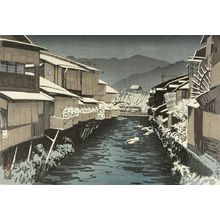
Fair Weather After Snow at Yamato Bridge, Kyoto (Yamato bashi no yukibare), Taishô period, dated 1924
Woodblock print
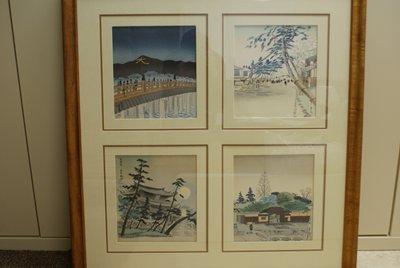
February (The Annual Festival of the Fushimi Inari)
二月 (伏見稲荷大社祭)
second half 20th century
Woodblock print, ink and color on paper
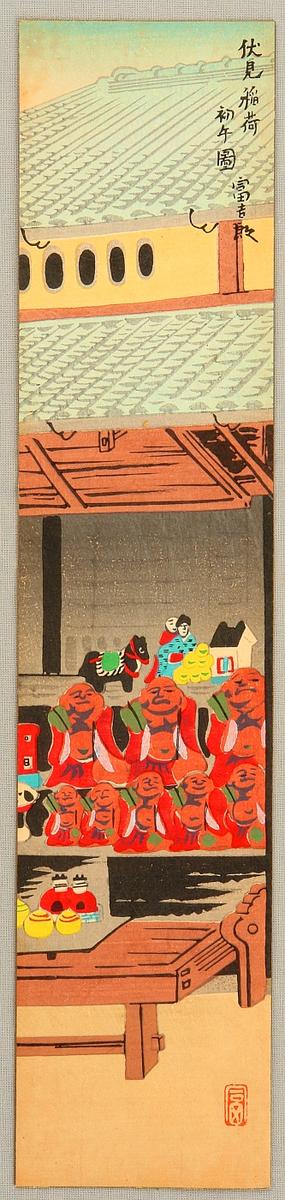
Fushimi Dolls
Woodblock print
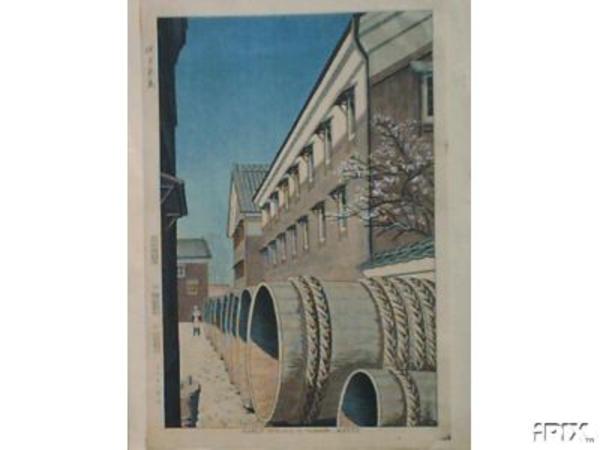
Fushimi Inari Temple
伏見稲荷
Woodblock print

Garden Tenryu-ji, Kyoto
1957

Ginkakuji Temple in Kyoto
Woodblock print

Gion Bridge at Hondo Amakusa, (Amakusa Hondo Gion-bashi), from the series "Selction of Views of Japan (Nihon fukei senshu)"
Amakusa Hondo Gion-bashi
1924
Color woodblock print; oban
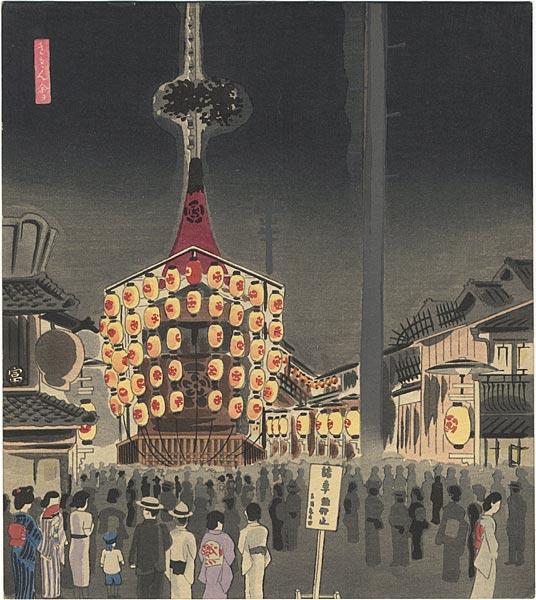
Gion Festival
Woodblock print

Gion in Kyoto (J)
1966
Color woodblock print; edition 51/100
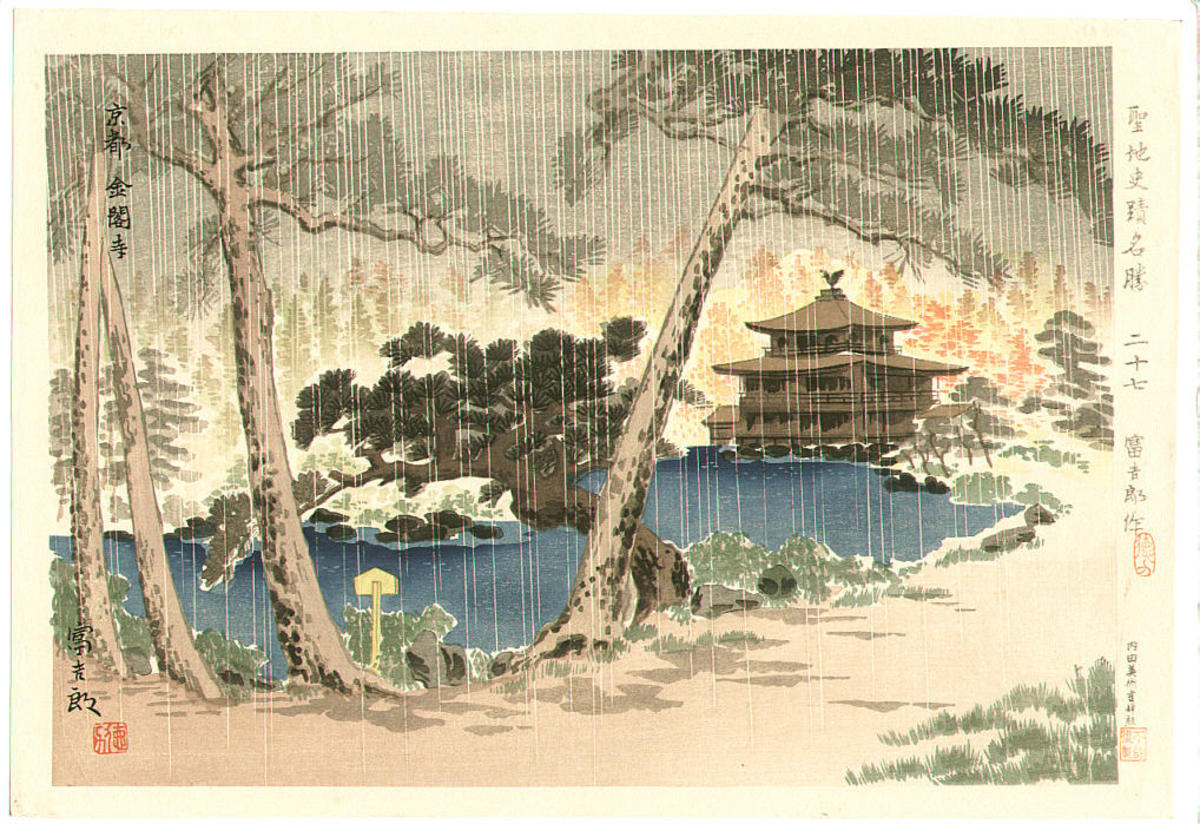
Golden Pavilion
Woodblock print
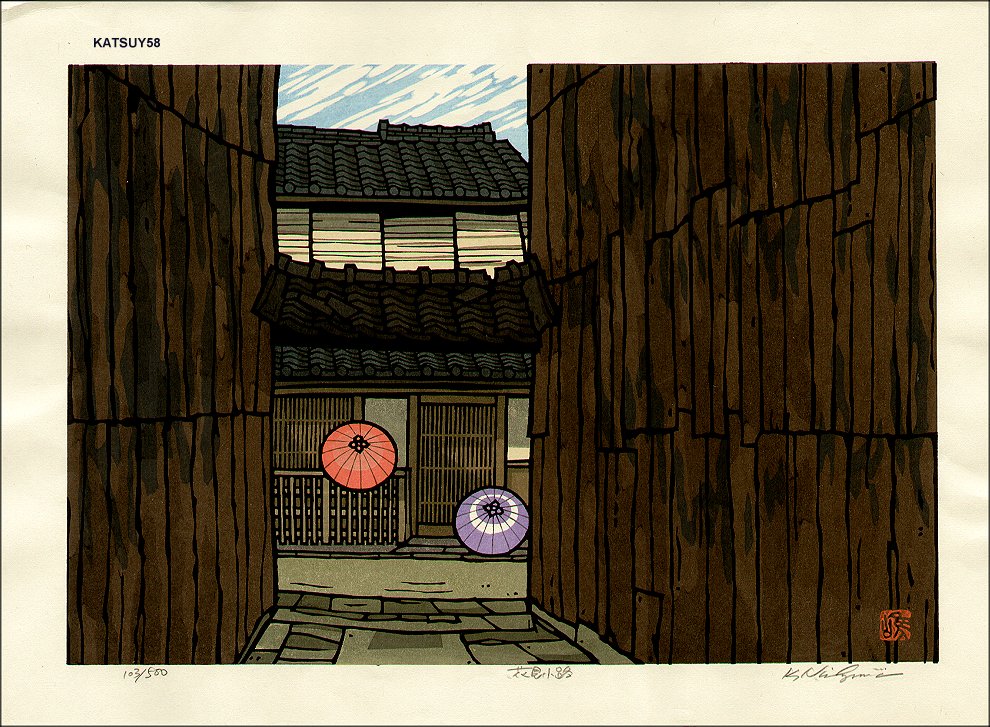
Hanamikoji St., Kyoto
Woodblock print
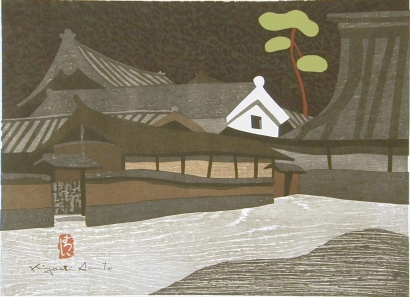
Hanzenji Kyoto
Woodblock print
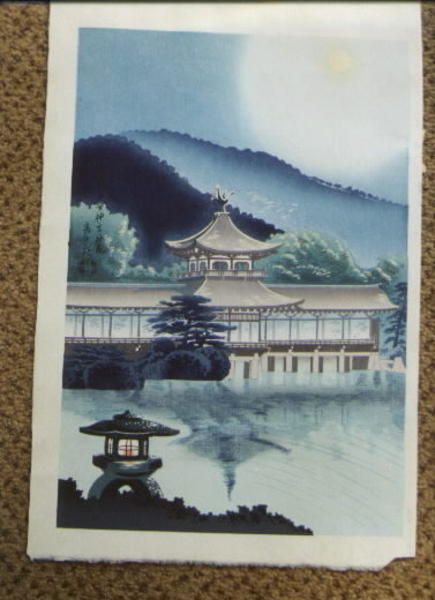
Heian Shrine
Woodblock print
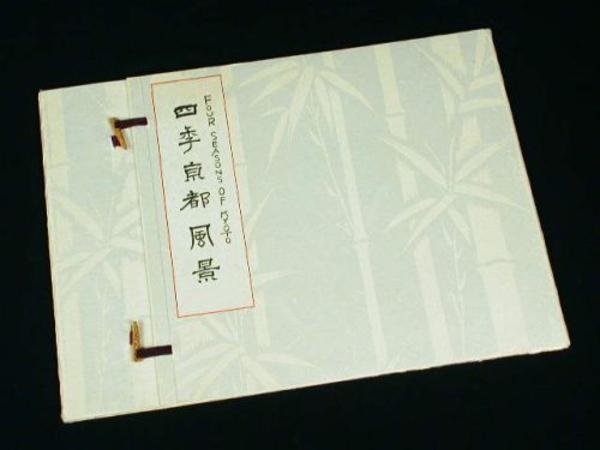
Heian Shrine in the Spring
Woodblock print

Heian Shrine, Kyoto (Heian jingu)
1936
Color woodblock print
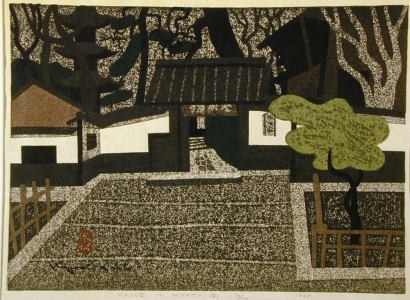
House in Kyoto (B)
Woodblock print
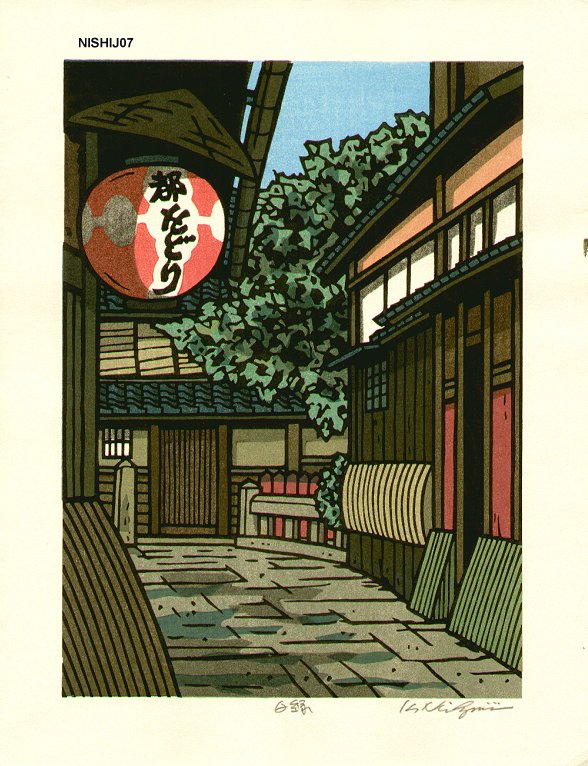
HUKURYOKU (a Kyoto street)
Woodblock print
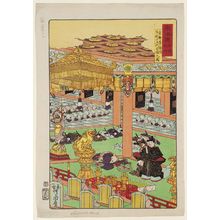
Images of the Fifteen Ashikaga Shoguns at the Tôji-in in Kyoto (Kyôto Tôji-in, Ashikaga jûgodai mokuzô no zu), from the series Scenes of Famous Places along the Tôkaidô Road, aka Processional Tôkaidô (Gyôretsu Tôkaidô), here called Tôkaidô meisho no uchi
Woodblock print
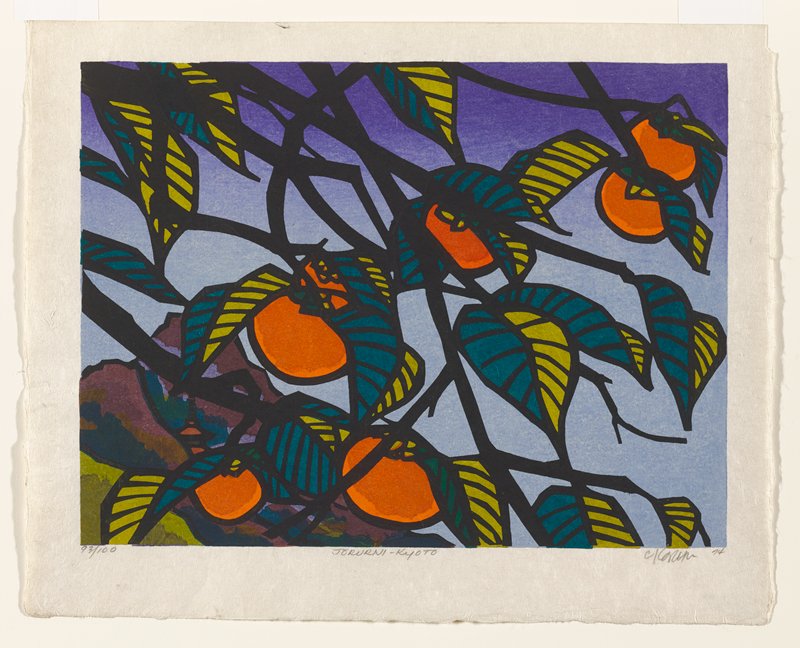
Jōruriji-Kyoto
1974
Woodblock print, ink and color on paper

July (Gorgeous Procession of Yama-hoko or the Floats at the Gion Festival)
七月 (祇園祭山鉾巡行)
second half 20th century
Woodblock print, ink and color on paper

Kamo River in Kyoto (Kamogawa)
Kamogawa
1933
Color woodblock print; oban

Kamogawa in Kyoto
1933
Color woodblock print

Karasuma Street-Kyoto
1970
Woodblock print, ink and color on paper
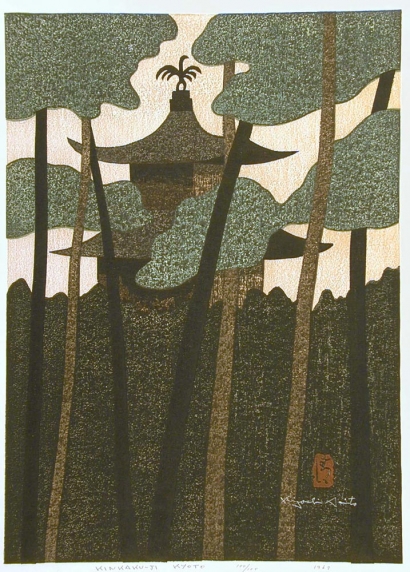
Kinkaku-ji (Golden Pavilion, Kyoto)
Woodblock print
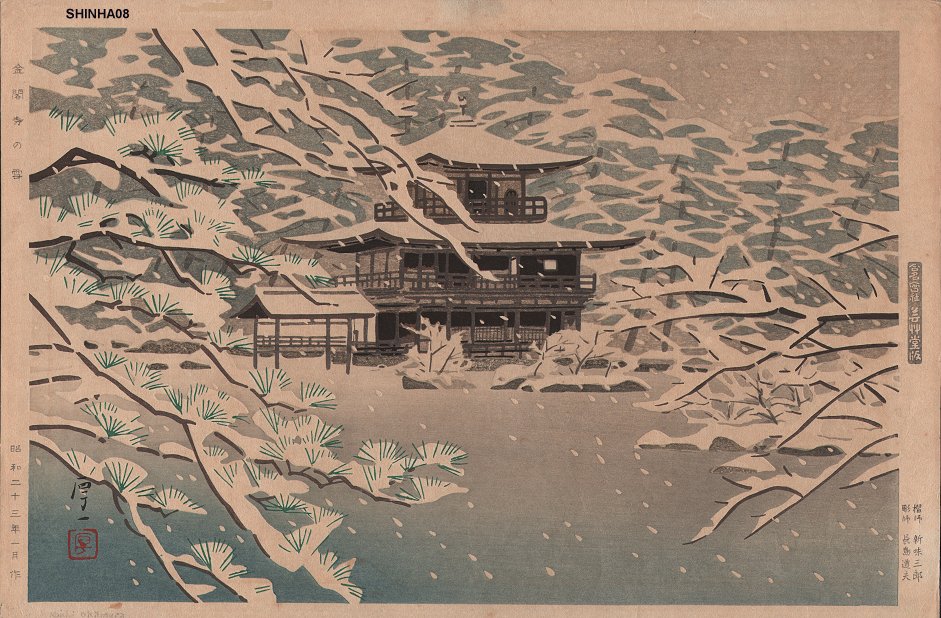
Kinkakuji, Kyoto
Woodblock print
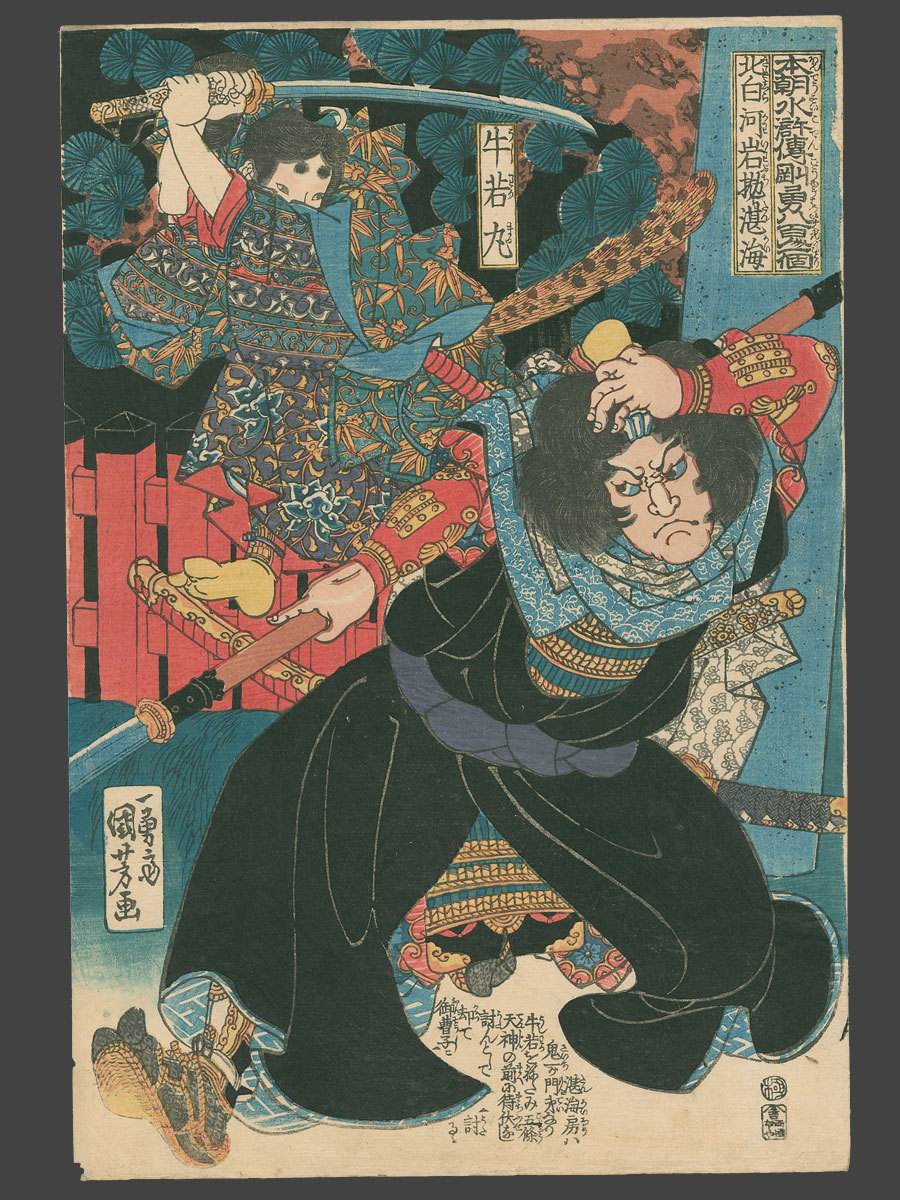
Kitashirakawa Iwabuchi Tankai in Combat with Ushiwakamaru (Yoshitsune) Before the Tenjin Temple at Gojo in Kyoto.
Woodblock print
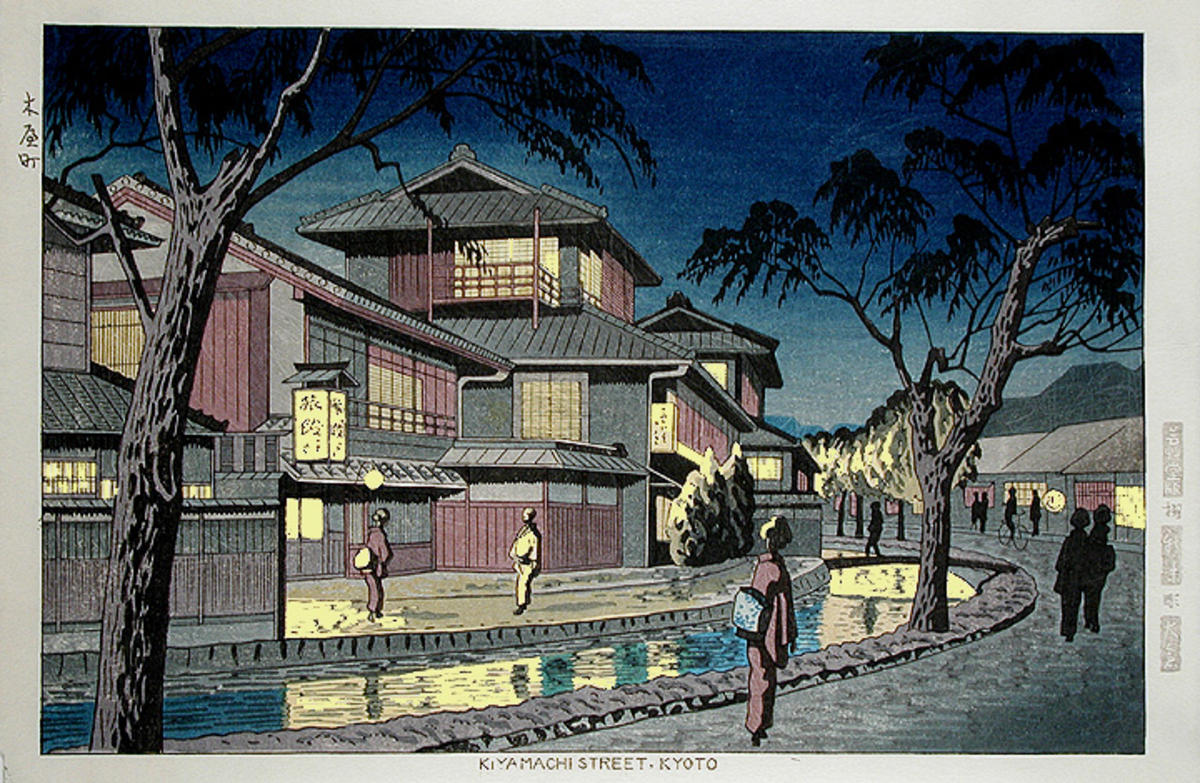
Kiyamachi Street, Kyoto
木屋町
ca. 1950s
Woodblock print
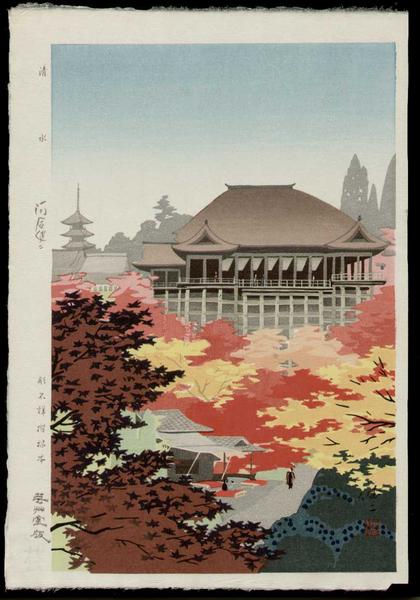
Kiyomizu Temple in Kyoto
Woodblock print
Kiyomizu Temple in the Snow
Woodblock print

Kiyomizu Temple, from the series "Famous Places in Kyoto (Kyoto meisho no uchi)"
c. 1834
Color woodblock print; oban
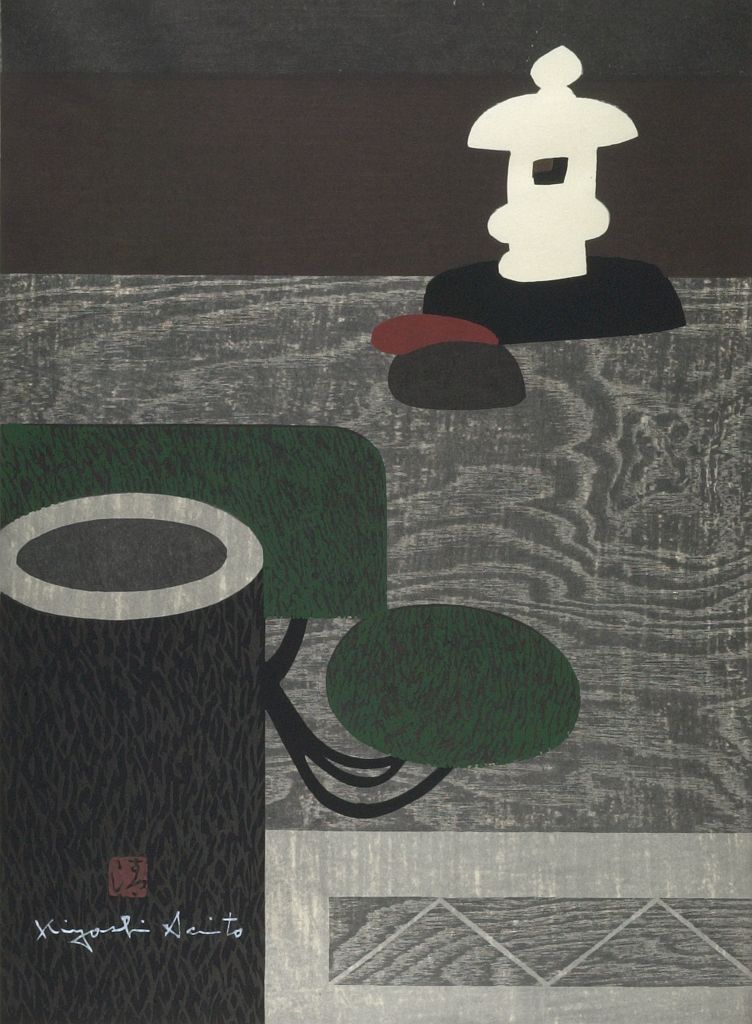
Kohô-an, Daitoku-ji, Kyoto, Shôwa period, dated 1961
Woodblock print
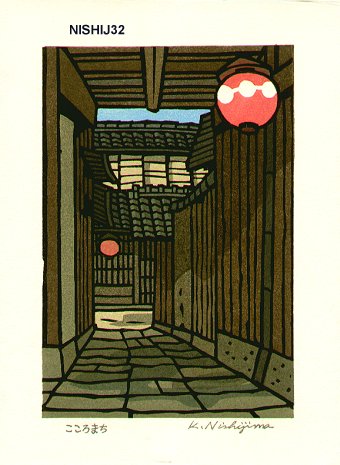
KOKOROMACHI (Kyoto Street)
Woodblock print
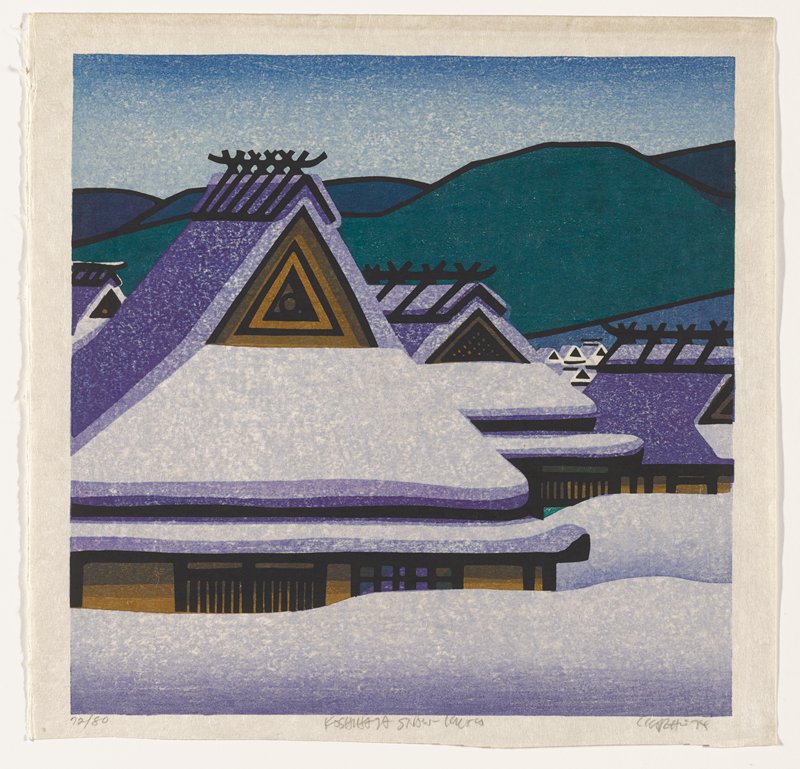
Koshihara Snow-Kyoto
1974
Woodblock print, ink and color on paper

Kozan-Ji, Kyoto (B)
Woodblock print
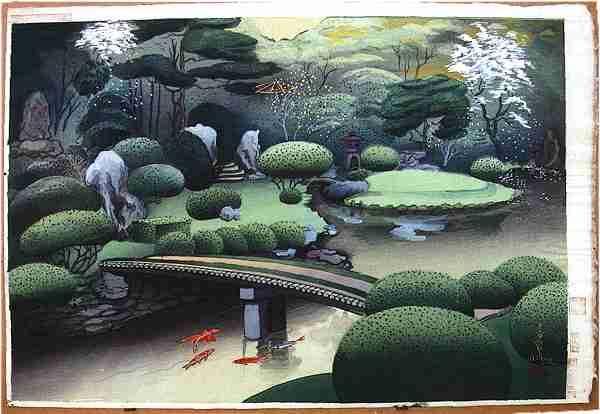
Kurodani Garden in Kyoto- Spring
Woodblock print
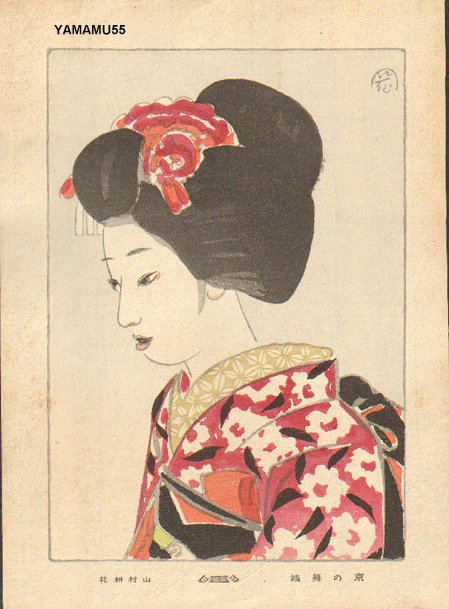
KYO NO MAIKO (Maiko of Kyoto)
Woodblock print

Kyoto
Woodblock print
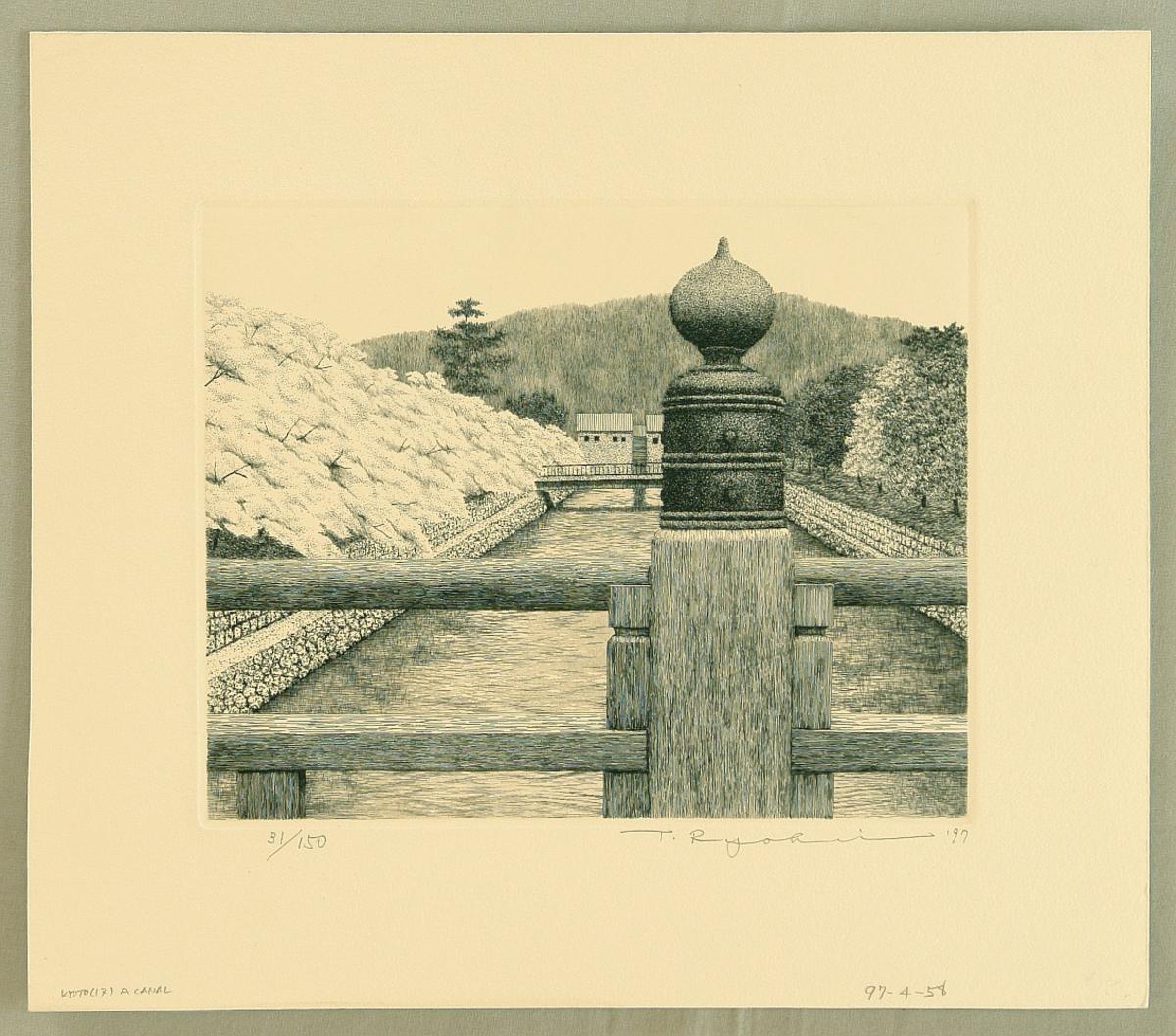
Kyoto - 17 A Canal
Woodblock print
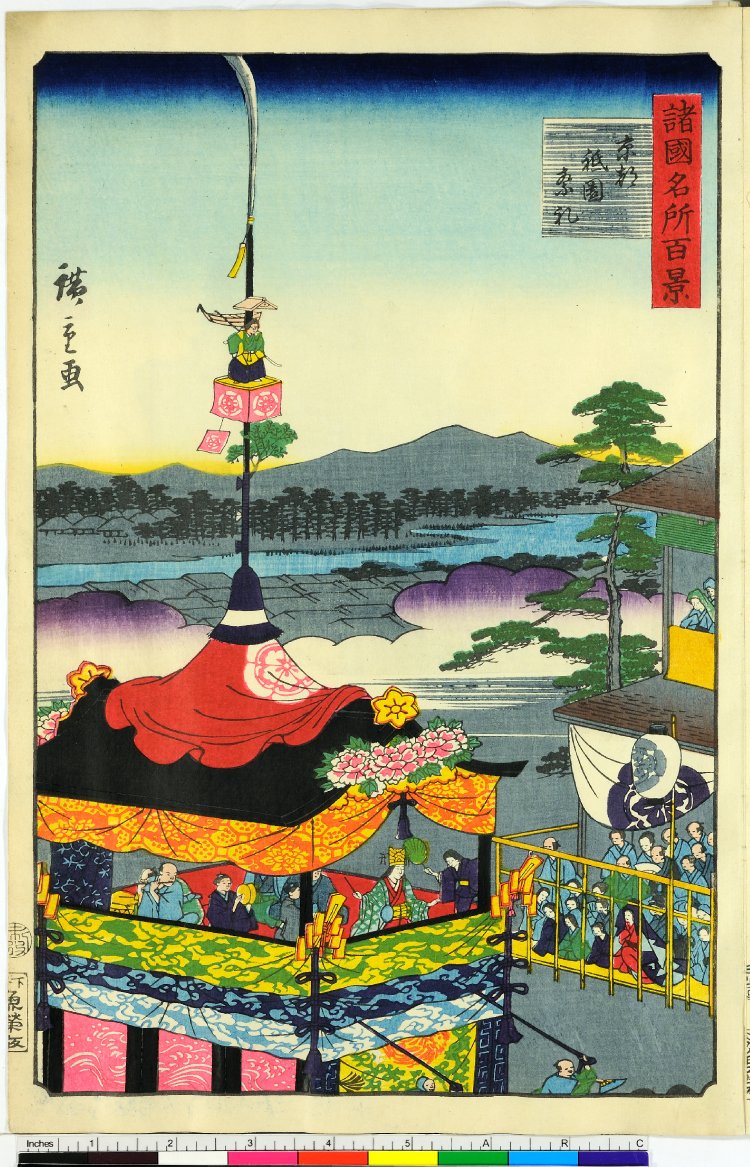
Kyoto Giion sairei 京都祇園祭礼 / Shokoku Meisho Hyakkei 諸国名所百景
Woodblock print
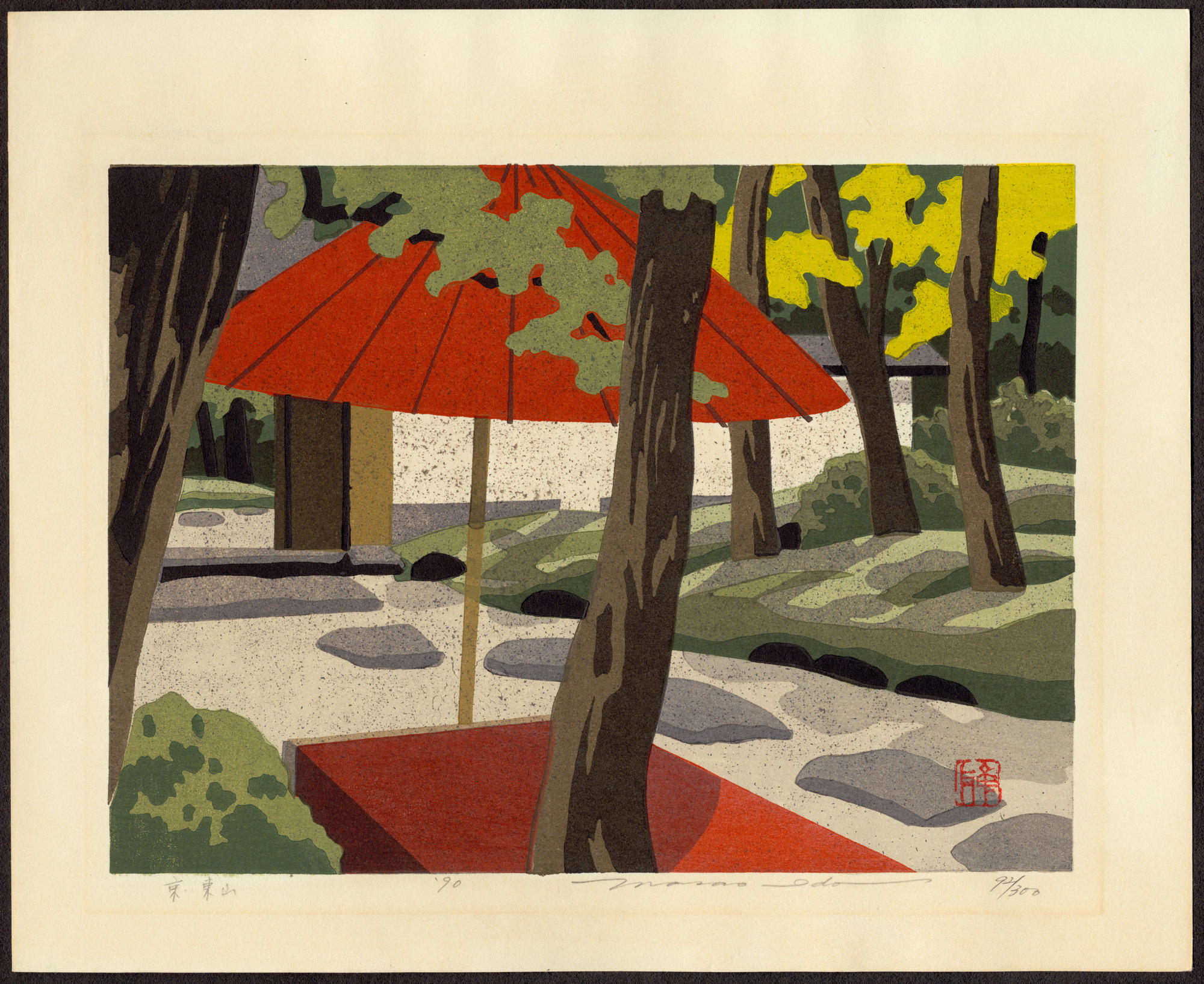
Kyoto Higashiyama - 京・東山
Woodblock print
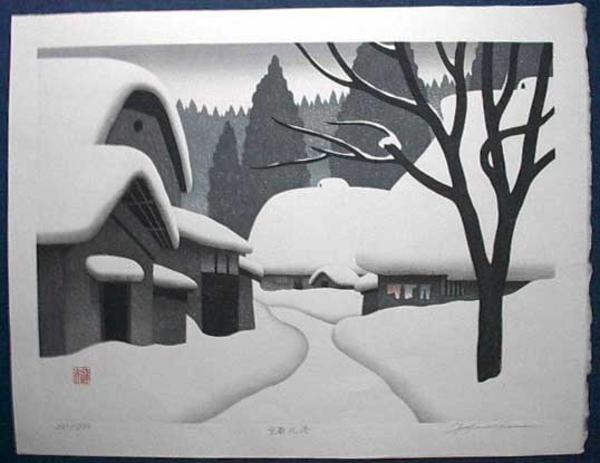
Kyoto Hokuraku
Woodblock print
Kyoto House
Woodblock print
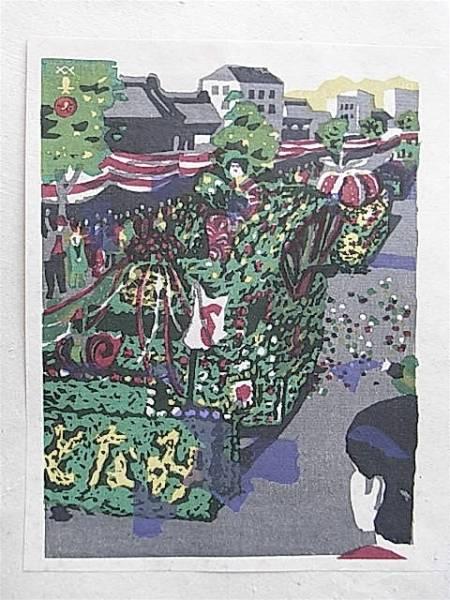
Kyoto Port Festival — 神戸港祭
Woodblock print
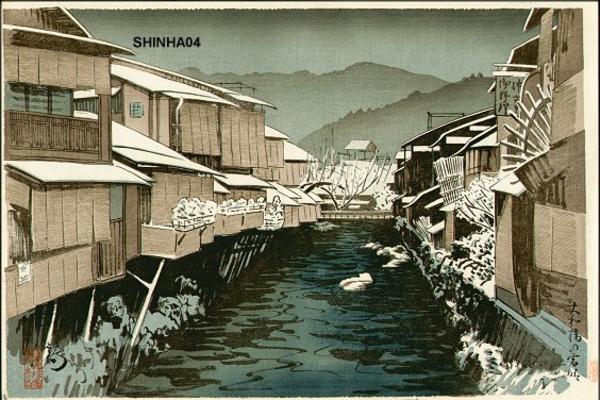
Kyoto riverbanks
Woodblock print

Kyoto Series, No. 22B
1962
Woodblock print, ink and color on paper

Kyoto Series, No. 33
1966
Woodblock print, ink and color on paper
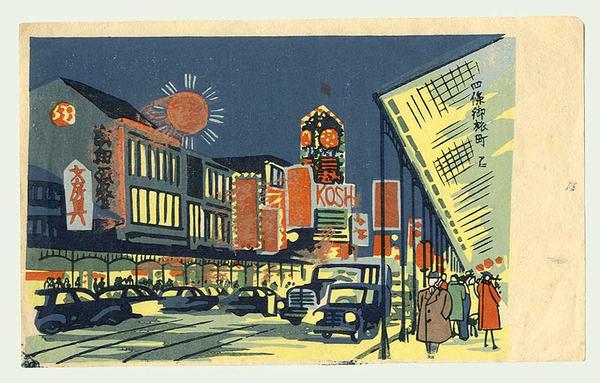
Kyoto Shijo
Woodblock print
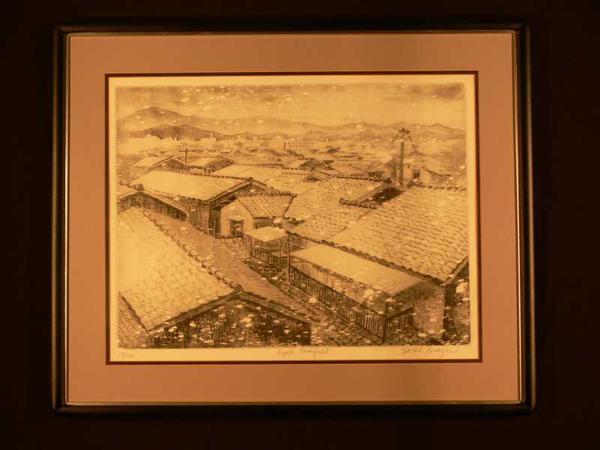
Kyoto Snowfall- LE
Not set
Woodblock print

Kyoto Woodcuts
Woodblock print
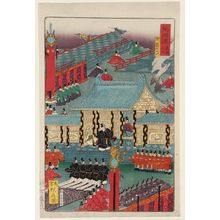
Kyoto: The Palace Wall and the Jômeimon Gate (Kyô, Tsuiji Jômeimon), from the series Scenes of Famous Places along the Tôkaidô Road (Tôkaidô meisho fûkei), also known as the Processional Tôkaidô (Gyôretsu Tôkaidô), here called Tôkaidô meisho no uchi
Woodblock print
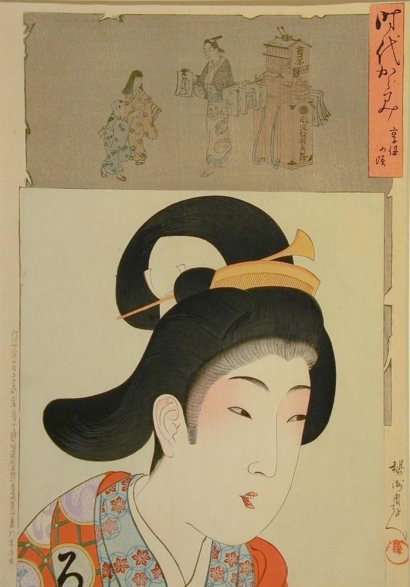
Lady in Kyoto Era (1716-1735)
Woodblock print

Late Autumn Rain, Nanzen Temple, Kyoto (Shigure no ato (Kyoto Nanzenji))
1951
Color woodblock print

Lyric Kyoto No. 2
1960
Color woodblock print

Maiko, Kyoto
舞妓 京都
1961
Color woodblock print
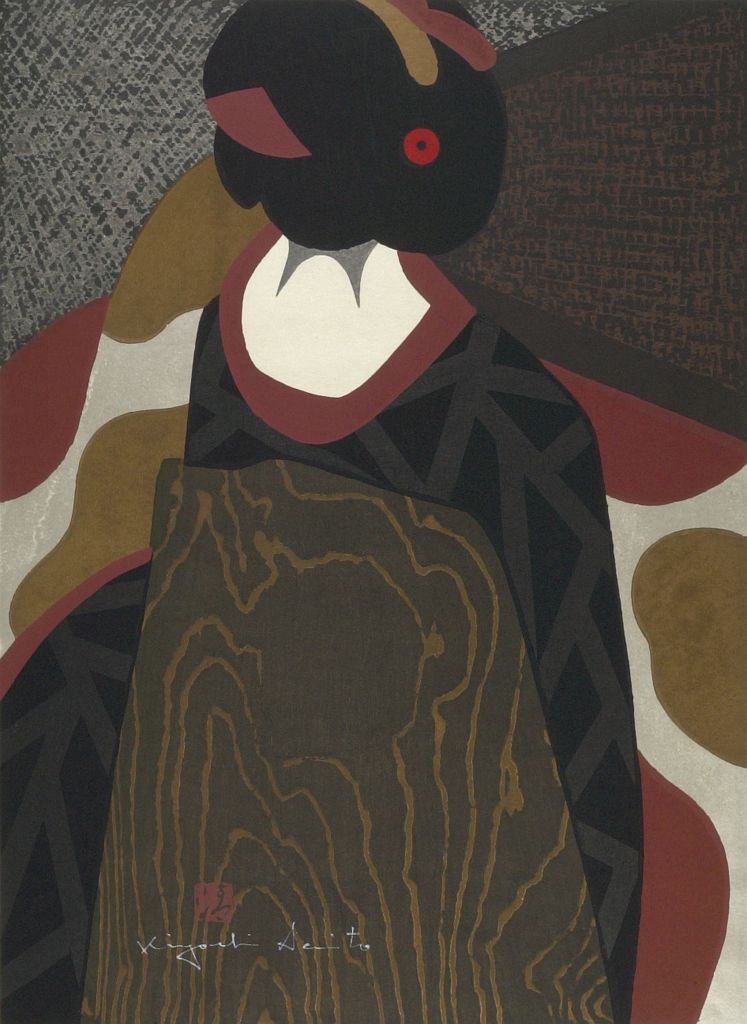
Maiko, Kyoto (H), Shôwa period, dated 1961
Woodblock print

May (The Pagoda of Yasaka near Gion)
五月 (祇園八坂の塔)
second half 20th century
Woodblock print, ink and color on paper

Minakuchi, Ishibe, Kusatsu, Otsu, and Kyoto, from the series "Famous Places on the Fifty-three Stations of the Tokaido, Five Stations (Tokaido gojusan eki goshuku meisho)"
c. 1830/35
Color woodblock print; oban
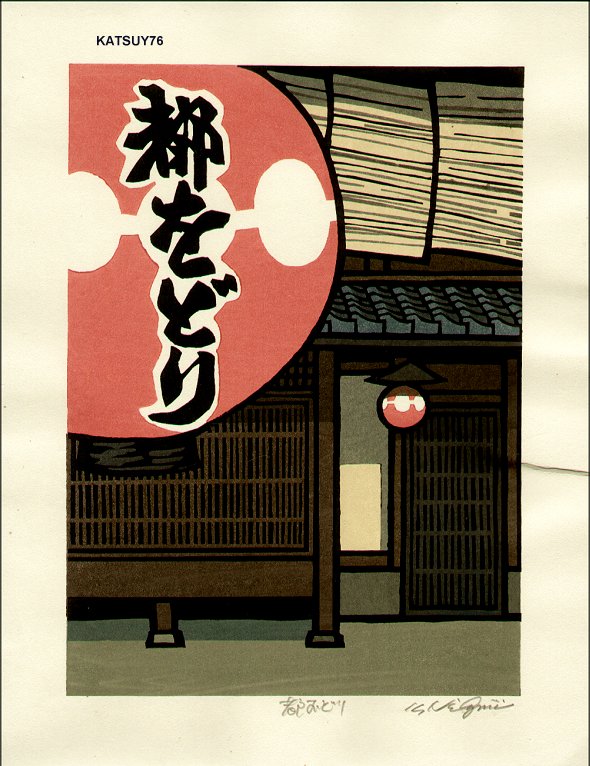
Miyako (Kyoto) Dancing
Woodblock print
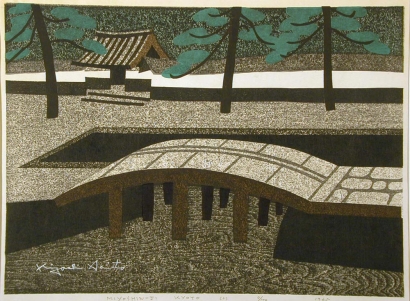
Miyoshin-ji Kyoto (C)
Woodblock print
Morning Mist at Sanjô Bridge, Kyoto (Sanjô ôhashi no asagiri), Taishô period, dated 1924
Woodblock print
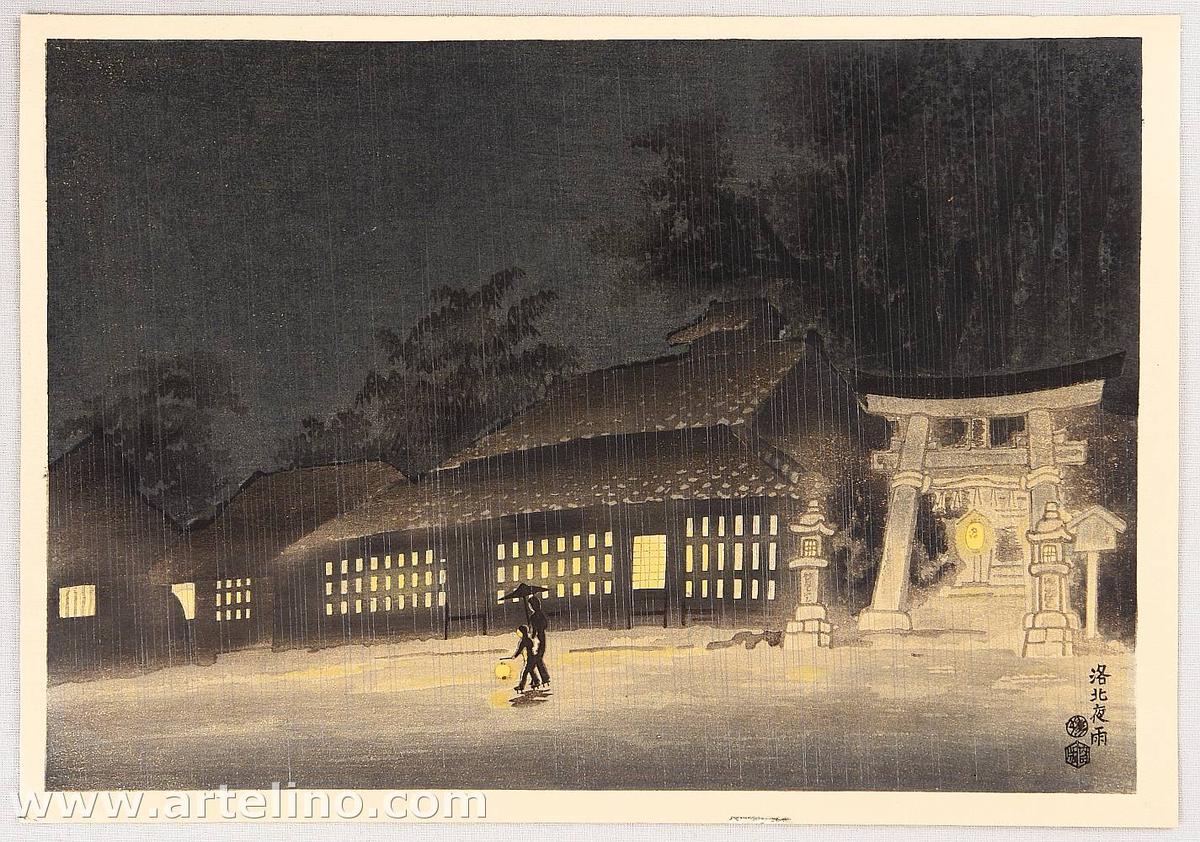
Night Rain in Kyoto- watercolour
Not set
Woodblock print

No Series Kyoto Snow Le
Woodblock print
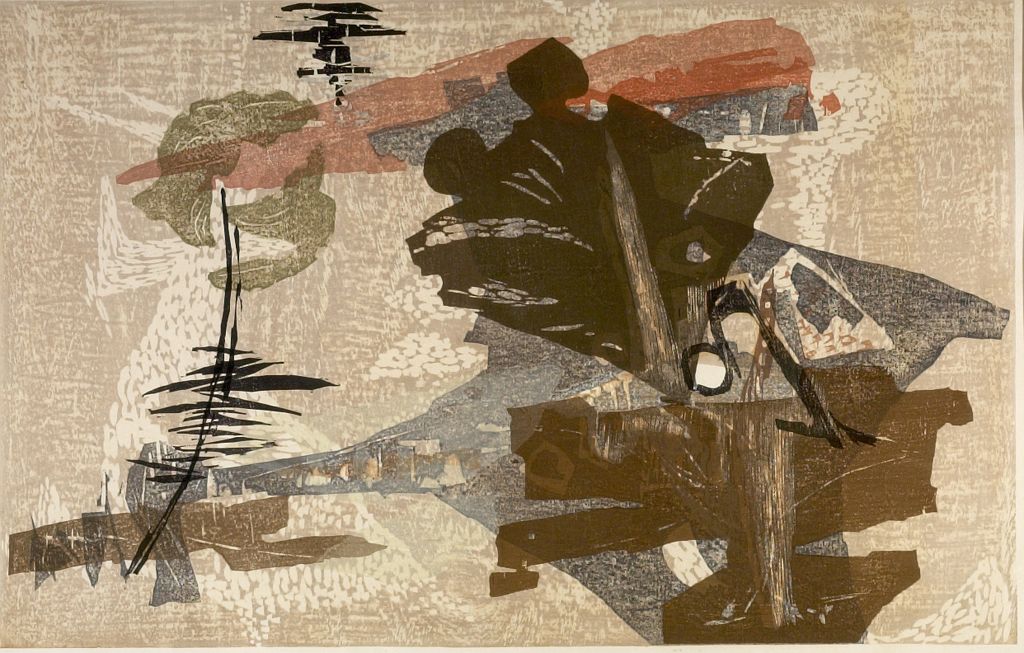
Nostalgia of Kyoto (Kyoto e no omoi), Shôwa period, circa 1960s
Woodblock print

Nunnery's Garden (A) -- Kyoto Series No. 46, Shôwa period, dated 1975

Obaiin Garden at Daitokuji Temple, Kyoto
1963
Woodblock print

October (The Full-Moon Night at the Gate of the Chionin Monastery)
十月 (知恩院山門月夜)
second half 20th century
Woodblock print, ink and color on paper
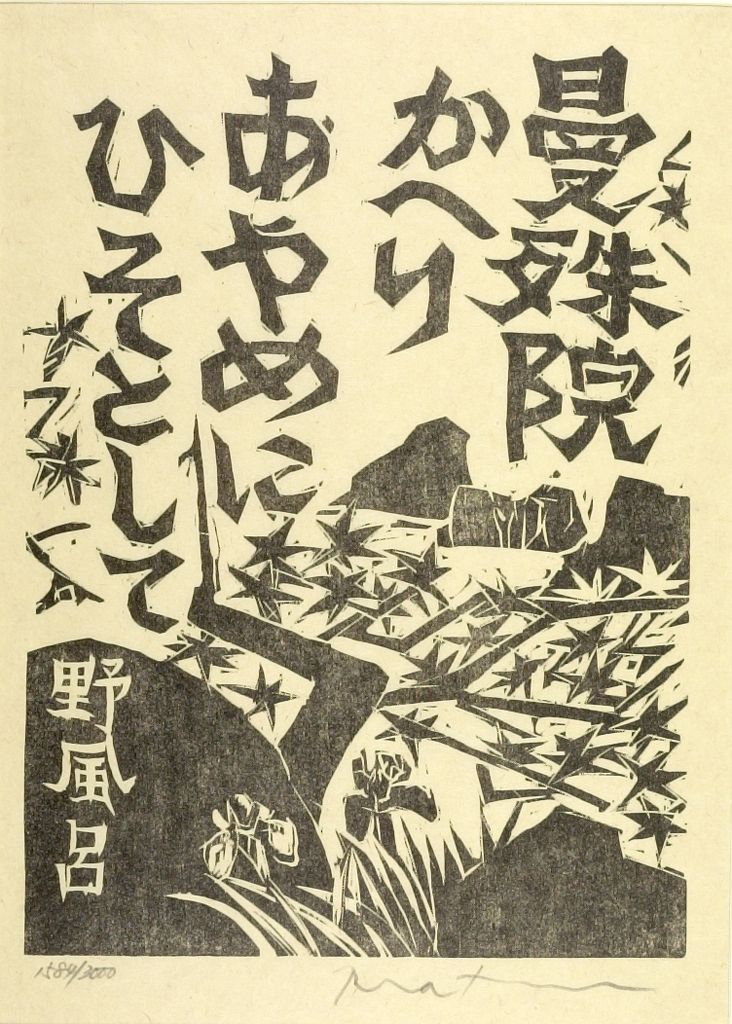
Original Print from the publication Kyoto Woodcuts, Shôwa period, circa 1960-1978
Woodblock print
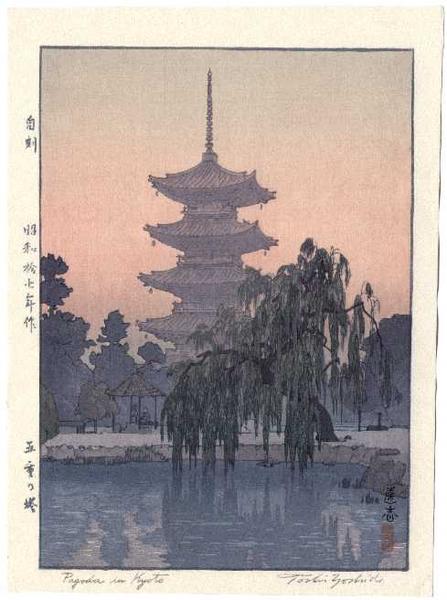
Pagoda in Kyoto- Goju no To
1942
Woodblock print
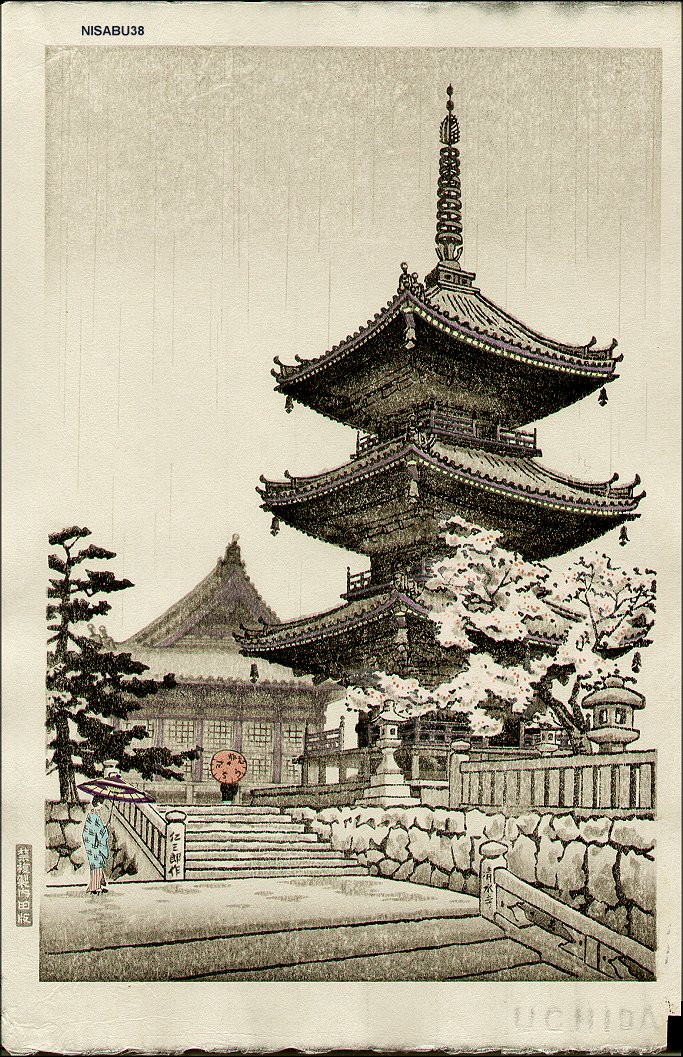
Pagoda of Kiyomizu Temple in Kyoto
Woodblock print
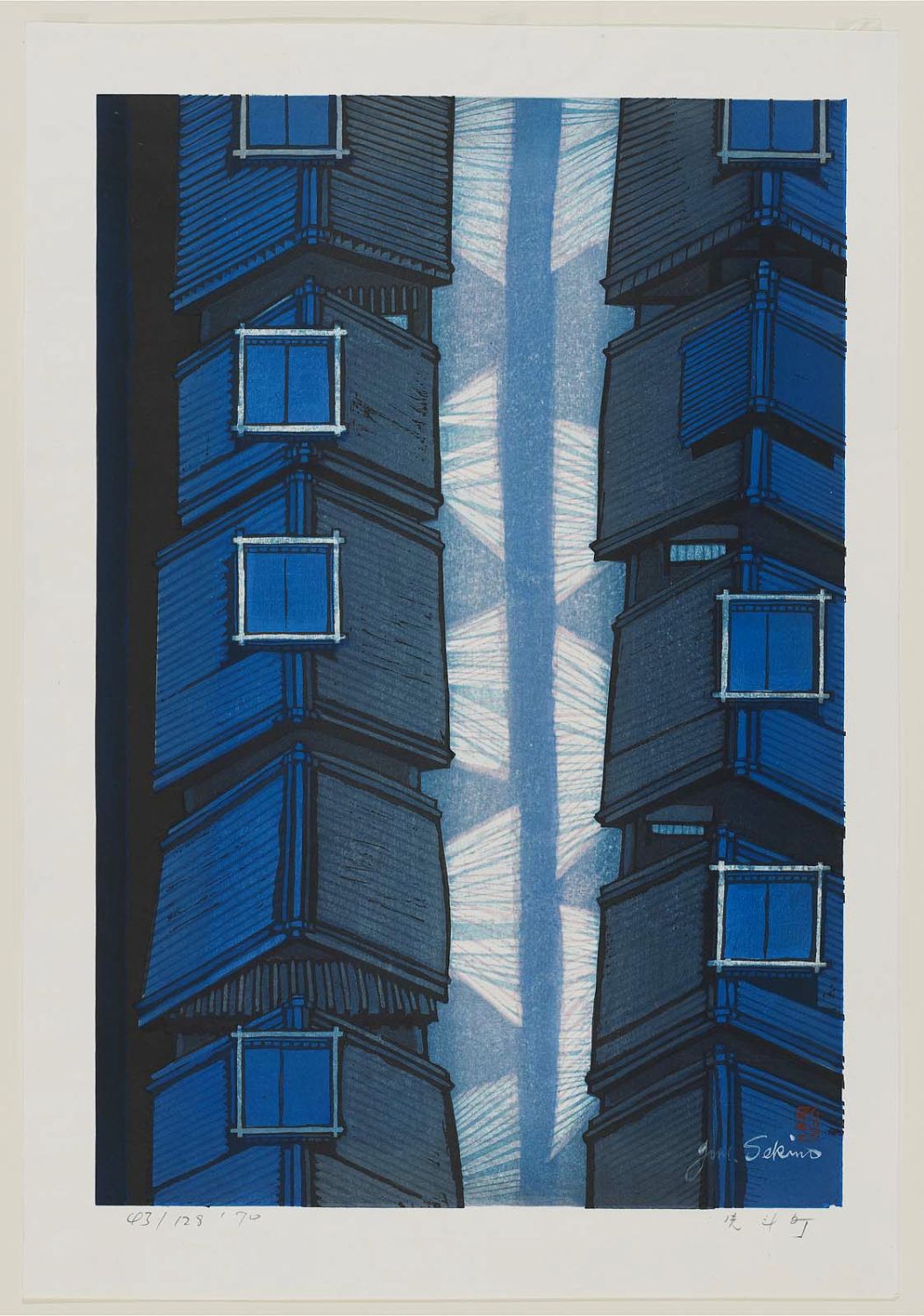
Pontocho, Kyoto
Woodblock print
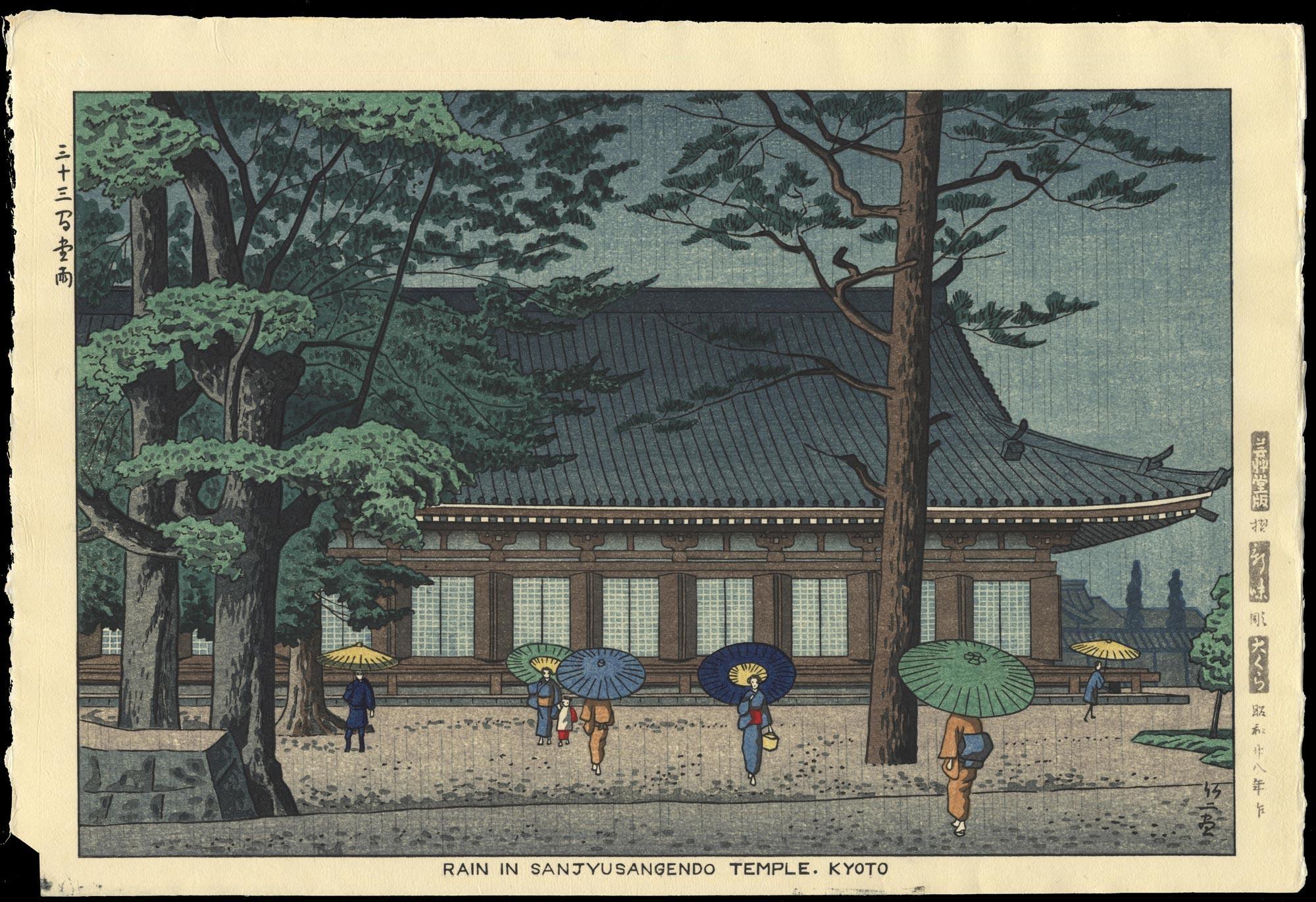
Rain in Sanjusangendo Temple, Kyoto
三十三間堂雨
Woodblock print
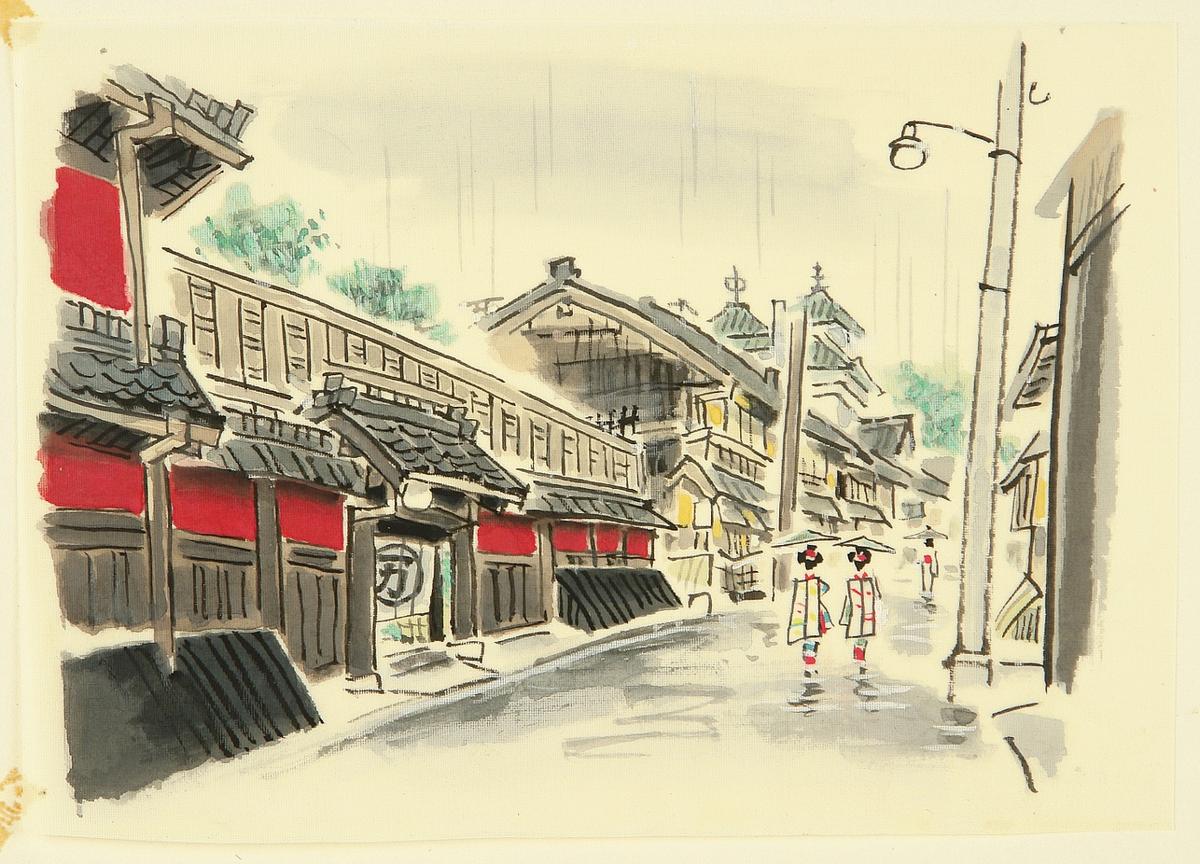
Rainy Street of Kyoto
Woodblock print

Rakuhoku in Kyoto
Woodblock print

Red Maple Trees at the Tsuten Bridge (Tsutenkyo no momiji), from the series "Famous Places in Kyoto (Kyoto meisho no uchi)"
c. 1834
Color woodblock print; oban
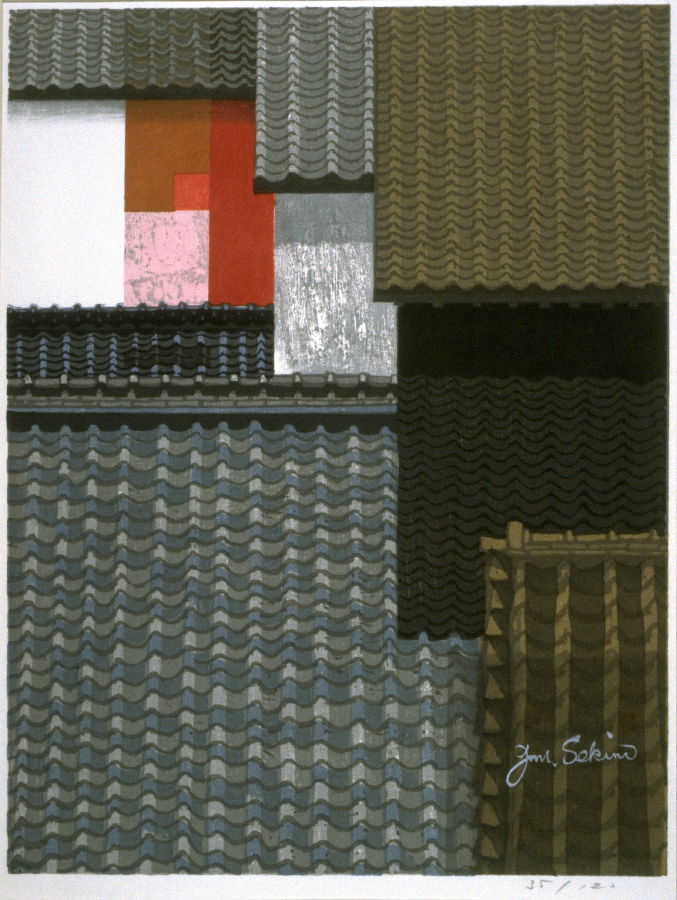
Roof of Kyoto
Woodblock print
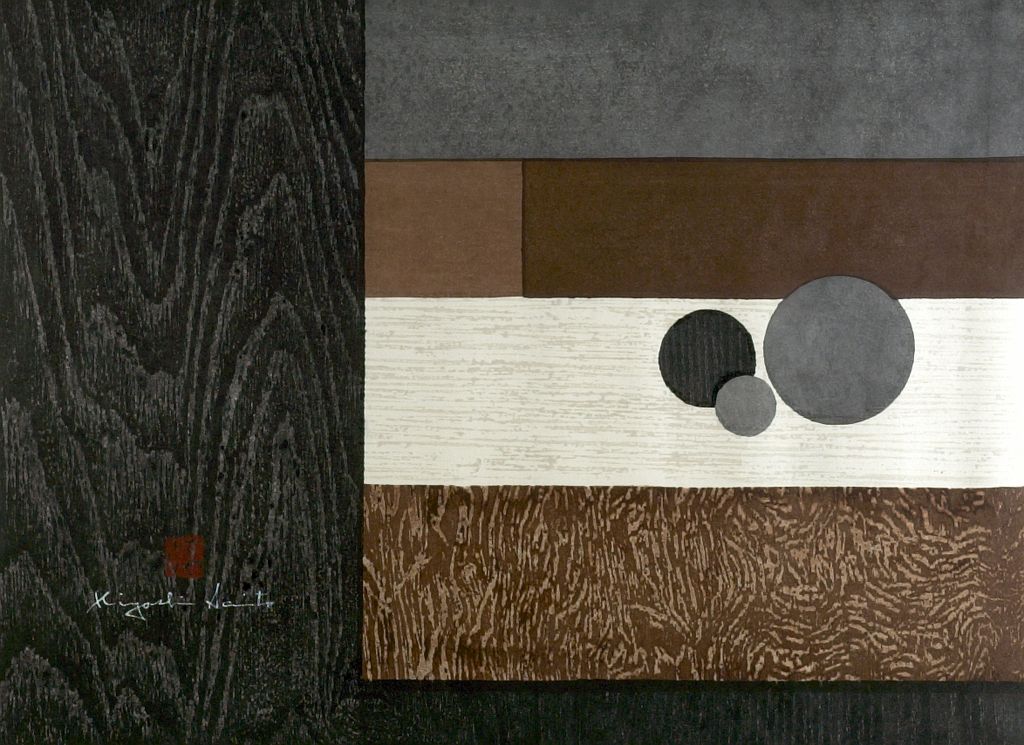
Ryôan-ji, Kyoto, Shôwa period, dated 1960
Woodblock print

Ryoanji, Kyoto (A)
1954
Color woodblock print
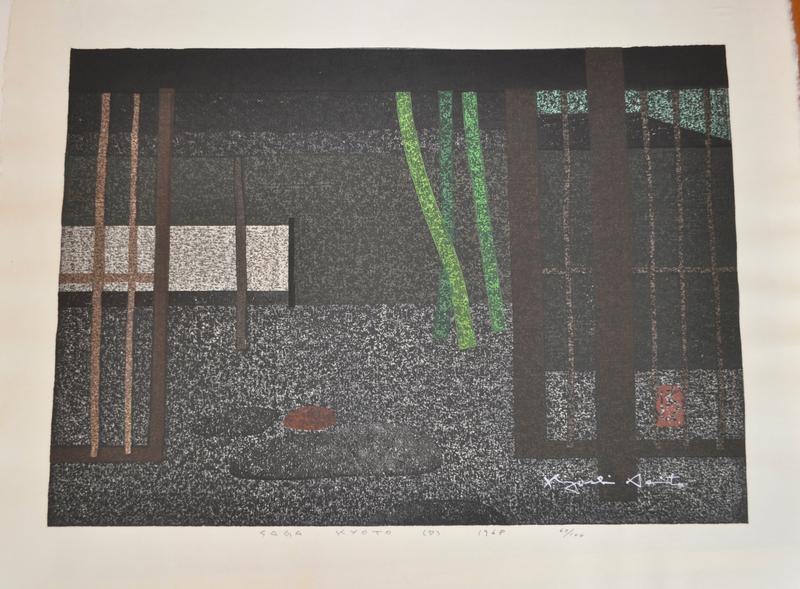
Saga, Kyoto (D)
1968
Woodblock print, ink and color on paper

Sanzen Temple, Ohara, Kyoto (Kyoto Ohara Sanzenin)
1949
Color woodblock print

Shichijo, Shinchi, Kyoto
1976
Color woodblock print; edition 16/100
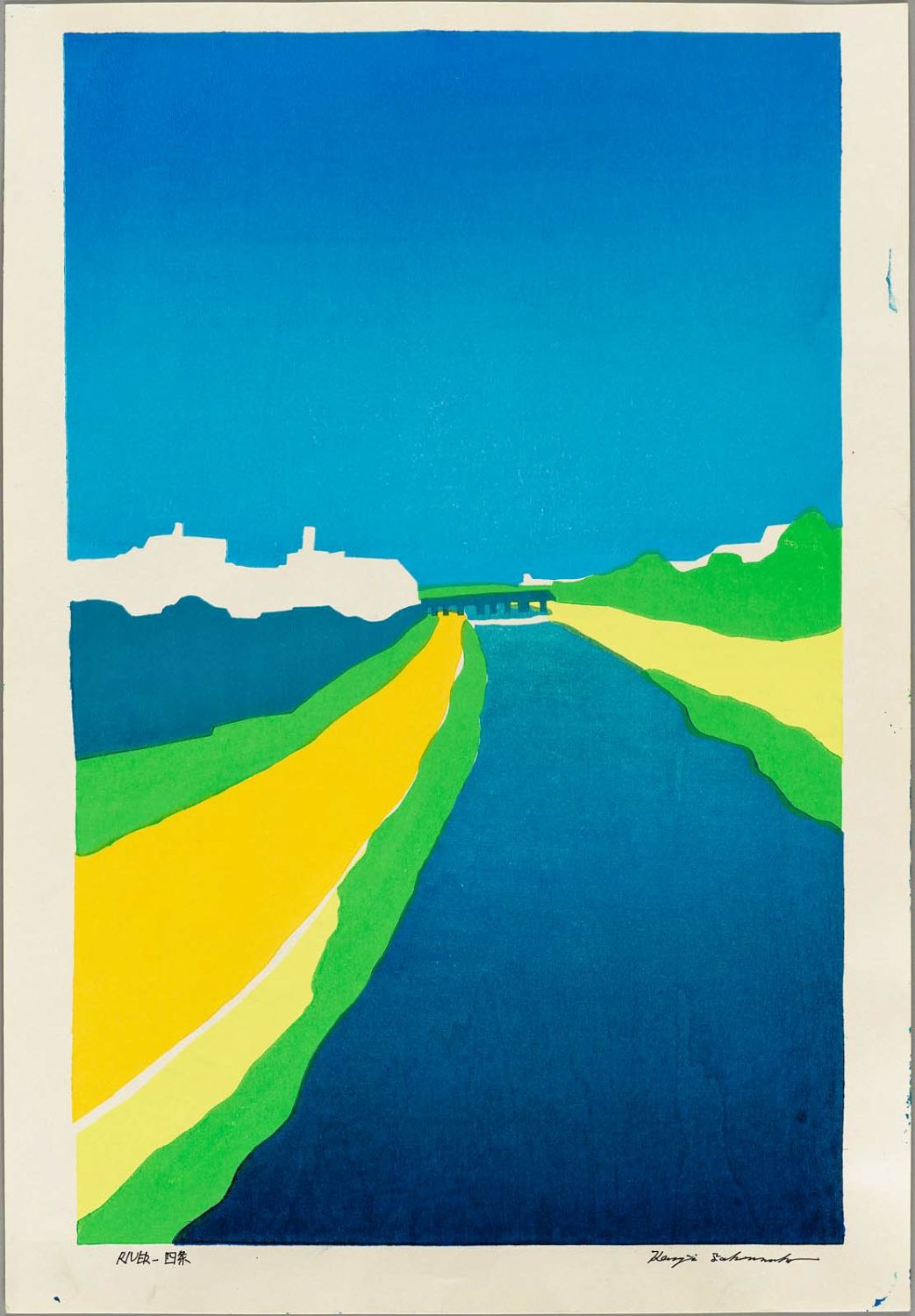
Shijo Bridge in Kyoto from the Rivers Series
Woodblock print
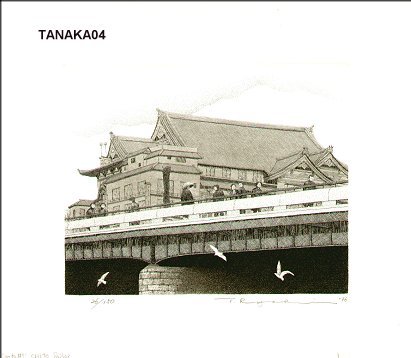
Shijo Bridge, Kyoto #11
Woodblock print
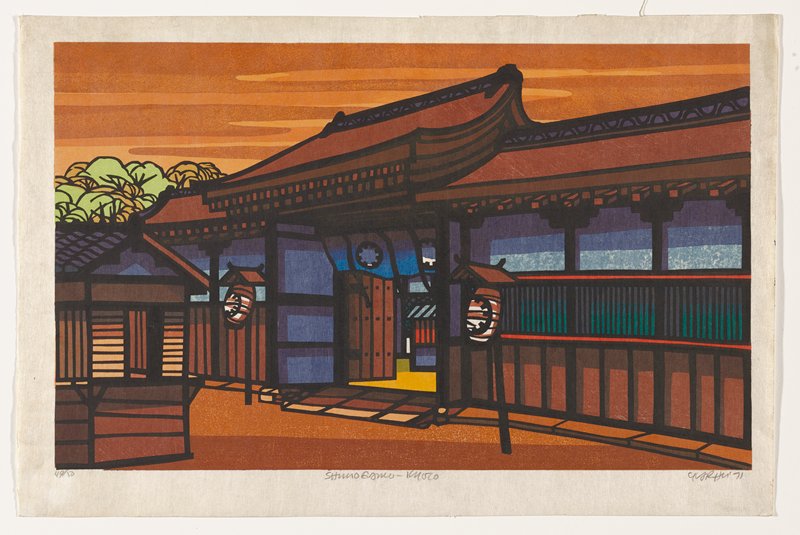
Shimogamo-Kyoto
1971
Woodblock print, ink and color on paper
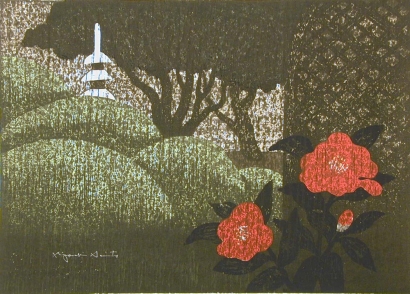
Shisen-do, Kyoto (G)
Woodblock print
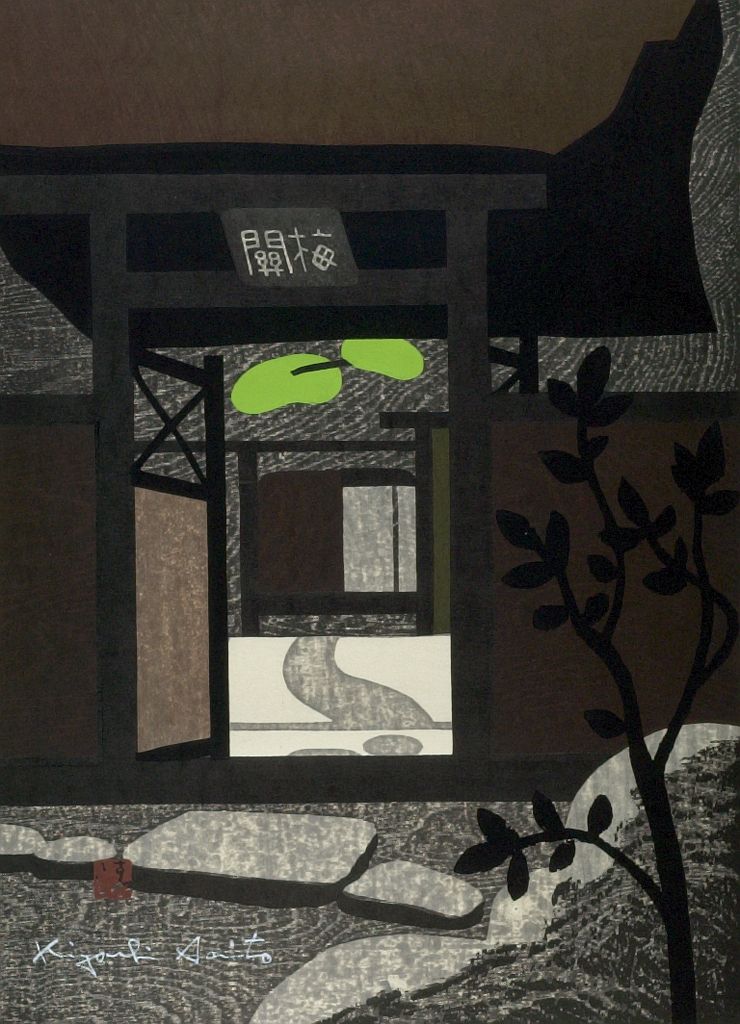
Shisendô, Kyoto C, Shôwa period, dated 1963
Woodblock print
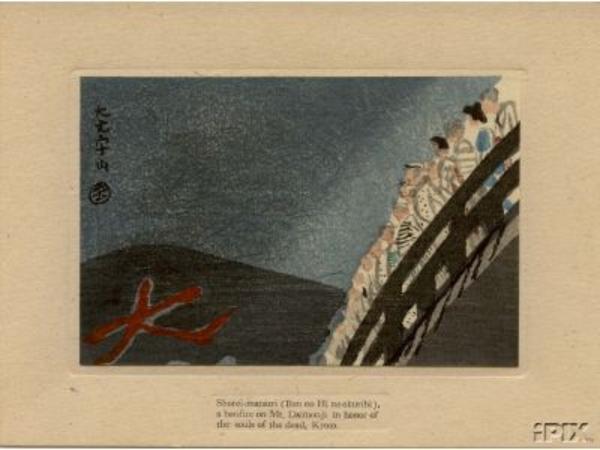
Shorei-matsuri, a bonfire on Mt. Daimonji in Kyoto
Woodblock print
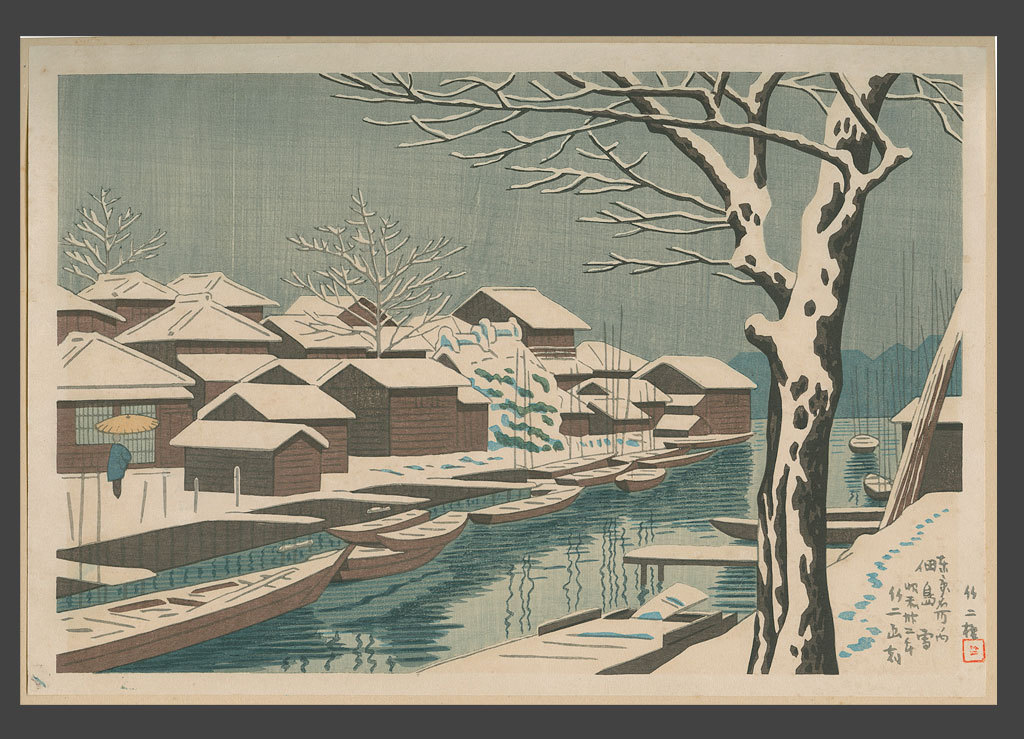
Snow at Chion-in Temple
知恩院雪
ca. 1950s
Woodblock print

Snow at Kiyomizu Hall, Ueno (Ueno Kiyomizudo no yuki)
Ueno Kiyomizudo no yuki
1929
Color woodblock print; oban
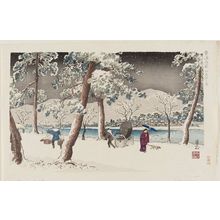
Snow on the banks of the Kamo River (Kamo tsutsumi no yuki) from the series Kyoraku Meisho (Famous places about Kyoto).
Woodblock print
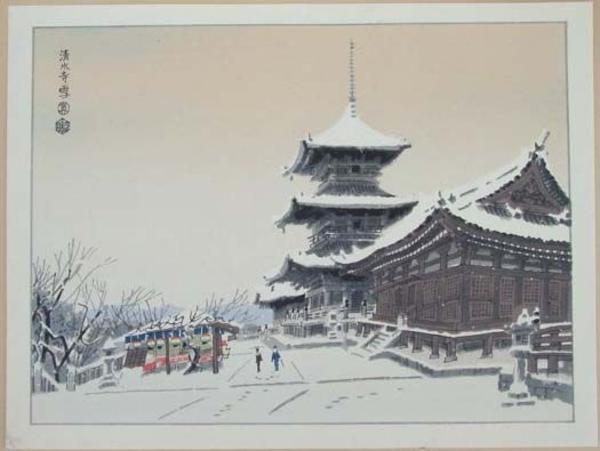
Snow Scene of Kiyomizu Temple in Kyoto
circa 1930-1950
Woodblock print

Solitude, Kyoto
1955
Color woodblock print; edition 70/150

Spring in Daigo, Kyoto (Daigo no haru Kyoto)
1950
Color woodblock print
![Spring Snow at Kiyomizu Temple, Kyoto (Haru no yuki [Kyoto Kiyomizu]) by Kawase Hasui](https://www.artic.edu/iiif/2/07f4e5b6-3545-ecef-6d04-6f5741e62c38/full/843,/0/default.jpg)
Spring Snow at Kiyomizu Temple, Kyoto (Haru no yuki [Kyoto Kiyomizu])
Haru no yuki [Kyoto Kiyomizu]
April, 1932
Color woodblock print; oban
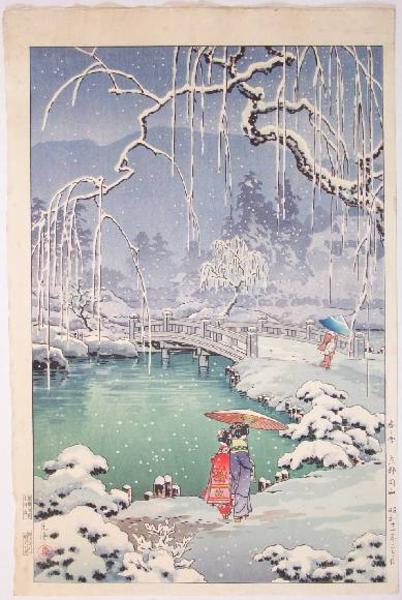
Spring Snow at Maruyama, Kyoto
Woodblock print

Stone Garden of Ryoanji Temple, Kyoto (Ryoan Fixed Stones)
Woodblock print

Stone Garden, Kyoto
1955
Color woodblock print; edition 48/150
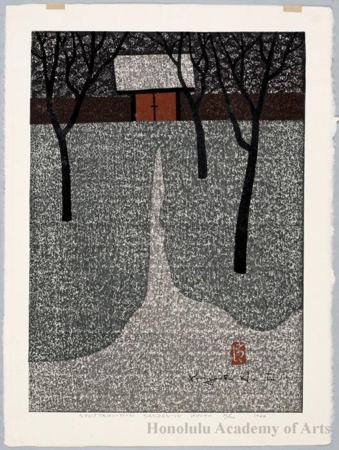
Syujyaku-mon Sansen-in, Kyoto
Woodblock print

TAKAGAMINE ROAD IN KYOTO
Not set
Woodblock print

The Geisha Kayo of Kyoto, Ikkaku of Osaka, and Kokichi of Tokyo
February 1877
Woodblock print (nishiki-e), ink and color on paper

The Gion Temple in Snow (Gionsha setchu), from the series "Famous Places in Kyoto (Kyoto meisho no uchi)"
c. 1834
Color woodblock print; oban

The Golden Pavilion (Kinkaku)
Kinkaku
1933
Color woodblock print
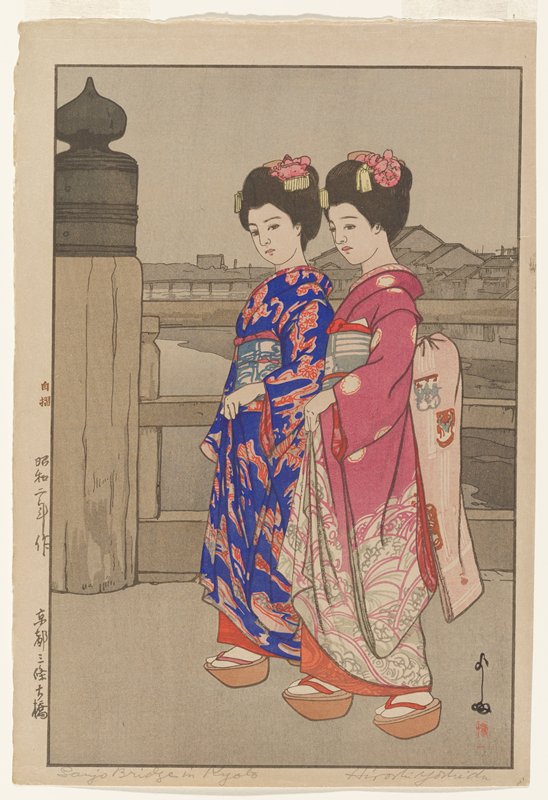
The Great Bridge of Sanjō in Kyoto
1927
Woodblock print, ink and color on paper

the river Uji at moonrise in Kyoto
Woodblock print

The Temple of the Golden Pavilion (Kinkakuji), from the series "Famous Places in Kyoto (Kyoto meisho no uchi)"
c. 1834
Color woodblock print; oban

The Village of Yase (Yase no sato), from the series "Famous Places in Kyoto (Kyoto meisho no uchi)"
c. 1834
Color woodblock print; oban

The Willow Tree at the Gate of Shimabara Pleasure Quarter (Shimabara deguchi no yanagi), from the series “Famous Views of Kyoto (Kyoto meisho no uchi)"
c. 1834
Color woodblock print; oban
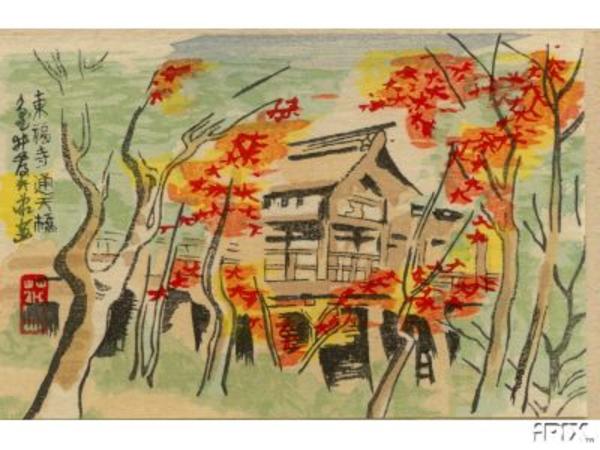
Tofukuji Temple in Kyoto
Woodblock print
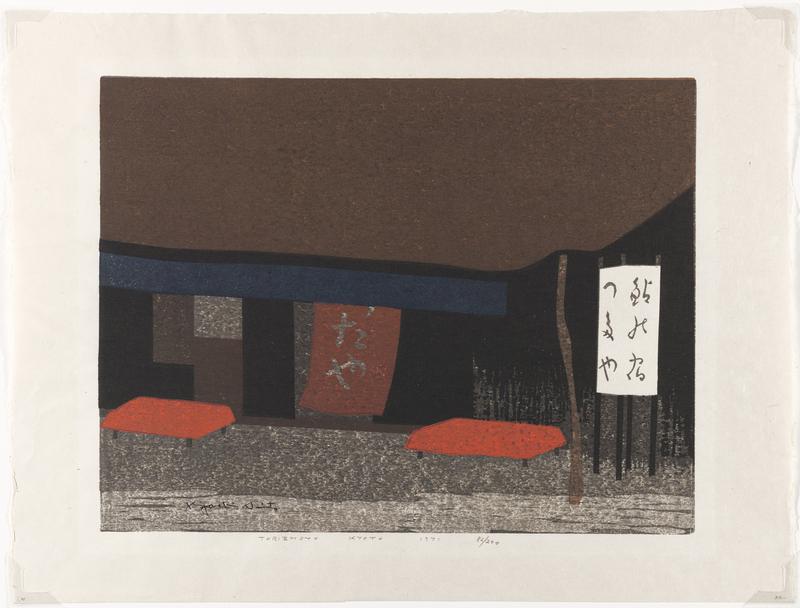
Toriemoto, Kyoto
1971
Woodblock print, ink and color on paper
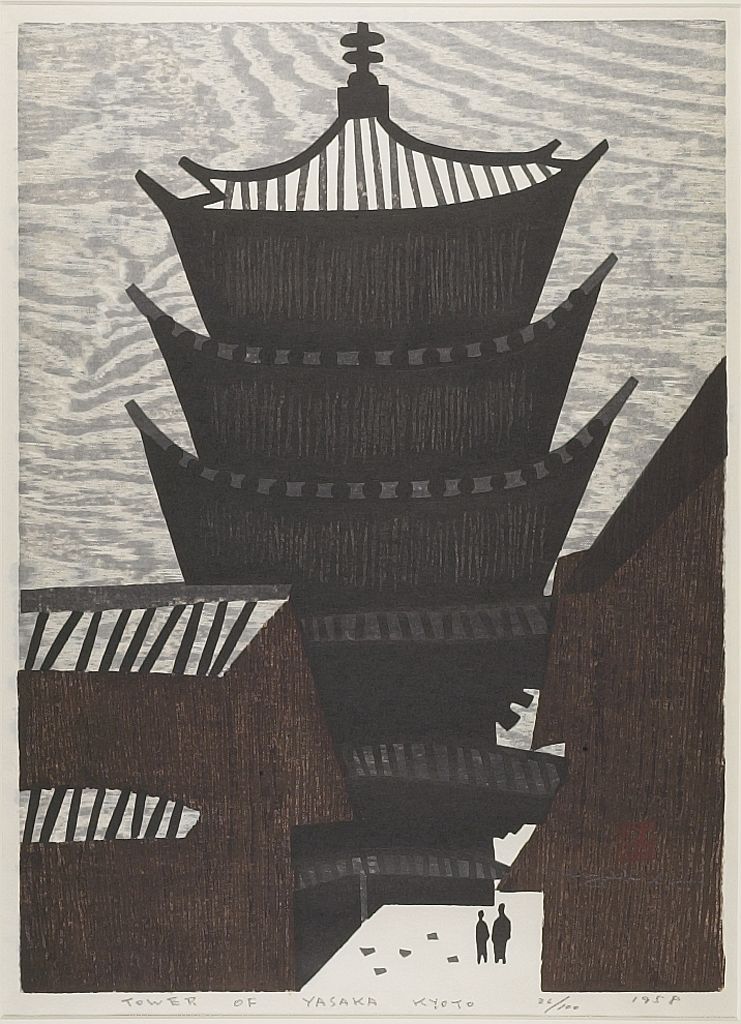
Tower of Yasaka, Kyoto, Shôwa period, dated 1958
Woodblock print
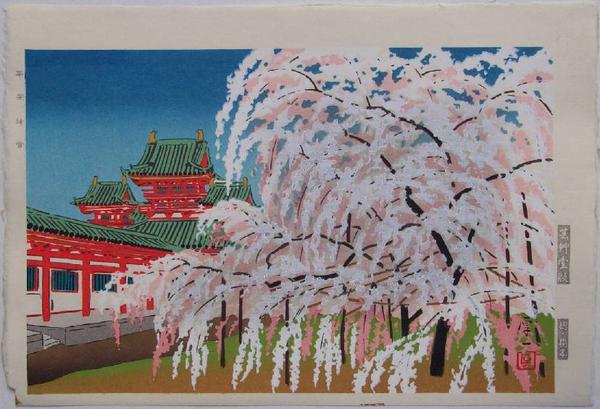
Twelve Views Of Kyoto Cherry Blossoms Heian Shrine
Woodblock print
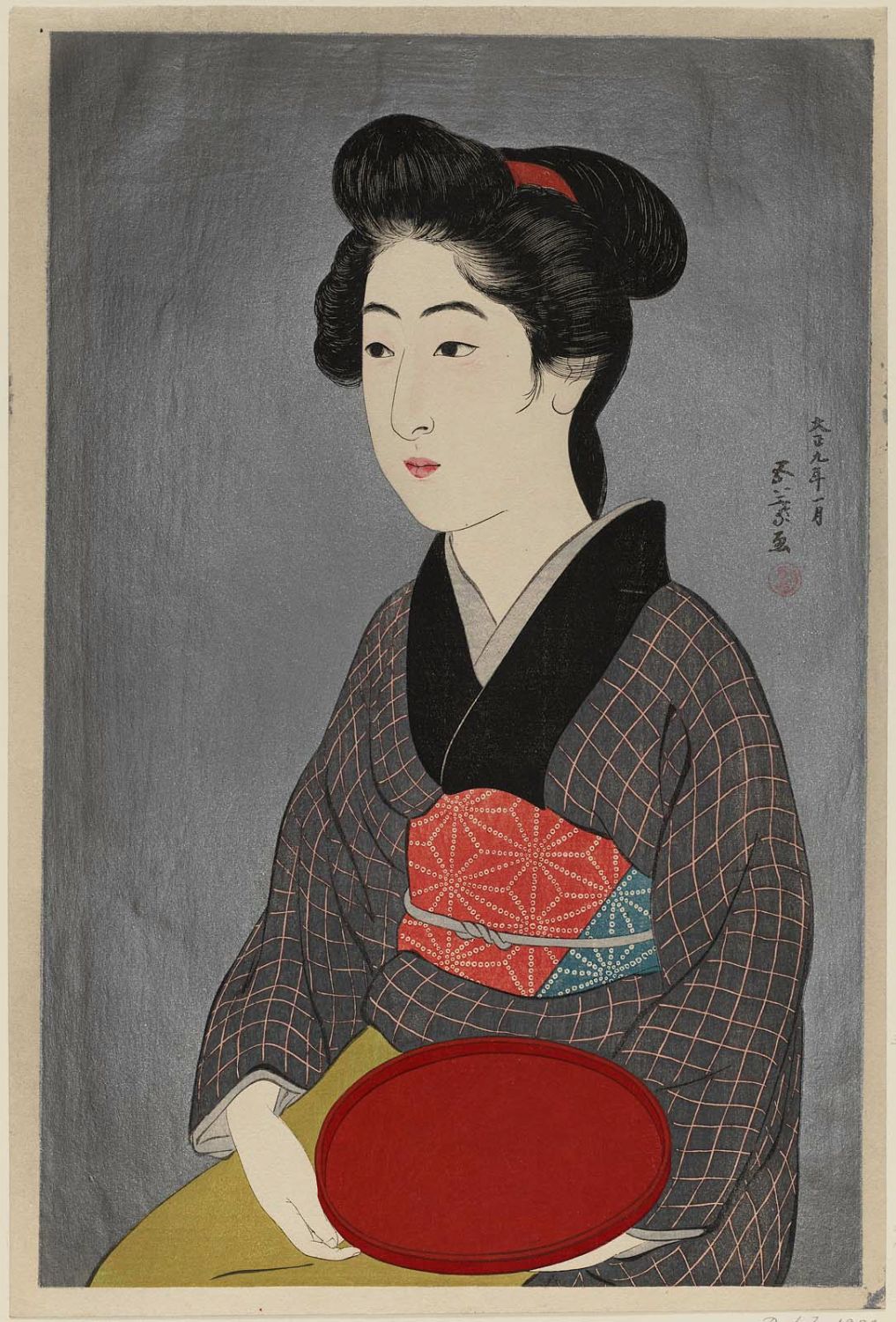
Waitress with a Red Tray (Portrait of Onao, a Maid at the Matsuyoshi Inn, Kyoto)
1920
Woodblock print
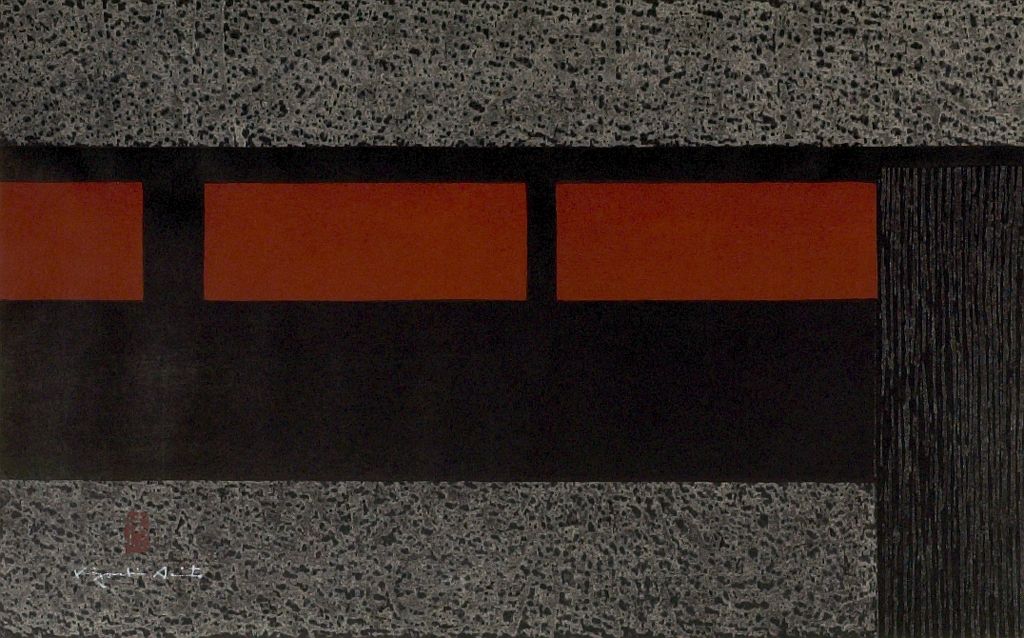
Wall of Kyoto (A), Shôwa period, dated 1960
Woodblock print
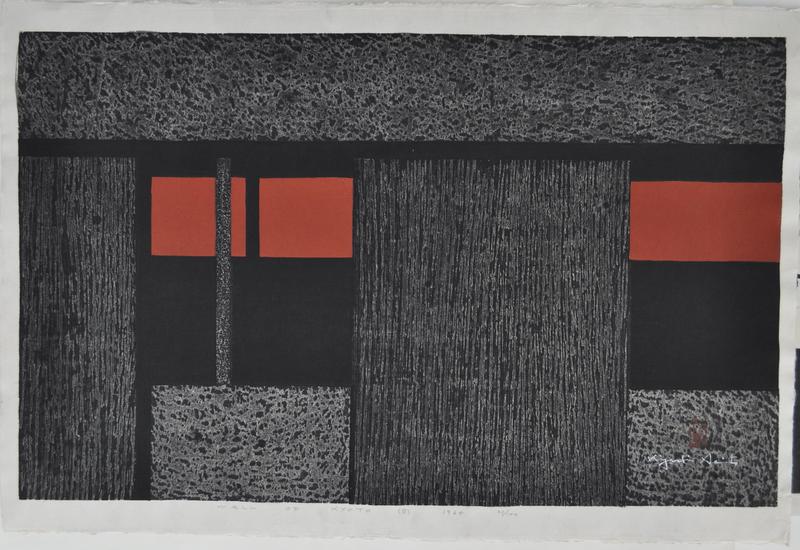
Wall of Kyoto (B)
1960
Woodblock print, ink and color on paper
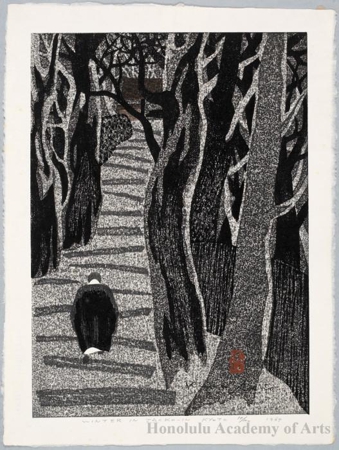
Winter in Jacko-in (Kyoto)
Woodblock print

Winter in Kamigamo, Kyoto (Kyoto Kamigamo no fuyu), from the series "Collection of Views of Japan II, Kansai Edition (Nihon fukei shu II Kansai hen)"
1933
Color woodblock print; oban
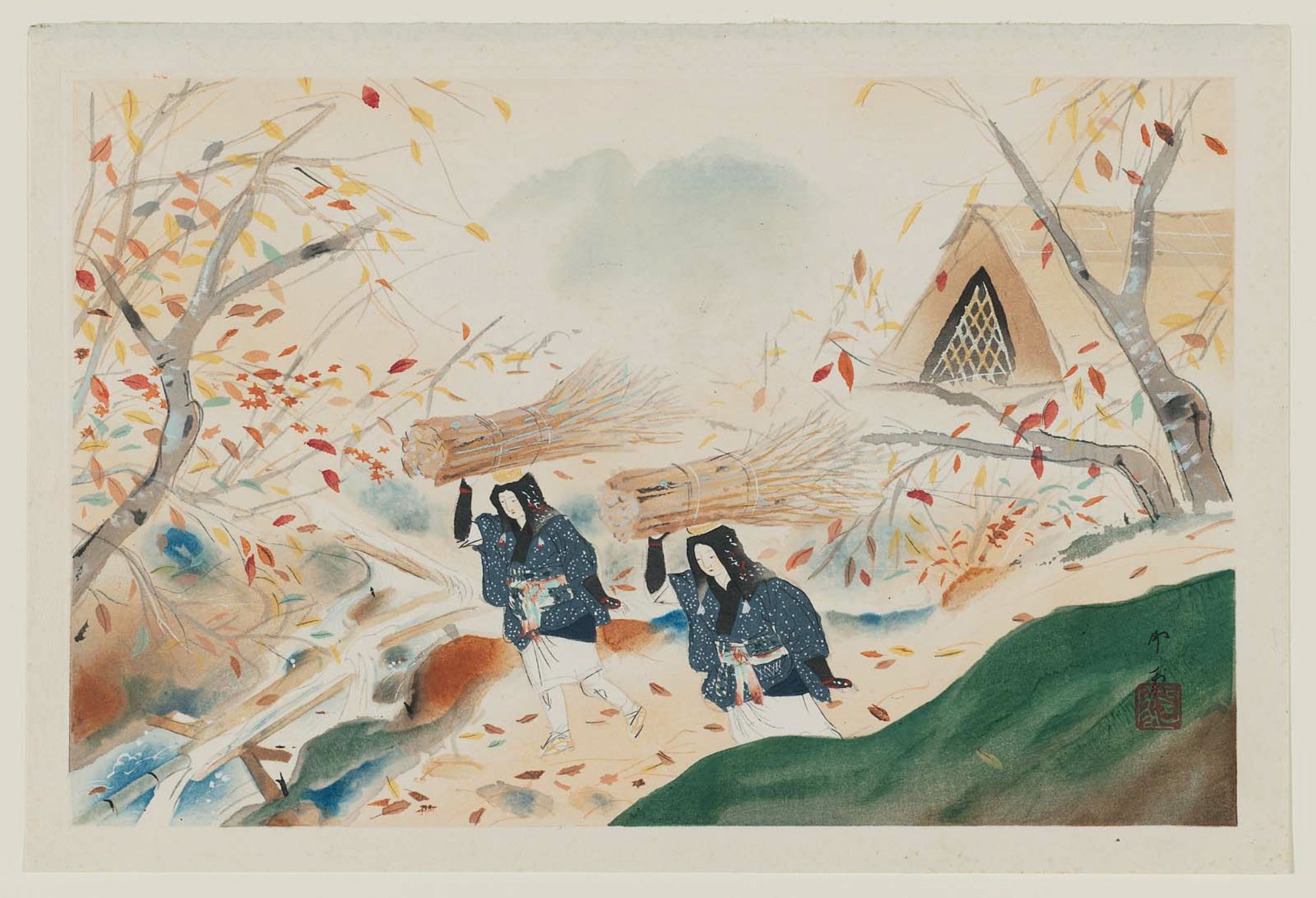
Women of Ôhara (Ôharame), from the album Eight Views of Kyoto (Kyôto hakkei)
Woodblock print
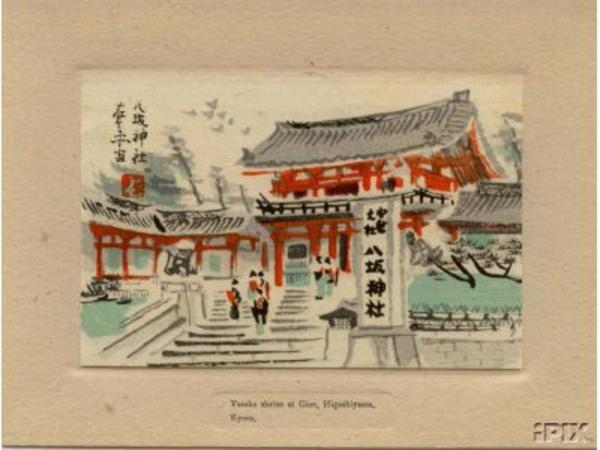
Yasaka Shrine at Gion in Kyoto
Woodblock print

Yasugi Kiyomizu Temple, Izumo Province (Izumo, Yasugi Kiyomizu), from the series "Selection of Views of Japan (Nihon fukei senshu)"
Izumo, Yasugi Kiyomizu
1926
Color woodblock print; oban

Yodo River (Yodogawa), from the series "Famous Places in Kyoto (Kyoto meisho no uchi)"
c. 1834
Color woodblock print; oban
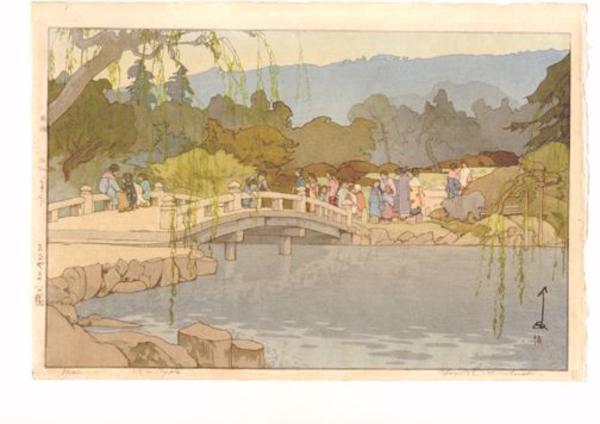
Yoshida No Series Park In Kyoto
Woodblock print

Young Woman Applying Rouge (Portrait of Chiyofuku, a Maiko of Gion, Kyoto)
1920
Color woodblock print with mica
Artists Who Depicted Kyoto (40)
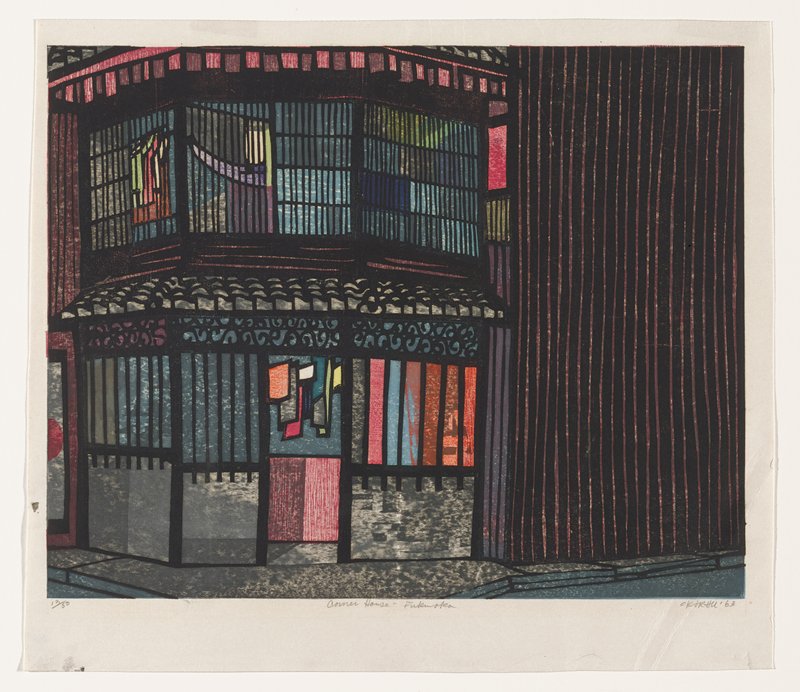
Clifton Karhu
1927–2007

Hashiguchi Goyo
橋口五葉
1880–1921
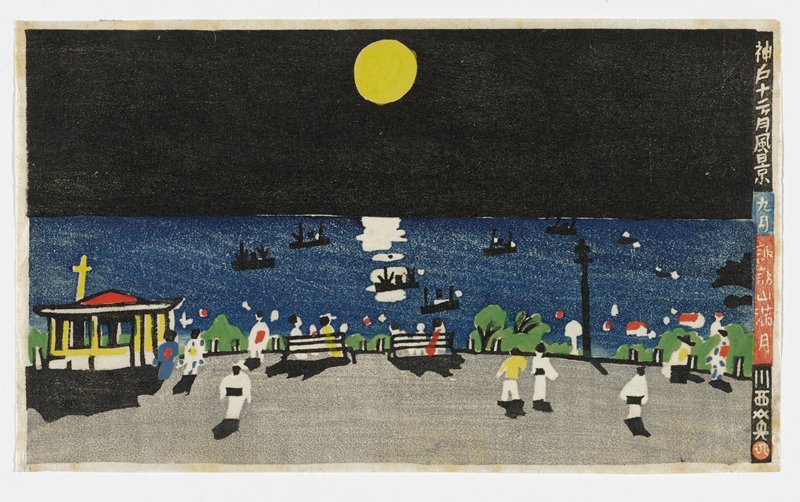
Hide Kawanishi
川西英
1894–1965
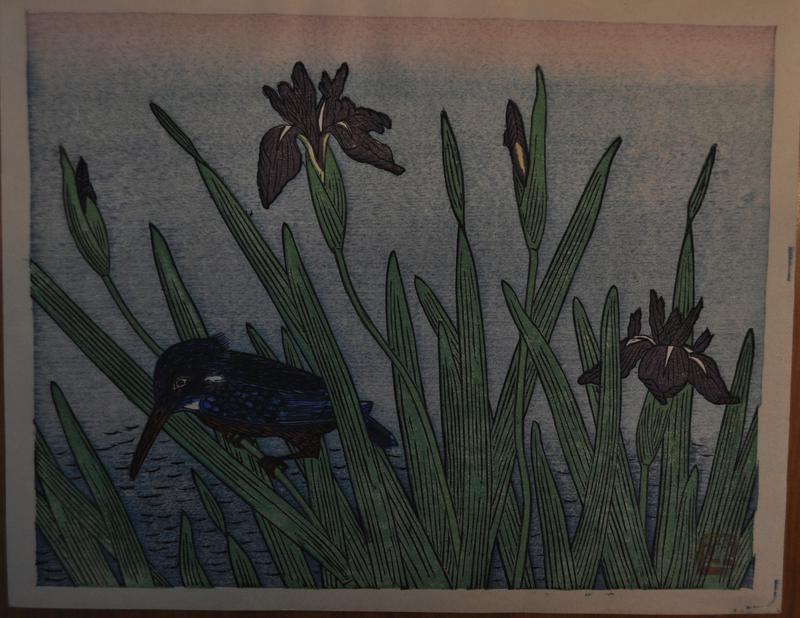
Hiratsuka Un'ichi
平塚運一
1895–1997
Hiroshi Yoshida
吉田博
1876–1950
Ido Masao
井堂雅夫
1945–2016

Insho Domoto
堂本印象
1891–1975
Ito Nisaburo
伊藤仁三郎
1910–1988

Ito Takashi
伊東孝
1894–1982

Jun'ichiro Sekino
関野準一郎
1914–1988
Kamei Tobei
亀井東平
1901–1977

Kanpo Yoshikawa
吉川観方
1894–1979
Katsuyuki Nishijima
西島勝之
1945
Kawanabe Kyosai
河鍋暁斎
1831–1889

Kawase Hasui
川瀬巴水
1883–1957
Kobayashi Kiyochika
小林清親
1847–1915
Konishi Seiichiro
小西誠一郎
Kotozuka Eiichi
琴塚英一
1906–1979

Kusaka Kenji
日下健二
1936

Maruyama Hiroshi
丸山浩司
1953
Miki Suizan
三木翠山
1883–1957
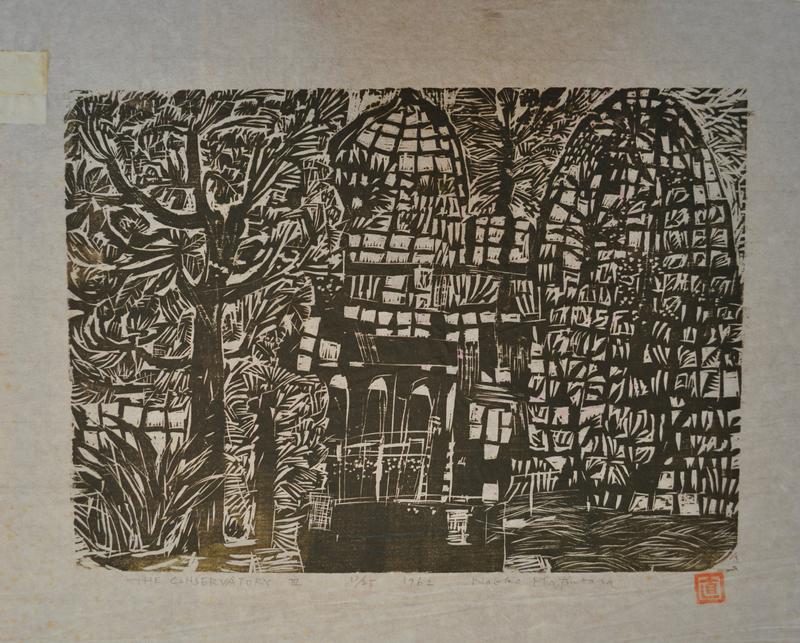
Naoko Matsubara
松原直子
1937
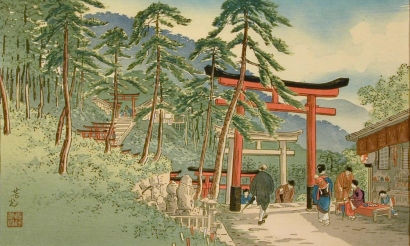
Nomura Yoshimitsu
野村義光

Ohno Bakufu
大野麦風
1888–1976
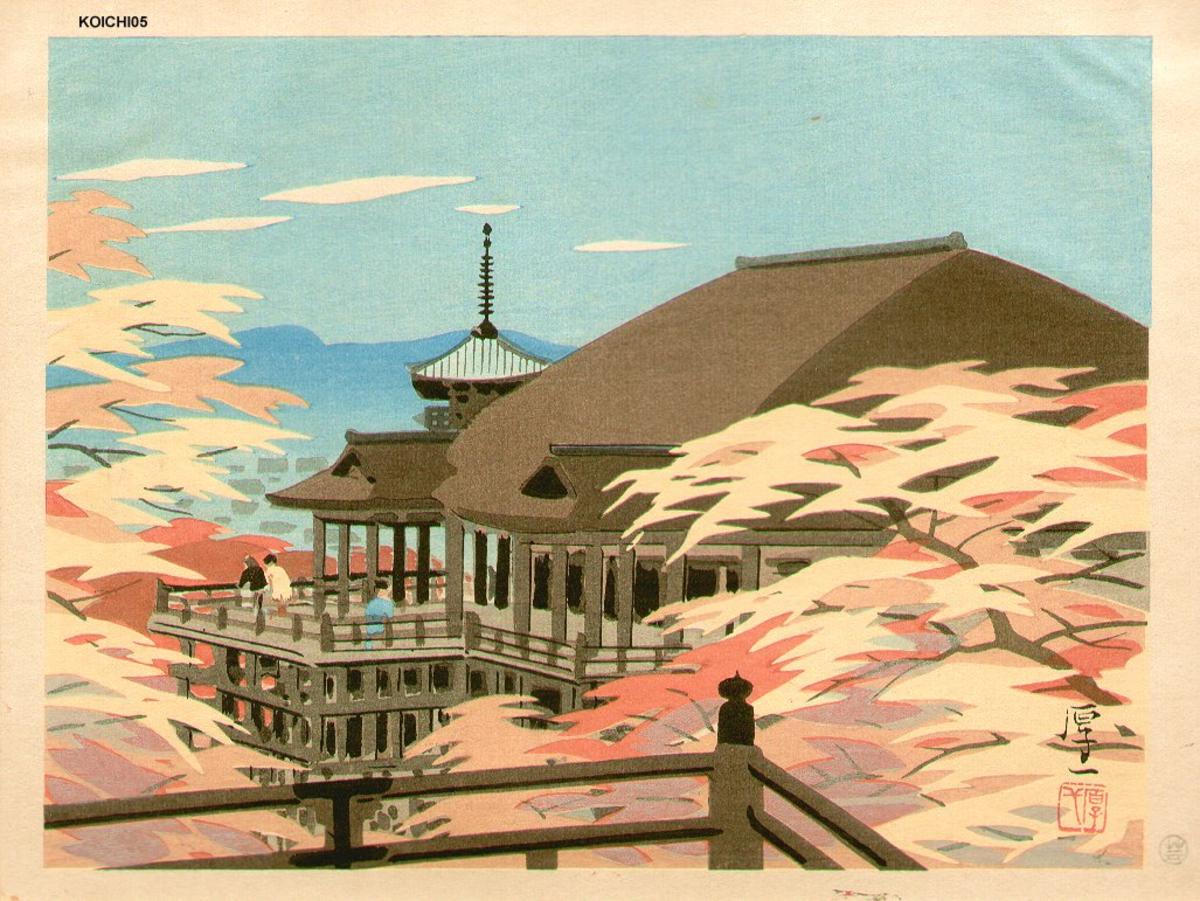
Okumura Koichi
奥村厚一
1904–1974
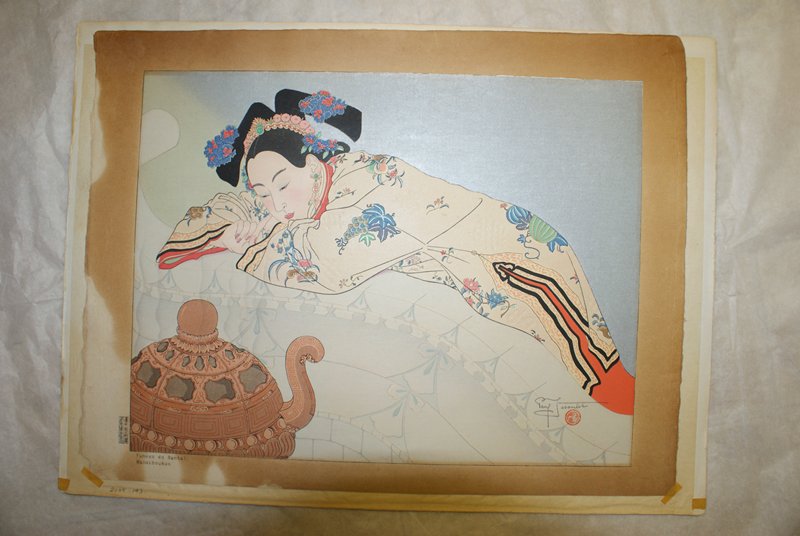
Paul Jacoulet
ポール・ジャクレー
1896–1960

Saito Kiyoshi
斎藤清
1907–1997
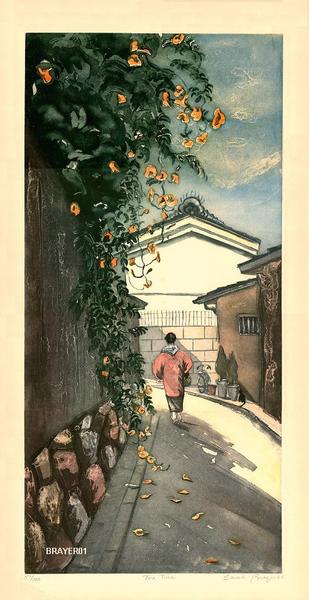
Sarah Brayer
1957

Shiro Kasamatsu
笠松紫浪
1898–1991

Tadashi Nakayama
中山正
1927–2014
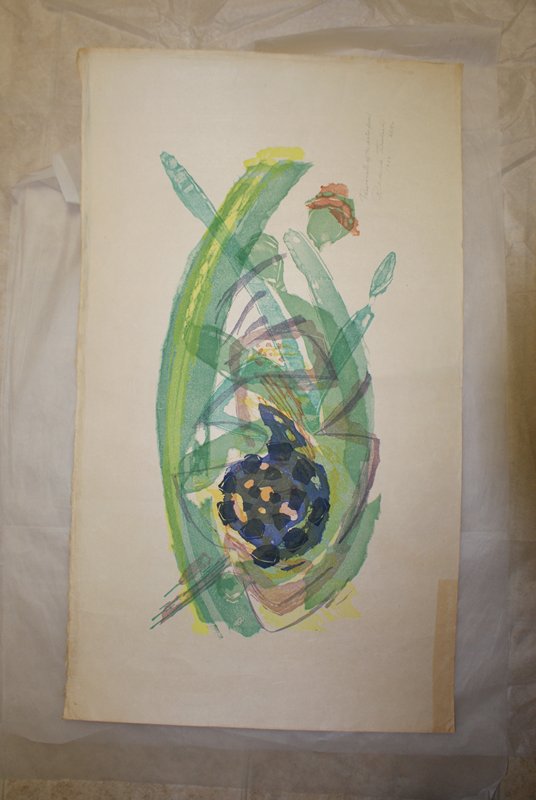
Takahashi Rikio
高橋力雄
1917–1998
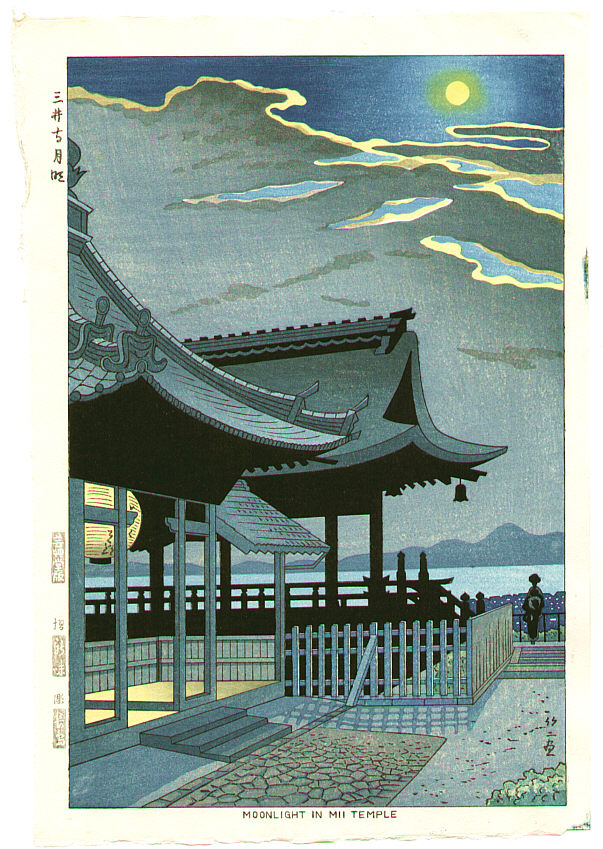
Takeji Asano
浅野竹二
1900–1999
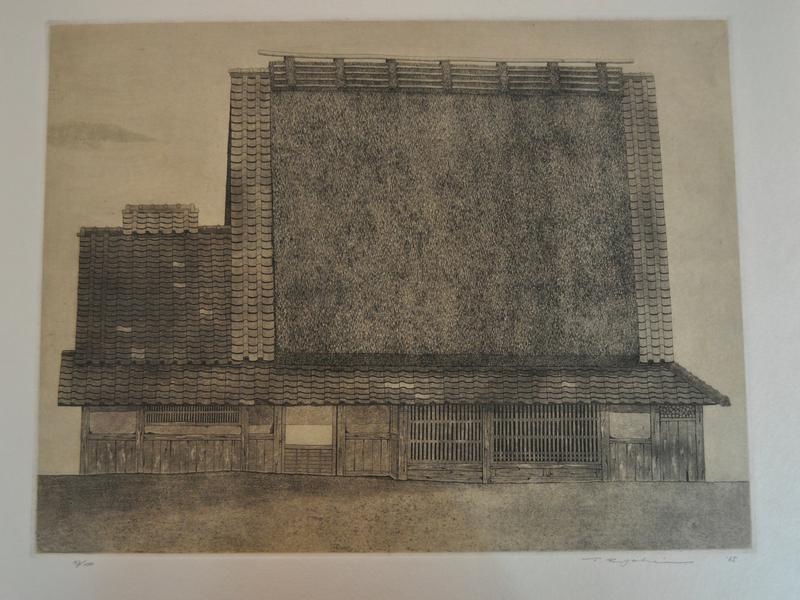
Tanaka Ryohei
田中良平
1933–2019

Tatsuo Kawashima
川島達雄
1940
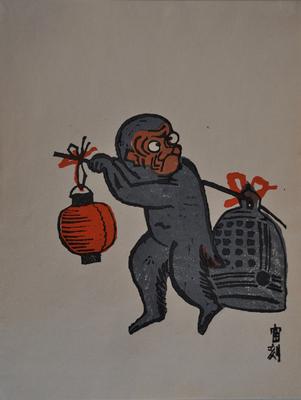
Tomikichiro Tokuriki
徳力富吉郎
1902–1999
Toyohara Chikanobu
豊原周延
1838–1912

Tsuchiya Koitsu
土屋光逸
1870–1949

Utagawa Hiroshige
歌川広重
1797–1858

Utagawa Kuniyoshi
歌川国芳
1798–1861

Yamamura Toyonari
山村豊成
1885–1942
Frequently Asked Questions
Kyoto, in the southern basin of the Yamashiro plain in west-central Honshu, served as the imperial capital of Japan from its founding as Heian-kyo in 794 until the Meiji Restoration of 1868, when the imperial court relocated to the renamed Tokyo. The city is organized on a classical grid laid down at its founding in deliberate emulation of the Tang Chinese capital at Chang'an, with broad north-south avenues and an east-west cross-axis structured around the Suzaku-oji thoroughfare, and the long centuries of court patronage produced an unusually dense concentration of Buddhist temples, Shinto shrines, aristocratic gardens, and craft workshops, many of which became the meisho, or famous places, on which the meisho-e tradition fed. The city survived without significant destruction through the Onin War, the Meiji transition, and the Pacific War, the last in part because of deliberate U.S. military decisions to spare its historical fabric, and the result is the densest concentration of pre-modern monumental architecture in any major Japanese city. For ukiyo-e and the later shin-hanga and sosaku-hanga schools, Kyoto provided an alternative iconography to Edo, one rooted in seasonal pilgrimage, classical literature, and the visual culture of the Heian court rather than the urban entertainment districts of the eastern capital. The principal Edo-period meisho-e treatment is Utagawa Hiroshige's Famous Views of Kyoto (Kyoto meisho), a horizontal-format series of ten sheets issued by Eisendo around 1834, which covers locations including Arashiyama, Kiyomizu Temple, Gion, Yodo River, Sanjo Bridge, Tadasugawara, the Shimabara pleasure quarter, and the Kamogawa River bridges, and which remains the canonical Edo-period print survey of the city. Hokusai had earlier included scenes of the Tokaido approach to Kyoto in his Travel road compositions and in passages of the One Hundred Views of Mount Fuji, Utagawa Kunisada and Toyokuni III contributed individual Kyoto theatrical and bijin sheets across the late Edo period, and Hasegawa Sadanobu I and II of the Osaka kamigata school produced their own Kyoto and Kansai meisho sets in the mid-nineteenth century. With the shin-hanga revival of the early twentieth century, Kyoto became a major subject for Kawase Hasui, who produced numerous Kyoto views including night and snow scenes of Kiyomizu, Gion, Yasaka pagoda, Heian Shrine, Sanjusangendo, and the Kamogawa, and for Yoshida Hiroshi, Tsuchiya Koitsu, Asano Takeji, and Tokuriki Tomikichiro, the last of whom, working from Kyoto itself, produced extensive Kyoto-centered series including Eight Views of Kyoto, Twelve Months of Kyoto, and the long-running Famous Places of Kyoto print sets across more than three decades. The Kyoto sosaku-hanga response was anchored by artists such as Asada Benji, Tokuriki Tomikichiro, Sekino Junichiro, and the postwar Kyoto-based creative-print circle, who worked within and around the city and brought their own creative-print idioms to its temples, gardens, and street scenes. The visual character of Kyoto in prints is built from a repeating set of motifs, including the cherry blossoms and autumn maples of Arashiyama and Higashiyama, the lantern-lit night quarters of Gion and Pontocho, the bell towers and gates of Higashi and Nishi Honganji, the wooden veranda of Kiyomizudera projecting over its hillside, the golden pavilion of Kinkakuji set on its mirror pond, the great rock garden of Ryoanji, the maiko and geiko of the entertainment districts, and the seasonal festivals such as Gion Matsuri in July, Daimonji Okuribi in August, Jidai Matsuri in October, and the cherry-blossom and autumn-foliage seasons that punctuate the calendar. Locations treated under their own entries in this database include Arashiyama, Chion-in, Daimonji, Fushimi Inari, Gion, Heian Shrine, Kinkaku-ji, Kiyomizu Temple, Maruyama Park, Sagano, and Shirakawa. The city remains the principal pilgrimage destination in Japan for travelers seeking the world depicted in these prints, with the Higashiyama temple district, the Gion entertainment quarter, and the Arashiyama-Sagano western edge preserving the broad outlines of the meisho geography that the printmakers recorded, and the Kyoto National Museum, the Kyoto Municipal Museum of Art, and the Kahitsukan Kyoto Museum of Contemporary Art holding representative print collections.
Hanga catalogues 149 prints depicting Kyoto (京都), by 40 different artists.
Clifton Karhu, Hashiguchi Goyo, and Hide Kawanishi are among the 40 artists who depicted Kyoto in our collection.
Want to rate prints from Kyoto?
Sign up to start rating