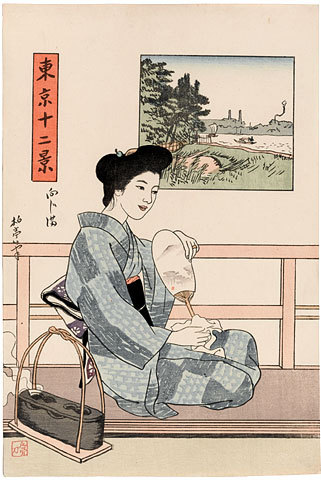
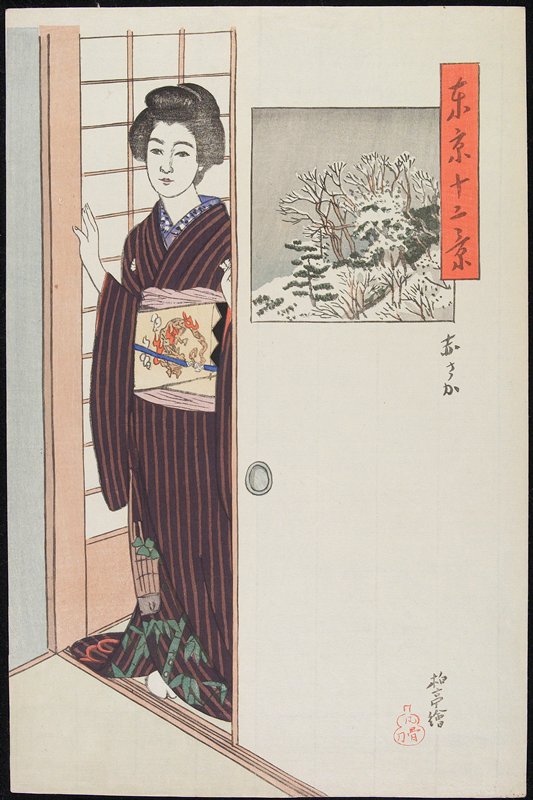
Twelve Views of Tokyo: Mukojima
- Series:
- Twelve Views of Tokyo
- Medium:
- Woodblock print
- Source:
- Scholten Japanese Art
- Image courtesy of
- Scholten Japanese Art
Description
Mukojima (向島), located on the east bank of the Sumida River in what is now Sumida Ward, was celebrated in both Edo-period and Taishō-era culture for its cherry trees (sakura) lining the embankment, its riverside teahouses, and its association with the pleasure culture of old Tokyo. Hakutei's depiction of Mukojima in the Twelve Views of Tokyo series would have confronted this accumulated cultural imagery, either engaging with the cherry blossom tradition directly or seeking a less familiar view of the district's marshland margins and low wooden architecture. The Sumida River, visible from or defining Mukojima's western edge, offered strong compositional possibilities: the broad horizontal of the river surface, the silhouettes of moored craft, and the distant Tokyo cityscape on the opposite bank. Hakutei's training in Western perspective would have shaped how he handled this water panorama, while his sosaku-hanga commitment meant rendering the full complexity of the scene through his own carved blocks.
More Prints by Ishii Hakutei
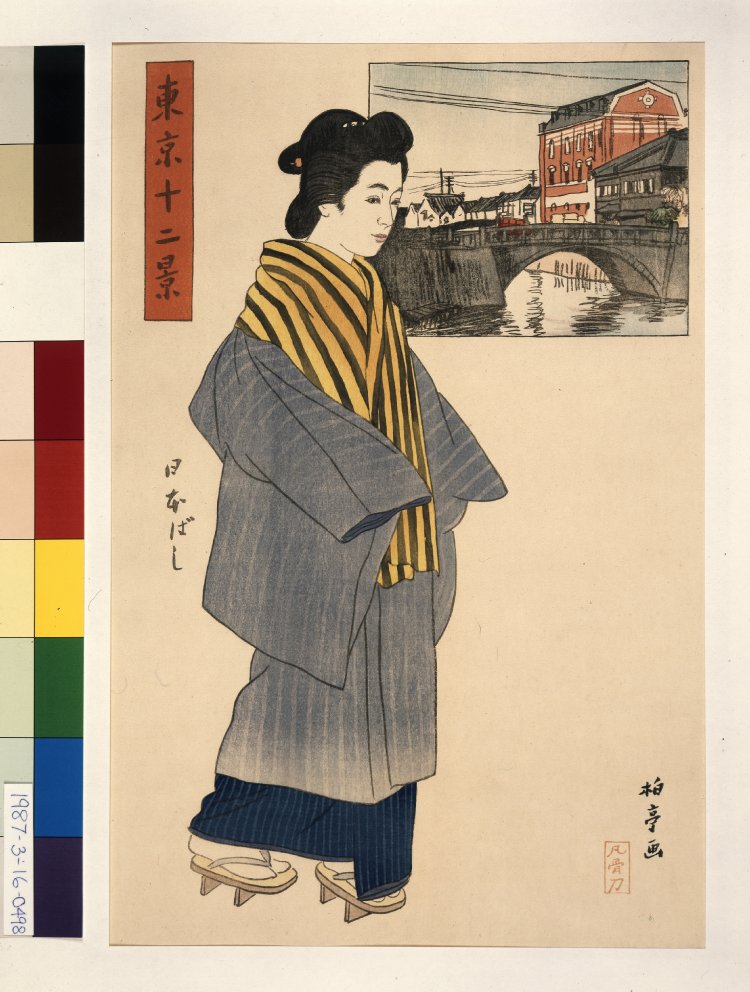
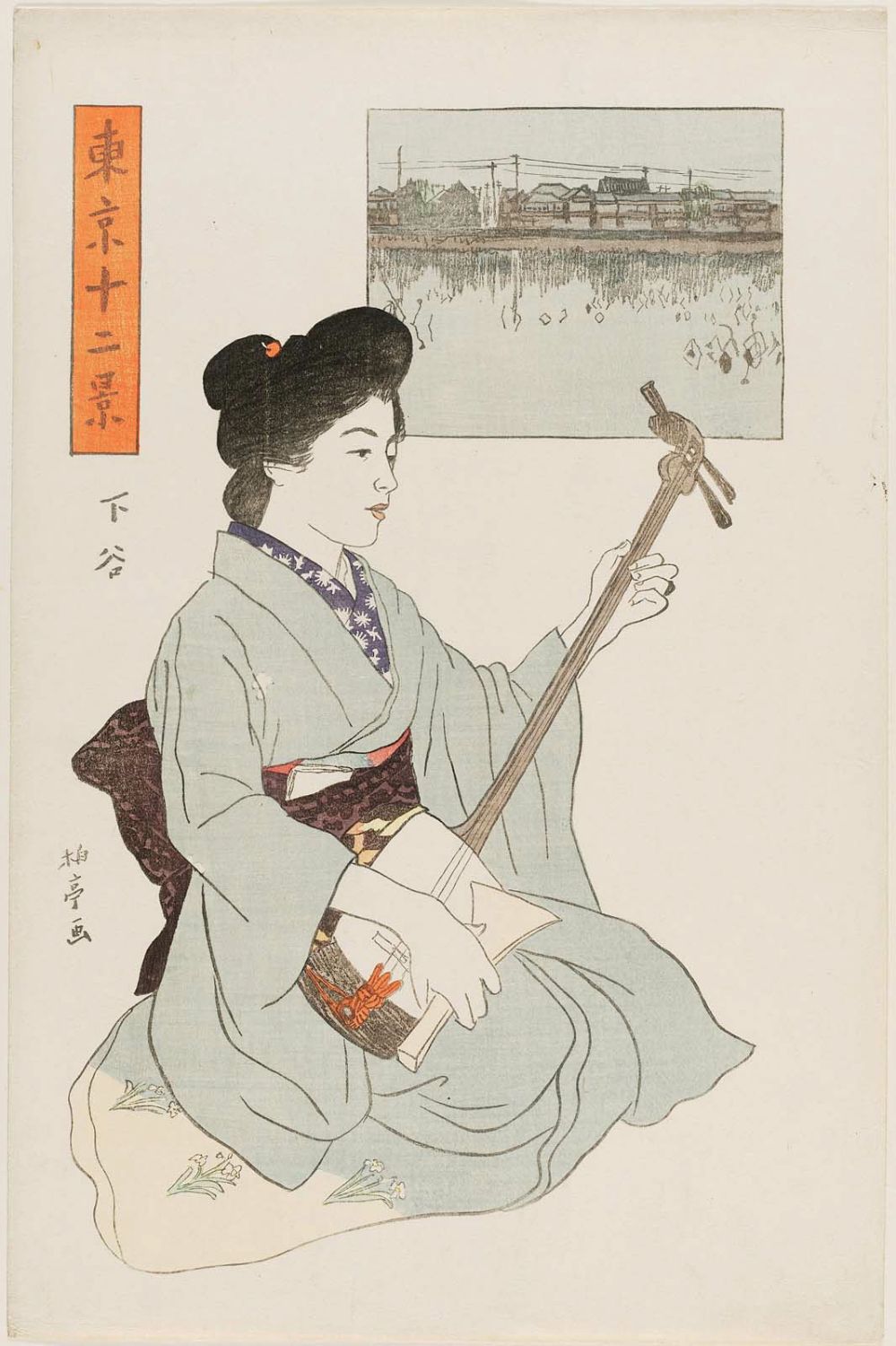
More Edo & Tokyo Prints

Komagata Embankment
Early Summer 1919
Woodblock print, ink and color on paper

View of Tsukuda Island from Eitai Bridge (Eitaibashi Tsukudajima), from the series "One Hundred Famous Views of Edo (Meisho Edo hyakkei)"
Color woodblock print

Yanagishima, from the series "One Hundred Famous Views of Edo (Meisho Edo hyakkei)"
Color woodblock print

Kasumigaseki, from the series “One Hundred Famous Views of Edo (Meisho Edo hyakkei)”
Color woodblock print
Featured in Collections
Curated cross-cuts that include this print.
Frequently Asked Questions
Twelve Views of Tokyo: Mukojima was created by Ishii Hakutei (石井柏亭).
Yes — Twelve Views of Tokyo: Mukojima is part of the Twelve Views of Tokyo series by Ishii Hakutei.
Twelve Views of Tokyo: Mukojima depicts edo & tokyo and famous places (meisho-e).