
Kara Bridge at Seta (Seta no Karahashi), from the series "Eight Views of Omi (Omi hakkei)"
by Ito Shinsui
- Series:
- Eight Views of Omi (print 7 of 1)
- Date:
- 1917
- Medium:
- Color woodblock print
- Format:
- Oban
- Dimensions:
- 22 × 32.1 cm
- Publisher:
- Watanabe Shozaburo
- Edition:
- Published by Watanabe Shozaburo
- Source:
- Art Institute of Chicago
Description
The Kara Bridge at Seta (Seta no Karahashi)—the famous double-arched bridge crossing the narrow southern outlet of Lake Biwa—appears in this 1917 contribution to the Eight Views of Omi series, the bridge's distinctive Chinese-style (kara) architecture reflected in the still water below. The Seta Bridge, one of Japan's most celebrated ancient bridges, had been a subject of poets and painters since the Nara period, and its inclusion in the Eight Views tradition connected Shinsui's shin-hanga work to this long history. The bokashi printing builds the atmospheric depth of the lakeshore morning.
Current Listings
$9,200
More Prints by Ito Shinsui
More Landscapes Prints

Lake Kugushi in Wakasa Province (Wakasa Kugushiko), from the series Souvenirs of Travel I (Tabi miyage dai isshu)"
Wakasa Kugushiko
1920
Color woodblock print; oban
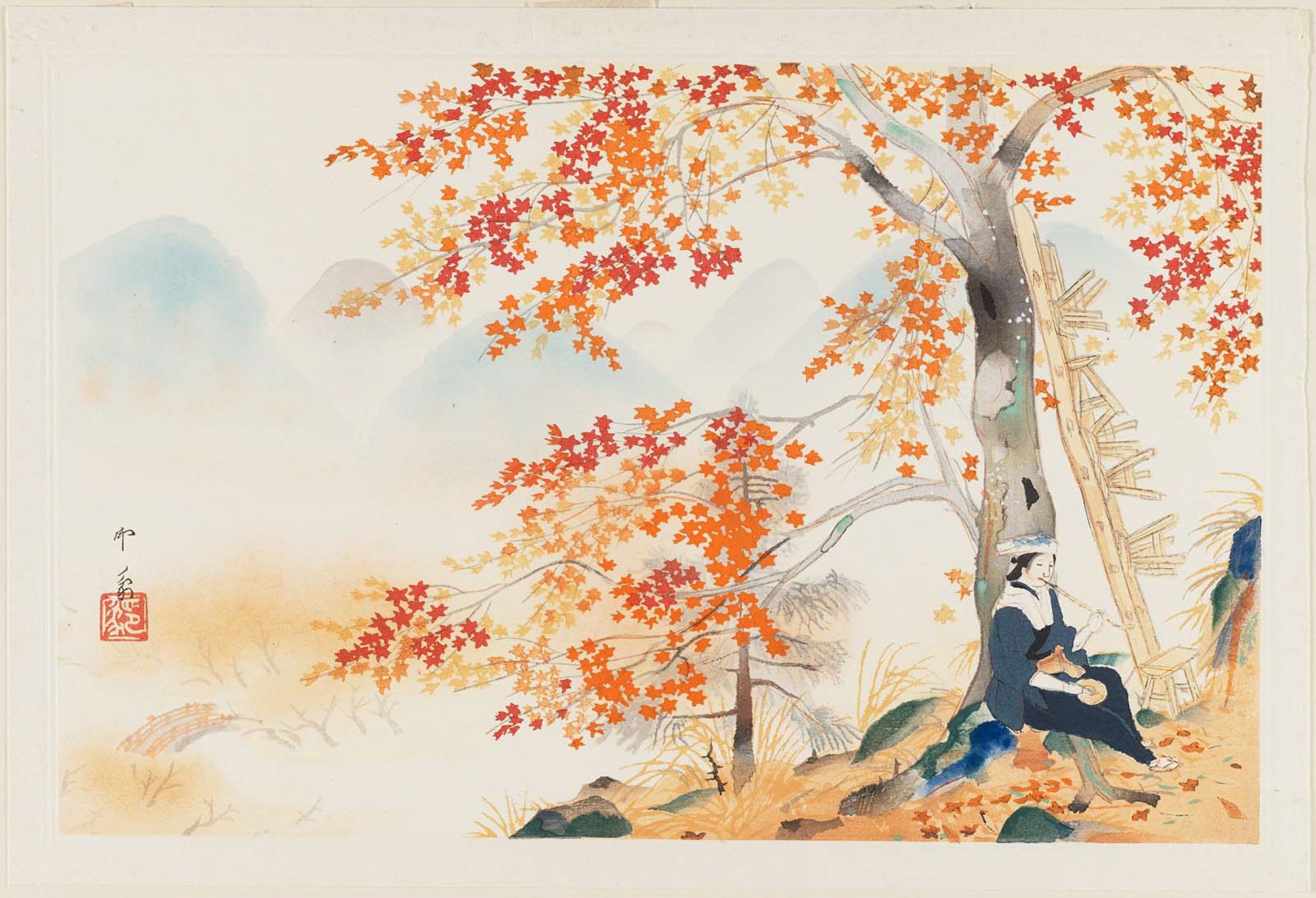
Autumn Maple Leaves at Takao, from the album Eight Views of Kyoto (Kyôto hakkei)
Woodblock print

The Beach at Kaiganji in Sanuki Province (Sanuki Kaiganji no hama), from the series "Collection of Views of Japan II, Kansai Edition (Nihon fukei shu II Kansai hen)"
1934
Color woodblock print; oban

Tea Kettle, section of a sheet from the series "Mirror of Stone Rubbings of Views of the Provinces" (Kohon meihitsu ishizuri kagami)
n.d.
Woodblock print; ishizuri-e, section of harimaze sheet
Featured in Collections
Curated cross-cuts that include this print.
Frequently Asked Questions
Kara Bridge at Seta (Seta no Karahashi), from the series "Eight Views of Omi (Omi hakkei)" was created by Ito Shinsui (伊東深水) in 1917.
Yes — Kara Bridge at Seta (Seta no Karahashi), from the series "Eight Views of Omi (Omi hakkei)" is part of the Eight Views of Omi series (print 7 of 1) by Ito Shinsui.
Kara Bridge at Seta (Seta no Karahashi), from the series "Eight Views of Omi (Omi hakkei)" uses Bokashi, on color woodblock print.
Kara Bridge at Seta (Seta no Karahashi), from the series "Eight Views of Omi (Omi hakkei)" was published by Watanabe Shozaburo (1917).
Kara Bridge at Seta (Seta no Karahashi), from the series "Eight Views of Omi (Omi hakkei)" depicts landscapes, bridges, and eight views of ōmi.
Kara Bridge at Seta (Seta no Karahashi), from the series "Eight Views of Omi (Omi hakkei)" measures 22 × 32.1 cm (Oban format).