Eight Views (Hakkei) Prints (40)
Prints in the classical Eight Views (hakkei) tradition — the Chinese-derived poetic format that organizes a region's landscape into eight canonical scenes, applied to Ōmi, Edo, Korea, Lake Biwa, and dozens of regional and topical adaptations.
Artists Known for Eight Views (Hakkei)


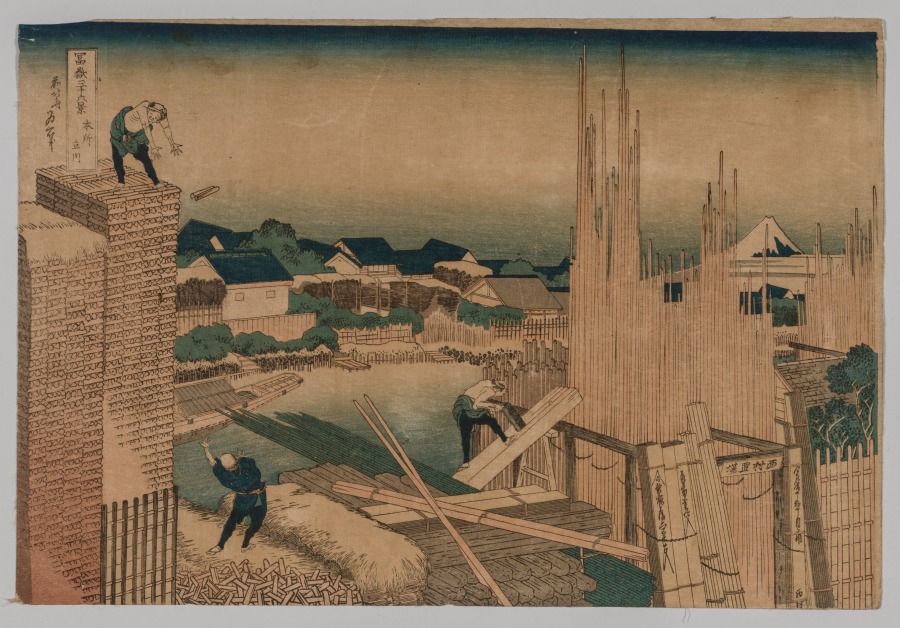



Kyonghoe Hall, Kyongsong (Keijo Keikaro), from the series "Eight Views of Korea (Chosen hakkei)"
November 1939
Color woodblock print; oban

Chongseokjeong, from the series "Eight Views of Korea" (Chosen hakkei, Sosekitei)
October 1939
Color woodblock print

Pulguk Temple, Kyongiu, from the series "Eight Views of Korea" (Chosen hakkei, Keishu Bukkokuji)
September 1939
Color woodblock print

Spring at Pubyong Pavilion, Modan Viewpoint, Pyongyang, from the series "Eight Views of Korea" (Chosen hakkei, Heijo no haru (Botandai Fusekiro))
1939
Color woodblock print
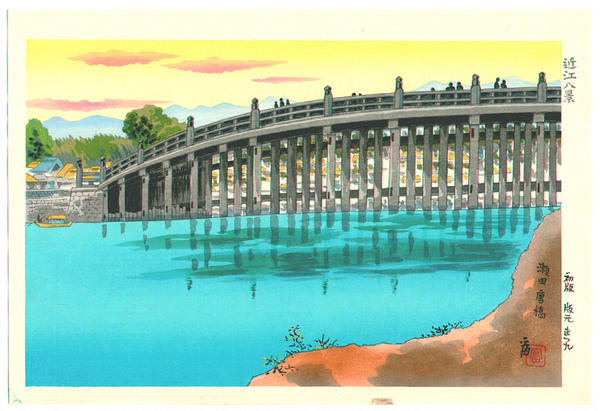
Setta Bridge - Oumi Hakkei
Woodblock print
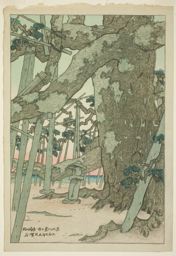
Eight Views of Omi: Evening Snow at Hira
近江八景 比良の暮雪
1917
Color woodblock print

Night Rain at Karasaki (Karasaki no yoru no ame), from the series Eight Views of Omi in Etching Style (Doban Omi hakkei)
1804/16
Color woodblock print; horizontal koban

Descending Geese at Katada (Katada no rakugan), from the series Eight Views of Omi in Etching Style (Doban Omi hakkei)
1804/16
Color woodblock print; horizontal koban

Eight Views of Omi in Etching Style (Doban Omi hakkei) and cover sheet
1804/16
Color woodblock print; horizontal koban

Mii Temple (Miidera), from the series “Eight Views of Omi (Omi hakkei) "
1912
Color woodblock print

Kara Bridge at Seta (Seta no Karahashi), from the series "Eight Views of Omi (Omi hakkei)"
1917
Color woodblock print

Pine Tree at Karasaki (Karasaki no matsu), from the series “Eight Views of Omi (Omi hakkei) “
1913
Color woodblock print

Pine Tree at Karasaki (Karasaki no matsu), from the series "Eight Views of Omi (Omi hakkei)"
1918
Color woodblock print

Ishiyama Temple (Ishiyamadera), from the series "Eight Views of Omi (Omi hakkei)"
1912
Color woodblock print

The Floating Pavilion at Katada (Katada Ukimido), from the series "Eight Views of Omi (Omi hakkei)"
May 1918
Color woodblock print

Imaibashi in Late Autumn, from the series "Eight Views of the Environs of Tokyo"
1939
Color woodblock print

Night Rain at Mii Temple, from the series "Eight Views of Ohmi"
1917
Color woodblock print
Chinese Bridge at Seta, from the series Eight Views of Lake Biwa (ōmi hakkei)
1918
Woodblock print; ink and color on paper
Yakase Bridge, from the series Eight Views of Lake Biwa (ōmi hakkei)
1917
Woodblock print; ink and color on paper

Hira, from the series Eight Views of Lake Biwa (ōmi hakkei)
1917
Woodblock print; ink and color on paper

Awazu, from the series Eight Views of Lake Biwa (ōmi hakkei)
1917
Woodblock print; ink and color on paper

Evening Glow for Date no Yosaku and Seki no Koman (Date no Yosaku Seki no Koman Sekisho), from the series Eight views of Traveling Lovers from Joruri Plays (Michiyuki hakkei)

The Evening Bell at Miidera (Mii no banshō), from the series "Eight Views in Omi Province (Omi hakkei no uchi)"
1837–38
Color woodblock print; ōban

The Moon Seen Through Leaves (Hagoshi no Tsuki), from the series "Twenty-eight Views of the Moon (Tsuki nijuhakkei no uchi)"
c. 1832
Color woodblock print; otanzaku

Descending Geese at Katada (Katada rakugan), from the series "Eight Views of Omi (Omi hakkei no uchi)"
c. 1834
Color woodblock print; oban

Four Views from the series Eight Views of Omi (Omi Hakkei)
About 1830
Color woodblock print

Descending Geese at Katada (Katada rakugan), from the series "Eight Views of Omi (Omi hakkei)"
1857
Color woodblock print; oban

Long Bridge at Seta (Seta no nagahashi), from the series "Eight Views of Omi (Omi hakkei)"
1852
Color woodblock print; uchiwa-e

Night Rain at Karasaki (Karasaki no yau), from the series "Eight Views of Omi (Omi hakkei no uchi)"
c. 1834
Color woodblock print; oban

Evening Bell at Mii Temple (Mii bansho), from the series "Eight Views of Omi (Omi hakkei no uchi)"
c. 1834
Color woodblock print; oban

Evening Glow at Seta Bridge (Seta no sekisho), from the series "Eight Views of Omi (Omi hakkei no uchi)"
c. 1834
Color woodblock print; oban

Returning Sails at Yabase (Yabase no kihan), from the series "Eight Views of Omi (Omi hakkei no uchi)"
c. 1834
Color woodblock print; oban

Autumn Moon at Ishiyama (Ishiyama shugetsu), from the series "Eight Views of Omi (Omi hakkei no uchi)"
c. 1834
Color woodblock print; oban

Clearing Weather at Awazu (Awazu seiran), from the series "Eight Views of Omi (Omi hakkei no uchi)"
c. 1834
Color woodblock print; oban

Returning Sails at Yabase (Yabase kihan), from the series "Eight Views of Omi (Omi hakkei)"
1857
Color woodblock print; oban

Autumn Moon over Ishiyama Temple (Ishiyama shugetsu), from the series "Eight Views of Omi (Omi hakkei)"
1857
Color woodblock print; oban

Rain at Mount Moiwa (Ame no Moiwayama), from the series "Eight Views of Sapporo (Sapporo hakkei)"
1932
Color woodblock print

Descending Geese for Bunshichi (Bunshichi no rakugan), from the series "Eight Views of Elegant Gallants (Furyu otokodate hakkei)"
1781/89
Color woodblock print; chuban
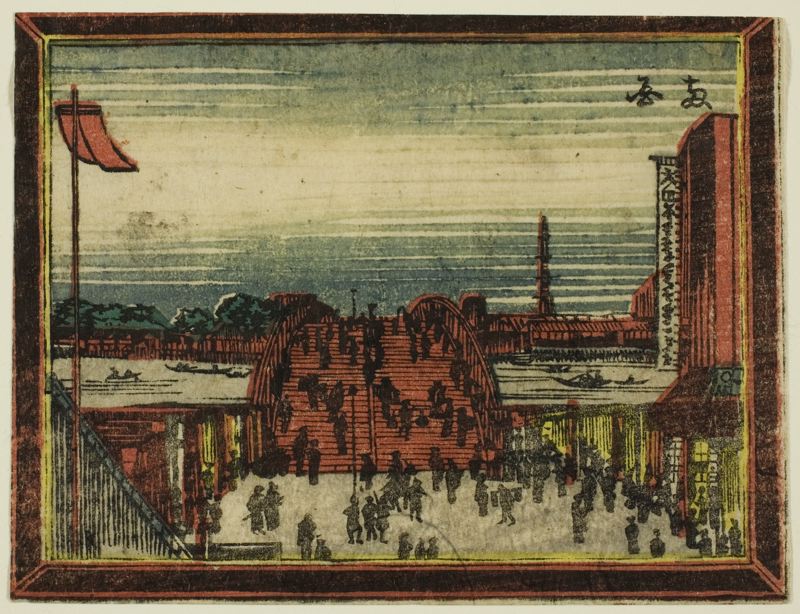
Ryogoku Bridge, from the series Dutch-style Pictures: Eight Views of Edo (Oranda gakyo Edo hakkei)
Woodblock print
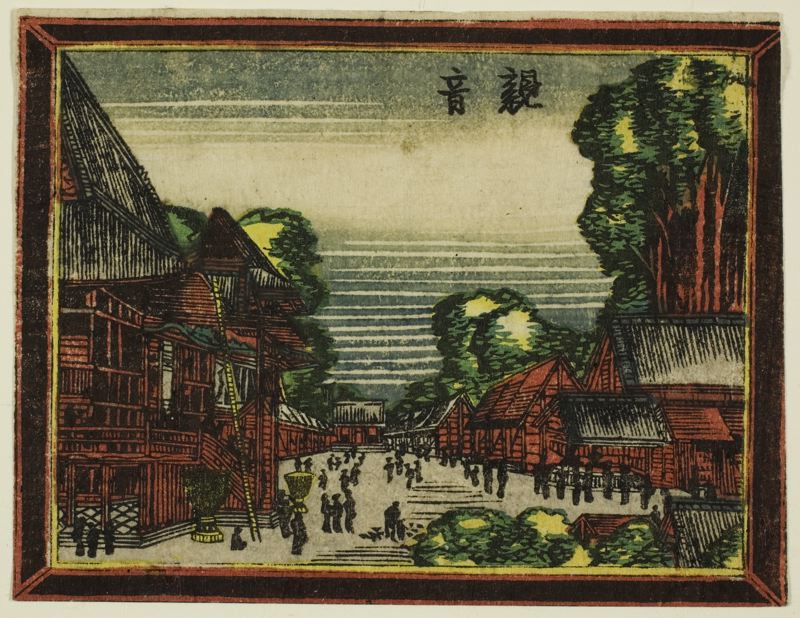
Kannon Temple (Kannon), from the series Dutch-style Pictures: Eight Views of Edo (Oranda gakyo Edo hakkei)
Woodblock print
Related Subjects
Frequently Asked Questions
Prints in the classical Eight Views (hakkei) tradition — the Chinese-derived poetic format that organizes a region's landscape into eight canonical scenes, applied to Ōmi, Edo, Korea, Lake Biwa, and dozens of regional and topical adaptations.
Utagawa Hiroshige, Ito Shinsui, and Katsushika Hokusai are among the artists most associated with eight views (hakkei) in our collection. Browse the full list of artists who explored this subject above.
Hanga currently catalogues 40 prints tagged with eight views (hakkei), spanning ukiyo-e, shin-hanga, and sōsaku-hanga traditions where applicable.