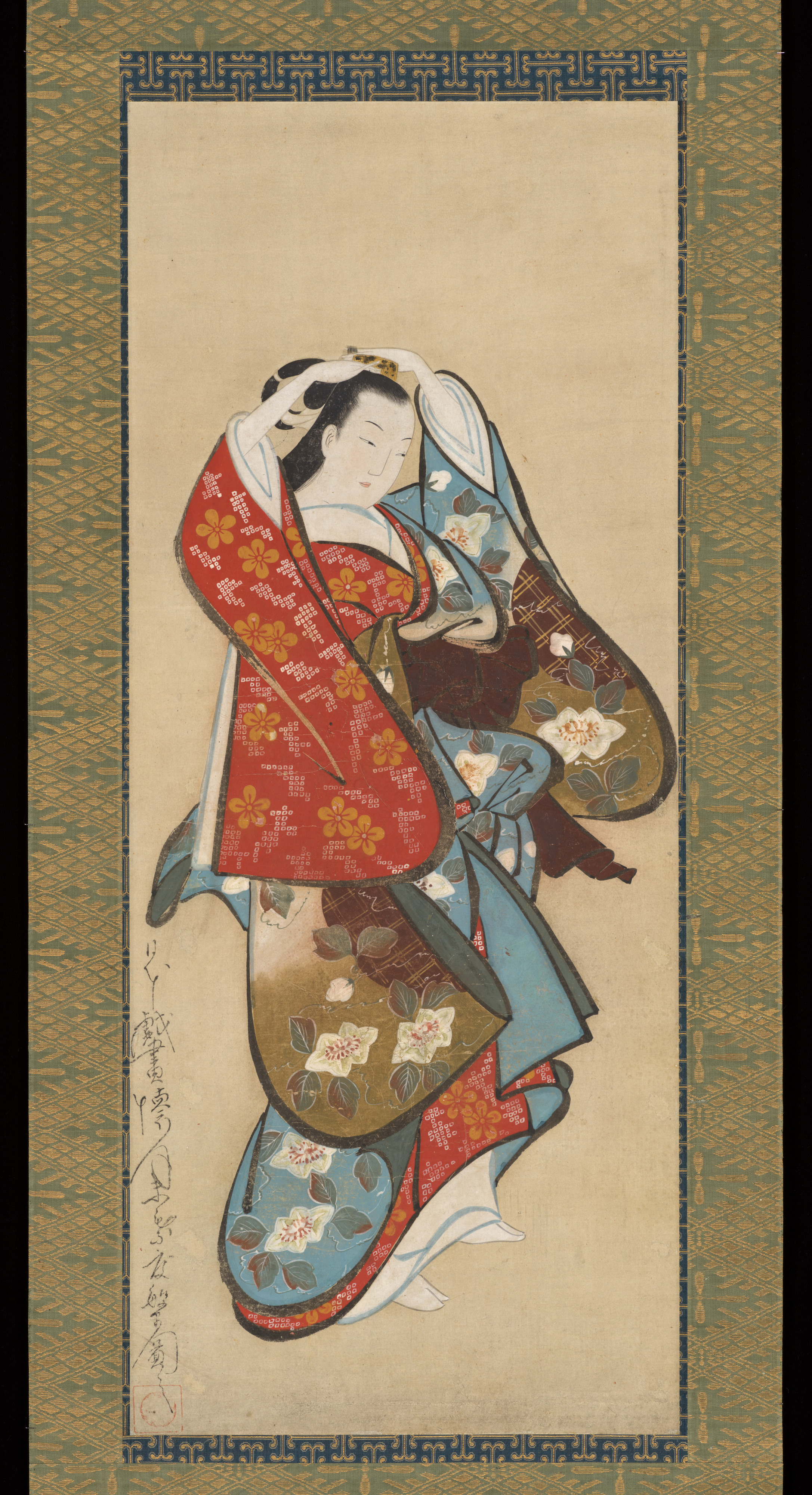
Beautiful Woman
- Date:
- Early 18th century
- Medium:
- Hanging scroll; ink and color on paper
- Source:
- Metropolitan Museum of Art
Description
A second hanging scroll by Kaigetsudō Dohan in the Metropolitan Museum of Art, showing a single standing courtesan in ink and colour on paper — one of the most substantial works by the artist in any Western collection. The Met catalogues the scroll broadly to the early eighteenth century, the period coinciding with Dohan's recorded activity around 1710 to 1716. The Kaigetsudō workshop produced both paintings and prints in this period, with the painted scrolls representing the more elaborate end of the workshop's production: larger surfaces, finer materials, longer execution times, and correspondingly higher prices. The market for Kaigetsudō paintings included both wealthy townspeople and samurai patrons, with the works displayed in private rooms as kakemono and rotated through the seasons in the manner of formal Japanese interior decoration. The compositional formula — a single full-length standing figure, near life-size, the kimono falling in concentric spiralling curves around the contrapposto pose — was identical to the printed version of the Kaigetsudō manner, but the painted execution allowed for the careful modelling of facial features and the meticulous rendering of the elaborate kimono textiles. The Met preserves this scroll under accession number 1975.268.125 within the Mary Griggs Burke Collection of Japanese art, one of the major American holdings of early Edo painting.
More Prints by Kaigetsudō Dohan
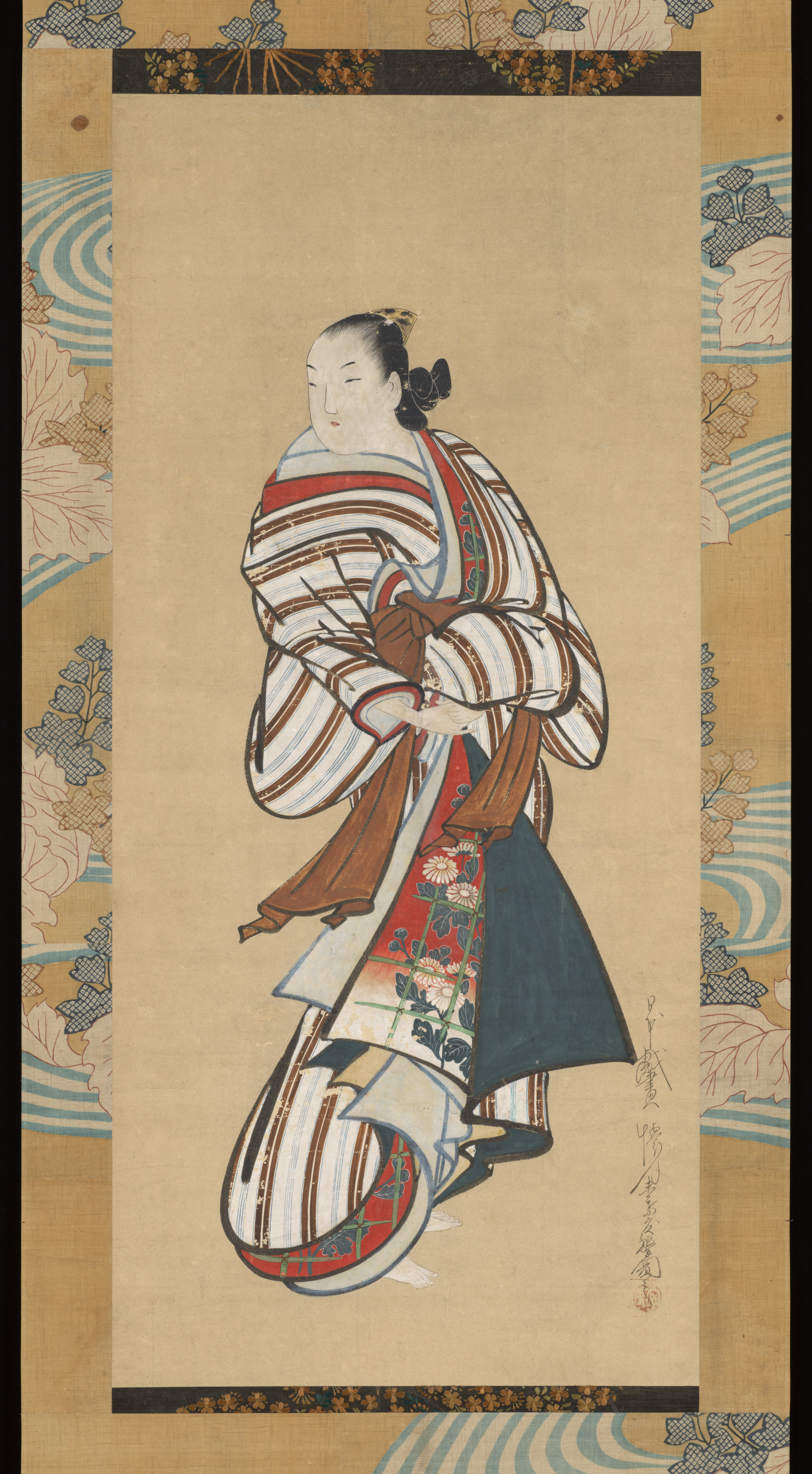
Standing Courtesan Looking Over Her Shoulder
ca. 1715
Hanging scroll; ink and color on paper
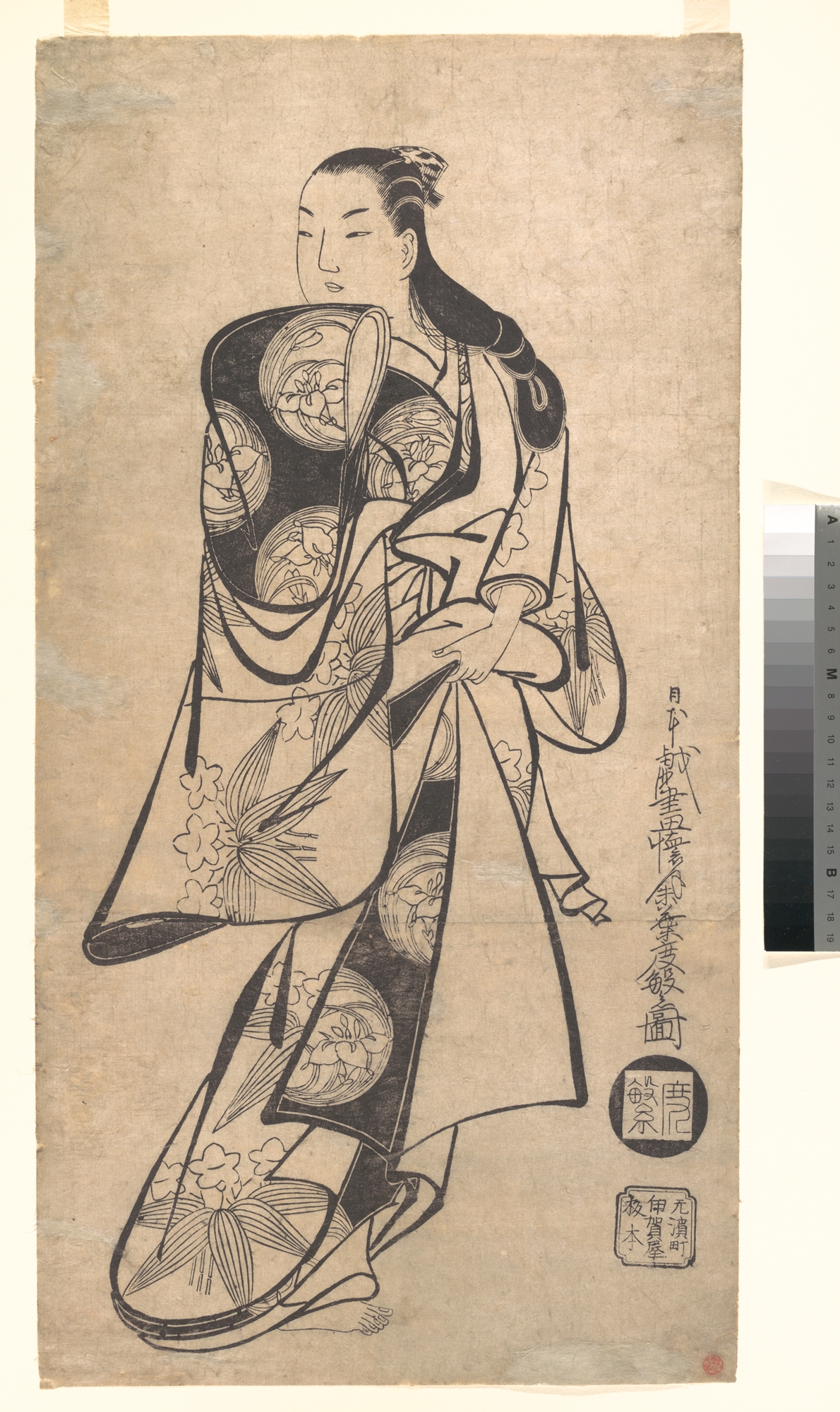
Courtesan
ca. 1714
Monochrome woodblock print (sumizuri-e); ink on paper
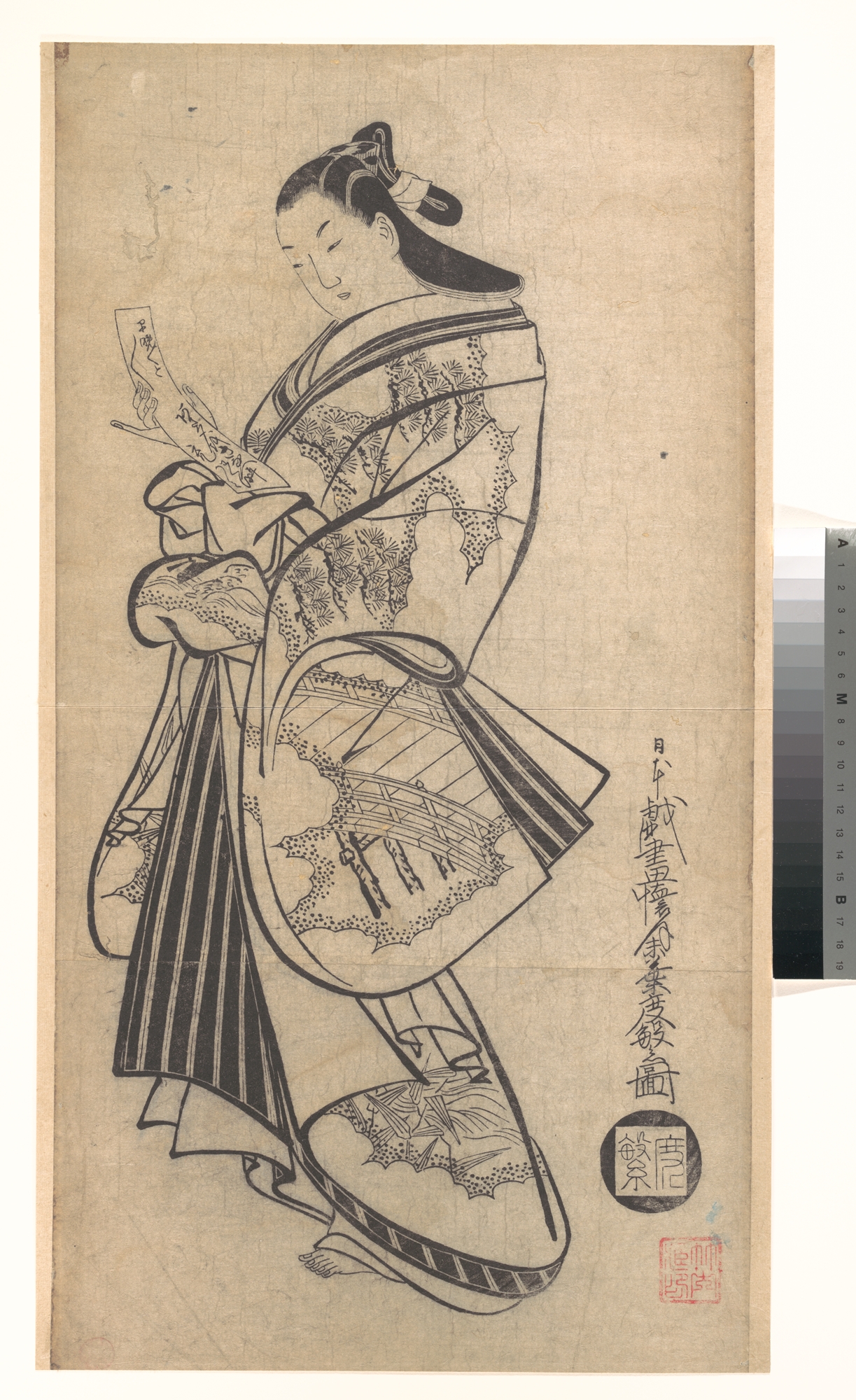
Courtesan with Poetry Card (Tanzaku) at the New Year
ca. 1714
Monochrome woodblock print (sumizuri-e); ink on paper

Standing Courtesan
c. 1715
Hand-colored woodblock print; o-oban, tan-e
Frequently Asked Questions
Beautiful Woman was created by Kaigetsudō Dohan (懐月堂度繁) in Early 18th century.