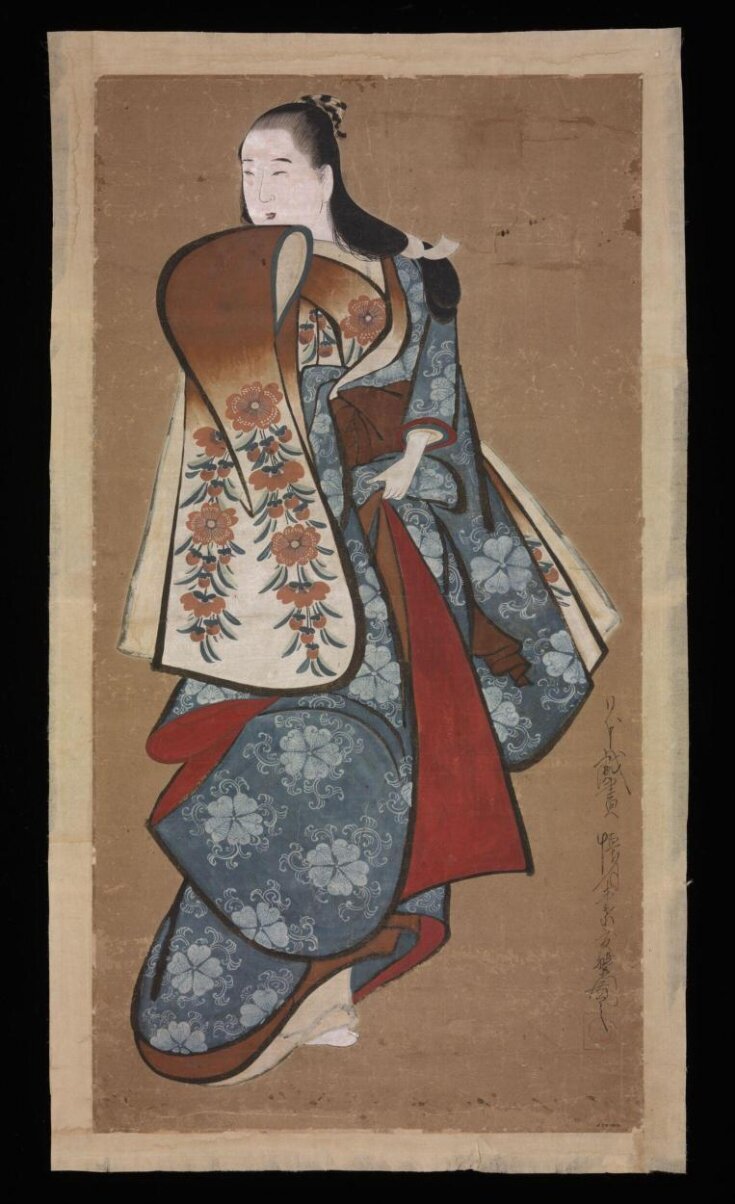
Biography
Kaigetsudō Dohan (懐月堂度繁, active c. 1710–1716) was one of the principal pupils of Kaigetsudō Ando and a designer of the large-format prints and paintings of standing courtesans for which the short-lived Kaigetsudō workshop is remembered today. With his fellow Kaigetsudō pupils Anchi, Doshin, and Doshū, he produced a tightly defined body of work over a period of roughly five or six years in early-eighteenth-century Edo before the school disbanded and its principal artists vanished from the documentary record.
Very little is known about Dohan's personal biography. His birth and death years are unrecorded, his lay name is not preserved, and the dates of his entry into and departure from the Kaigetsudō workshop are inferable only from the prints and paintings that survive with his signature. The school itself was founded by Kaigetsudō Ando around the turn of the eighteenth century in Edo, and specialised in a single subject — the standing courtesan of the Yoshiwara pleasure quarter, depicted at near life-size on hanging scrolls (kakemono) and on the extra-large vertical sheets known as ō-ōban. The Kaigetsudō manner was visually unmistakeable: a single female figure, taller and broader than life, with the kimono falling in pronounced sweeping curves around a contrapposto stance that allowed the elaborately patterned fabric to occupy almost the entire pictorial field. The figure's head, turned slightly to one side and crowned with a heavy lacquered coiffure pierced with hairpins, served as the visual anchor for the great spiralling mass of the robes.
The school's brief lifespan was decisively ended in 1714, when Ando was implicated in the Ejima-Ikushima scandal — an affair involving Ejima, a senior lady-in-waiting in the shogun's household, the kabuki actor Ikushima Shingorō, and an unauthorised gathering at a teahouse following a performance at the Yamamura-za theatre. Ando was exiled from Edo to the island of Ōshima in 1714, and the workshop appears to have closed shortly thereafter, although prints continued to be issued under the Kaigetsudō names for a year or two after the master's departure. The vogue for such large single-figure prints faded over the years that followed, by which time the Kaigetsudō workshop had effectively ceased to be a presence in Edo print culture.
Dohan's known printed output is small — approximately twelve print designs are recorded, at least one surviving in only a single impression — but it is of consistently high quality and represents the Kaigetsudō manner at its most mature. He worked primarily in the sumizuri-e (monochrome black-line print) technique and in hand-coloured impressions, in which orange-red and yellow pigments were brushed by hand onto the black-line print. The hand-colouring gave the Kaigetsudō robes their characteristic glow and allowed Dohan to articulate the elaborate textile patterns — hexagonal flower roundels, swirling waves, fan medallions, pine and cherry motifs — that distinguish each courtesan from her counterparts. His paintings, several of which are preserved in Western collections, follow the same compositional formula in colour and ink on paper or silk, occupying a position somewhere between the workshop's print production and the more elaborate independent paintings produced by Ando himself.
Dohan's surviving works are held today in major collections of Japanese prints and paintings outside Japan, including the Metropolitan Museum of Art and the Art Institute of Chicago. Despite the small number of designs and the brevity of his recorded career, the consistency and visual force of his standing-courtesan prints have made him one of the most admired of the Kaigetsudō pupils and a significant figure in the foundational moment of Edo single-figure bijin-ga.
Key Facts
- Nationality
- 🇯🇵Japan
- Movement
- Ukiyo-e
- Works Indexed
- 6
Frequently Asked Questions
Kaigetsudō Dohan (懐月堂度繁, active c. 1710–1716) was one of the principal pupils of Kaigetsudō Ando and a designer of the large-format prints and paintings of standing courtesans for which the short-lived Kaigetsudō workshop is remembered today. With his fellow Kaigetsudō pupils Anchi, Doshin, and Doshū, he produced a tightly defined body of work over a period of roughly five or six years in early-eighteenth-century Edo before the school disbanded and its principal artists vanished from the documentary record.
Kaigetsudō Dohan's work was shaped by the Ukiyo-e tradition in Japanese woodblock printmaking. Ukiyo-e: ## What is ukiyo-e? Ukiyo-e ([浮世絵](/glossary/ukiyo-e)) — literally "pictures of the floating world" — is the Edo-period Japanese print and painting tradition that flourished from roughly 1660 to 1868, depicting the pleasures of urban life in Edo (modern Tokyo): courtesans, kabuki actors, sumo wrestlers, famous landscapes, and seasonal beauties.
Original prints by Kaigetsudō Dohan can be found in collections including Metropolitan Museum of Art, Art Institute of Chicago.
Woodblock Prints by Kaigetsudō Dohan (6)
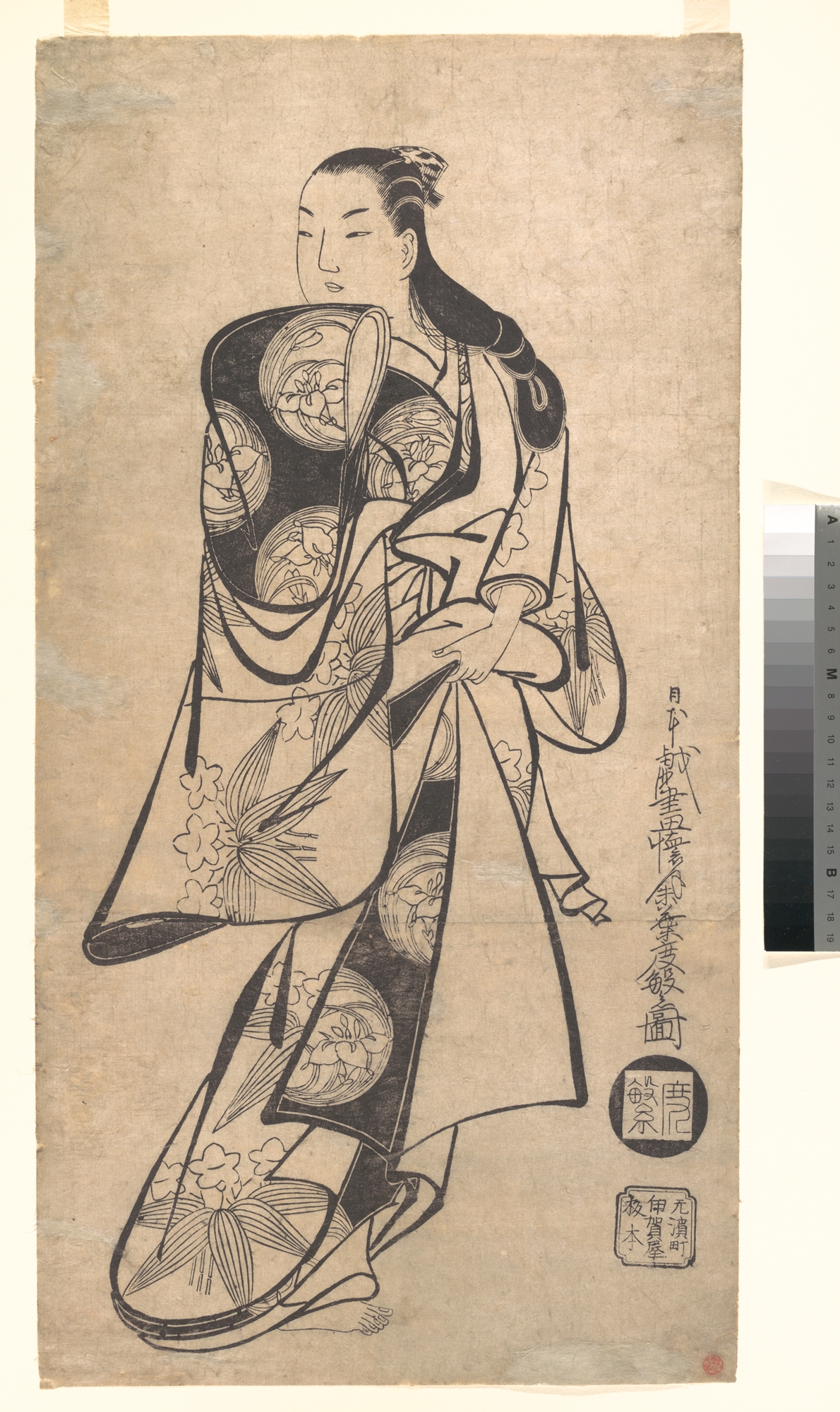
Courtesan
ca. 1714
Monochrome woodblock print (sumizuri-e); ink on paper
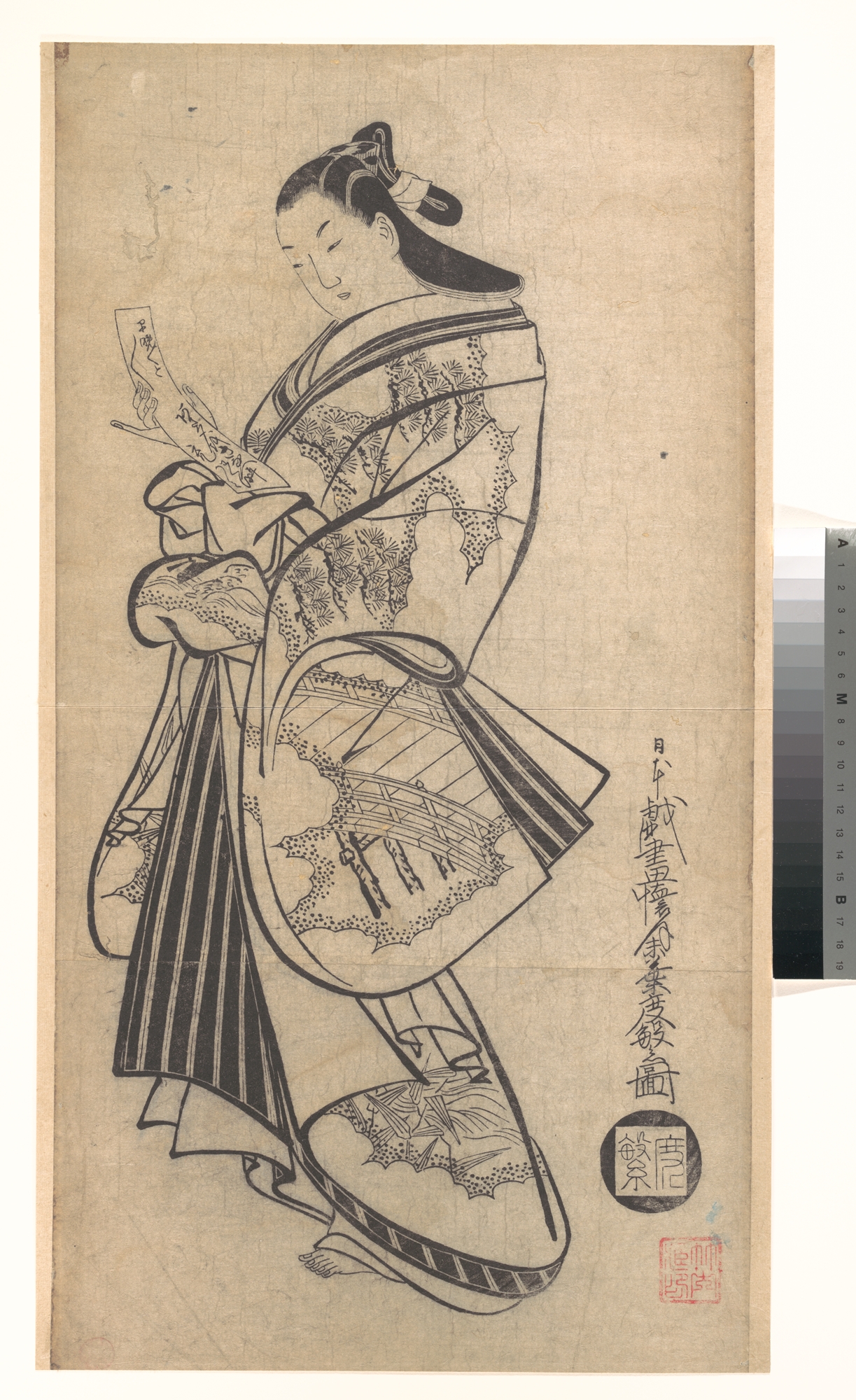
Courtesan with Poetry Card (Tanzaku) at the New Year
ca. 1714
Monochrome woodblock print (sumizuri-e); ink on paper
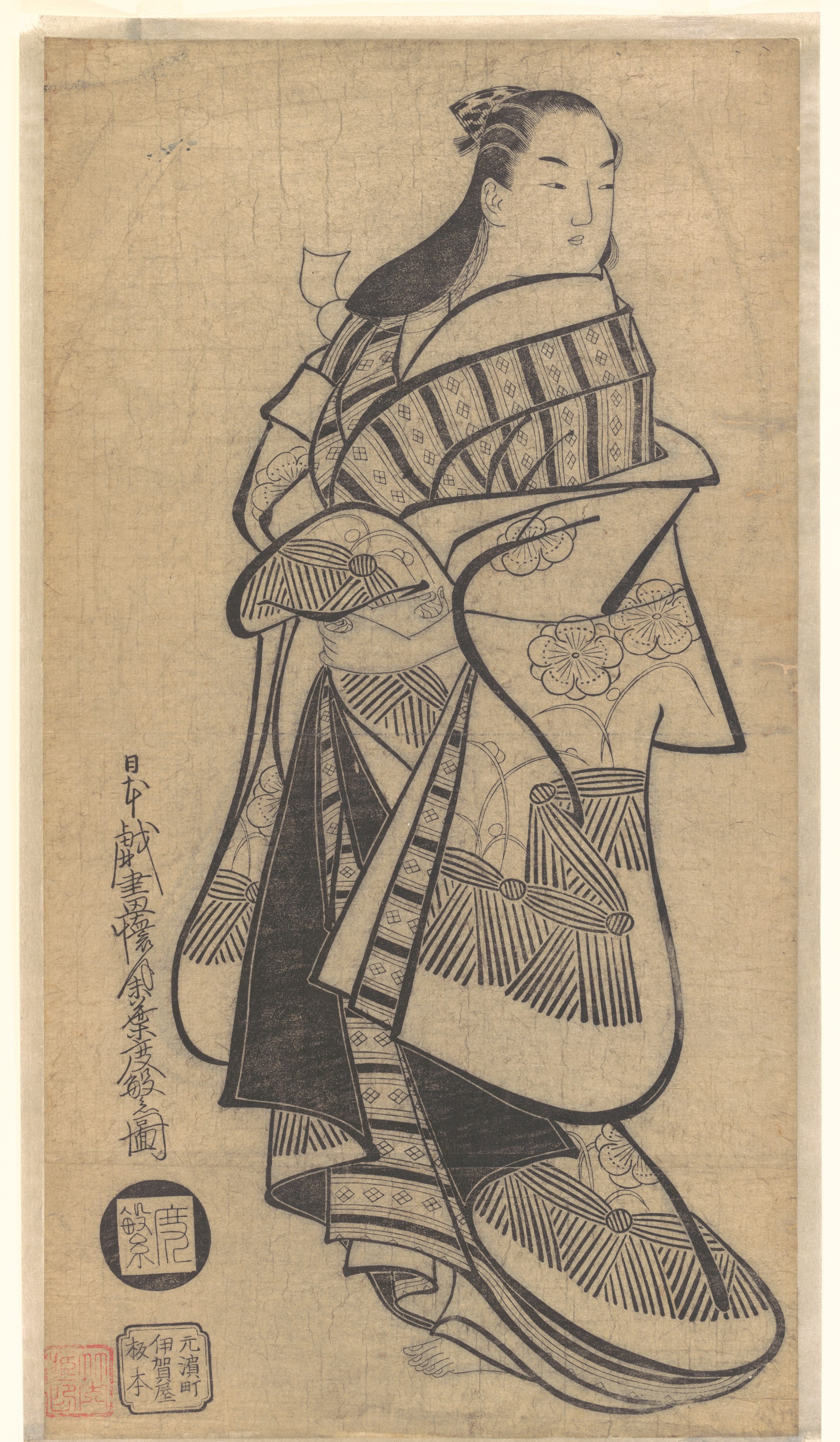
Courtesan
ca. 1714
Monochrome woodblock print (sumizuri-e); ink on paper
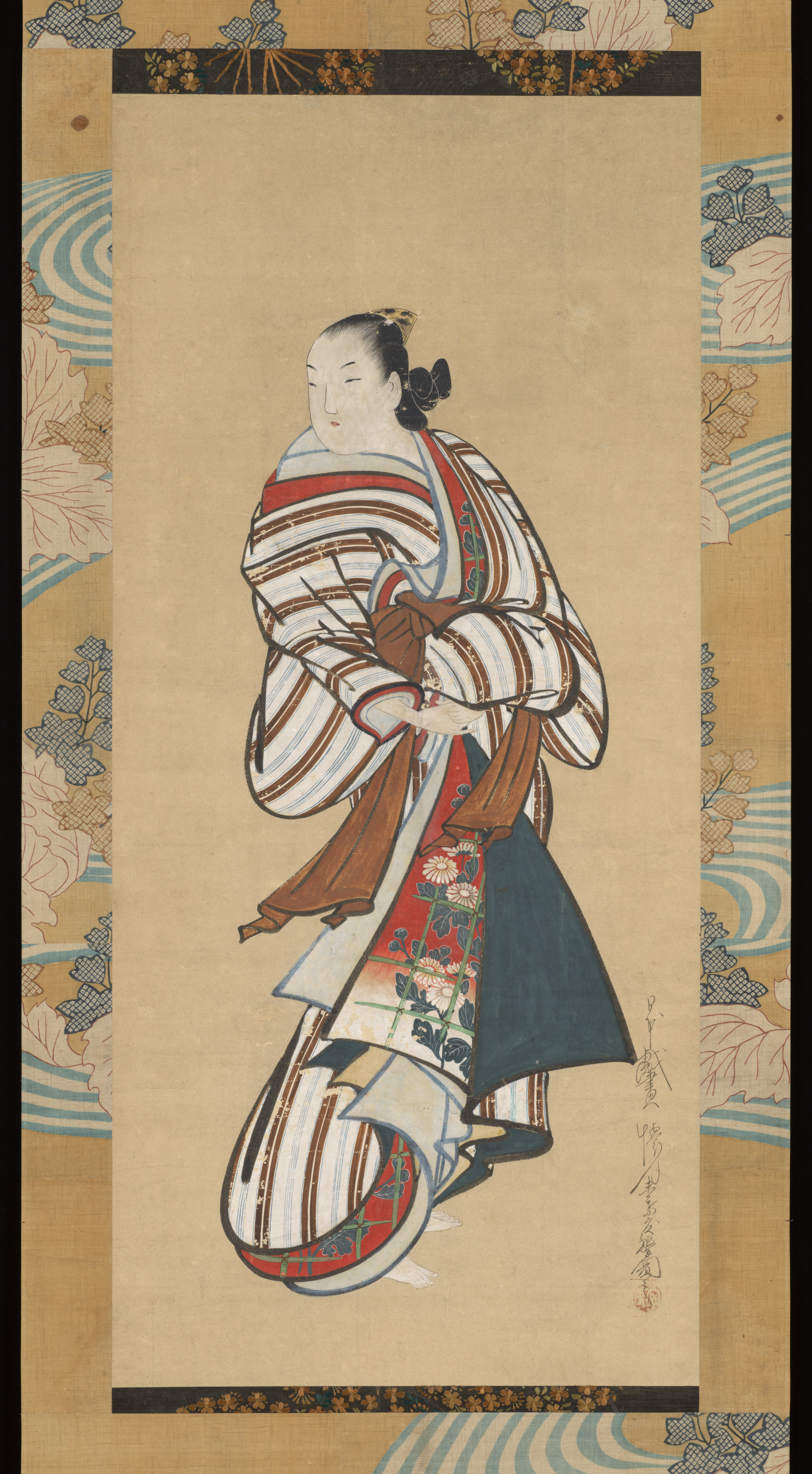
Standing Courtesan Looking Over Her Shoulder
ca. 1715
Hanging scroll; ink and color on paper
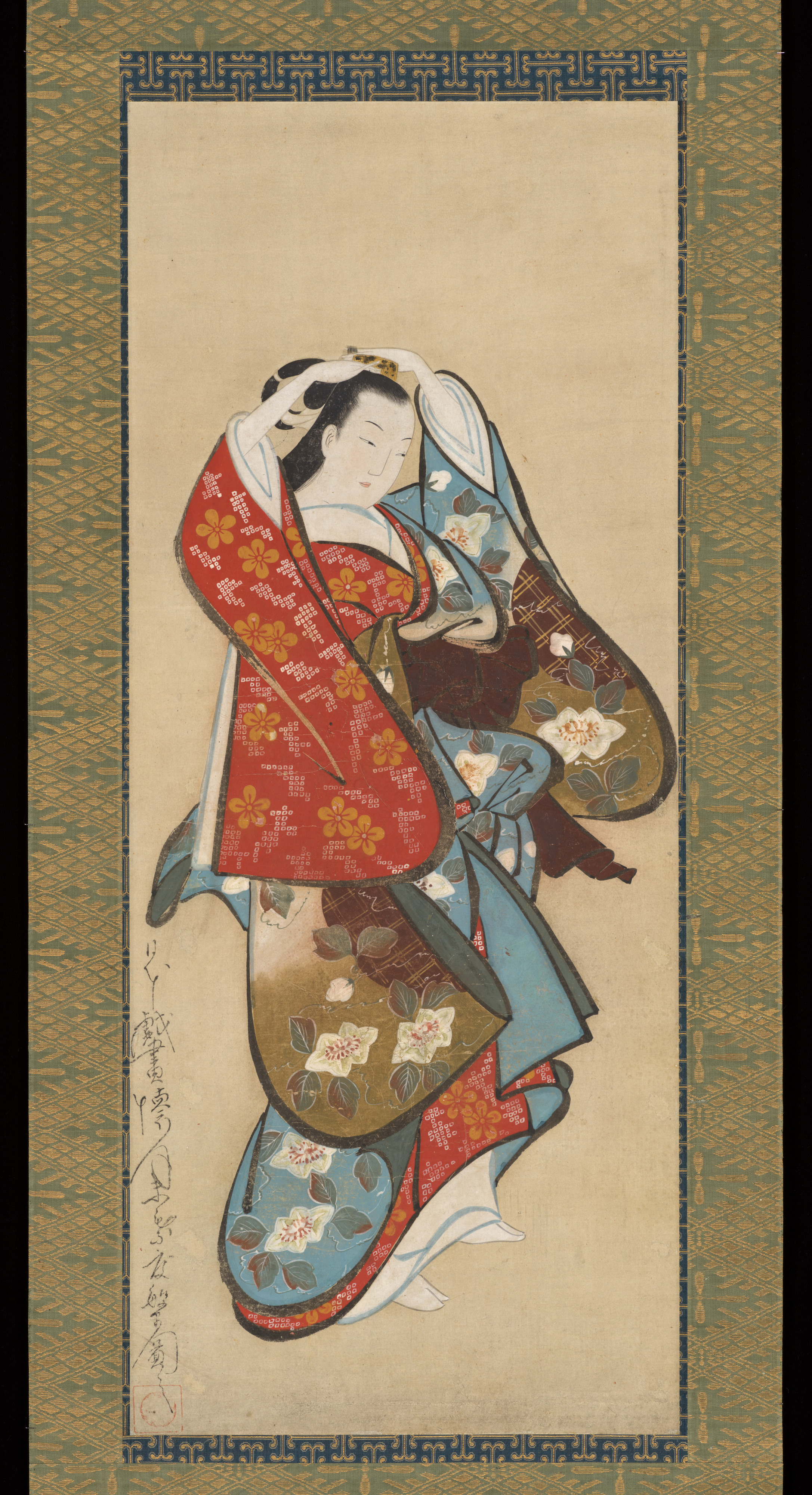
Beautiful Woman
Early 18th century
Hanging scroll; ink and color on paper

Standing Courtesan
c. 1715
Hand-colored woodblock print; o-oban, tan-e