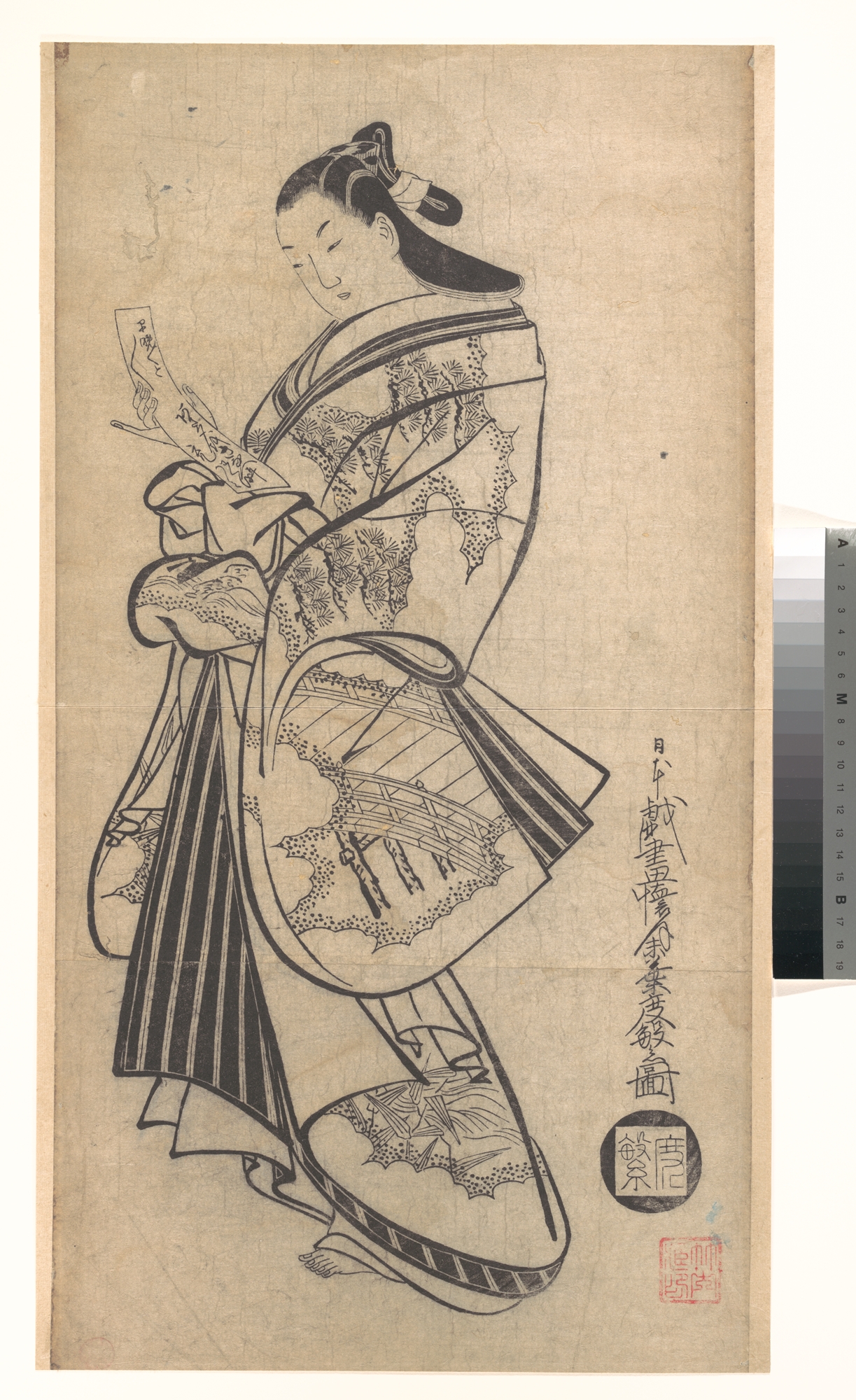
Courtesan with Poetry Card (Tanzaku) at the New Year
- Date:
- ca. 1714
- Medium:
- Monochrome woodblock print (sumizuri-e); ink on paper
- Source:
- Metropolitan Museum of Art
Description
A monochrome sumizuri-e print by Kaigetsudō Dohan showing a standing courtesan holding a tanzaku, the narrow vertical poetry-card used in Edo for the writing and exchange of short poems at the New Year and other formal occasions. The combination of a Yoshiwara courtesan with a tanzaku draws on the cultivated literary identity that the highest-ranking courtesans (tayū and oiran) were expected to project — accomplished in calligraphy, poetry composition, and the broader range of classical Japanese literary and musical arts in addition to their sexual and conversational duties. The New Year was the single most important occasion in the Yoshiwara calendar, with the highest-ranking courtesans receiving their elaborate new-year robes — typically a gift from a major patron — and processing through the quarter in formal display. The poetry-card recorded the exchange of seasonal greetings between the courtesan and her patrons. The print belongs to the very short period of Kaigetsudō Dohan's recorded activity, around 1714, and follows the school's standard formula: a single standing figure, three-quarter view, elaborate kimono falling in spiralling curves, lacquered hair pierced with multiple hairpins. The Met holds this sheet under accession number JP3104 as one of approximately twelve recorded print designs by Dohan. The o-oban format and sumizuri-e technique place the print at the high point of the Kaigetsudō workshop's brief existence.
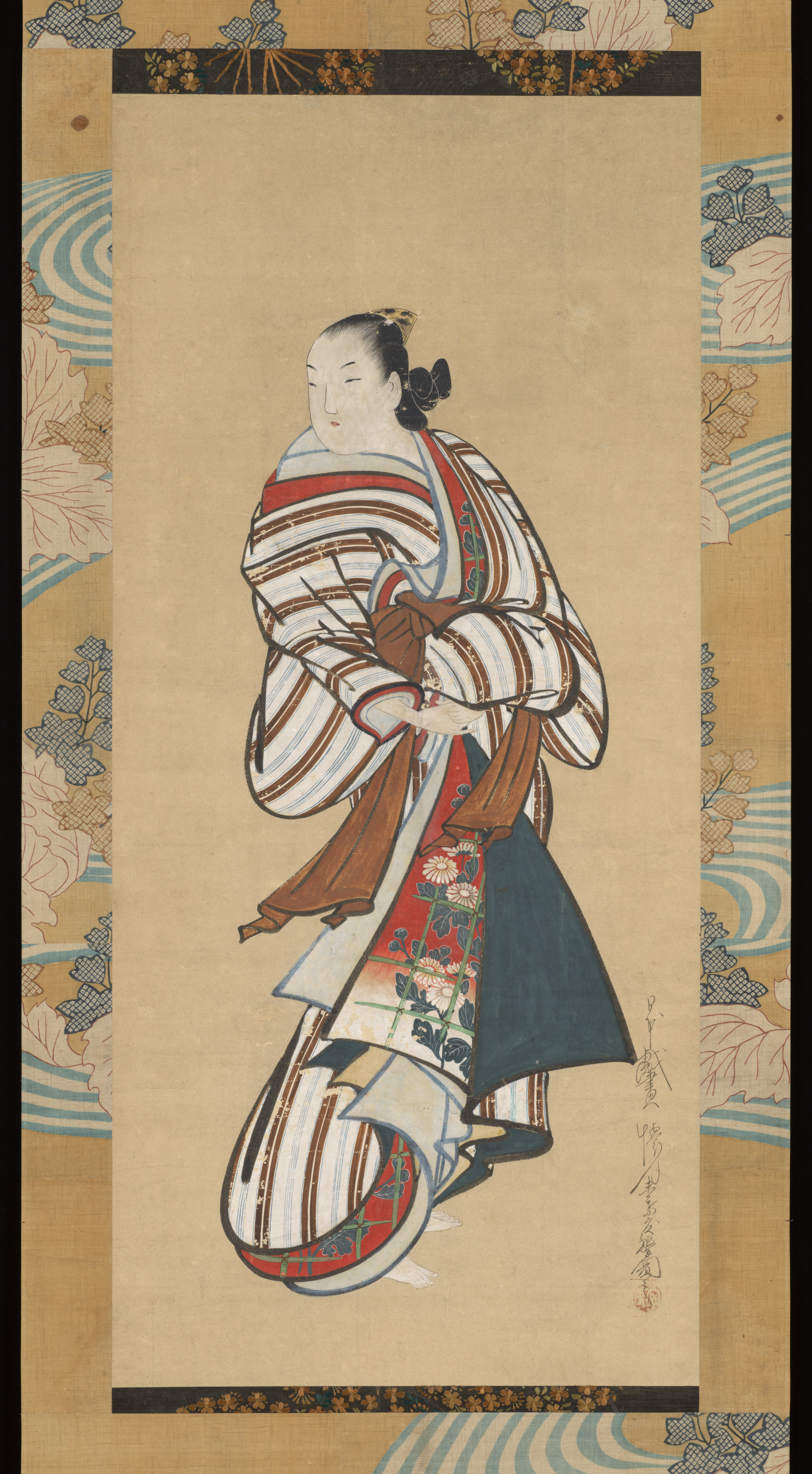
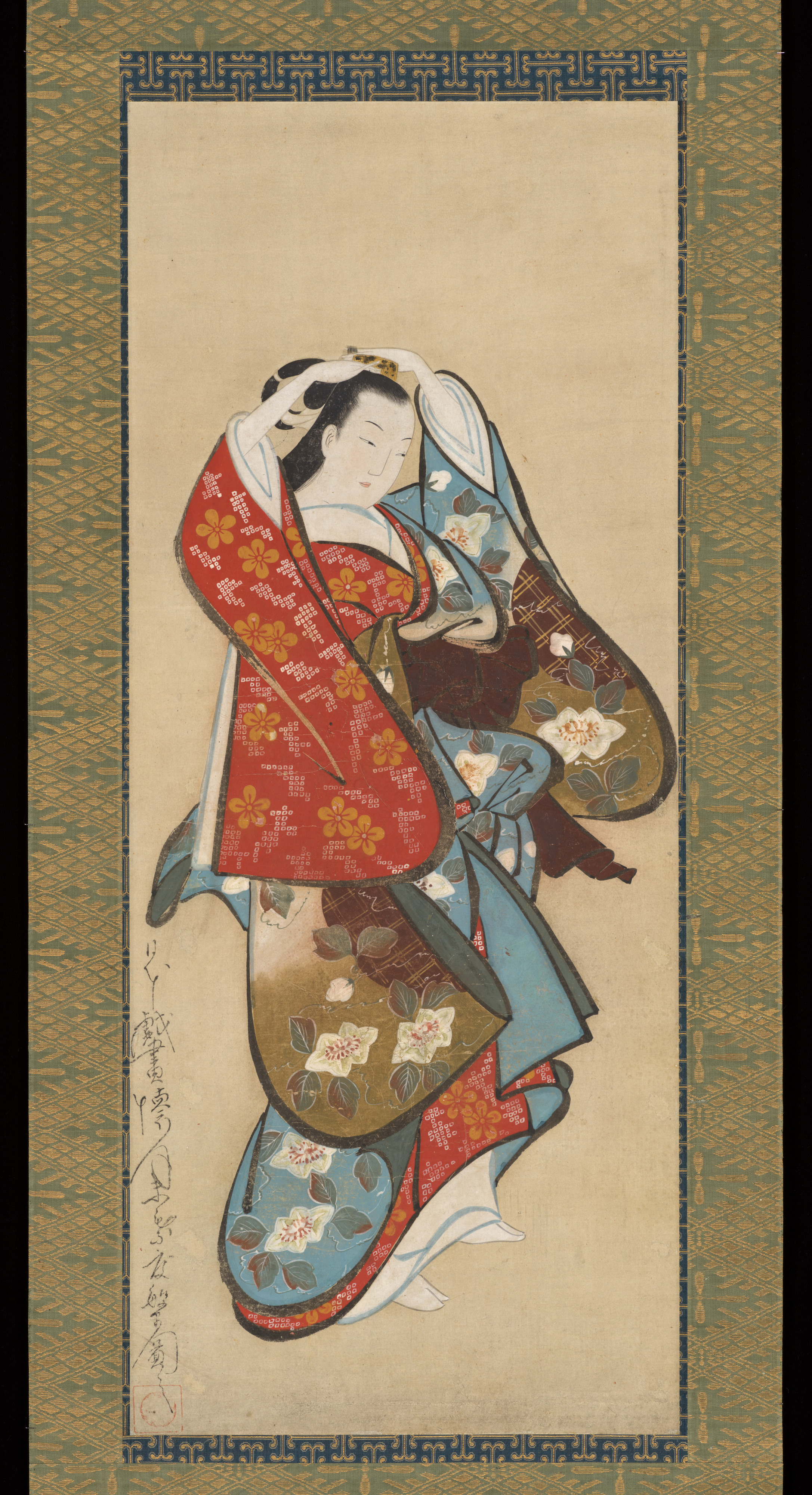
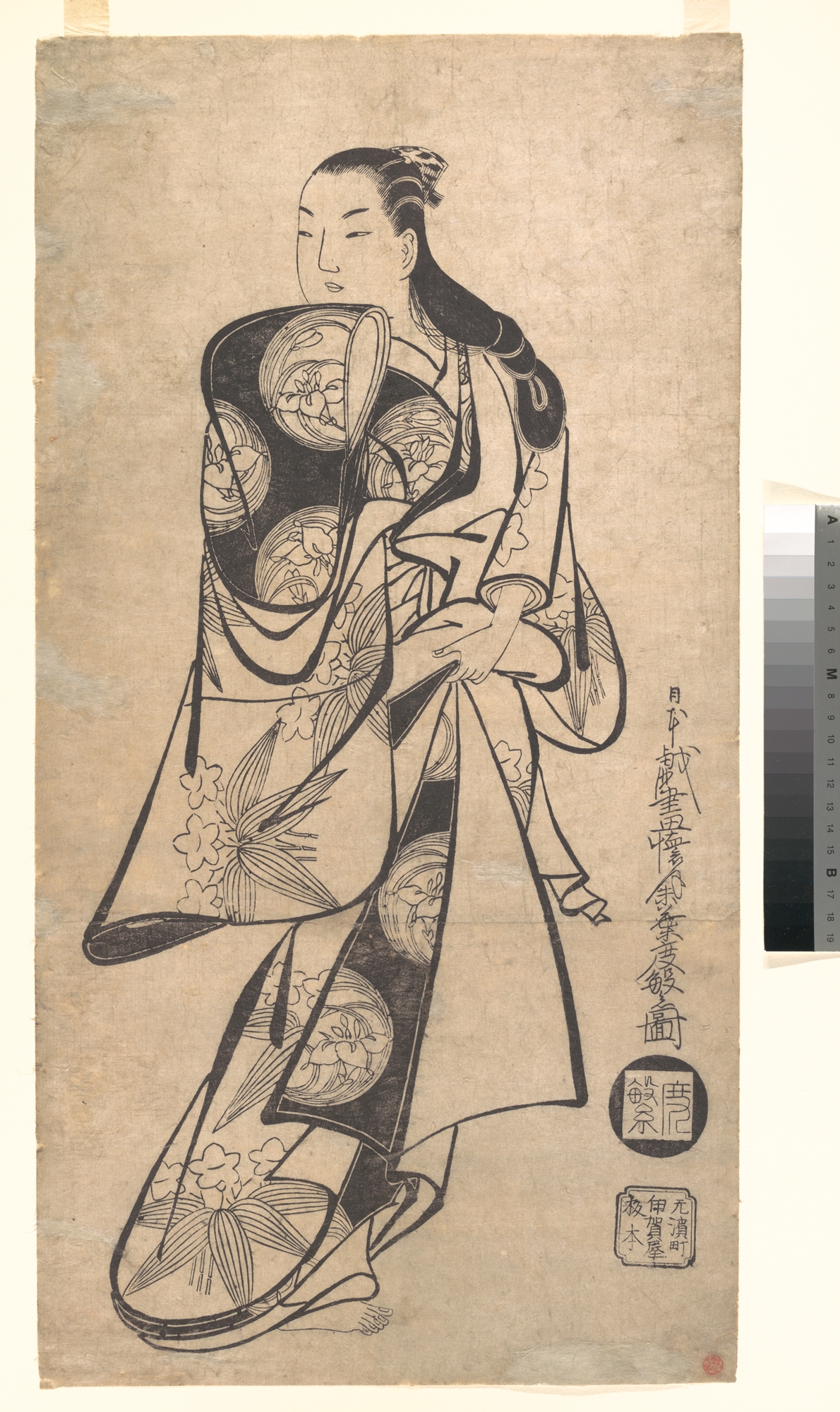
More Prints by Kaigetsudō Dohan

Frequently Asked Questions
Courtesan with Poetry Card (Tanzaku) at the New Year was created by Kaigetsudō Dohan (懐月堂度繁) in ca. 1714.