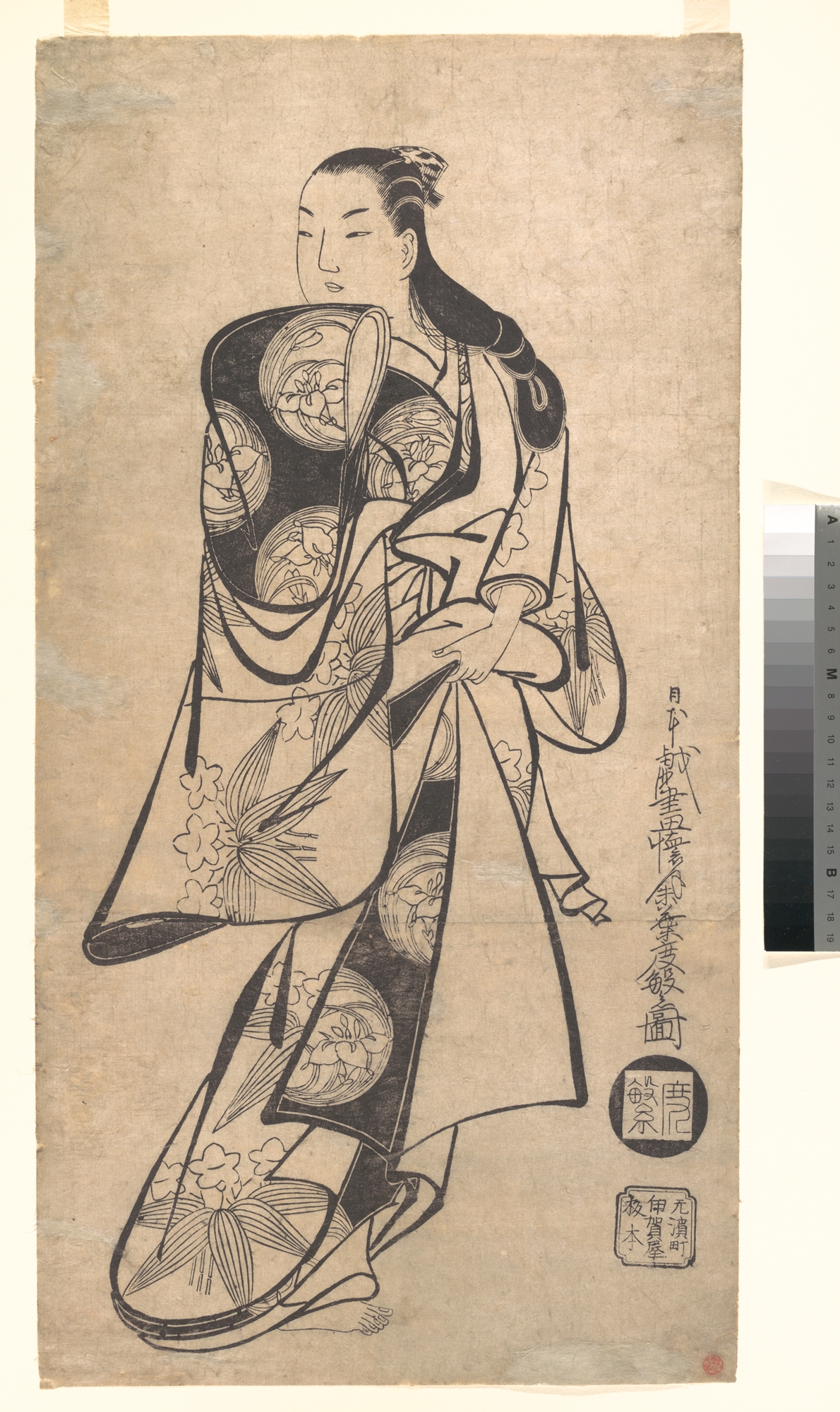
Courtesan
- Date:
- ca. 1714
- Medium:
- Monochrome woodblock print (sumizuri-e); ink on paper
- Source:
- Metropolitan Museum of Art
Description
A second monochrome sumizuri-e print of a standing courtesan by Kaigetsudō Dohan, dated by the Metropolitan Museum of Art to around 1714 — the year in which the Kaigetsudō workshop's master, Kaigetsudō Ando, was implicated in the Ejima-Ikushima scandal and exiled from Edo to the island of Ōshima. The exile decisively ended the workshop's brief existence and meant that the small body of prints carrying the Kaigetsudō pupils' signatures was produced over the very short window between roughly 1710 and 1716 or 1717. The composition follows the Kaigetsudō formula codified by Ando and translated into the woodblock medium by his pupils: a single standing courtesan in three-quarter view, head tilted, the elaborate kimono falling in concentric spiralling curves that fill the sheet. The bold contour line, with its characteristic looped flourishes around the shoulder and hem, is the visual signature of the school. Especially characteristic of Kaigetsudō beauties are the bold lines of the swirling robe, effectively accented in the monochrome impression by the densely inked block of the lacquered hair. The o-oban sheet — extra-large vertical format — was the Kaigetsudō workshop's preferred carrier, deliberately oversized to allow figures to read at near life-size. The Met catalogues the print under accession number JP3103, and notes that among the twelve known Dohan designs several survive in only a single impression.
More Prints by Kaigetsudō Dohan
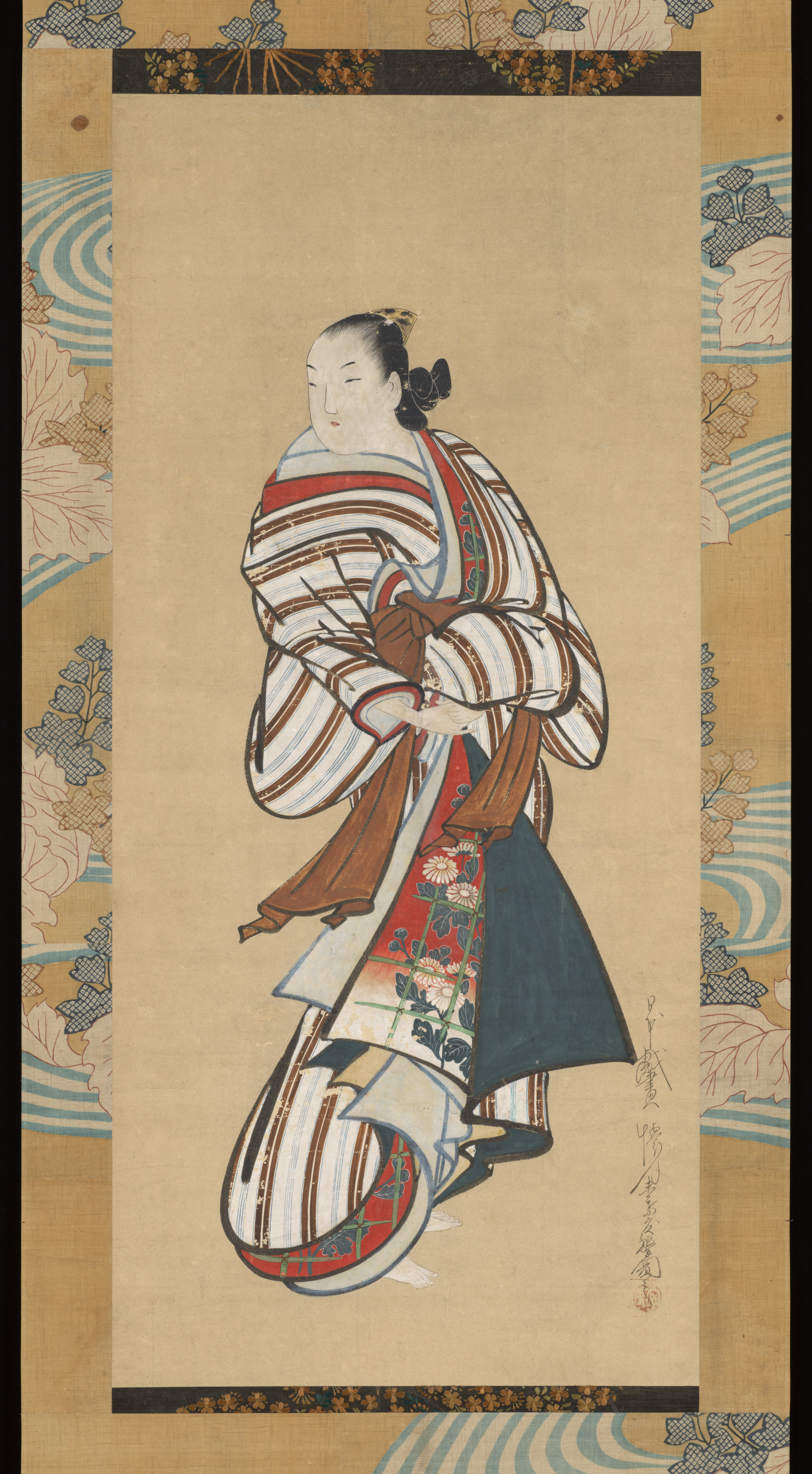
Standing Courtesan Looking Over Her Shoulder
ca. 1715
Hanging scroll; ink and color on paper
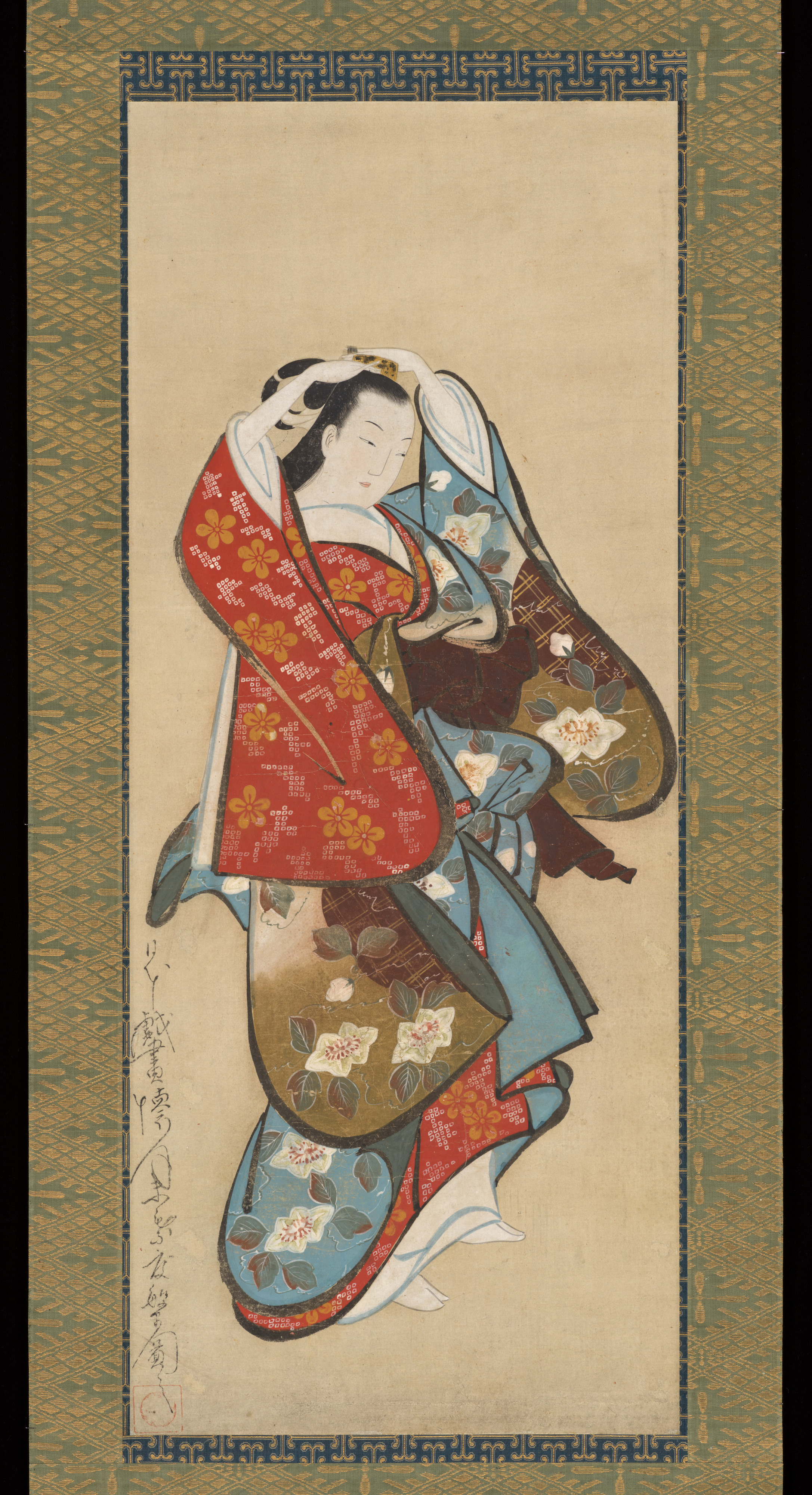
Beautiful Woman
Early 18th century
Hanging scroll; ink and color on paper
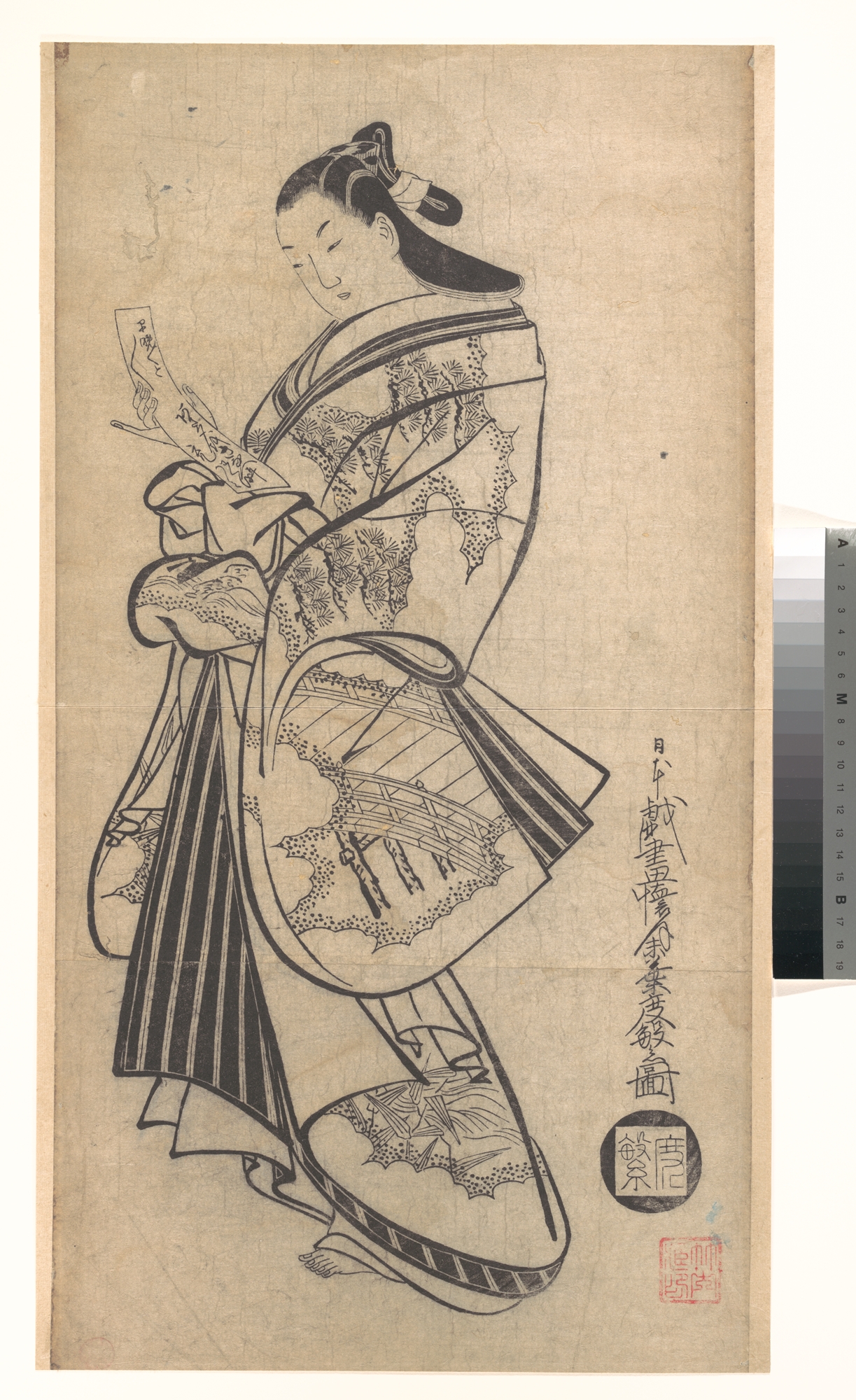
Courtesan with Poetry Card (Tanzaku) at the New Year
ca. 1714
Monochrome woodblock print (sumizuri-e); ink on paper

Standing Courtesan
c. 1715
Hand-colored woodblock print; o-oban, tan-e
Frequently Asked Questions
Courtesan was created by Kaigetsudō Dohan (懐月堂度繁) in ca. 1714.