
Standing Courtesan
- Date:
- c. 1715
- Medium:
- Hand-colored woodblock print; o-oban, tan-e
- Source:
- Art Institute of Chicago
Description
A hand-coloured tan-e print by Kaigetsudō Dohan from around 1715, showing a single standing courtesan in the canonical Kaigetsudō pose — three-quarter view, body in contrapposto, the elaborate kimono falling in pronounced sweeping curves that fill the o-oban sheet. The tan-e technique applied orange-red and yellow pigments by hand onto the black-line impression, supplying a partial polychromy that gave the elaborate Yoshiwara robes their characteristic glow without yet attaining the registered full-colour printing (nishiki-e) that Suzuki Harunobu and his collaborators would introduce only after the mid-1760s. The hand-colouring allowed Dohan to articulate the textile patterns that distinguish each courtesan in his small recorded oeuvre. The Kaigetsudō workshop was founded by Kaigetsudō Ando around the turn of the eighteenth century in Edo and specialised exclusively in the single subject of the standing Yoshiwara courtesan, depicted at near life-size on extra-large vertical sheets and on hanging scrolls. The o-oban format — substantially taller and wider than the standard ukiyo-e print sheets of the period — was the workshop's deliberate signature, distinguishing its prints from the smaller theatrical and bijin-ga works of contemporaries. The Art Institute of Chicago holds the print in the Clarence Buckingham Collection, one of the major American holdings of early Edo printmaking, and dates it to around 1715, in the year following Ando's exile from Edo in the Ejima-Ikushima scandal of 1714.
More Prints by Kaigetsudō Dohan
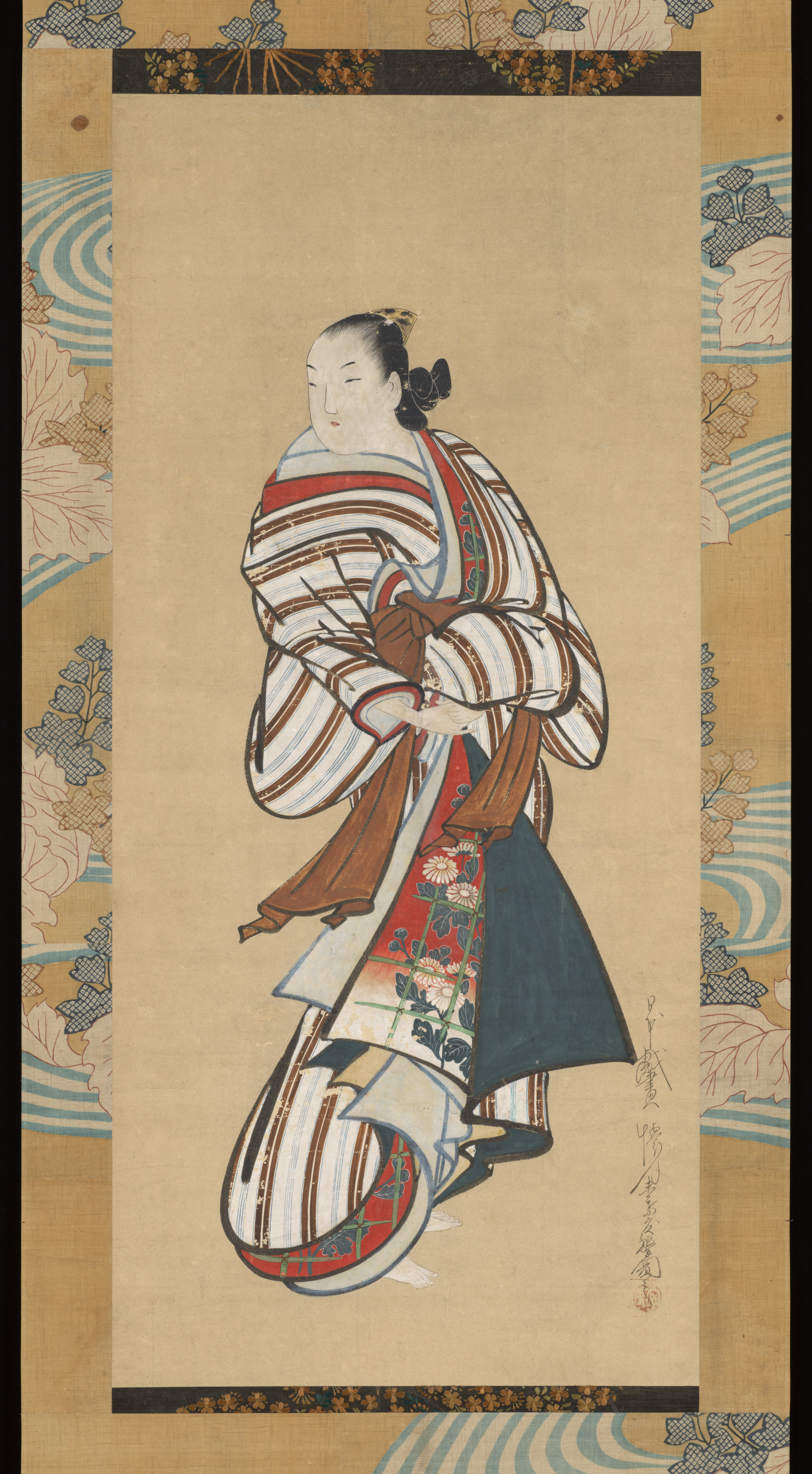
Standing Courtesan Looking Over Her Shoulder
ca. 1715
Hanging scroll; ink and color on paper
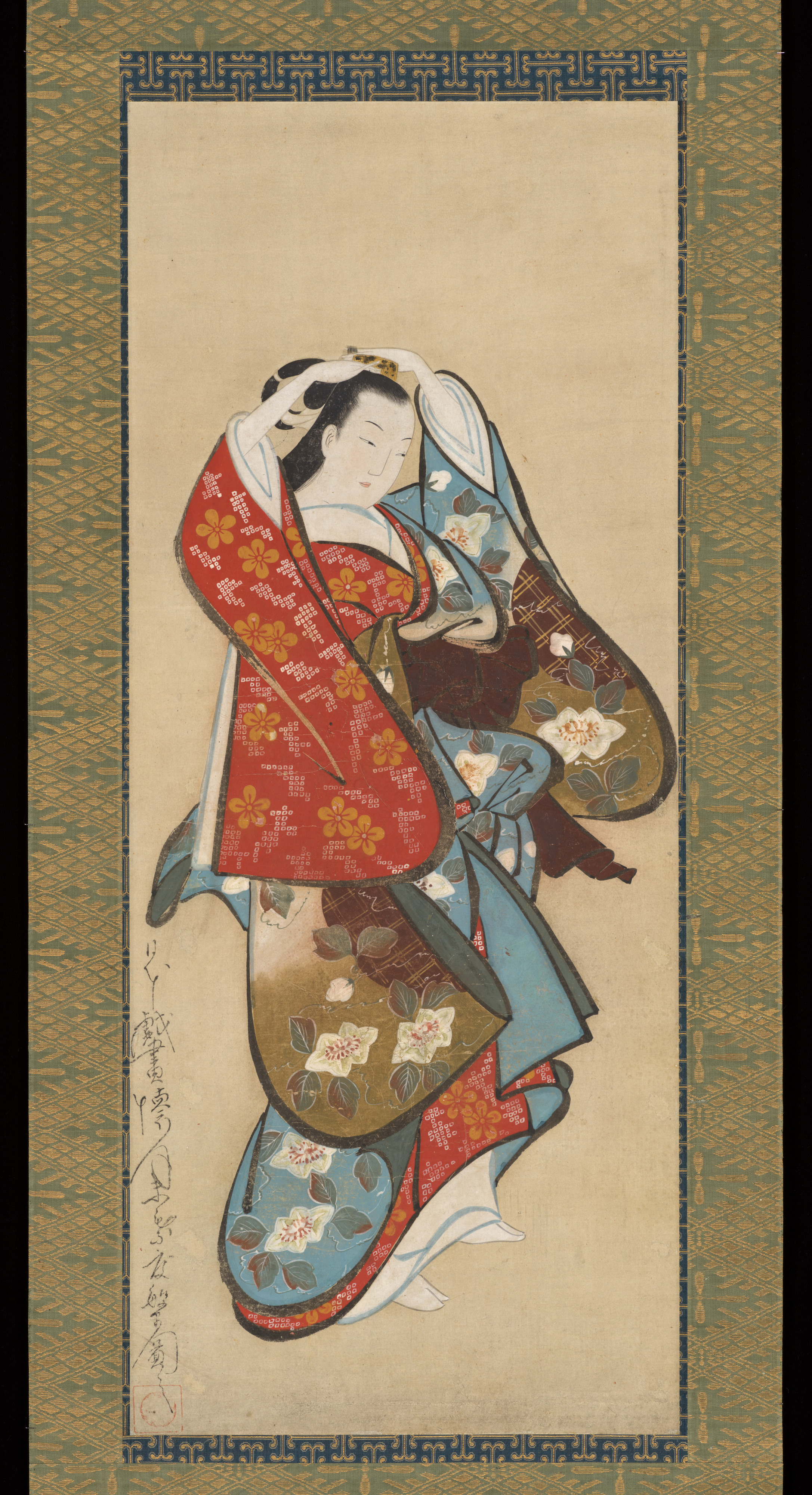
Beautiful Woman
Early 18th century
Hanging scroll; ink and color on paper
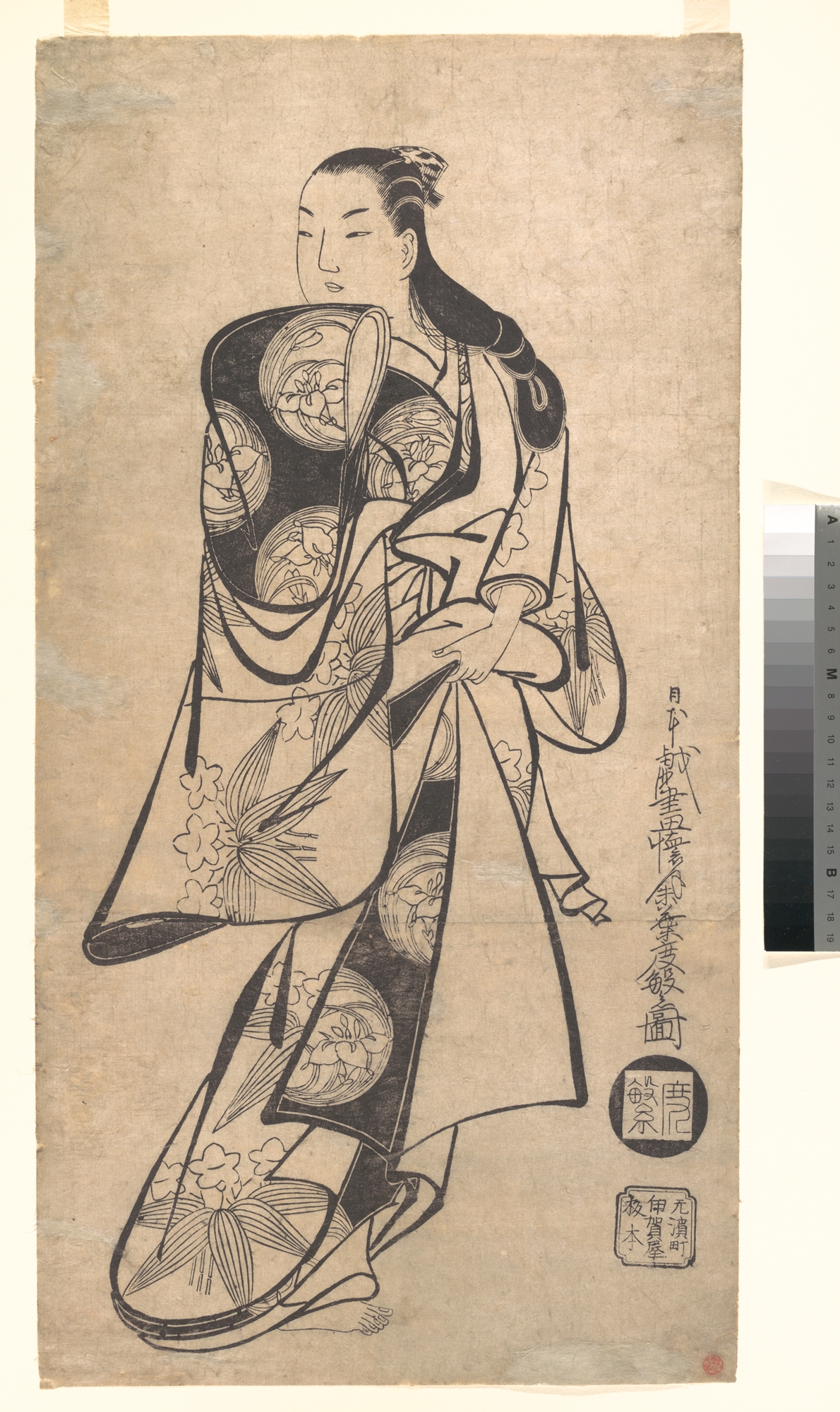
Courtesan
ca. 1714
Monochrome woodblock print (sumizuri-e); ink on paper
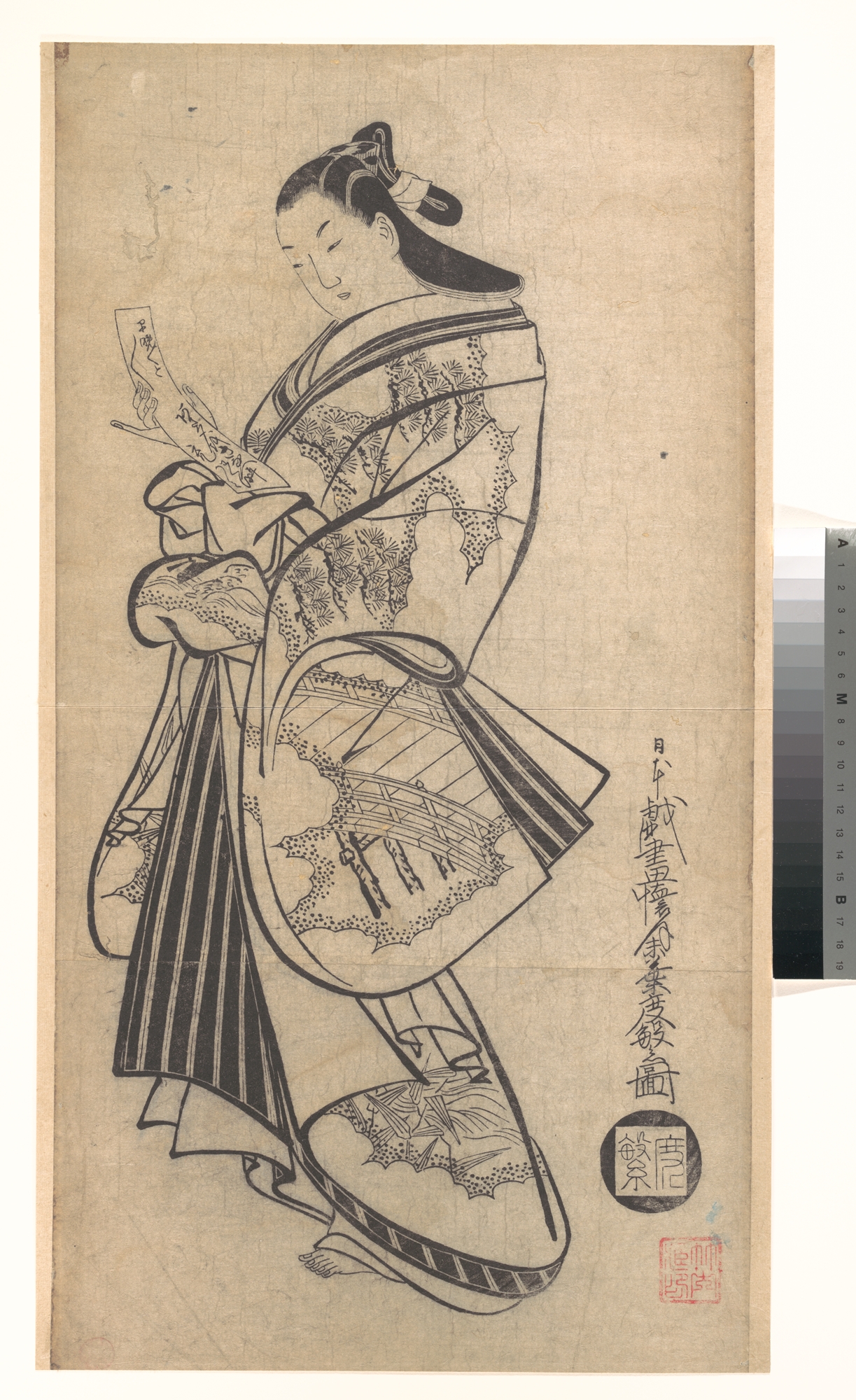
Courtesan with Poetry Card (Tanzaku) at the New Year
ca. 1714
Monochrome woodblock print (sumizuri-e); ink on paper
Frequently Asked Questions
Standing Courtesan was created by Kaigetsudō Dohan (懐月堂度繁) in c. 1715.