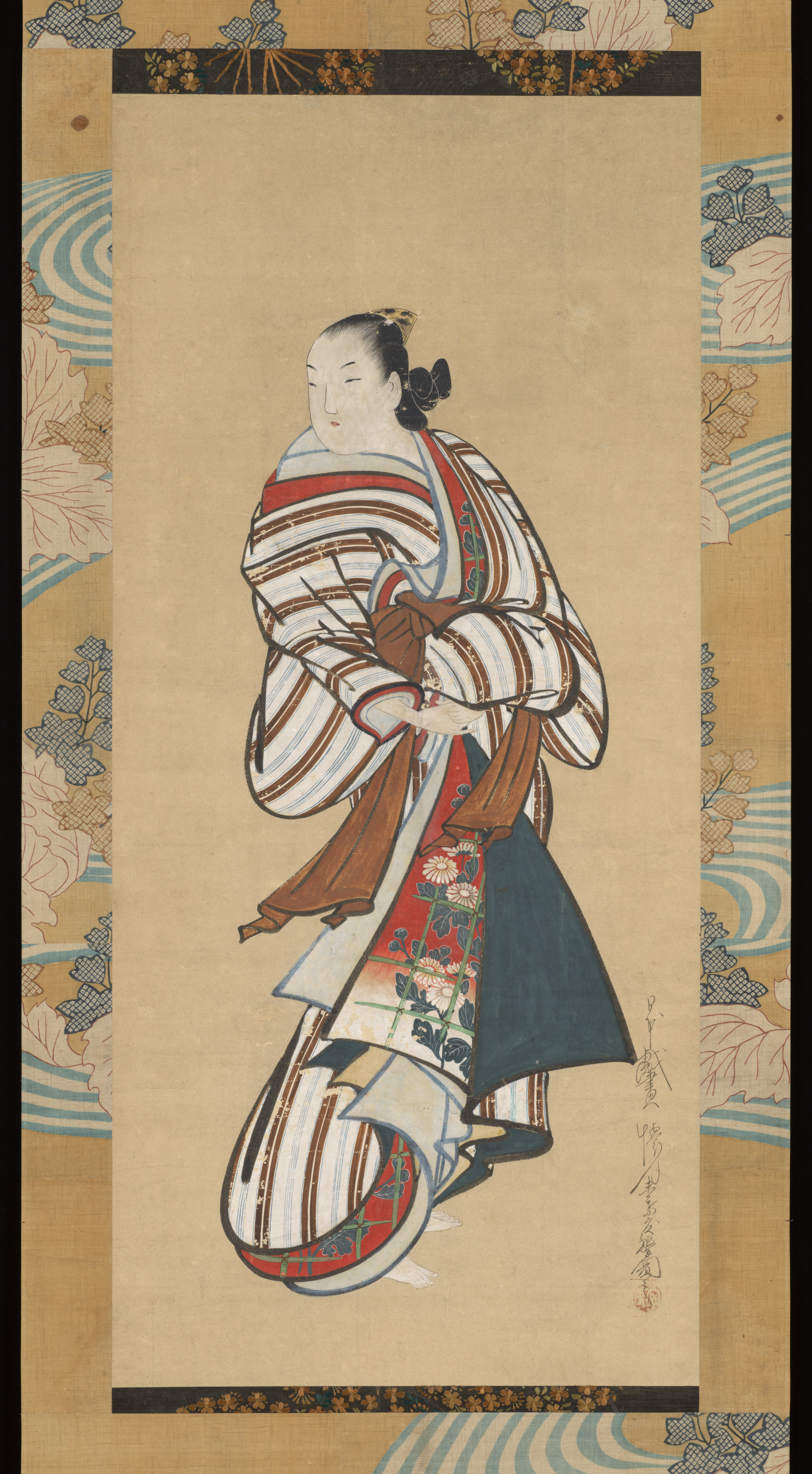
Standing Courtesan Looking Over Her Shoulder
- Date:
- ca. 1715
- Medium:
- Hanging scroll; ink and color on paper
- Source:
- Metropolitan Museum of Art
Description
A hanging scroll by Kaigetsudō Dohan in ink and colour on paper, showing a standing courtesan glancing back over her shoulder — one of the small group of independently painted works that complement the printed output of the Kaigetsudō workshop. The Kaigetsudō school maintained a dual practice in which both paintings and prints were produced in the same workshop and on the same compositional formula: the single standing courtesan, near life-size, kimono falling in sweeping curves around the contrapposto pose. The painted version, however, gave the artist access to the colour and tonal range that the early sumizuri-e prints could not provide, allowing Dohan to model the elaborate kimono textiles in pigment and to set off the figure with subtle shifts of ground colour. The over-the-shoulder pose — the head turned back while the body continues to face forward — was a recurring conceit in Japanese bijin-ga, allowing the artist to display both the front and the back of the figure in a single image and giving the courtesan a moment of arrested motion that suggests she has just been called or has noticed something behind her. The pose ran through Japanese painting from the Heian period onward and was particularly identified with the bijin tradition that the Kaigetsudō workshop helped to codify in early-eighteenth-century Edo. The Metropolitan Museum of Art catalogues the scroll under accession number 57.138.1, dating it to around 1715. It is among the most important Kaigetsudō paintings in any Western collection.
More Prints by Kaigetsudō Dohan
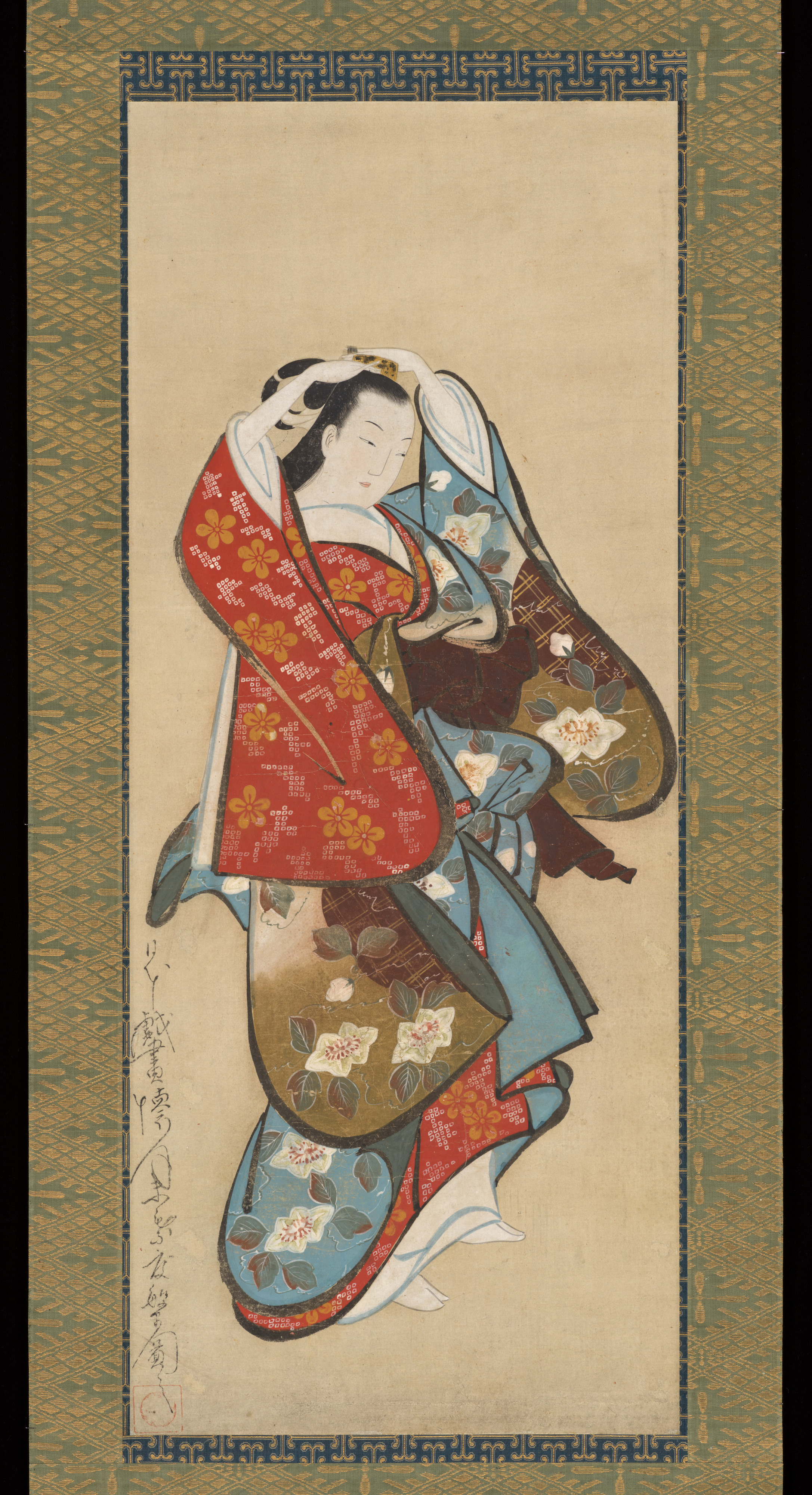
Beautiful Woman
Early 18th century
Hanging scroll; ink and color on paper
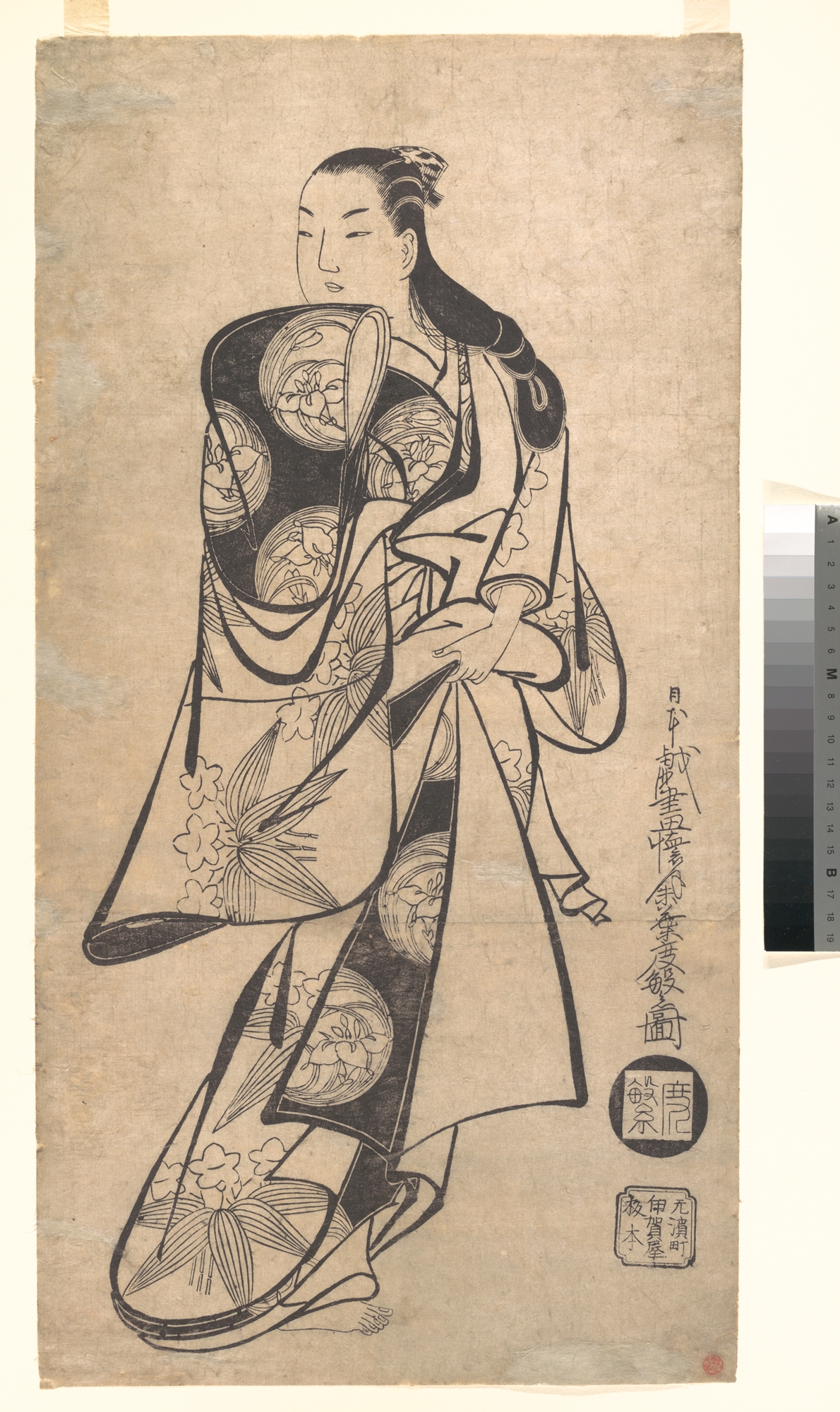
Courtesan
ca. 1714
Monochrome woodblock print (sumizuri-e); ink on paper
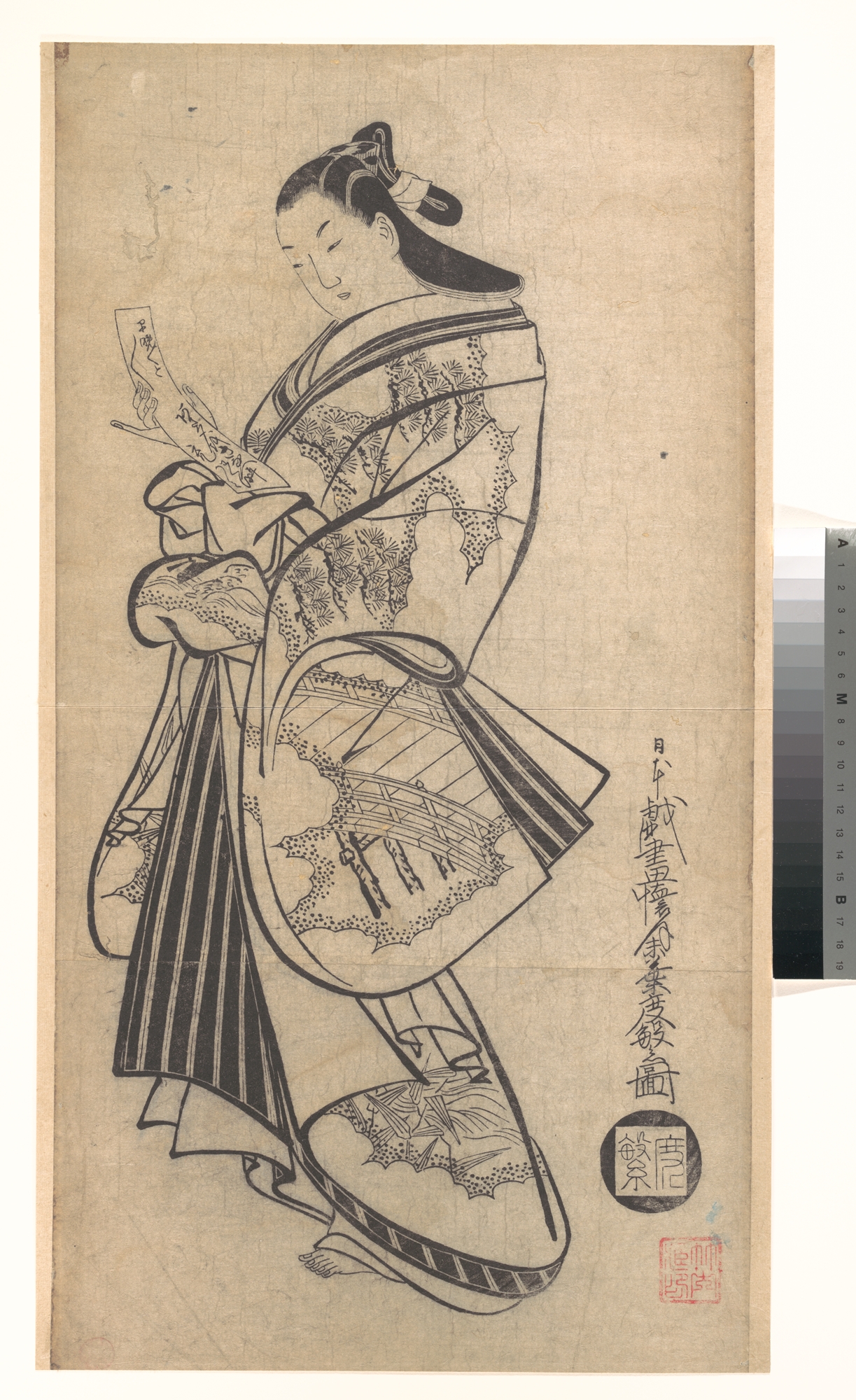
Courtesan with Poetry Card (Tanzaku) at the New Year
ca. 1714
Monochrome woodblock print (sumizuri-e); ink on paper

Standing Courtesan
c. 1715
Hand-colored woodblock print; o-oban, tan-e
Frequently Asked Questions
Standing Courtesan Looking Over Her Shoulder was created by Kaigetsudō Dohan (懐月堂度繁) in ca. 1715.