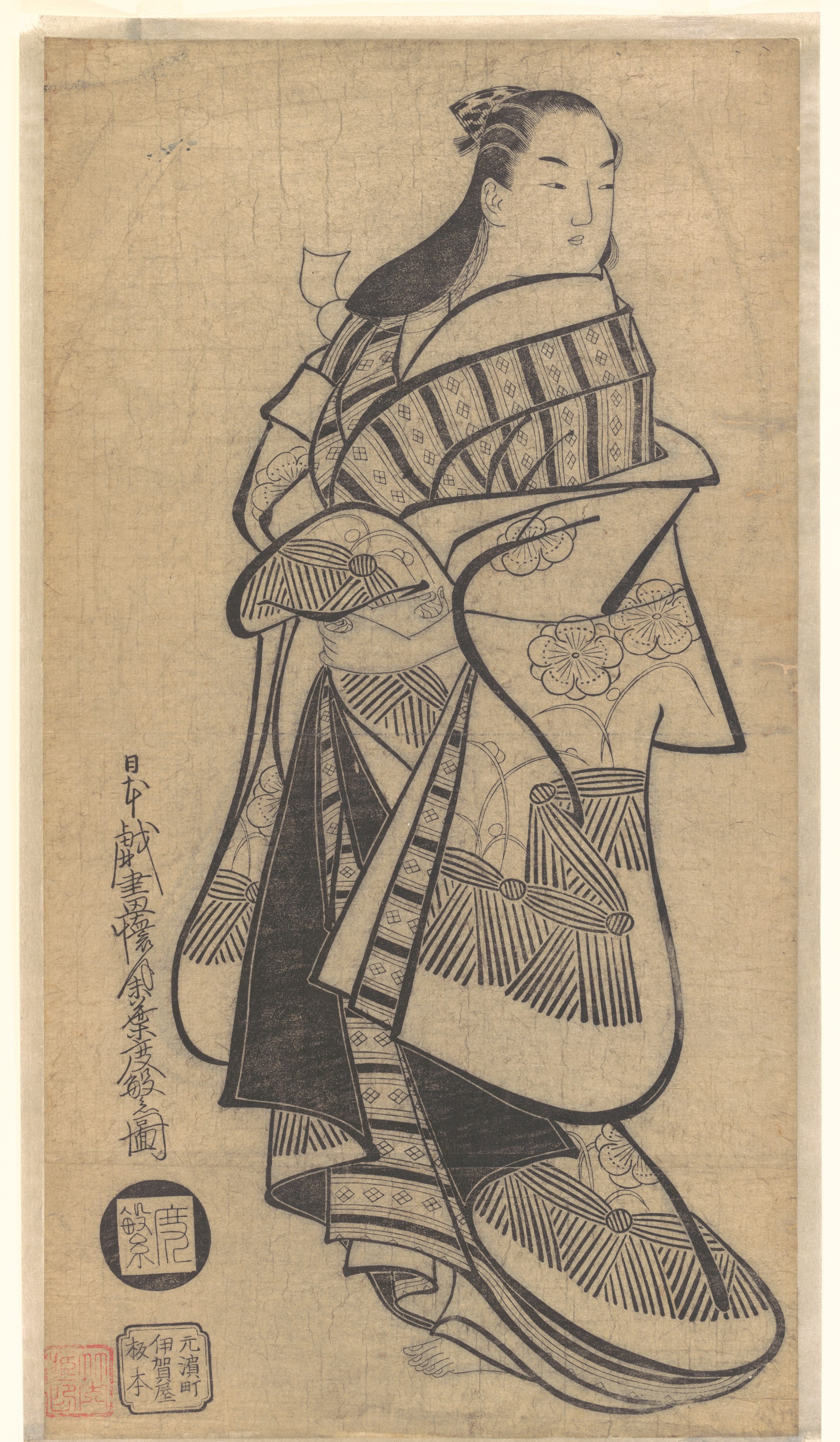
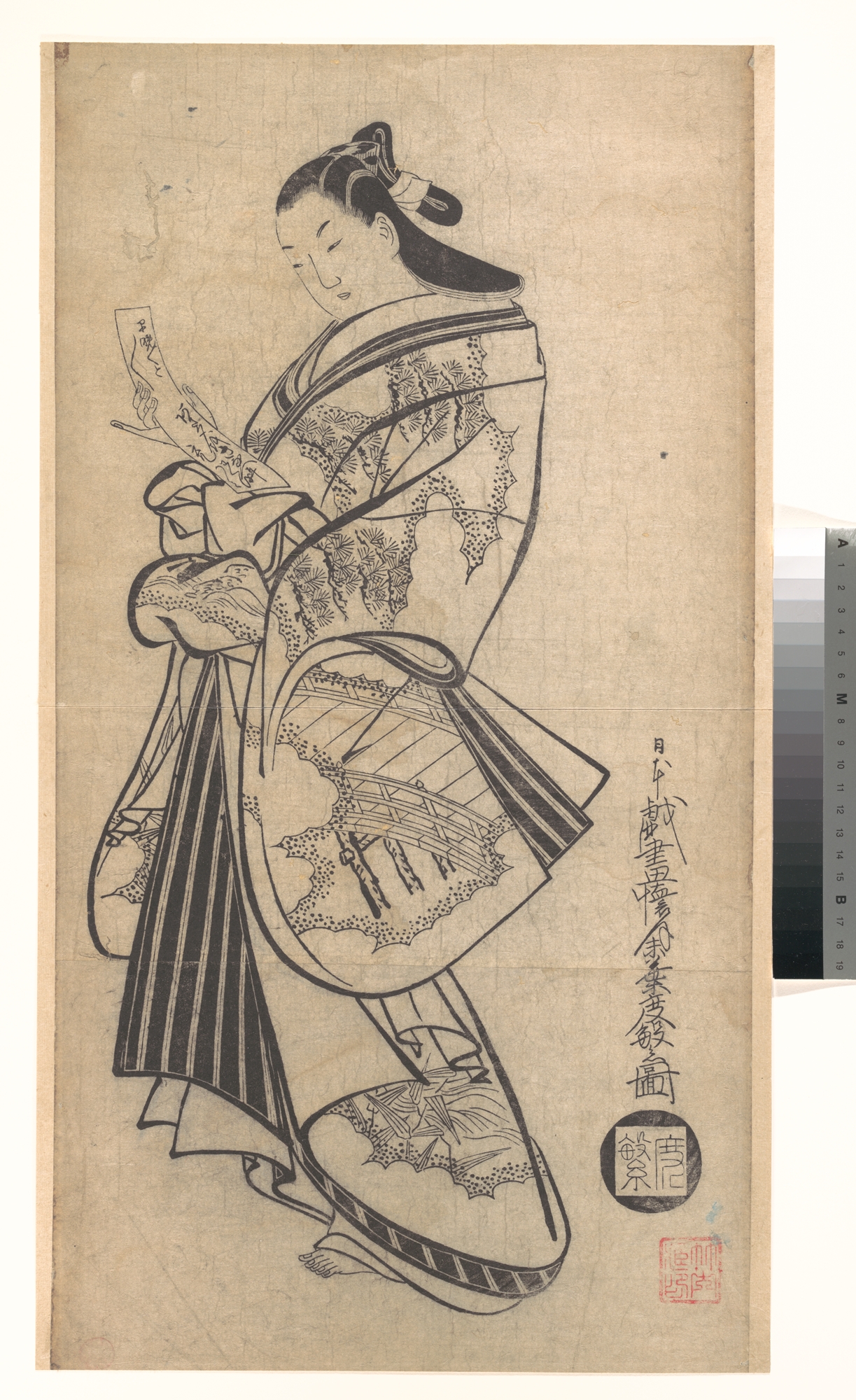
Courtesan
- Date:
- ca. 1714
- Medium:
- Monochrome woodblock print (sumizuri-e); ink on paper
- Source:
- Metropolitan Museum of Art
Description
A monochrome sumizuri-e print by Kaigetsudō Dohan from around 1714, showing a single standing courtesan in the unmistakable Kaigetsudō manner: a single female figure occupying almost the entire vertical extent of the sheet, the kimono falling in pronounced sweeping curves around a contrapposto stance that allowed the elaborately patterned fabric to fill the pictorial field. The Kaigetsudō workshop, founded by Kaigetsudō Ando around the turn of the eighteenth century in Edo, specialised in this single subject — the standing courtesan of the Yoshiwara pleasure quarter — and Dohan was one of the principal pupils responsible for translating Ando's painted compositions into the medium of the woodblock print. The print belongs to the sumizuri-e (monochrome black-line) period of early-eighteenth-century Edo ukiyo-e, before the introduction of the orange-red tan-e hand-colouring that would later be applied to the same compositions to give the elaborate robes their characteristic glow. The o-oban format — the extra-large vertical sheet that allowed near-life-size figures — was the Kaigetsudō workshop's signature format, marking a deliberate elevation of the woodblock print into territory previously reserved for hanging-scroll painting. The Metropolitan Museum of Art holds this impression as part of its foundational collection of early Edo prints, where it functions both as a major surviving work of the brief Kaigetsudō school and as evidence of the technical limits of pre-polychrome Edo printmaking. Among the twelve known print designs by Dohan, several survive in only a single impression.
More Prints by Kaigetsudō Dohan
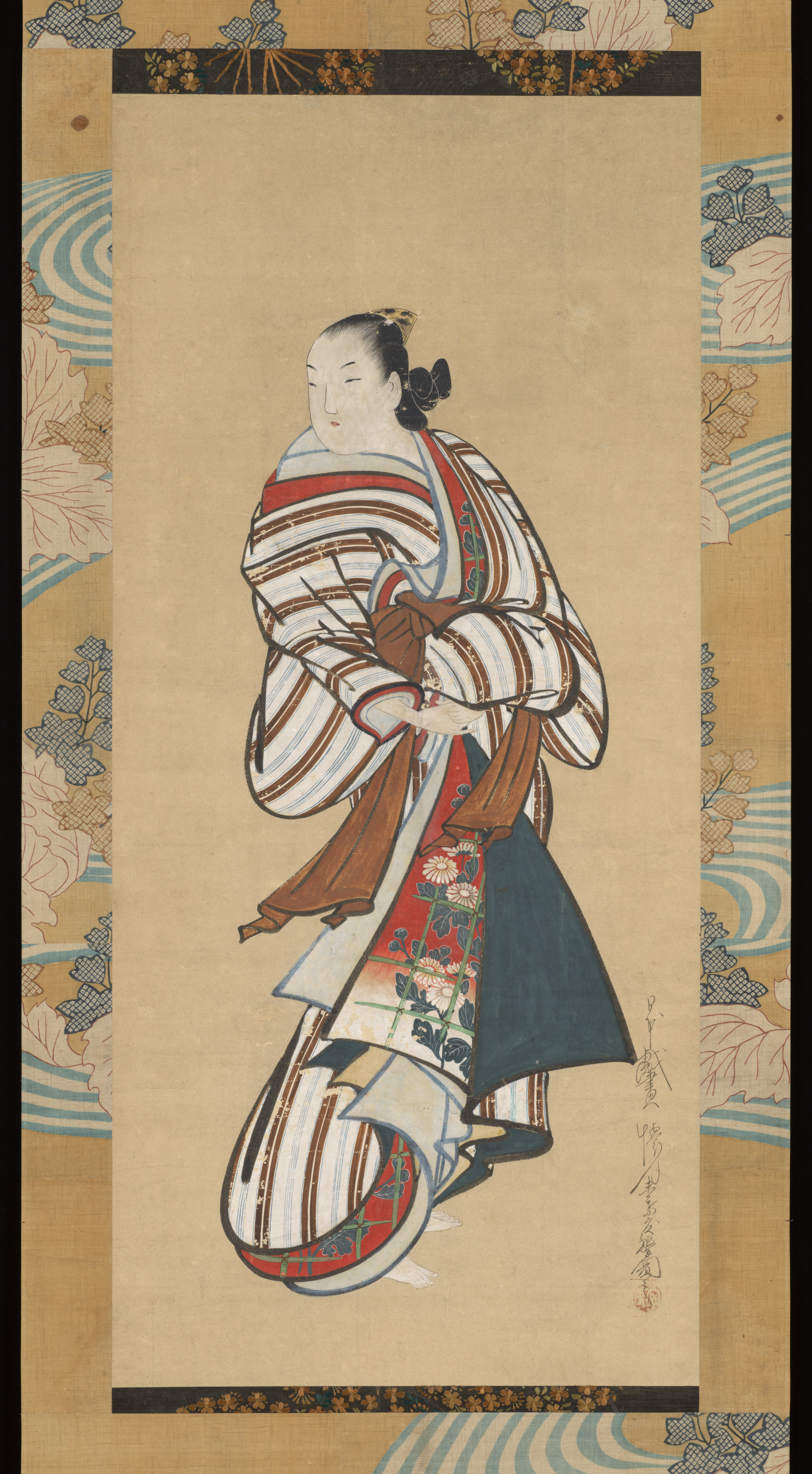
Standing Courtesan Looking Over Her Shoulder
ca. 1715
Hanging scroll; ink and color on paper
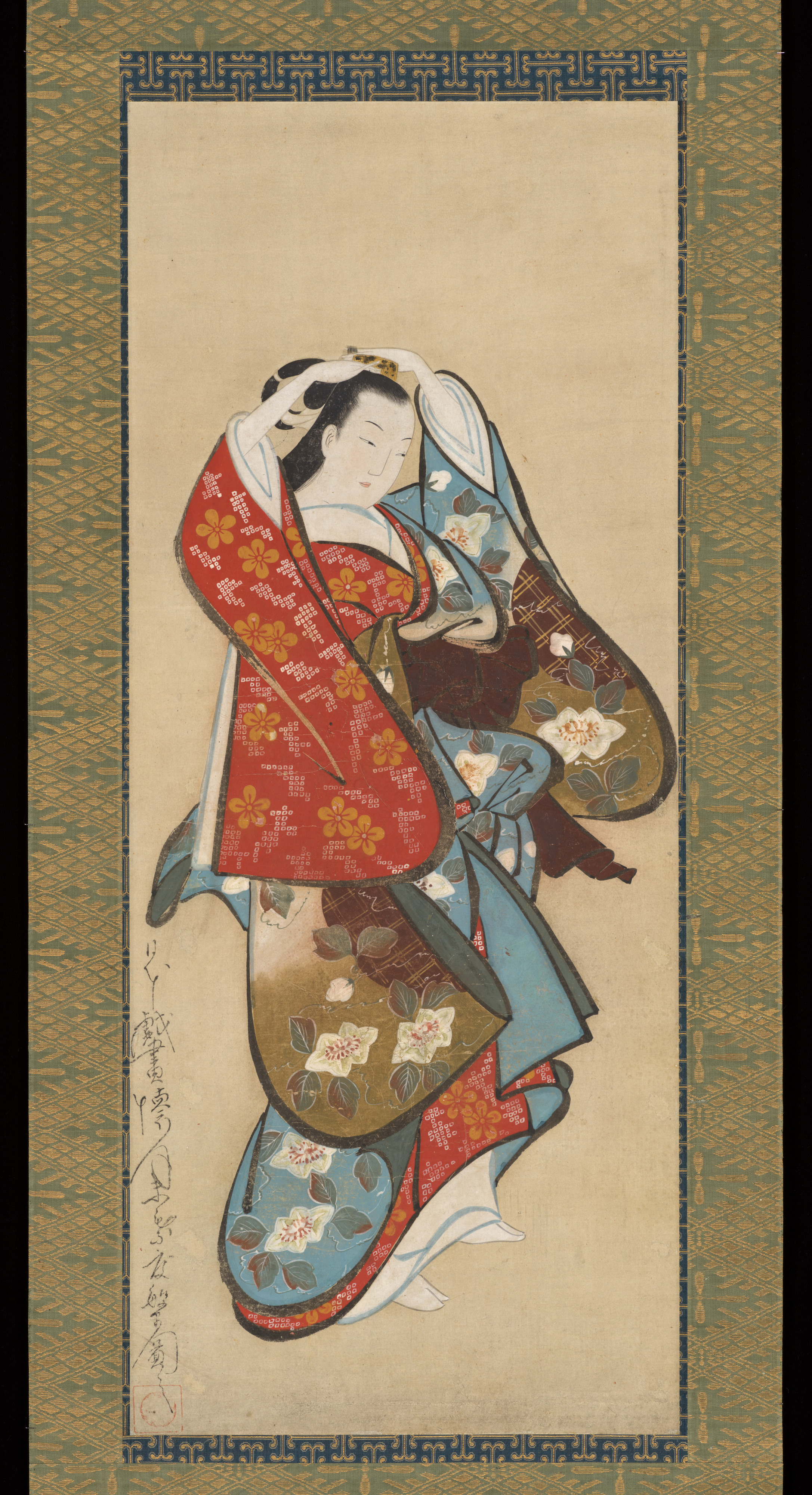
Beautiful Woman
Early 18th century
Hanging scroll; ink and color on paper
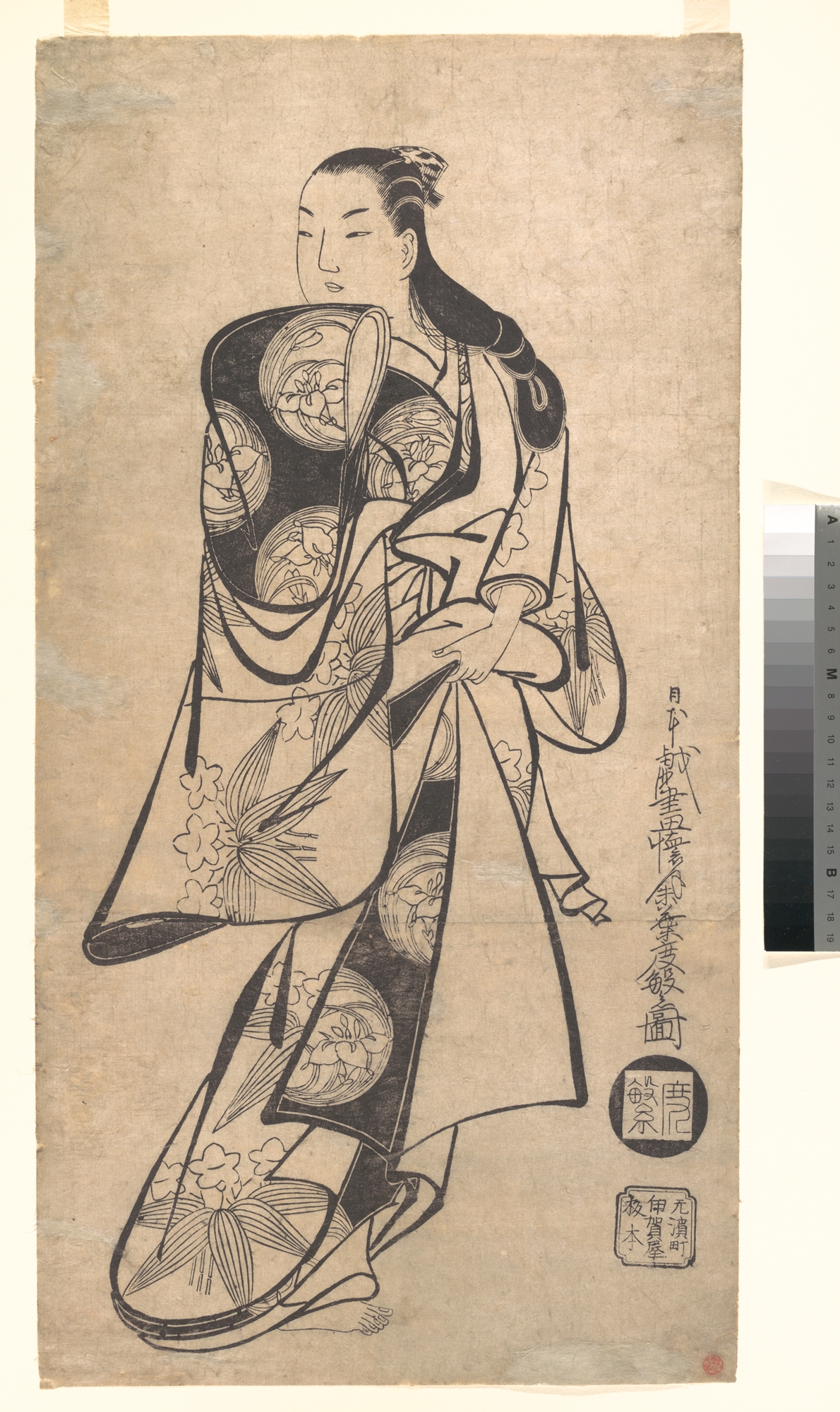
Courtesan
ca. 1714
Monochrome woodblock print (sumizuri-e); ink on paper
Courtesan with Poetry Card (Tanzaku) at the New Year
ca. 1714
Monochrome woodblock print (sumizuri-e); ink on paper
Frequently Asked Questions
Courtesan was created by Kaigetsudō Dohan (懐月堂度繁) in ca. 1714.