
Flowing Water
by Kajita Hanko
- Medium:
- Woodblock print
- Format:
- Oban
- Source:
- Honolulu Museum of Art
Description
Flowing Water — a subject of elementary poetic power in Japanese aesthetics. Moving water (nagare-mizu) is one of the fundamental subjects of classical Japanese art, carrying associations of time's passage, of the impermanence of all things, and of the elemental forces that shape the landscape. Whether depicted as a mountain stream, a garden waterfall, or an urban canal, flowing water presents the visual paradox of constant motion within a fixed image. Hanko's treatment likely renders this subject through the lens of his literary and painterly traditions.
More Prints by Kajita Hanko

More Landscapes Prints

Lake Kugushi in Wakasa Province (Wakasa Kugushiko), from the series Souvenirs of Travel I (Tabi miyage dai isshu)"
Wakasa Kugushiko
1920
Color woodblock print; oban
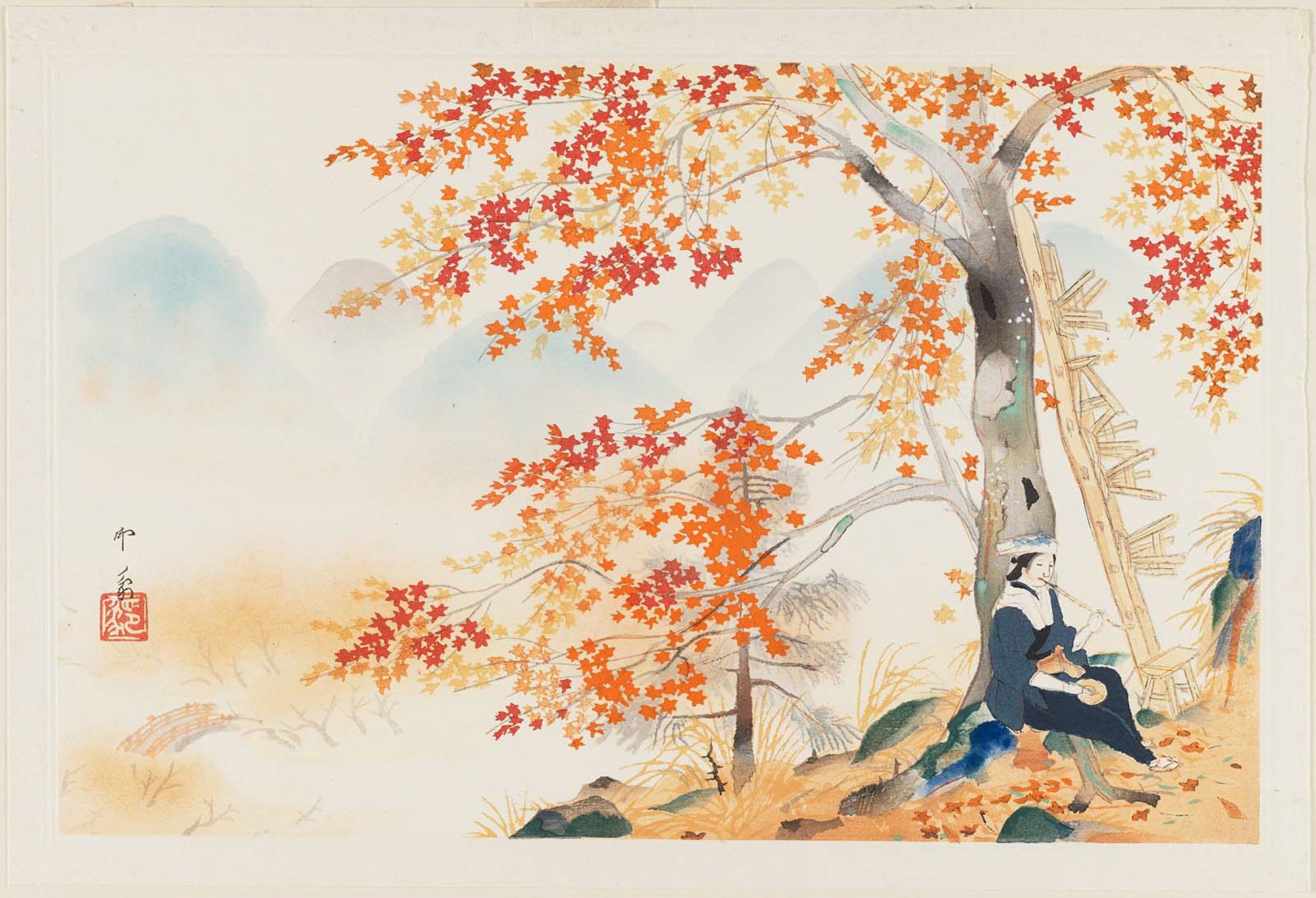
Autumn Maple Leaves at Takao, from the album Eight Views of Kyoto (Kyôto hakkei)
Woodblock print

The Beach at Kaiganji in Sanuki Province (Sanuki Kaiganji no hama), from the series "Collection of Views of Japan II, Kansai Edition (Nihon fukei shu II Kansai hen)"
1934
Color woodblock print; oban

Tea Kettle, section of a sheet from the series "Mirror of Stone Rubbings of Views of the Provinces" (Kohon meihitsu ishizuri kagami)
n.d.
Woodblock print; ishizuri-e, section of harimaze sheet
Featured in Collections
Curated cross-cuts that include this print.
Frequently Asked Questions
Flowing Water was created by Kajita Hanko (梶田半古).
Flowing Water depicts landscapes, rivers & lakes, and bijin-ga.