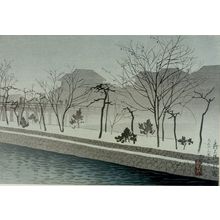
Morning Mist at Sanjô Bridge, Kyoto (Sanjô ôhashi no asagiri), Taishô period, dated 1924
- Medium:
- Woodblock print
- Source:
- Harvard Art Museum
- Image courtesy of
- Harvard Art Museum
Description
Dated 1924, this meisho-e depicts the Sanjō Ōhashi, the historic bridge spanning the Kamo River in central Kyoto that served as the eastern terminus of the Tōkaidō road. Morning mist, rendered through layered bokashi gradations in grey and blue-white tones, obscures the far bank and softens the bridge's stone piers, evoking the cool dampness of early morning along the river. Human figures crossing the bridge or gathered at its approaches would be rendered small against the atmospheric landscape, following the convention of foregrounding place over person. The 1924 date places the print in the mature Taishō period, contemporaneous with Yoshikawa's actor and geisha studies, revealing the breadth of his subject matter. The composition reflects the shin-hanga interest in atmospheric Japanese landscapes while remaining rooted in Kyoto's specific topographic and cultural identity.
More Prints by Kanpo Yoshikawa

The Actor Kataoka Gado IV as Miyuki in the play Shoutsushi Asagao Nikki (The Diary of the Morning Glory)
c. 1924
Color woodblock print; oban

Five, Hinazō
early summer 1922
Woodblock print, ink and color on paper with mica
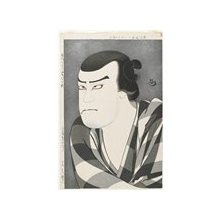
The Actor Nakamura Enjaku II as the Snarling Gonta
Woodblock print
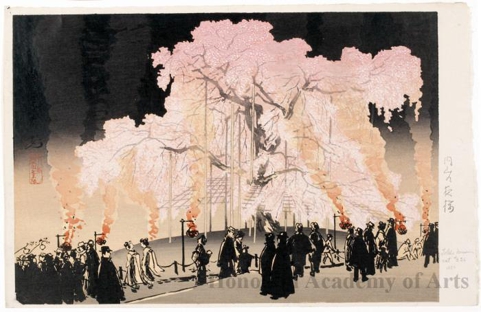
Cherry Blossoms at Night, Maruyama
Woodblock print
More Landscapes Prints

Lake Kugushi in Wakasa Province (Wakasa Kugushiko), from the series Souvenirs of Travel I (Tabi miyage dai isshu)"
Wakasa Kugushiko
1920
Color woodblock print; oban
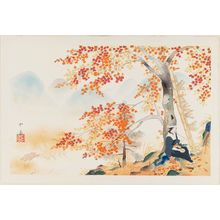
Autumn Maple Leaves at Takao, from the album Eight Views of Kyoto (Kyôto hakkei)
Woodblock print

The Beach at Kaiganji in Sanuki Province (Sanuki Kaiganji no hama), from the series "Collection of Views of Japan II, Kansai Edition (Nihon fukei shu II Kansai hen)"
1934
Color woodblock print; oban

Tea Kettle, section of a sheet from the series "Mirror of Stone Rubbings of Views of the Provinces" (Kohon meihitsu ishizuri kagami)
n.d.
Woodblock print; ishizuri-e, section of harimaze sheet
Featured in Collections
Curated cross-cuts that include this print.
Frequently Asked Questions
Morning Mist at Sanjô Bridge, Kyoto (Sanjô ôhashi no asagiri), Taishô period, dated 1924 was created by Kanpo Yoshikawa (吉川観方).
Morning Mist at Sanjô Bridge, Kyoto (Sanjô ôhashi no asagiri), Taishô period, dated 1924 depicts landscapes and bridges, set at Kyoto.