
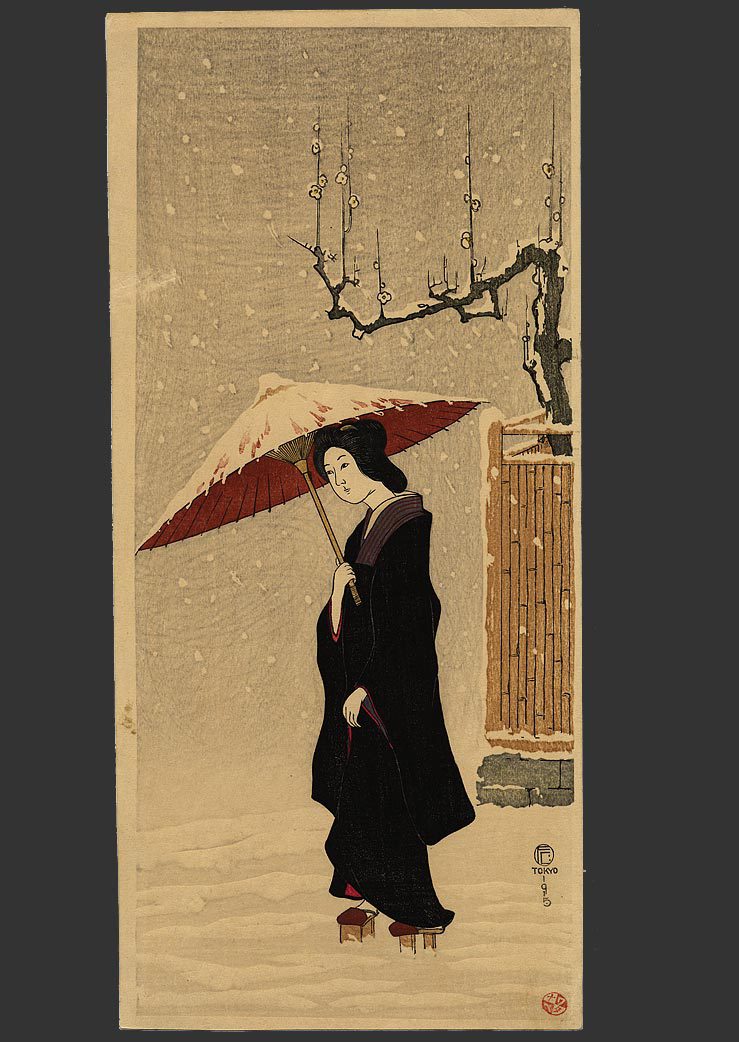
Maiko Admiring the moon
- Medium:
- Mokuhanga (Japanese woodblock)
- Image courtesy of
- Saru Gallery
Description
A second treatment of the maiko-and-moon subject, suggesting Yoshikawa returned to the theme with a different pose, costume, or seasonal cue. Such variation is characteristic of bijin-ga production, where artists explored compositional alternatives within an established subject — Goyo and Kotondo similarly produced sequential bijin works sharing themes. Here Yoshikawa would render the maiko's regalia with the accuracy his scholarship enabled: the kimono pattern signals season and the maiko's stage of training, while the obi musubi (knot) reveals district-specific conventions of Gion or Pontocho. Compositional differences from the first version might include a shifted angle of address — figure turned more in profile, head tilted further toward the moon — or a movement toward earlier or later autumn through ornament selection. As nishiki-e the print would require multiple color blocks for the textile pattern alone, registered with the precision the genre demands. Yoshikawa's bijin-ga consistently treat costume as portraiture of culture itself.
More Prints by Kanpo Yoshikawa

The Actor Kataoka Gado IV as Miyuki in the play Shoutsushi Asagao Nikki (The Diary of the Morning Glory)
c. 1924
Color woodblock print; oban

Five, Hinazō
early summer 1922
Woodblock print, ink and color on paper with mica
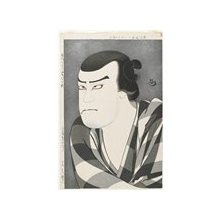
The Actor Nakamura Enjaku II as the Snarling Gonta
Woodblock print
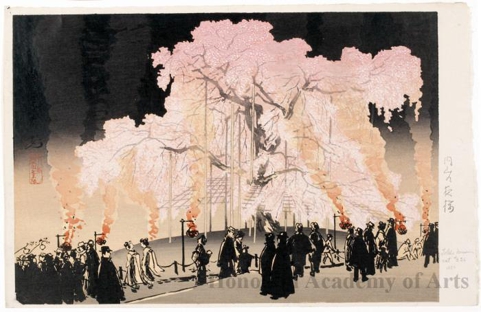
Cherry Blossoms at Night, Maruyama
Woodblock print
More Bijin-ga Prints
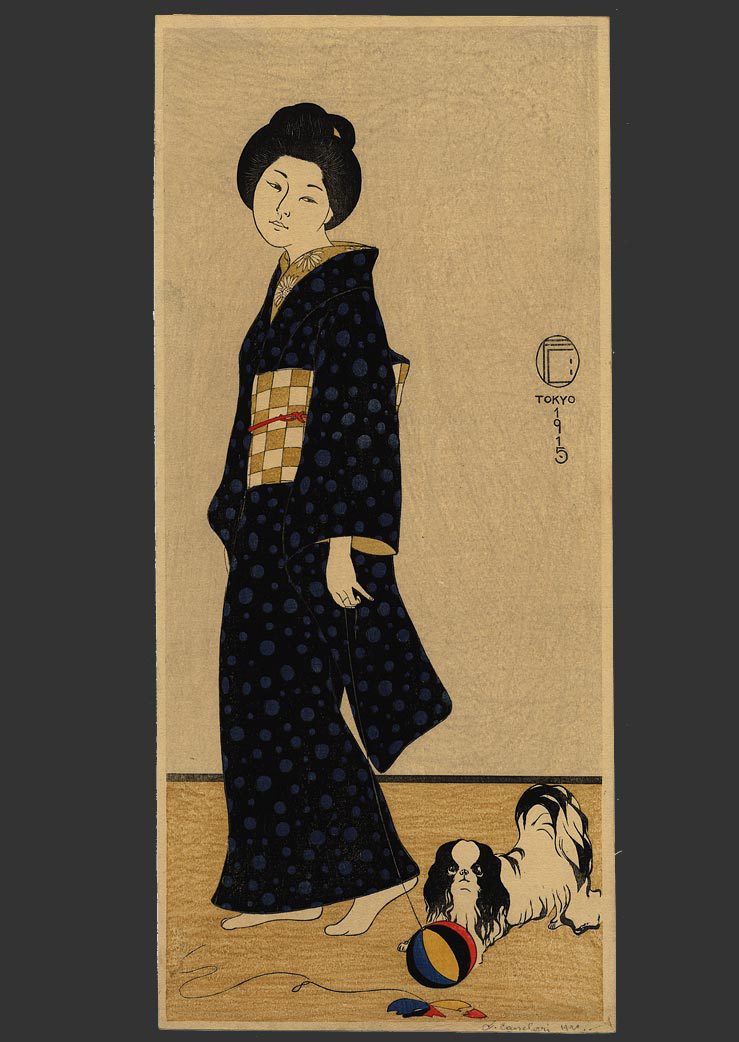
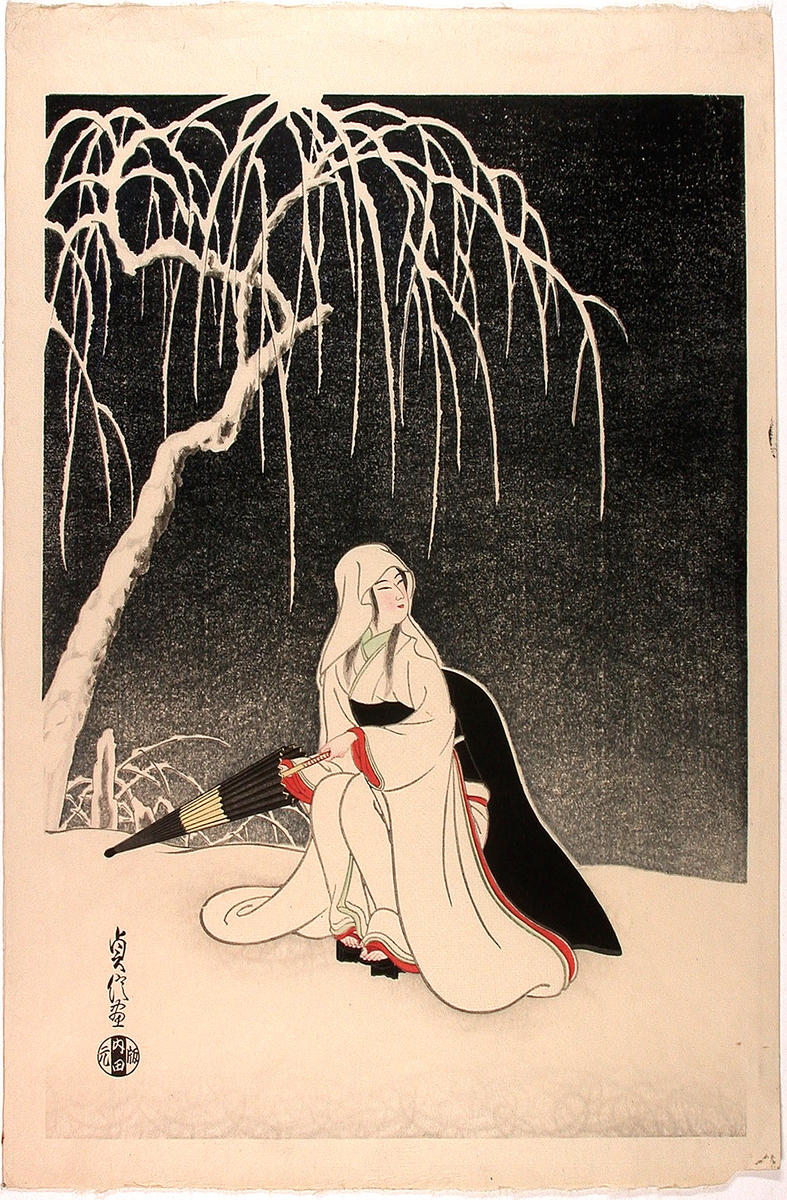

Featured in Collections
Curated cross-cuts that include this print.
Frequently Asked Questions
Maiko Admiring the moon was created by Kanpo Yoshikawa (吉川観方).
Maiko Admiring the moon depicts bijin-ga and moonlight.