
Sanjo Ohashi Bridge
- Medium:
- Mokuhanga (Japanese woodblock)
- Image courtesy of
- Saru Gallery
Description
This print depicts the Sanjo Ohashi, the bridge spanning the Kamo River in central Kyoto and historically the western terminus of the Tokaido highway. The site was already a fixture of Edo-period meisho-e — Hiroshige included it in his Famous Views of Kyoto series — and held particular meaning for Yoshikawa, whose Kyoto upbringing shaped a sustained attachment to the city's landmarks. The composition would employ the bridge's wooden balustrade as a strong horizontal element with the Higashiyama hills providing background recession, and would use bokashi gradations in the river water and sky to establish time of day. Printed with sumi ink and natural mineral pigments on washi paper, the work exemplifies Yoshikawa's contribution to early-twentieth-century Kyoto landscape printmaking. His antiquarian concern for architectural and topographical accuracy distinguishes the print from contemporaneous shin-hanga treatments of the same subject, in which mood often takes precedence over documentary specificity.
More Prints by Kanpo Yoshikawa

The Actor Kataoka Gado IV as Miyuki in the play Shoutsushi Asagao Nikki (The Diary of the Morning Glory)
c. 1924
Color woodblock print; oban

Five, Hinazō
early summer 1922
Woodblock print, ink and color on paper with mica
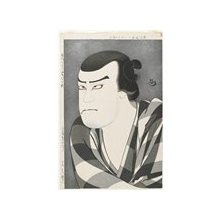
The Actor Nakamura Enjaku II as the Snarling Gonta
Woodblock print
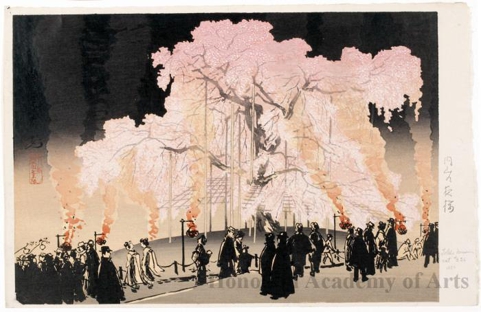
Cherry Blossoms at Night, Maruyama
Woodblock print
More Bridges Prints
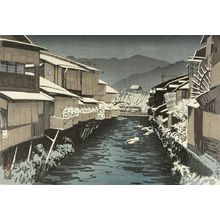
Fair Weather After Snow at Yamato Bridge, Kyoto (Yamato bashi no yukibare), Taishô period, dated 1924
Woodblock print
![Mount Fuji on a Moonlit Night, Kawai Bridge (Tsukiyo no Fuji [Kawaibashi]), from the series "Selection of Views of the Tokaido (Tokaido fukei senshu)" by Kawase Hasui](https://www.artic.edu/iiif/2/d0960668-1e73-339a-b182-fb995a54bff0/full/843,/0/default.jpg)
Mount Fuji on a Moonlit Night, Kawai Bridge (Tsukiyo no Fuji [Kawaibashi]), from the series "Selection of Views of the Tokaido (Tokaido fukei senshu)"
1947
Color woodblock print; oban

Shin Ohashi Bridge (Shin Ohashi), from the series "Twenty View of Tokyo (Tokyu nijukkei)"
1926
Color woodblock print; oban

Sacred Bridge in Nikko (Nikko Shinkyo)
1930
Color woodblock print; oban
Featured in Collections
Curated cross-cuts that include this print.
Frequently Asked Questions
Sanjo Ohashi Bridge was created by Kanpo Yoshikawa (吉川観方).
Sanjo Ohashi Bridge depicts bridges.