
Anraku Hot Springs, Ôsumi (Ôsumi Anraku onsen), from the series Selected Views of Japan (Nihon fûkei senshû)
by Kawase Hasui
- Medium:
- Woodblock print
- Source:
- Museum of Fine Arts Boston
- Image courtesy of
- Museum of Fine Arts Boston
Description
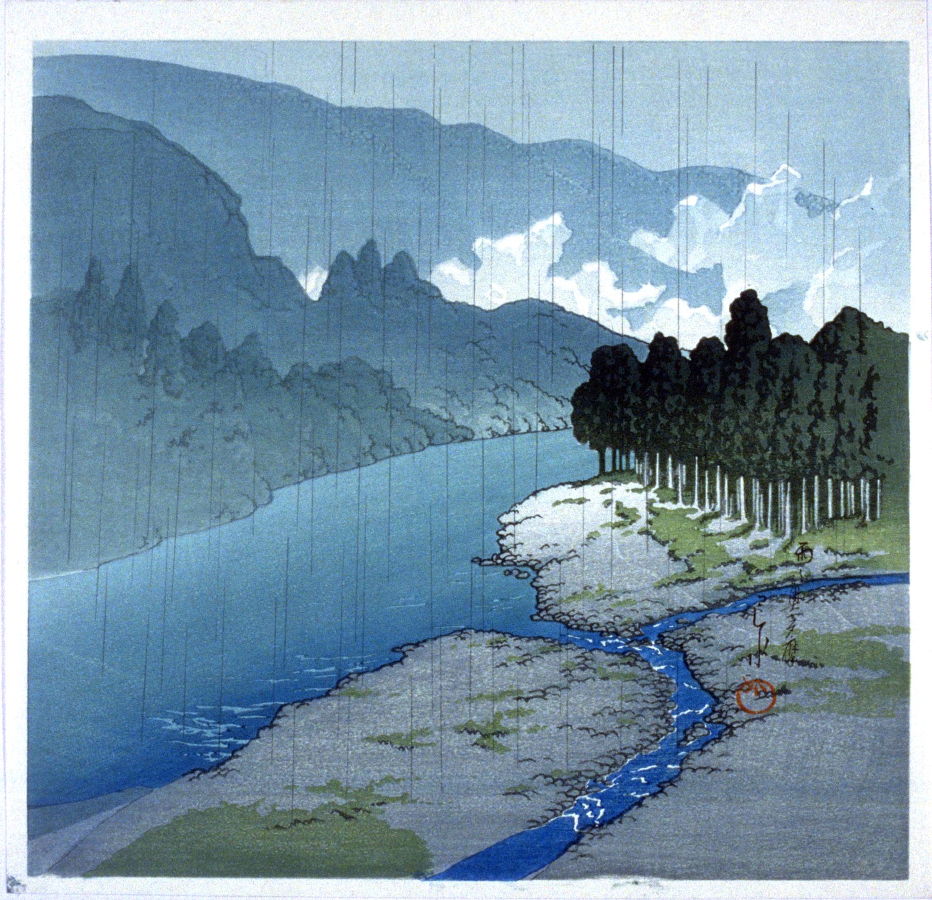
A river with rocky, foam-flecked rapids runs across the foreground below a low stone embankment, with thatched-roof buildings clustered along the far bank beneath flowering (pink-blossomed) trees. Green, tree-covered mountains rise steeply behind the village, with a taller double-peaked mountain in the distance under a pale sky. The palette is dominated by blues and greens with touches of pink and brown roof tones; no human figures are visible. Woodblock print by Kawase Hasui, titled Anraku Hot Springs, Ôsumi (Ôsumi Anraku onsen), from the series Selected Views of Japan (Nihon fûkei senshû); year unknown.
More Prints by Kawase Hasui

Featured in Collections
Curated cross-cuts that include this print.
Frequently Asked Questions
Anraku Hot Springs, Ôsumi (Ôsumi Anraku onsen), from the series Selected Views of Japan (Nihon fûkei senshû) was created by Kawase Hasui (川瀬巴水).