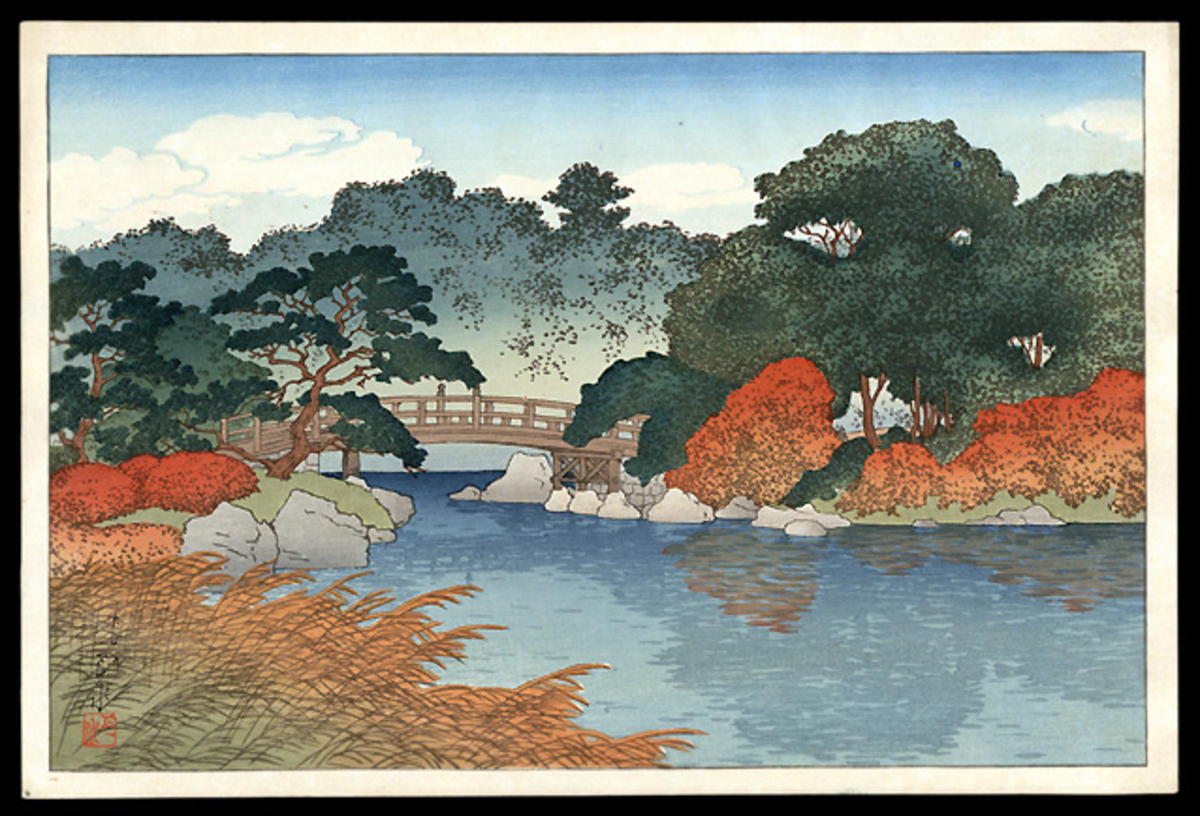
Autumn Garden
by Kawase Hasui
- Medium:
- Woodblock print
- Source:
- Japanese Art Open Database
- Image courtesy of
- Japanese Art Open Database
Description
Hasui occasionally turned from the broad meisho-e landscape tradition to more intimate garden subjects, and this print likely depicts a formal Japanese garden viewed in the season of koyo, the autumn color change. The composition may center on a stone lantern, pond surface, or covered walkway partially obscured by maples. Hasui was trained under Kaburagi Kiyokata in nihonga figure painting before shifting to landscape printmaking under the influence of Hiroshi Yoshida's success with shin-hanga publishers; his garden prints reflect this training in their sensitivity to contained, layered spatial recession. The muted palette typical of autumn garden subjects — subdued green moss, amber foliage, grey stone — demanded careful color separation and delicate bokashi gradations from the carver and printer. Such prints tend toward a quieter, more contemplative register than Hasui's open coastal or mountain landscapes.
More Prints by Kawase Hasui

More Gardens Prints
![[Garden of] Taj Mahal, No. 1 (Taji Maharu no niwa, dai ichi) by Hiroshi Yoshida](https://www.artic.edu/iiif/2/230993a7-d4f0-c979-c267-127d48e1ef1c/full/843,/0/default.jpg)
[Garden of] Taj Mahal, No. 1 (Taji Maharu no niwa, dai ichi)
Taji Maharu no niwa, dai ichi
1931
Color woodblock print; oban

Kiyozumi Garden in Moonlight
January 1938
Woodblock print, ink and color on paper

Moon over Kiyosumi Garden (Tsuki no Kiyosumien)
1938
Color woodblock print; oban
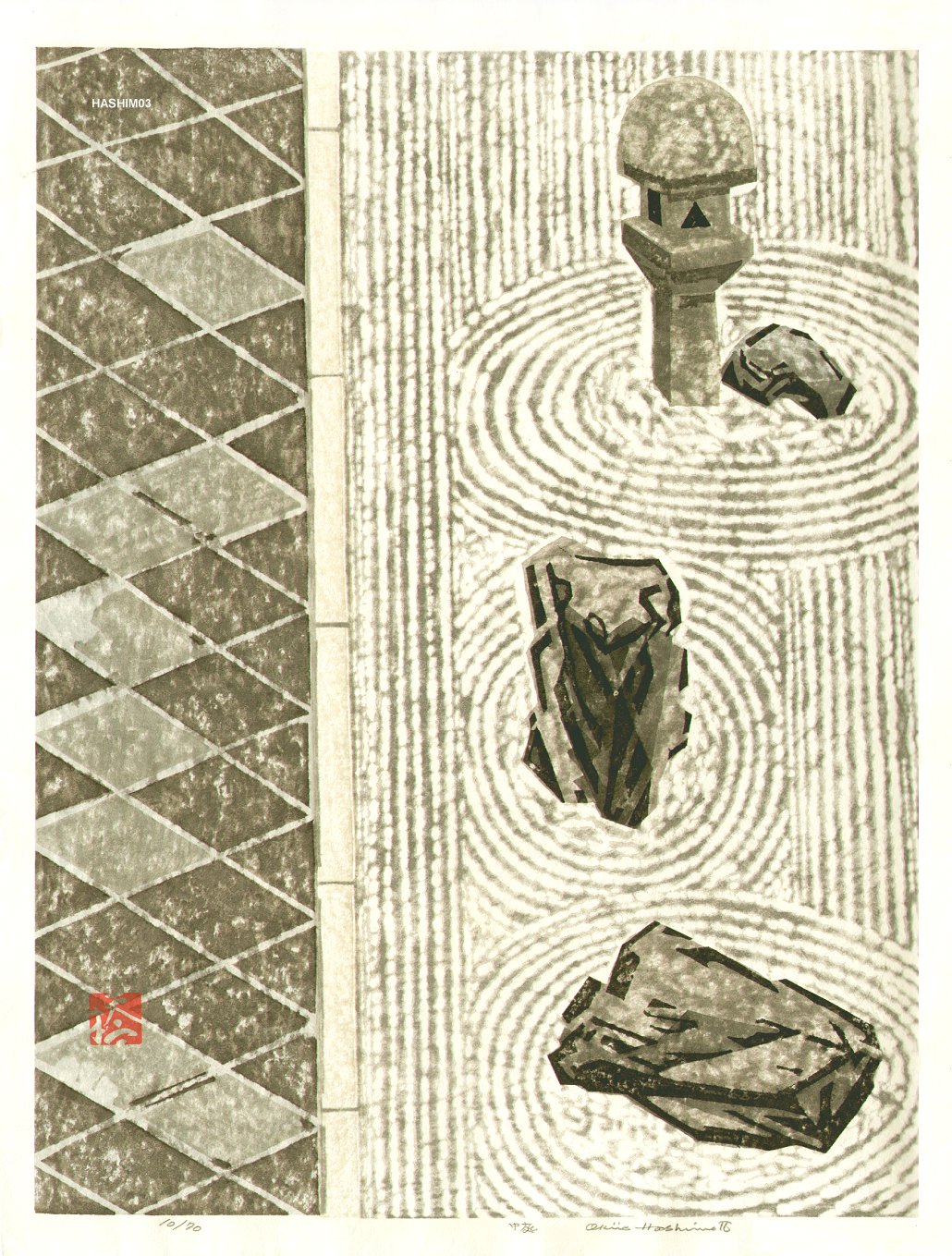
Rock garden
10/70, 1966
Woodblock print
Featured in Collections
Curated cross-cuts that include this print.
Frequently Asked Questions
Autumn Garden was created by Kawase Hasui (川瀬巴水).
Autumn Garden depicts gardens and autumn foliage.