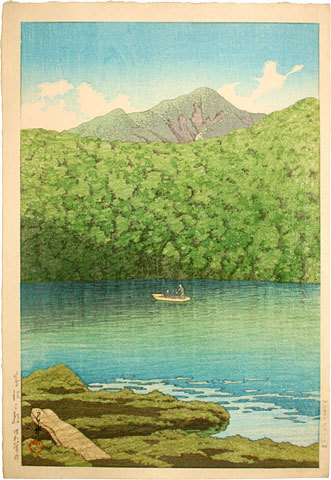
Collection of scenic views of Japan, eastern Japan edition: Morning at Tsuta Marsh (Nihon fukei shu higashi Nihon hen: Tsutanuma no asa)
by Kawase Hasui
- Medium:
- Woodblock print
- Source:
- Scholten Japanese Art
- Image courtesy of
- Scholten Japanese Art
Description
A woodblock print showing a still blue marsh or lake ringed by dense green forested hills, with a dark conical mountain peak rising under a pale sky in the background. A single small boat with one figure sits on the water near the center, and a rocky, plant-fringed shore occupies the lower left foreground. This woodblock print by Kawase Hasui is titled *Collection of Scenic Views of Japan, Eastern Japan Edition: Morning at Tsuta Marsh (Nihon fukei shu higashi Nihon hen: Tsutanuma no asa)*.
More Prints by Kawase Hasui
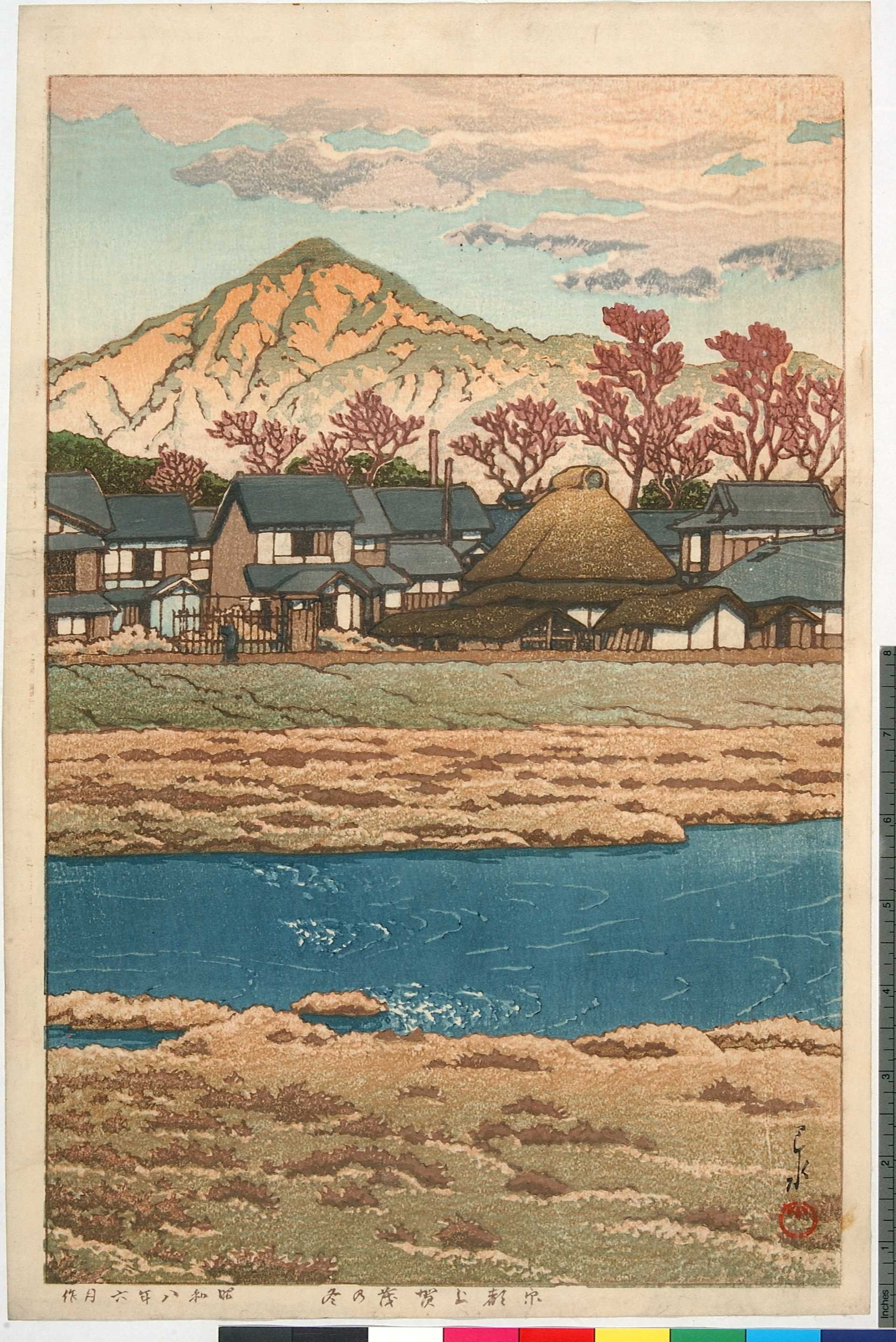
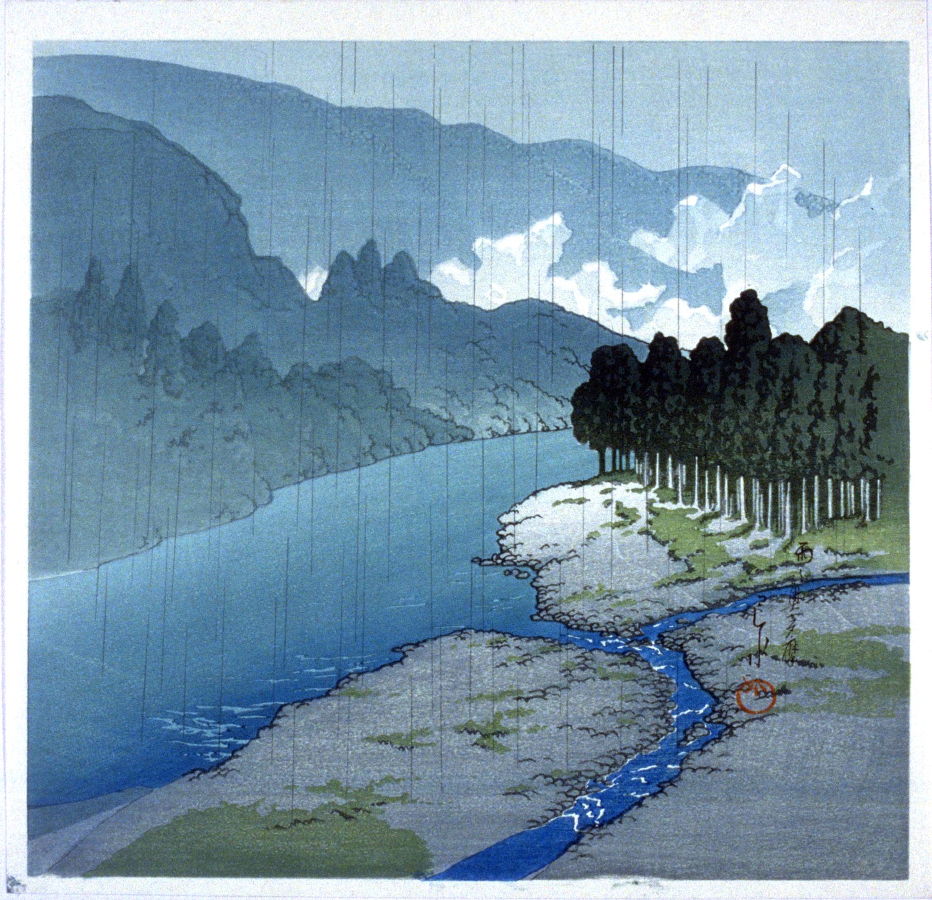

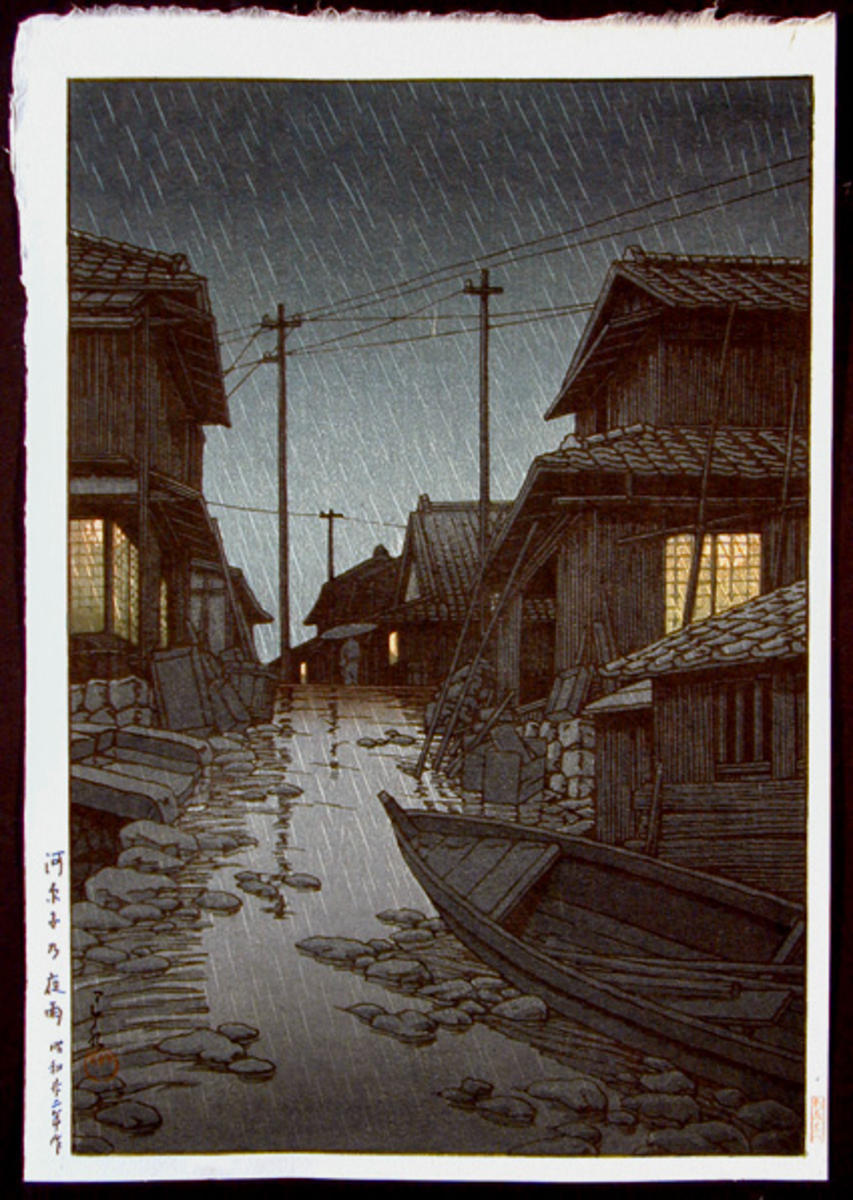
More Famous Places (Meisho-e) Prints

Rain at Maekawa in Sagami Province (Soshu Maekawa no ame), from the series "Selection of Views of the Tokaido (Tokaido fukei senshu)"
1932
Color woodblock print; oban

Shinkawabata at Handa, Owari Province (Bishu Handa Shinkawabata), from the series "Selection of Views of the Tokaido (Tokaido fukei senshu)"
1935
Color woodblock print; oban

Evening Snow at Ishinomaki (Ishinomaki no bosetsu), from the series "Collection of Views of Japan, Eastern Japan Edition (Nihon fukei shu higashi Nihon hen)"
1935
Color woodblock print; oban

Morning in Dotonbori, Osaka (Osaka Dotonbori no asa), from the series "Collection of Views of Japan II, Kansai Edition (Nihon fukei shu II Kansai hen)"
1933
Color woodblock print; oban
Featured in Collections
Curated cross-cuts that include this print.
Frequently Asked Questions
Collection of scenic views of Japan, eastern Japan edition: Morning at Tsuta Marsh (Nihon fukei shu higashi Nihon hen: Tsutanuma no asa) was created by Kawase Hasui (川瀬巴水).
Yes — Collection of scenic views of Japan, eastern Japan edition: Morning at Tsuta Marsh (Nihon fukei shu higashi Nihon hen: Tsutanuma no asa) is part of the Collection of Scenic Views of Japan, Eastern Japan Edition series by Kawase Hasui.
Collection of scenic views of Japan, eastern Japan edition: Morning at Tsuta Marsh (Nihon fukei shu higashi Nihon hen: Tsutanuma no asa) depicts famous places (meisho-e).