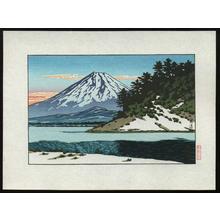
Lake Shoji
by Kawase Hasui
- Medium:
- Woodblock print
- Source:
- Japanese Art Open Database
- Image courtesy of
- Japanese Art Open Database
Description
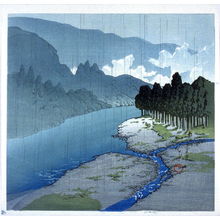
This third impression variant of Hasui's Lake Shoji subject documents ongoing demand for this composition depicting the smallest and arguably most scenic of the Fuji Five Lakes in Yamanashi Prefecture. Lake Shoji (Shojiko) is known for its clear waters and relatively undeveloped shoreline, qualities that suited Hasui's preference for landscapes with minimal human intrusion. Across three known variants of this title, differences in printing likely reflect incremental changes in colorway, bokashi gradation, or paper absorption. Mount Fuji rises above the far shore in classic compositions from this site, its reflection in the still lake creating a symmetrical vertical axis. This print may show signs of extended woodblock use in fine line passages, with the printing quality compared across variants offering insight into the production span of the design. Shin-hanga prints of this type were produced on demand by the Watanabe publishing house, which maintained the carved woodblocks and contracted artisan printers for each new run throughout the interwar decades.
More Prints by Kawase Hasui
More Landscapes Prints

Lake Kugushi in Wakasa Province (Wakasa Kugushiko), from the series Souvenirs of Travel I (Tabi miyage dai isshu)"
Wakasa Kugushiko
1920
Color woodblock print; oban
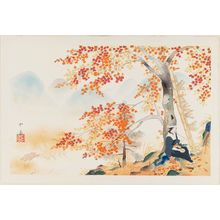
Autumn Maple Leaves at Takao, from the album Eight Views of Kyoto (Kyôto hakkei)
Woodblock print

The Beach at Kaiganji in Sanuki Province (Sanuki Kaiganji no hama), from the series "Collection of Views of Japan II, Kansai Edition (Nihon fukei shu II Kansai hen)"
1934
Color woodblock print; oban

Tea Kettle, section of a sheet from the series "Mirror of Stone Rubbings of Views of the Provinces" (Kohon meihitsu ishizuri kagami)
n.d.
Woodblock print; ishizuri-e, section of harimaze sheet
Featured in Collections
Curated cross-cuts that include this print.
Frequently Asked Questions
Lake Shoji was created by Kawase Hasui (川瀬巴水).
Lake Shoji depicts landscapes.